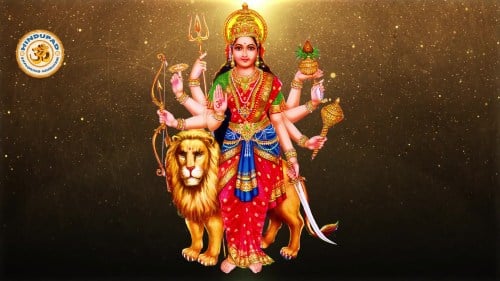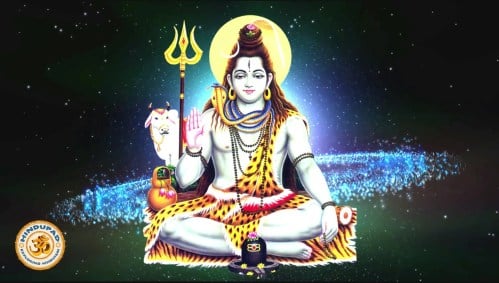
The Devi Upanishad articulates a profound insight within Hindu philosophy: Shiva and Shakti are inseparable, and their interdependence is essential for the full manifestation of reality. Shiva symbolizes pure consciousnesssilent, vast, and unchangingwhile Shakti embodies dynamic energythe power that moves, creates, and sustains. Without Shakti’s union, the text suggests, Shiva remains inert; without Shiva’s steady awareness, Shakti lacks orienting clarity. This sacred union is not a hierarchy but a harmonized whole.
Presented in lucid metaphysical terms, the teaching clarifies that ultimate reality (often spoken of as the Supreme) becomes experientially accessible through the embrace of both stillness and movement. In this vision, consciousness without energy remains unexpressed, and energy without consciousness becomes directionless. The Devi Upanishad thus reframes power as integrative: true potency arises when insight and force are aligned.
Everyday experience offers relatable mirrors of this principle. Intention without follow-through rarely changes outcomes, much as awareness without energy does not transform life. Conversely, restless activity without reflection can feel scattered or exhausting. The Shiva–Shakti balance appears whenever clarity meets purpose, like a lamp and its flame, a dancer and the dance, or a seed guided by the vital force that lets it sprout.
Philosophically, this sacred pairing illuminates enduring questions about being and becoming. It suggests that liberation is not mere withdrawal into abstract awareness, nor unbridled immersion in activity. Rather, it is the realized harmony of bothinner illumination expressing itself in wise, compassionate action. In this way, the Devi Upanishad speaks to both contemplative insight and ethical engagement.
This teaching also resonates across dharmic traditions, nurturing unity in spiritual diversity. In Buddhism, the interplay of prajñā (wisdom) and upāya (skillful means) echoes the need for both seeing and doing. In Sikh thought, the relationship of nirgun (formless) and sargun (with attributes) parallels the presence of the unmanifest through the manifest. Jain metaphysics, with its nuanced exploration of dravya, guṇa, and paryāya, reflects an affinity for understanding reality as both stable and dynamically expressed. These consonances point toward a shared civilizational insight: completeness requires complementary perspectives.
Read through this integrative lens, the Devi Upanishad does not diminish Shiva by calling him powerless; it elevates the relational truth that power is perfected in union. The image of Shiva as pure awareness finds its fulfillment in Shakti as creative potency, just as meaning finds voice through sound. The result is a holistic vision of the cosmos and of human life, where inner clarity and outer expression reinforce one another.
Practical reflection flows naturally from this philosophy. Practices that cultivate steady awarenesssuch as meditation, mantra, or mindful breathnurture the Shiva principle. Practices that direct energized engagementservice (seva), devotion (bhakti), and ethical action (dharma)activate the Shakti principle. When both are integrated, life feels coherent: purpose aligns with presence, and energy serves wisdom.
For seekers across traditions, this insight encourages respectful dialogue and shared learning. It affirms that different paths within Hinduism, Buddhism, Jainism, and Sikhism can illuminate the same integrative truth through varied methods and symbols. Such recognition strengthens a culture of mutual reverence and common purpose within the broader dharmic family.
Ultimately, the Devi Upanishad’s message is timeless: consciousness and energy together form the sacred architecture of reality. In honoring their union, spiritual practice becomes more balanced, communities grow more harmonious, and the quest for liberation gains both depth and direction. The sacred dance of Shiva and Shakti is thus not only a theological teaching but a practical compass for living with clarity, vigor, and unity.
Inspired by this post on Hindu Blog.