-
Did Goddess Lakshmi Slay Demons? Scriptural Evidence on Kolhasura and Mahishasura

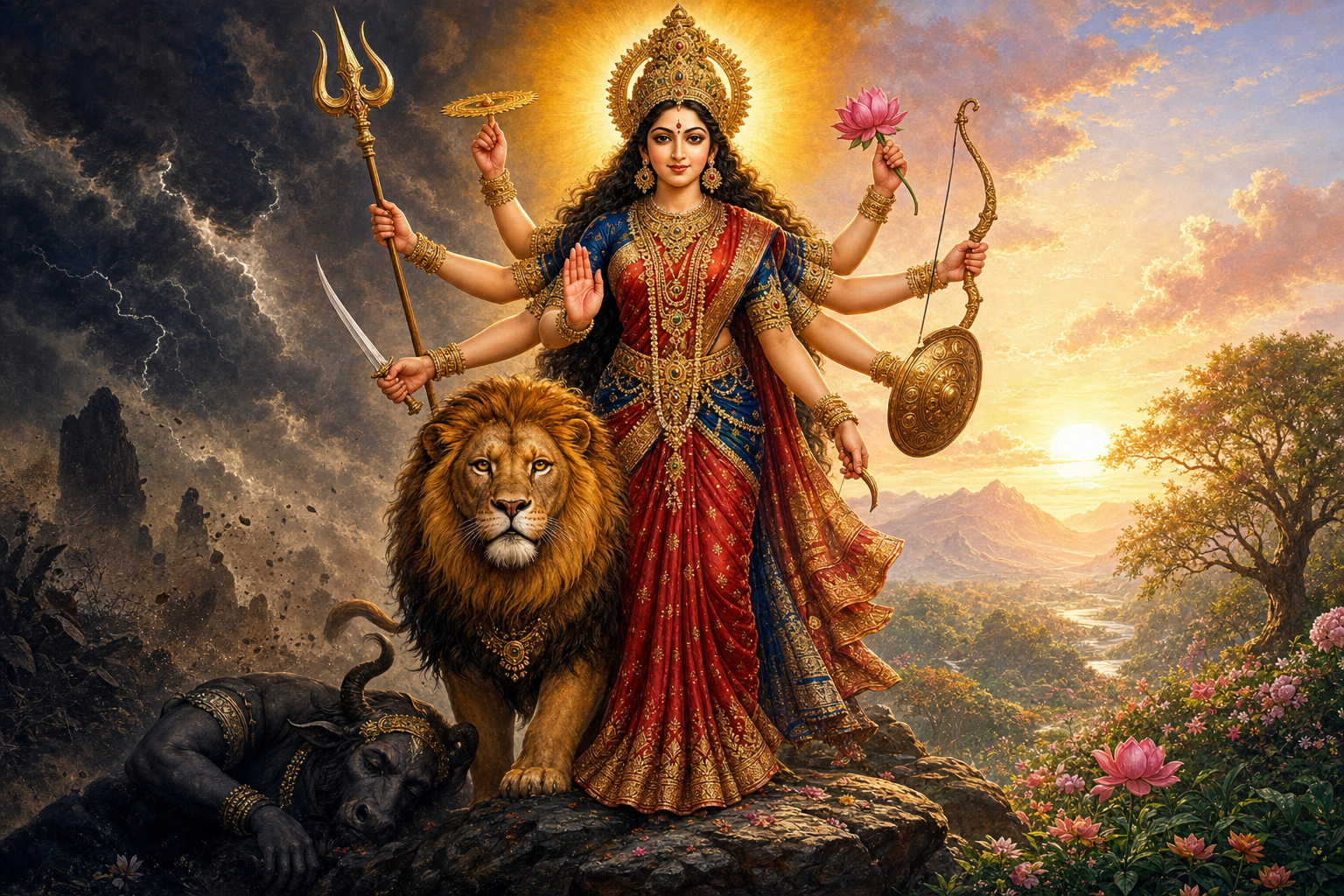
Did Goddess Lakshmi slay demons? Scriptural and regional traditions answer yes in her fierce Mahalakshmi form. The Skanda Purana’s Karavira Mahatmya narrates Mahalakshmi (Ambabai) defeating Kolhasura at Kolhapur, while the Devi Mahatmya’s Mahishasuramardini cycle—often assimilated devotionally to Mahalakshmi—captures the goddess’s triumph over Mahishasura. This article clarifies how Śrī-Lakshmi’s benevolent identity and Mahalakshmi’s protective power coexist…
-
Ugra Lakshmi Unveiled: Fierce Iconography, Tantric Theology, and Living Rituals of Protective Grace

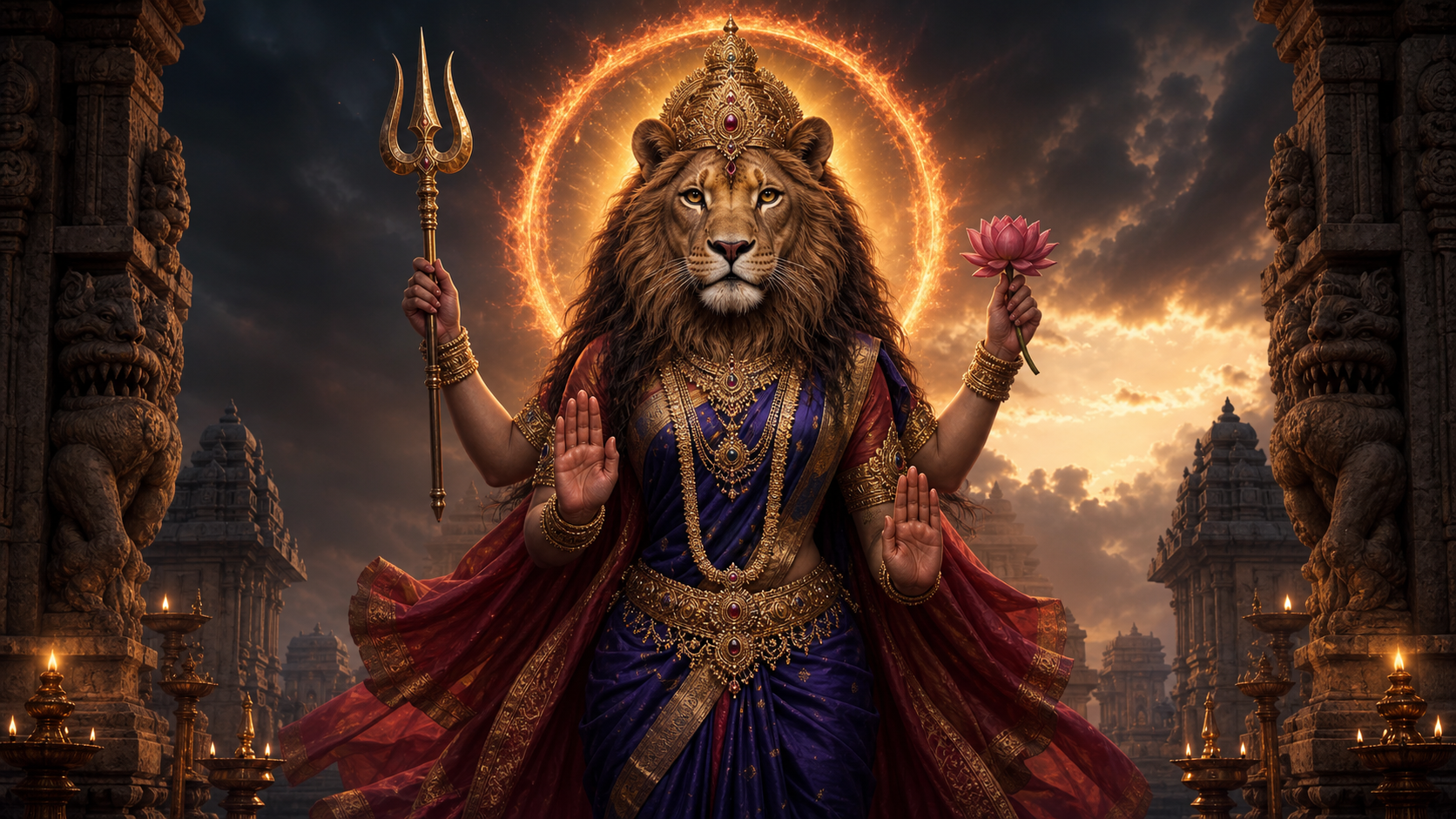
This comprehensive study explores the fierce (ugra) manifestations of Goddess Lakshmi through iconography, tantric theology, and living ritual practice. It clarifies that ugra, far from implying aggression, denotes vigilant, protective radiance aligned with dharma. Drawing from the Śrī Sūkta, Purāṇic hymns, the Lakṣmī Tantra, and the Devī Māhātmya, it maps how Lakshmi’s compassion assumes martial…
-
Decoding the Khatvanga: Skull Staff of Chamunda & Kali—Fearlessness, Tantra, and Transcendence

The khatvanga—skull-staff of Chamunda, Kali, and other fierce goddesses—emerges as a precise, multilayered symbol in Hindu iconography and tantric philosophy. This long-form analysis decodes its form (skull, bone staff, damaru, banner), its cremation-ground origins, and its ethical evolution from literal bone to wood or metal in mainstream ritual spaces. It clarifies how the staff encodes…
-
Beyond Rivalry: Why a True Vaidika Honors Tantra and a True Tantrika Reveres the Vedas

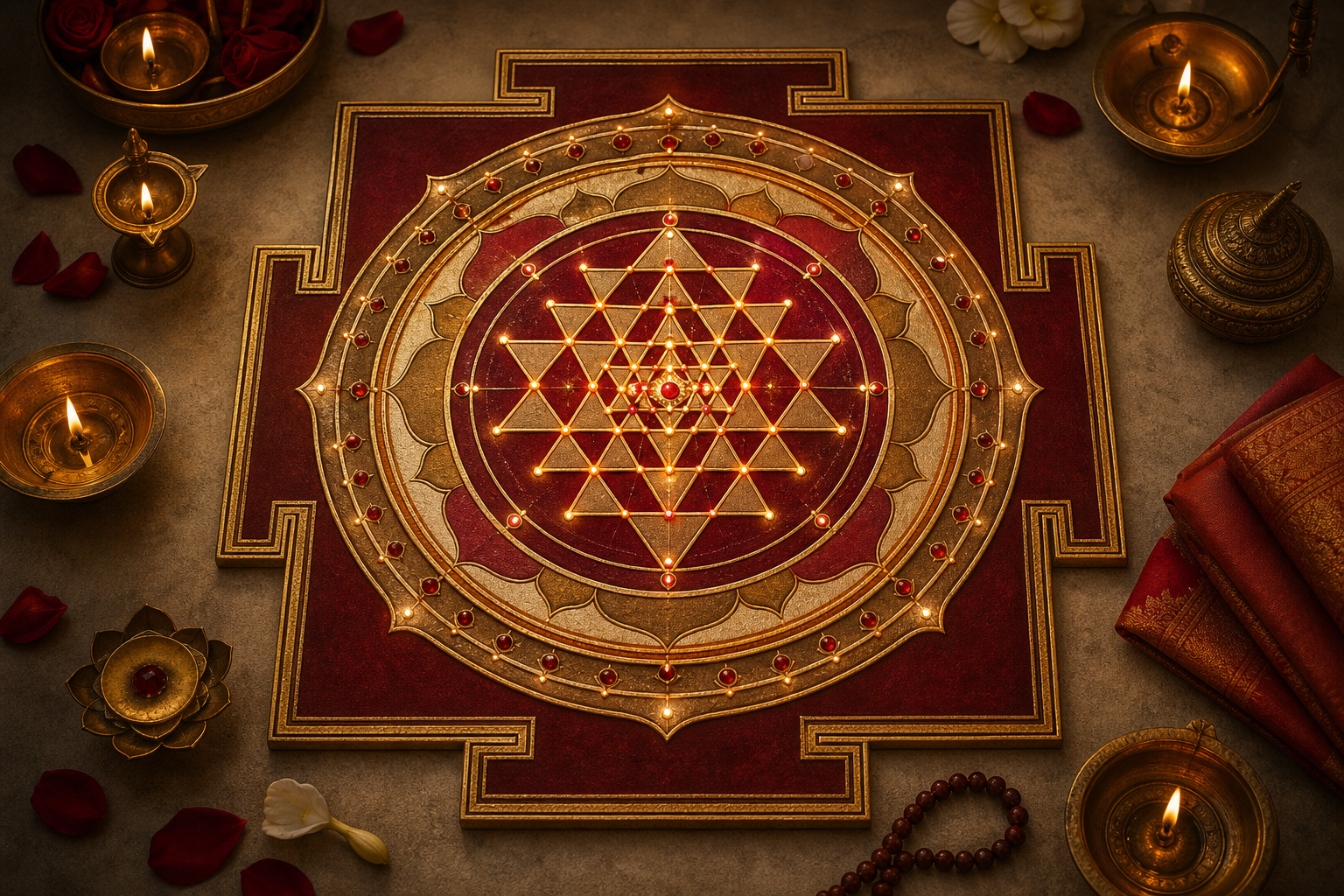
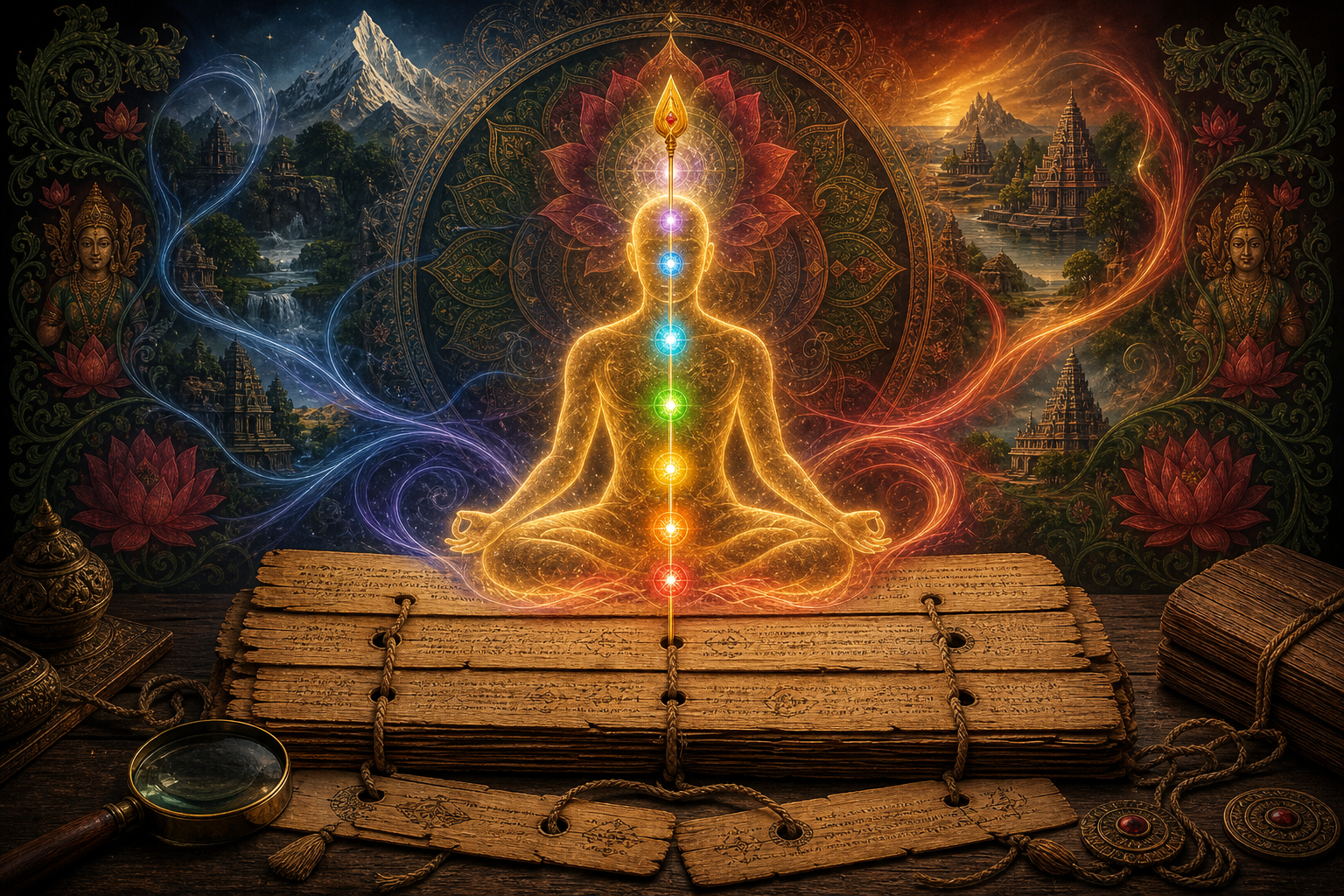
Vedas and Tantra are not adversaries but complementary avenues to the same truth, a reality long recognized across authentic lineages. This article traces their historical interdependence through the Agamas, Pancharatra, temple praxis, and Vedantic metaphysics to clarify why both are indispensable. It explains how mantra, yantra, mudra, nyasa, and Kundalini sadhana can integrate seamlessly with…
-
Why Red Rules Hindu Temples: Shakti, Auspiciousness, Ritual Power, and Color Science

Red in Hindu temples is far more than ornament; it is the visual pulse of Shakti, auspiciousness, and energized devotion. This article explains how scriptures, Agamic traditions, and Shakta Tantras align red with rajas and protective grace, while temple practices translate meaning into materials such as kumkum, sindoor, and red flowers. It examines the role…
-
Indrajit’s Final Penance: A Riveting Study of Dharma, Filial Loyalty, and Redemption in Ramayana

This long-form analysis explores Indrajit (Meghanada) as one of the Ramayana’s most complex figures—an invincible warrior confronting a profound dharmic dilemma between filial loyalty and moral law. Anchored in the Valmiki Ramayana and enriched by regional traditions such as the Krittivasi Ramayana, it explains how the Nikumbhila sanctuary—often associated with Kali—frames his final yuddha-yajna as…
-
Kalika Tandava Decoded: Shiva’s Eight‑Armed Cosmic Dance of Renewal and Liberation

Kalika Tandava presents Shiva’s eight‑armed dance as a rigorous map of cosmic processes and inner transformation. The iconography—Abhaya and Varada mudras, damaru, agni, trishula, kapala, and more—translates metaphysics into a readable visual grammar. Drawing on Shaiva Agamas, Shilpa‑Shastras, and the Natya Shastra, the form aligns creation and dissolution with a living rhythm practitioners can contemplate…
-
Laghu Shyamala: The Enigmatic Dark Goddess of Shakti, Speech, and Fertile Creation in Hinduism

Laghu Shyamala is honored as a dark-hued, esoteric form of the Divine Mother whose power concentrates knowledge, speech, creativity, and fertility. The name reveals an accessible pathway to Shakti, pairing the generative symbolism of “Shyamala” with the concise, practical emphasis of “Laghu.” Iconography—veena, parrot, book, and japa-mala—maps a theology of cultured eloquence and compassionate learning.…
-
Shukla Devi Puja 2026 on Jyeshta Shukla Ashtami: Sacred Timings, Kheer Bhavani, Complete Vidhi

Shukla Devi Puja (Shukla Devi Aradhana) in 2026 falls on 22 June, coinciding with Jyeshta Shukla Ashtami in the Hindu calendar. The day venerates the luminous, sattvika dimension of the Divine Mother and aligns with the Khir Bhavani Mela in Kashmir, where devotees traditionally offer kheer. The article explains how Ashtami tithi is computed, why…
-
Bhairava Unveiled: Symbolism, Meaning, Kala-Time Mastery, and Fearless Liberation

Bhairava Roopaya—named first in the Bhairava Sahasranama—presents Bhairava as the omnipresent intelligence of Shiva that creates, sustains, dissolves, conceals, and liberates. This long-form exploration decodes the name’s etymology (bhaya + rava and Bha–Ra–Va), connects it to the Shaiva pañcakṛtya, and situates it within Kashmir Shaivism’s non-dual vision and Vijnana Bhairava Tantra’s contemplative methods. Readers gain…
-
Aparajita, the Invincible: Ancient Hindu War Rites, Dharma-Yuddha Ethics, and Strategy

Aparajita—“the unconquered”—was venerated by kings, commanders, and communities as the victory-bestowing face of the Goddess in ancient India. The worship synchronized statecraft and spirituality, binding warfare to Dharma-Yuddha and Kshatra Dharma. Textual traditions linked Aparajita with Durga and embedded victory hymns from the Devi Mahatmya into pre-campaign rites. Rituals integrated muhurta selection, sankalpa, weapon consecration,…
-
Shoola vs Trishul: Decoding Sacred Weapons, Iconography, and the Timeless Power of Dharma

Shoola (single-pointed spear) and Trishul (three-pronged trident) are often confused, yet they carry distinct forms and meanings in Hindu iconography. This article clarifies how a spear encodes one-pointed discernment while a trident integrates triadic powers—iccha, jnana, kriya; the gunas; and the three dimensions of time. Readers learn to identify each implement swiftly at temples and…
-
Dashamahavidya Jayanti 2026–2027: Accurate Tithi Guide, Deep Meanings, and Home Puja Methods

This comprehensive guide to Dashamahavidya Jayanti 2026–2027 explains how the ten Jayantis of Mahatara, Matangi, Bagalamukhi, Chinnamastika, Dhumavati, Mahakali, Bhuvaneshwari, Kamala, Tripurabhairavi & Lalita are determined by tithi, with clear notes on regional calendar differences. It summarises widely observed tithis for each Mahavidya, indicates likely 2026–2027 Gregorian windows, and offers practical home-puja methods aligned to…
-
Hargauri Durga in Bengal: Uma’s Tender Homecoming and Her Sacred Union with Shiva

Hargauri Durga reframes Bengal’s Sharadiya devotion as Uma’s tender homecoming, with Shiva’s serene presence completing the sacred tableau. The piece decodes the Hara–Gauri archetype, clarifies its relationship to Mahishasura Mardini, and situates the tradition within Devi Paksha, from Mahalaya to Vijayadashami. It explains core rites—bodhana, nabapatrika, Sandhi Puja, Kumari Puja, and visarjan—while interpreting how they…
-
Chinnamasta Jayanti 2026: Fierce Shakti Awakening—Date, Tithi, Rituals, Deep Meaning

Chinnamasta Jayanti 2026 falls on 29 April and is observed on Vaishakh Shukla Trayodashi according to the Hindu calendar. This comprehensive guide explains the festival’s date–tithi alignment, its profound Mahavidya symbolism, and how householders can perform a sattvic, family-friendly puja at home. It connects Chinnamasta’s fierce wisdom to yogic themes of manipura chakra, kundalini, and…
-
When She Leads, She Builds: Shakti Leadership Uniting Hindu, Buddhist, Jain, and Sikh Paths

This essay examines Shakti-centered leadership across Hinduism, Buddhism, Jainism, and Sikhism, showing how women-led initiatives have historically built enduring institutions—temples, viharas, basadis, and gurdwaras—that function as knowledge commons and care infrastructures. It maps Journey and Destination across traditions—moksha, nirvana, kevala jñāna, and mukti—highlighting how aligned methods shape aligned outcomes. Case studies from Gargi and Maitreyi…
-
Nāda in Shaivism and Tantra: Unstruck Sound, Creation’s Pulse, and the Path of Awakening

Nāda in Shaivism and the Śākta Tantras is more than audible sound; it is the unstruck vibration that initiates creation, structures language, and guides contemplative practice. This article clarifies nāda’s role in the Shaiva triad of nāda–bindu–kalā, the four levels of speech, and the 36-tattva cosmology. It explains how Oṁ, the Maheshvara Sūtras, and the…
-
Bhadrakali Amman Unveiled: Sacred Iconography, Rituals, and Time-Transcending Philosophy

Bhadrakali Amman is presented as fierce grace: a guardian who unites auspiciousness with the transformative power of time. The analysis explains the etymology from Kala, the iconography of weapons and mudrās, and the ritual ecosystem of Amman worship in Tamil Nadu and Kerala. It highlights key festivals such as Attukal Pongala and the ethical turn…