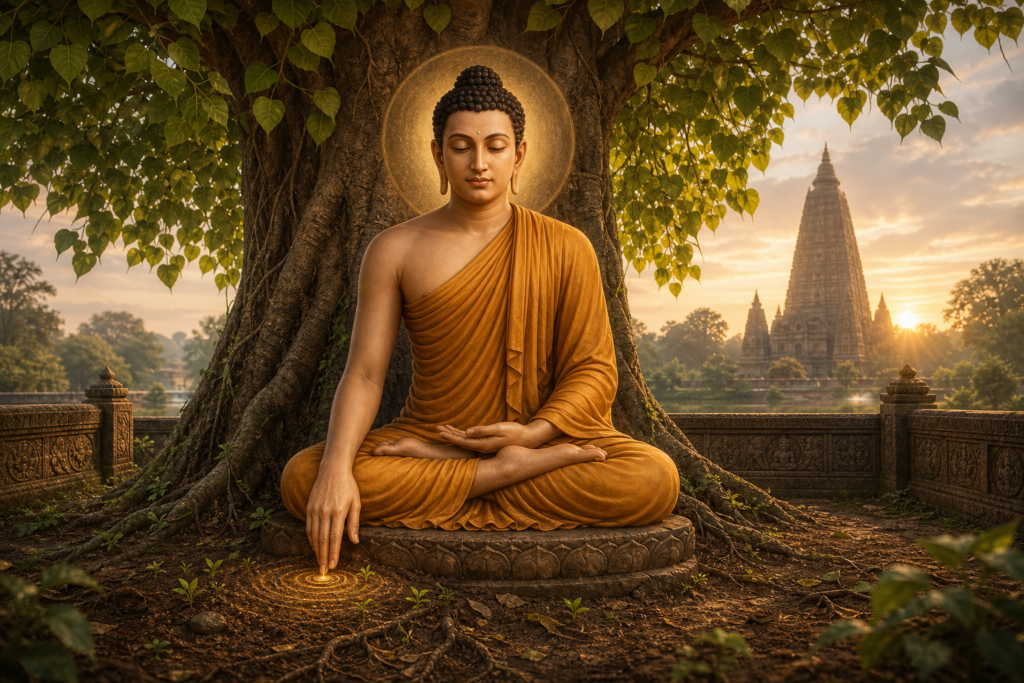
The Rishi Agastya–Lopamudra Kalyanam is traditionally located in the sacred Pothigai Hills of present-day Tamil Nadu, a landscape revered for millennia in Hindu memory. This divine marriage, celebrated in Hindu scriptures and regional lore, is remembered not only as a personal union but as a civilizational moment that harmonizes ascetic discipline with household wisdom, linking the spiritual geographies of North and South India.
Agastya Maharshi stands in the Vedic tradition as a pioneering sage whose presence bridges regions and knowledge systems. Associated with the spread of Vedic learning to the South, Agastya embodies tapas (disciplined austerity), insight, and a deep engagement with sacred ecologyattributes that the Pothigai Hills themselves symbolize in collective memory.
Ma Lopamudra, described as a princess of the Vidarbha Kingdom, is celebrated as a learned figure whose voice appears in dialogic form in the Rigveda. Her intellectual stature, alongside Agastya’s, reflects an ancient valuation of women’s scholarship in Hindu thought. The Kalyanam thus becomes a convergence of two streams of wisdom: the contemplative rigor of a rishi and the luminous learning of a rajarshi’s daughter.
Tradition remembers their son, Dridhasyu, as a gifted poet, underscoring the continuity of Vedic learning within the grihastha (householder) ideal. This lineage conveys a key message: knowledge, when nurtured within a life of duty and mutual respect, naturally flowers into creative and ethical expression.
The symbolism of this marriage is profound. Agastya’s tapas aligns with steadfast discipline, while Lopamudra’s vidya (knowledge) represents refined insight; together, they portray a holistic model of dharma. Set against the sanctified backdrop of the Pothigai Hills, the narrative highlights how sacred geography and spiritual partnership mutually reinforce a Vedic vision of balanced living.
Across the broader dharmic familyHinduism, Buddhism, Jainism, and Sikhismthis ideal resonates through shared ethical motifs: disciplined living, compassionate action, and the cultivation of wisdom within community. The Kalyanam narrative thus serves as a unifying touchstone, affirming that household responsibility and inner renunciation are complementary, not opposed, in the pursuit of liberation and societal harmony.
For contemporary readers, the account offers practical guidance. Mutual respect between partners, equal regard for education, and reverence for nature echo through the story, inviting reflection on how spiritual values can inform daily life. The Pothigai Hills, in this light, are not only a site of memory but a reminder of ecological stewardship integral to dharmic living.
In terms of sources and remembrance, the episode is anchored in Vedic literature, later Puranic retellings, and regional traditions that honor Agastya Maharshi and Lopamudra Mata. Whether encountered through temple lore, pilgrimage narratives, or study of the Rigveda, the Kalyanam speaks with enduring relevance: a sacred union that models balance between knowledge and austerity, devotion and duty, and ultimately, the many paths of dharma moving in concord.
Inspired by this post on Hindu Pad.