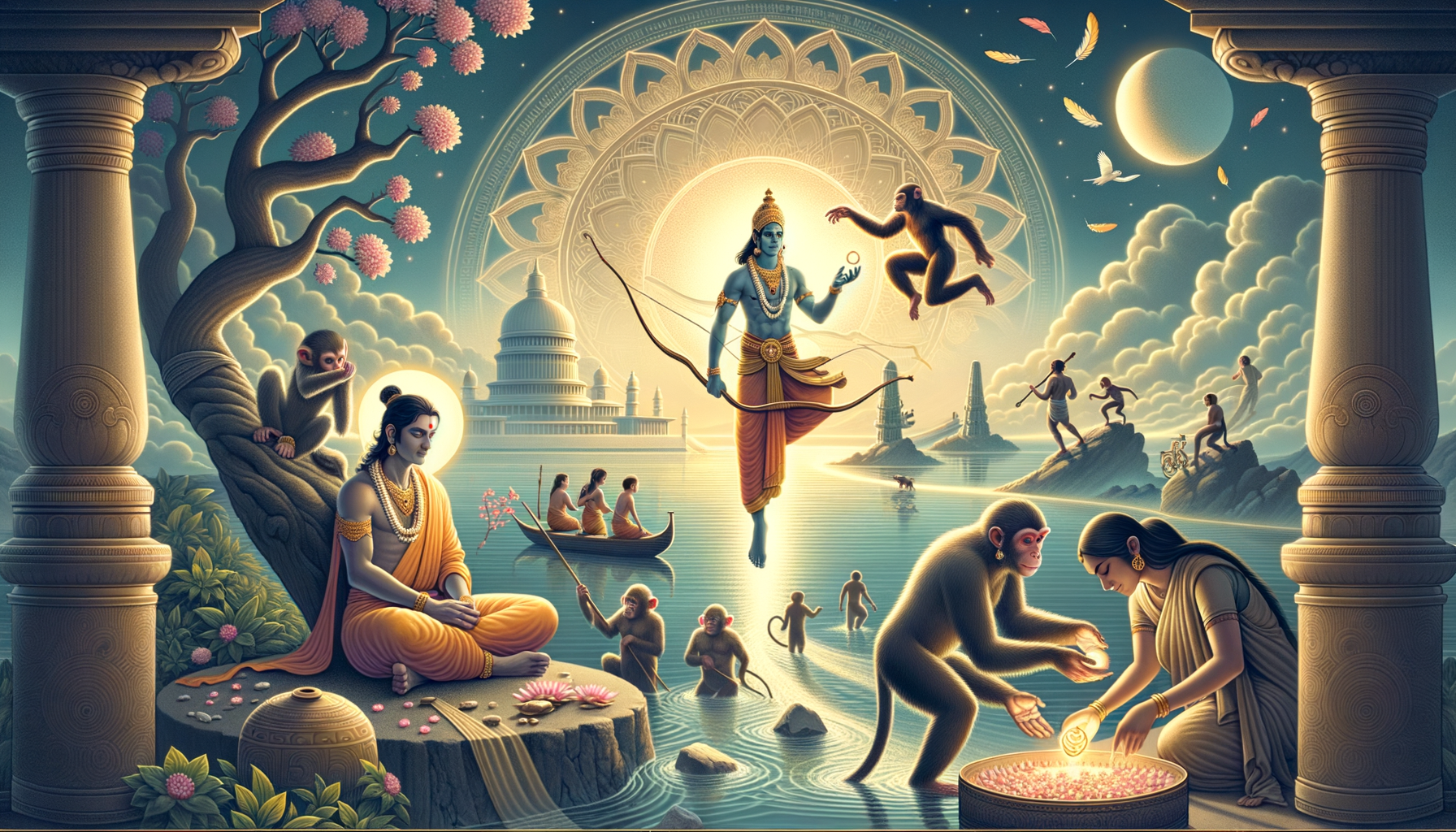
The Ramayana, attributed to Valmiki, stands as an ancient Indian epic that continues to guide ethical reflection and cultural memory across South Asia. As one of the two major Sanskrit epics alongside the Mahabharata, it presents a compelling narrative centered on Prince Rama, Sita, and Hanuman while advancing enduring principles of dharma, devotion, and just leadership. Readers frequently turn to these key episodes not only for literary richness but also for practical wisdom that resonates across Hinduism, Buddhism, Jainism, and Sikhism, strengthening a shared civilizational heritage.
The early arc of the epic establishes Rama’s virtues and the ideals of Ayodhya. Episodes such as the redemption of Ahalya through Rama’s compassion and the swayamvara of Sitawhere Rama breaks the bow of Shivaaffirm themes of grace, courage, and rightful conduct. These foundational moments invite readers to consider the balance between personal restraint and decisive action, key to understanding the epic’s consistent emphasis on ethical clarity.
The exile (vanvas) marks a decisive shift from royal comfort to moral testing. Rama, Sita, and Lakshmana’s forest years highlight disciplined simplicity and steadfast loyalty. Encounters with Śūrpaṇakhā, the ruse of the golden deer, and Sita’s abduction by Ravana reveal how desire and deception destabilize order. The sacrifice of Jatayu, who falls defending Sita, offers a moving meditation on duty beyond self-interest. The alliance in Kishkindha with Sugriva demonstrates strategic cooperation grounded in trust, a lesson in forging ethical partnerships during crisis.
The Sundara Kanda captures the devotional and heroic heart of the narrative. Hanuman’s ocean-leap, discovery of Sita in Aśokavana, and delivery of Rama’s ring embody courage anchored in service (seva) and unwavering bhakti. The burning of Lanka is framed not as vengeance but as a signal of truth and accountability. Many readers find these scenes emotionally resonant, seeing in Hanuman’s focus a timeless model for aligning strength with humility and sacred purpose.
The march to Lanka and the construction of the Rama Setu with the Vanara Sena exemplify disciplined teamwork and moral resolve in confronting adharma. Counsel from Vibhishana, who chooses righteousness over kinship, underscores the Ramayana’s insistence that ethical judgment must prevail over personal ties. The culmination in the battle of Lanka and Ravana’s downfall is presented as a Dharma-Yuddhaan ethical warguided by proportion, intention, and responsibility. These episodes continue to inform contemporary discussions on leadership, justice, and the limits of force.
The return to Ayodhya and the coronation inaugurate the ideal of Ram Rajya, a paradigm of governance attentive to welfare, transparency, and fairness. Across dharmic traditions, these values find convergences: Jain renderings emphasize self-restraint and ahimsa; the Buddhist Dasaratha Jataka foregrounds ethical kingship and compassion; Sikh reflections uplift maryada (discipline) and seva (service). The Ramayana thus becomes a shared touchstone, encouraging unity in diversity while celebrating distinct spiritual insights within a common ethical horizon.
Engaging with these defining episodes offers practical benefits for students, educators, and seekers alike. The narrative scaffolds discussions on duty within family and society, the meaning of righteous leadership, the power of truthful speech, and the transformative role of devotion. Readers often connect emotionally with the epic’s archetypal journeysfrom exile to return, loss to recoveryfinding in them guidance for resilience and moral clarity. Approached as a living text, the Valmiki Ramayana illuminates a shared civilizational vocabulary that strengthens interrelated traditions and fosters harmony across the broader dharmic community.
Inspired by this post on Hindu Pad.