-
Govardhan’s Sacred Vow: The Powerful Link Between Rama, Krishna, and Dharma

The story of Govardhan across Treta Yuga and Dvapara Yuga reveals a powerful connection between Sri Rama and Sri Krishna. In devotional tradition, Govardhan longed to serve Rama during the building of Rama Setu but was promised future fulfillment. That promise is completed when Krishna lifts Govardhan to protect Vraja from Indra’s storm. The narrative…
-
Pampa Lake in the Ramayana: Sacred Waters, Exile, and the Power of Devotion

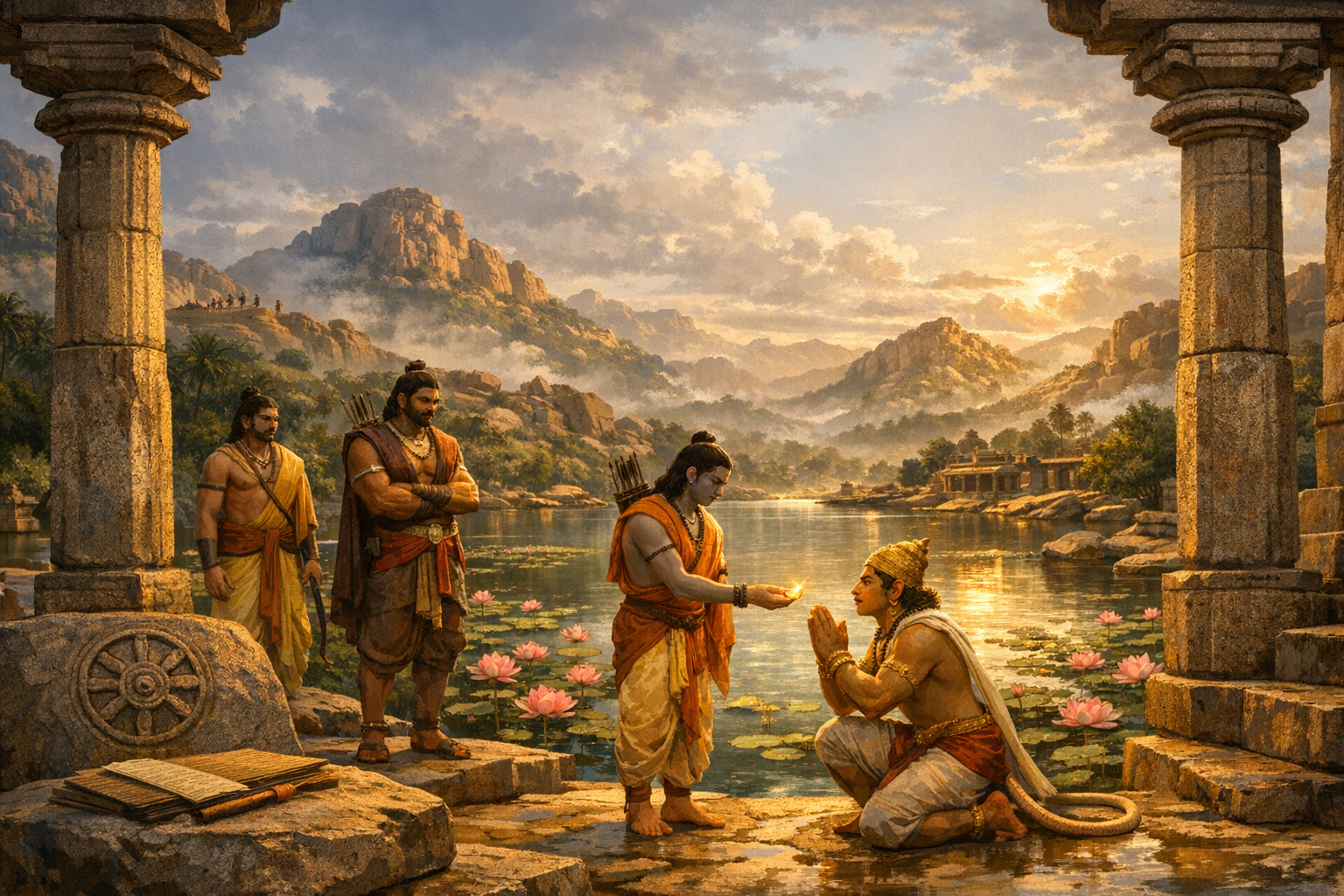
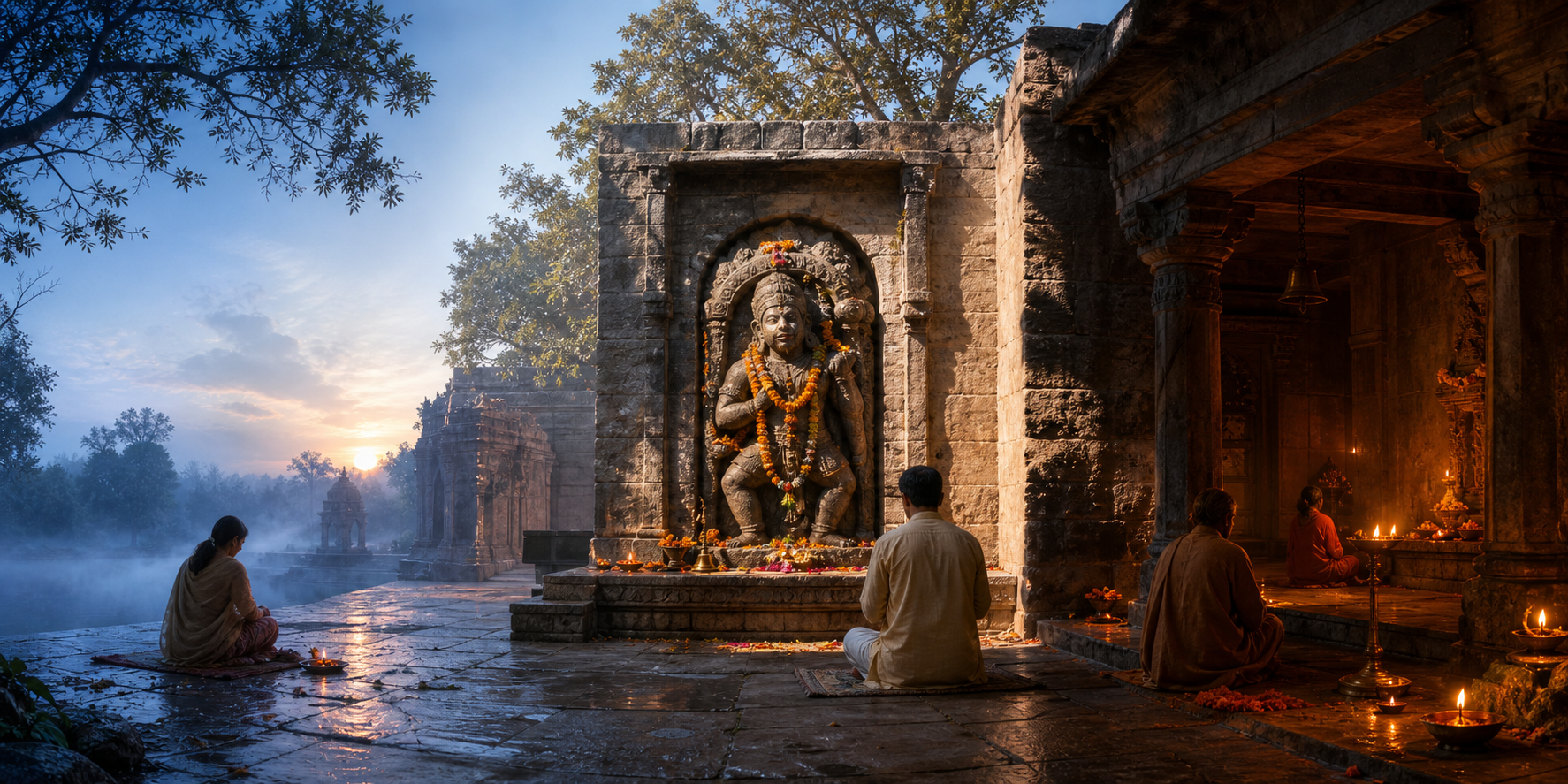
Pampa Lake, traditionally identified with the Kishkindha region near present-day Hampi and Anegundi in Karnataka, holds a profound place in the Ramayana. It is the sacred landscape where Sri Rama’s grief for Sita deepens, Shabari’s devotion finds fulfillment, and the first steps toward the alliance with Hanuman and Sugriva begin. The episode reveals how natural…
-
Hanubhairav: Powerful Symbolism of Hanuman and Bhairava’s Fierce Sacred Unity

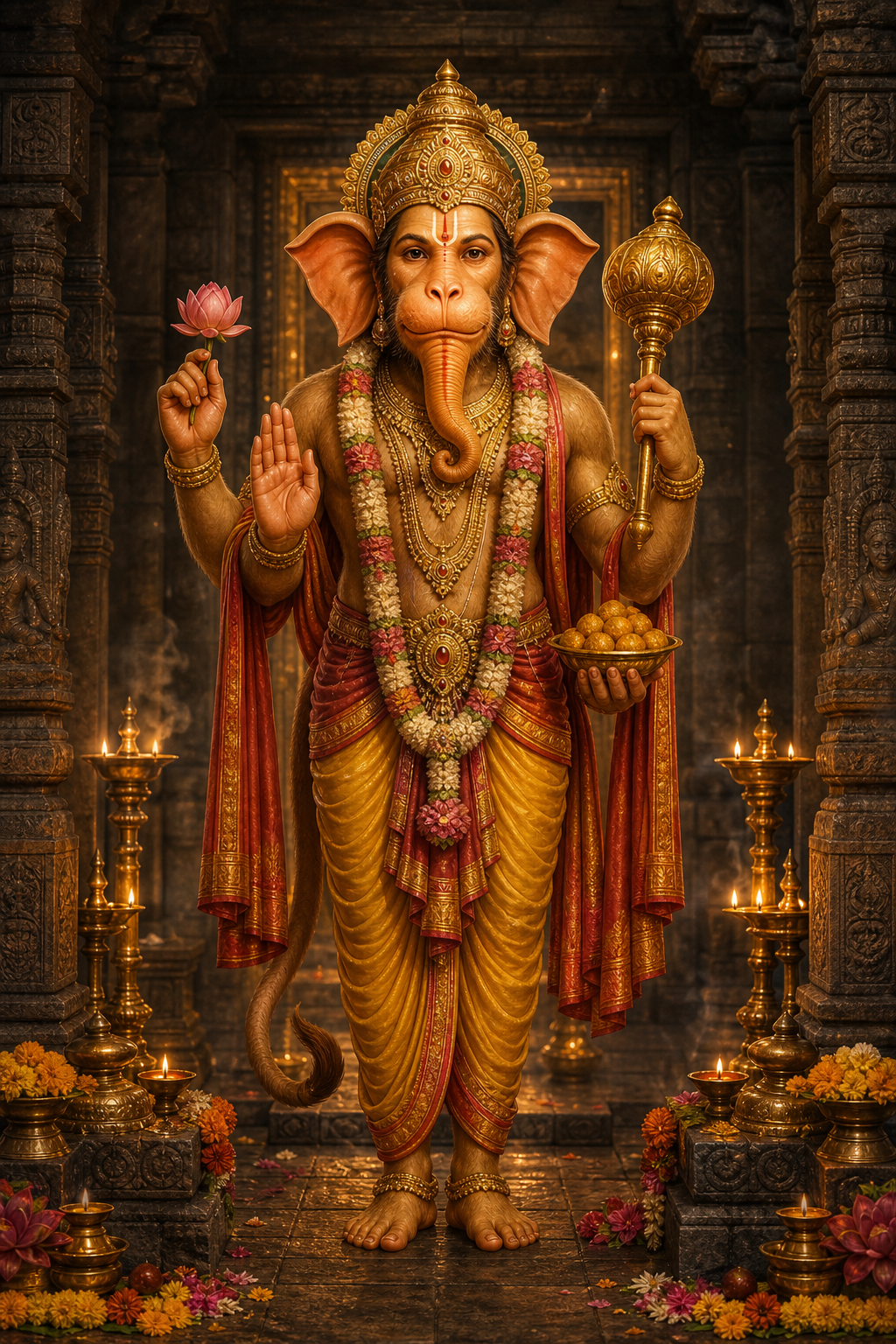
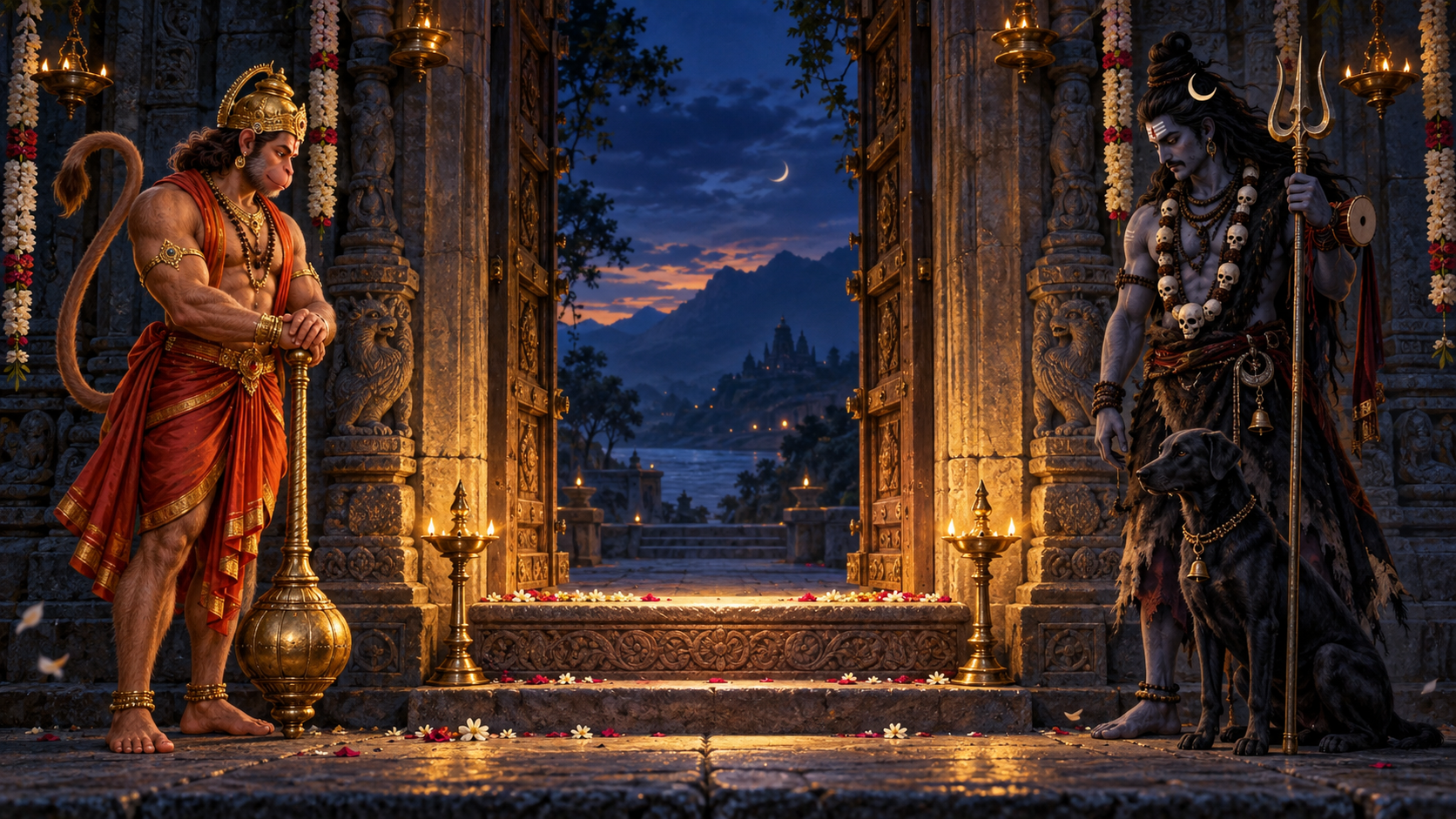
Hanubhairav represents the powerful symbolic union of Hanuman’s unwavering devotion and Bhairava’s fierce protective force. This long-form exploration explains the form as a devotional-tantric synthesis rather than a universally standardized Puranic avatara. It examines Hanuman’s bhakti, Bhairava’s Shaiva symbolism, and the deeper meaning of courage, discipline, ego-destruction, and sacred guardianship. The article also clarifies how…
-
Why Every Ramayana Is Incomplete: The Powerful Living Tradition of Rama

The Ramayana is often treated as a single familiar story, but its real tradition is far wider and deeper. Valmiki’s Sanskrit Ramayana, Tulsidas’s Ramcharitmanas, Kamban’s Tamil epic, Jain and Buddhist retellings, Southeast Asian adaptations, and folk performances all reveal different dimensions of Rama Katha. This article explains why every Ramayana is complete within its own…
-
Nava Chiranjeevis: Powerful Lessons from Hinduism’s Immortal Witnesses

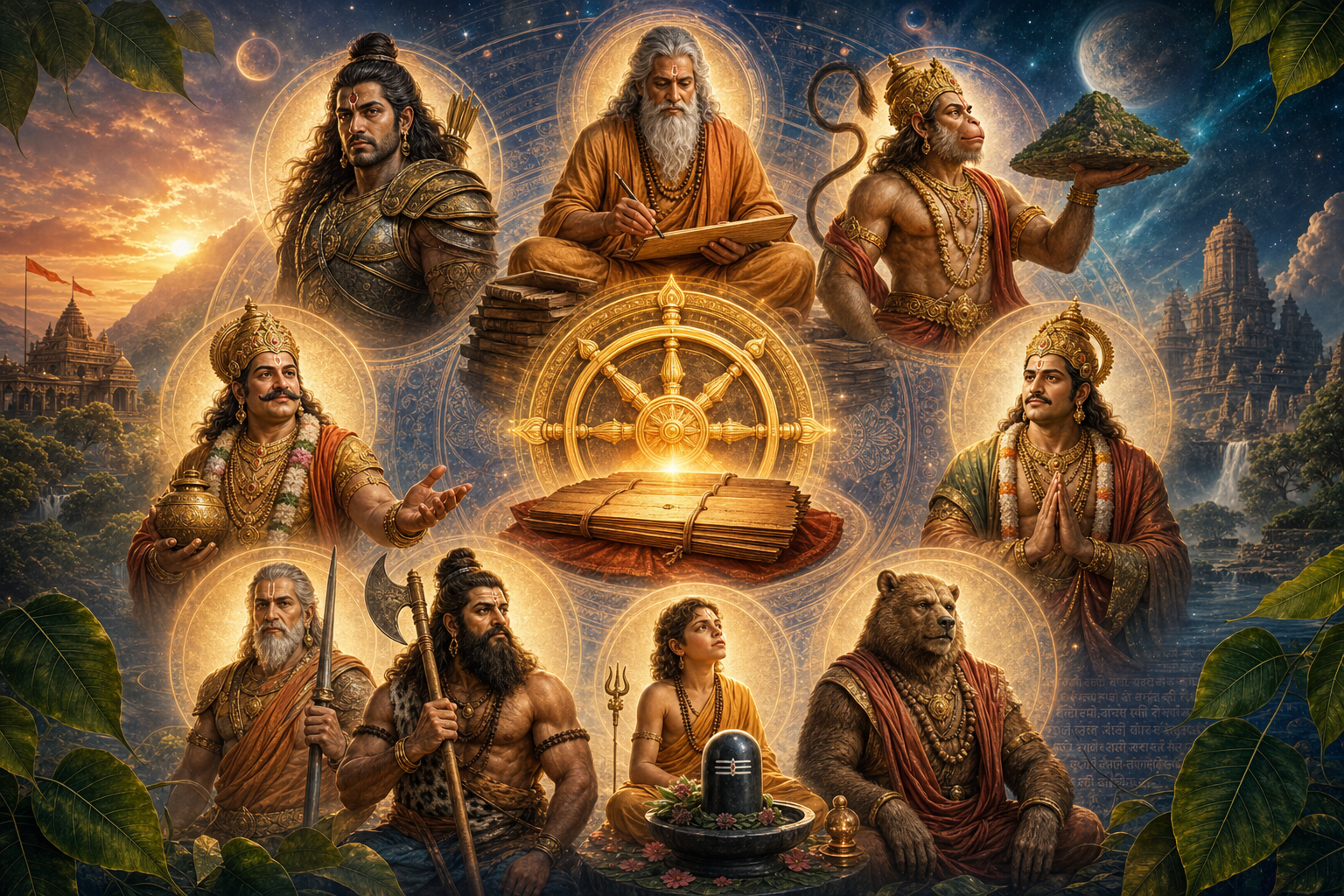
The Nava Chiranjeevis, or Nava Sanjivis, are the nine enduring witnesses of Hindu Puranic and Itihasa tradition. Their stories show that immortality in Hinduism is not merely endless life, but a deeper responsibility shaped by dharma, memory, devotion, knowledge, and consequence. Ashwatthama, Mahabali, Veda Vyasa, Hanuman, Vibhishana, Kripacharya, Parashurama, Markandeya, and Jambavan each preserve a…
-
Suchindram’s Sacred Hanuman Tail: Why the Butter Offering Still Moves Devotees

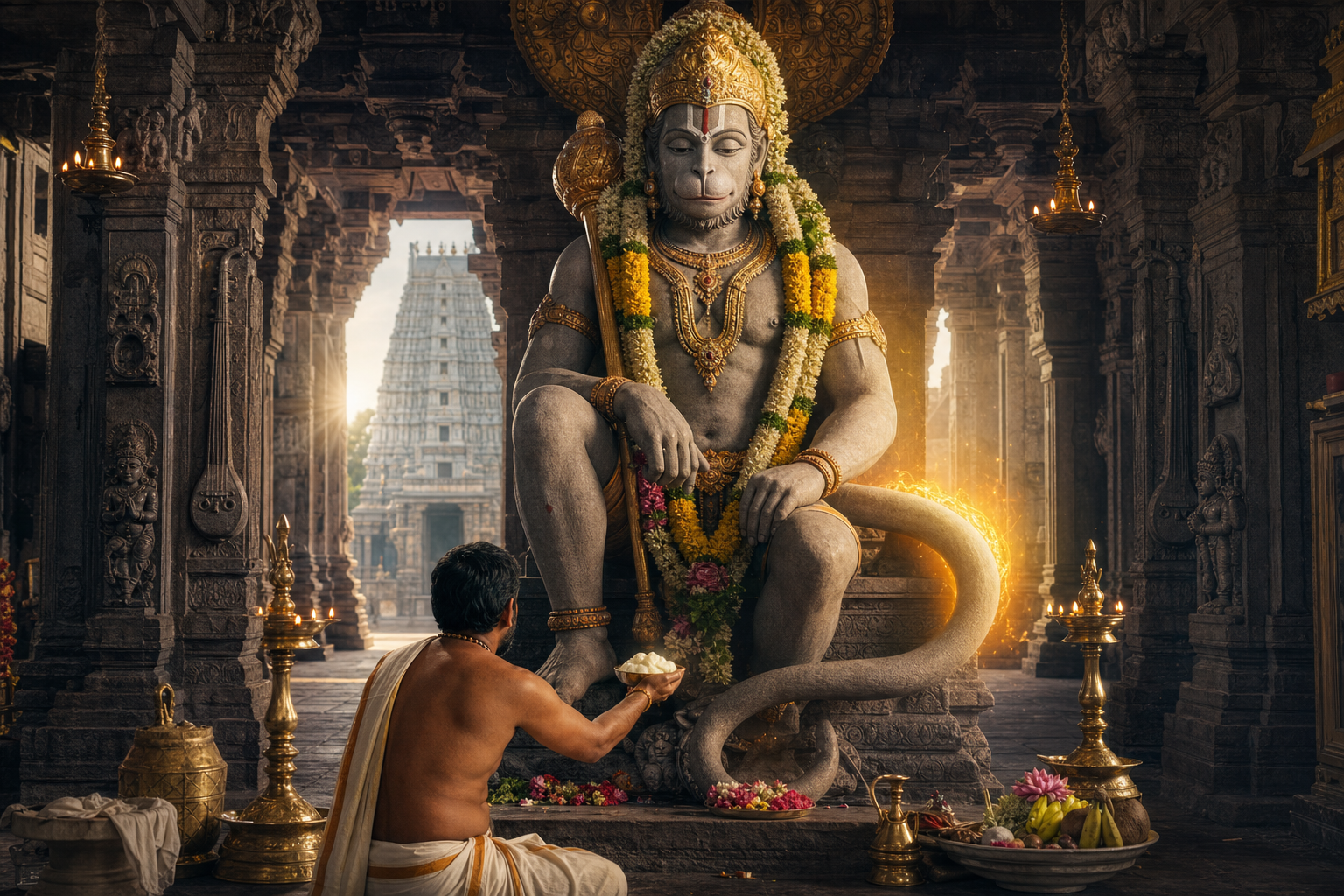
Suchindram Temple near Kanyakumari is one of Tamil Nadu’s most remarkable sacred spaces, known for the Sthanumalayan form that unites Shiva, Vishnu, and Brahma. Its Hanuman shrine preserves a deeply moving devotional tradition: the offering of butter associated with cooling the sacred memory of Hanuman’s burning tail in the Ramayana. This practice reveals how ritual,…
-
When Hanuman’s Bhakti Moved Narasimha: Karanja Ahobilam’s Miracle, Iconography, Legacy

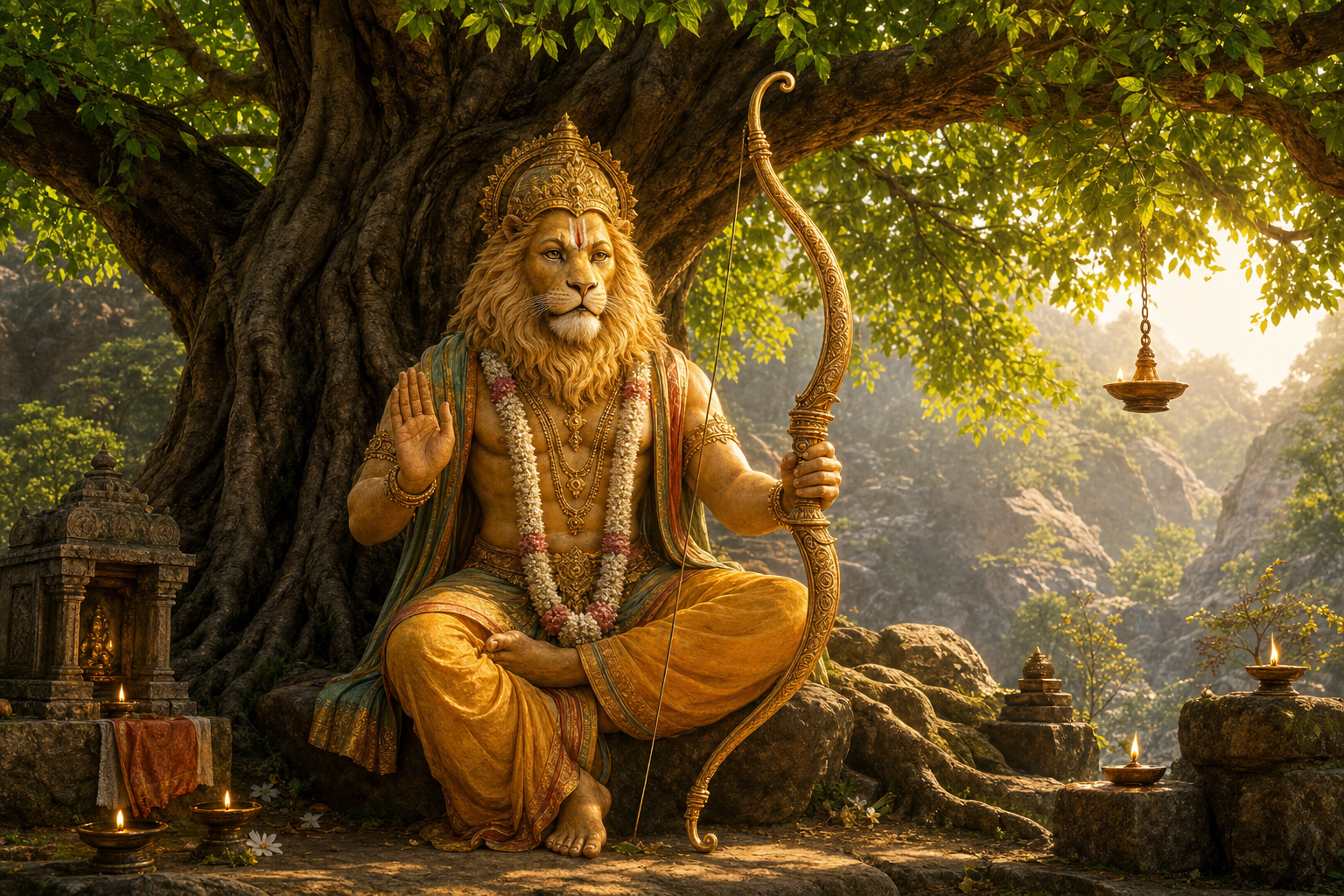
Set in the Nallamala Hills of Andhra Pradesh, this study explores Karanja Narasimha at Ahobilam, where a cherished legend narrates how the Lord adapts form to honor Hanuman’s unwavering devotion to Sri Rama. It unpacks narrative variants, explains the iconographic significance of the bow, and situates the shrine within the Nava Narasimha circuit. Readers gain…
-
Why Devas Drink Amrita While Asuras Wield Sanjeevani Vidya: The Timeless Balance of Dharma

This article decodes why Hindu narratives pair Amrita with Sanjeevani Vidya as complementary boons that create a dynamic equilibrium between Devas and Asuras. It explains Samudra Manthan’s mechanicsMandara, Vasuki, and Kurmaand the ethical meaning of Shiva as Neelakantha. Readers learn how Dhanvantari’s Amrita and Shukracharya’s Sanjeevani Vidya prevent any single force from achieving unchecked dominance.…
-
Unveiling Lankini (Lankalakshmi): Lanka’s Fierce GuardianIconography, Myth, and Spiritual Power

Lankinialso known as Lankalakshmiappears in the Sundara Kanda as the fierce yet discerning guardian of Lanka’s gate. Her encounter with Hanuman marks the withdrawal of fortune from adharma and the redirection of śrī toward a righteous mission. Iconographically, she aligns with threshold guardians (dvarapalikas), typically shown with martial attributes and a vigilant stance; regional traditions…
-
Mahiravana and Ahiravana Unmasked: Untangling Folk Ramayanas, Patala Sorcery, and Panchamukhi Hanuman

Are Mahiravana and Ahiravana one demon or two? This long-form, academically grounded exploration surveys medieval vernacular Ramayanas, regional theatre (from Ramlila to Yakshagana), and Southeast Asian tellings to clarify how the Patala episode evolved beyond the Valmiki Ramayana. It explains why most traditions treat the names as interchangeable while some stage lineages present them as…
-
Hanuman’s Honeybee Stratagem: Foiling Mahiravana in Patala to Save Rama and Lakshmana

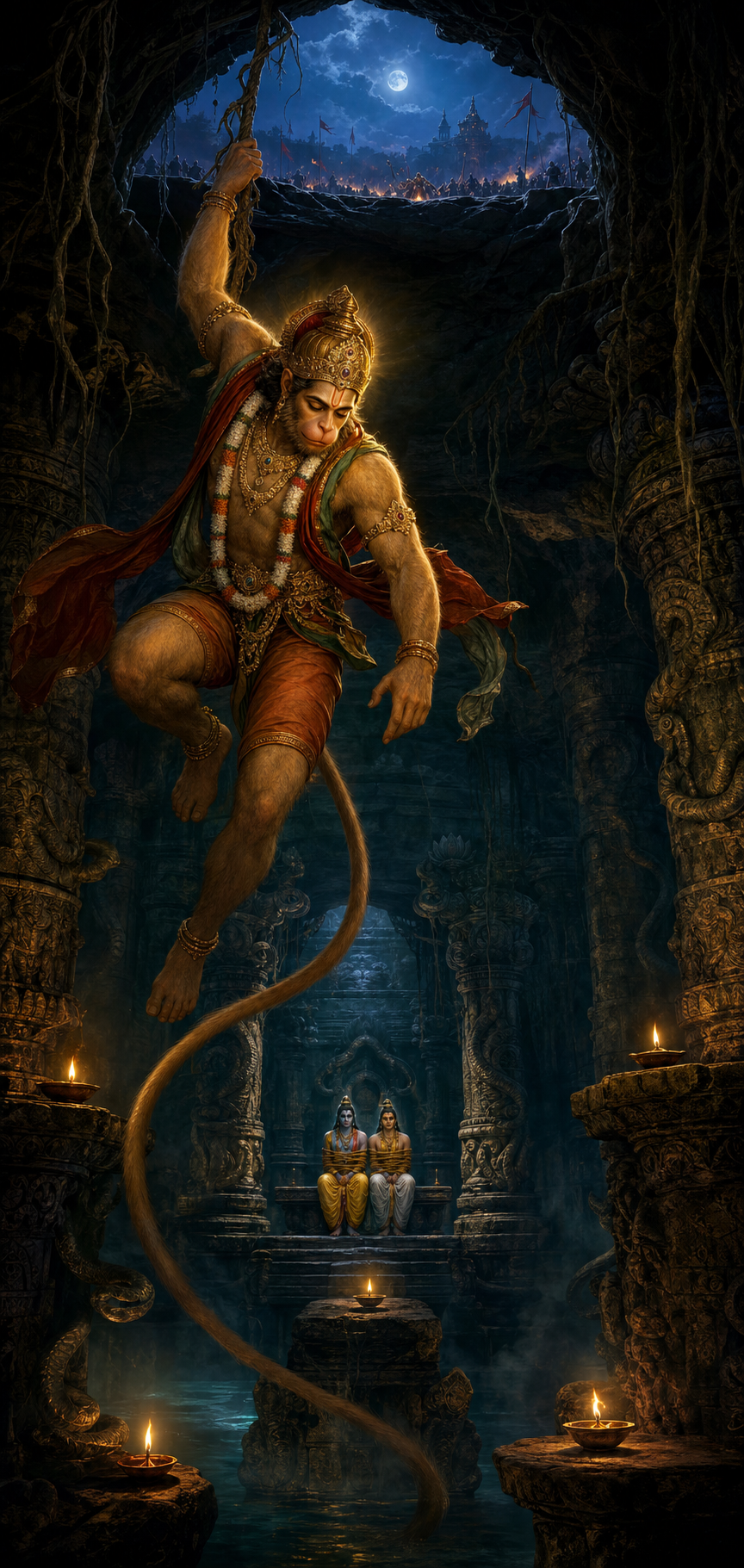
This long-form analysis narrates how Hanuman’s honeybee form and Panchamukhi manifestation foil Mahiravana’s Patala ritual to rescue Rama and Lakshmana. It situates the episode in later and regional Ramayana traditions, clarifying its relationship to Valmiki while highlighting its wide cultural reception in performance and temple iconography. The essay unpacks Patala cosmology, the five-lamp life-bond, and…
-
Hanuman’s Tail-Dome and the Underworld Duel: Mahiravana’s Deception and a Dharmic Rescue

This analytical retelling explores the Mahiravana (Ahiravana) episode from later Ramayana traditions, where Hanuman’s innovative “tail-dome” defense is outwitted by a master of illusion and redeemed by a precise, dharmic rescue in Patala. It situates the story within regional Ramayana literatures, clarifies iconography around Panchamukhi Hanuman, and explains the technical constraint of extinguishing five life-lamps…
-
Makaradhwaja and Hanuman’s Karmaphala: Unveiling Dharma, Lineage, and the Fire of Lanka

This essay offers a scholarly, engaging reading of Makaradhwajathe wondrous “son of Hanuman” said to arise from sweat after the Lanka Dahanaas a profound meditation on karmaphala in the Ramayana tradition. It clarifies that the tale is absent from the Valmiki Ramayana and instead flourishes in later and regional sources such as the Krittivasi Ramayan,…
-
Inside the Impregnable: Golden Walls, Iron Gates, and Hanuman’s Reconnaissance of Lanka

This long-form analysis situates Hanuman’s reconnaissance in the Yuddha Kāṇḍa of the Valmiki Ramayana as a precise military assessment of Lanka’s defenses. It explains Lanka as a classic jala-durga (water fort), where golden walls and iron gates combine spectacle with deterrence. Readers gain a technical view of fortification-in-depth, early-warning systems, ordnance such as śataghnī, and…
-
Rama on Hanuman, Lakshman on Angada: Decoding Yuddha Kanda Strategy and Sacred Symbolism

This study examines Rama’s march to Lanka through the dual lenses of strategy and symbolism in the Yuddha Kanda. It traces how intelligence from Sundara Kanda matured into a disciplined campaign: ritual diplomacy with the ocean, Nala’s engineering of Rama Setu, and Sugriva’s team-of-teams command across a high-mobility Vanara army. It clarifies that Valmiki does…
-
Kishkindha Kanda Unveiled: Hampi’s Sacred Landscape, Dharma Debates, and Hanuman’s Rise

Kishkindha Kanda (Book IV of the Valmiki Ramayana) forges the Rama–vanara alliance, situates the narrative in the sacred Hampi–Anegundi landscape, and prepares the ground for Hanuman’s mission. Readers gain a clear map of key episodesthe pact with Sugriva, Vali-vadha’s dharma debate, Sugriva’s coronation, the monsoon interlude, and the strategic dispatch of search parties. The analysis…
-
Kishkindha Kanda Unveiled: Rama–Hanuman Alliance, Vali’s Fall, and Hampi’s Sacred Landscapes

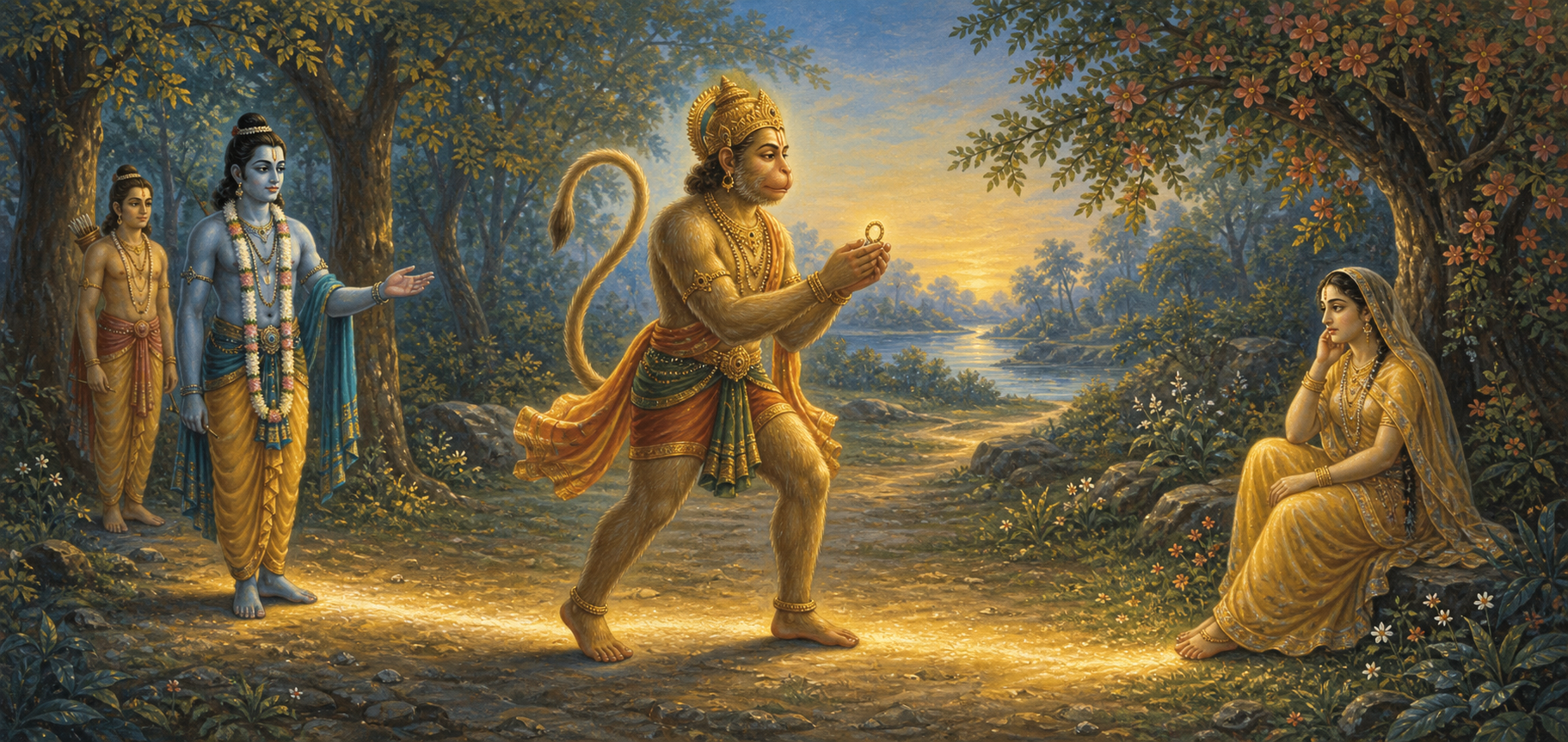
Kishkindha Kanda, the fourth book of the Valmiki Ramayana, turns grief into disciplined action as Rama allies with Sugriva, brings down Vali, and launches a continent-spanning search for Sita. Set against the sacred landscapes around Hampi–Anegundi in Karnataka, it blends political acumen, ethical debate, and ecological poetics. The kanda highlights exemplary speech and statesmanship through…
-
Kapi Dhvaja Unveiled: How Hanuman on Arjuna’s Banner Powered Dharma at Kurukshetra

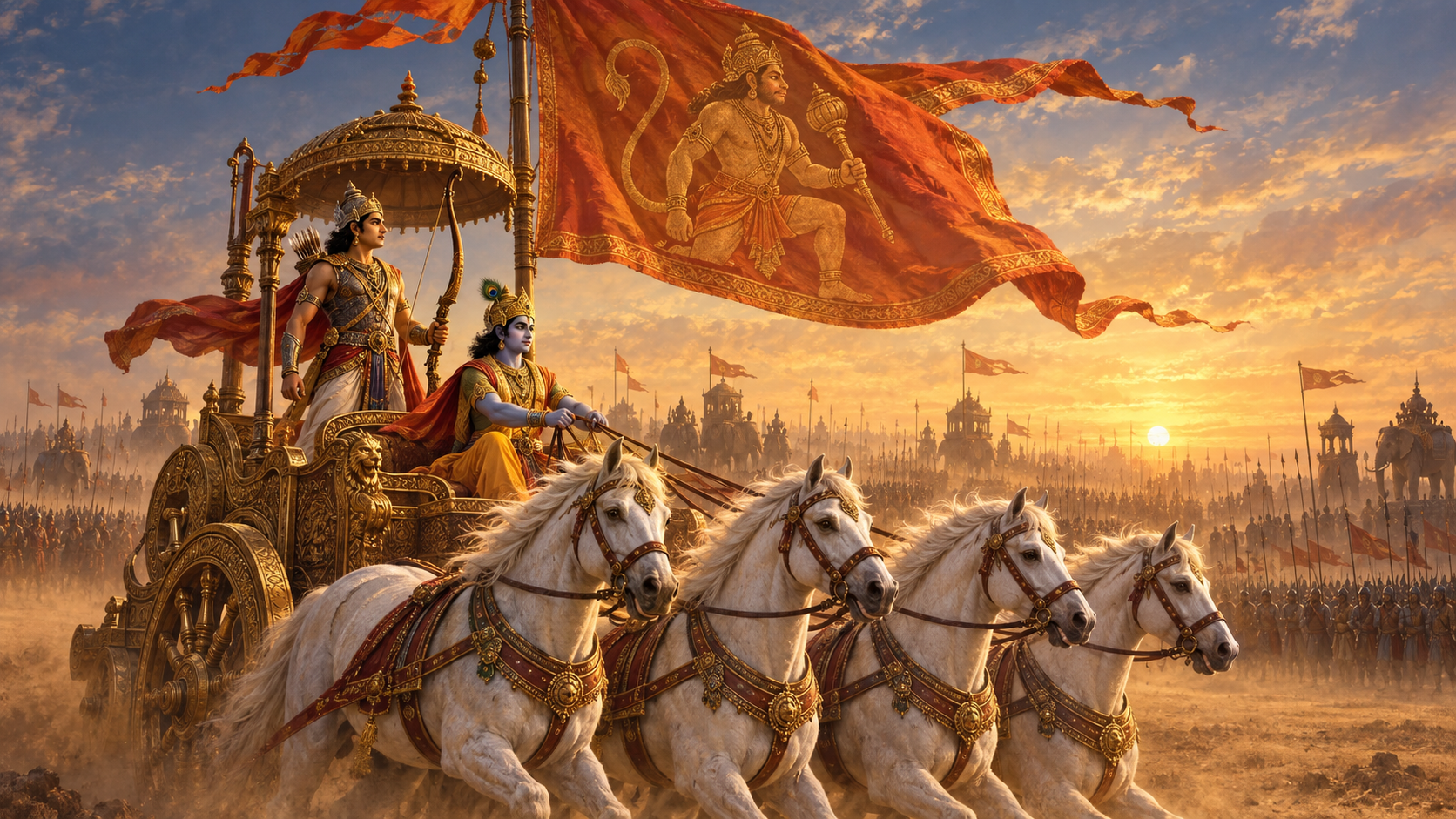
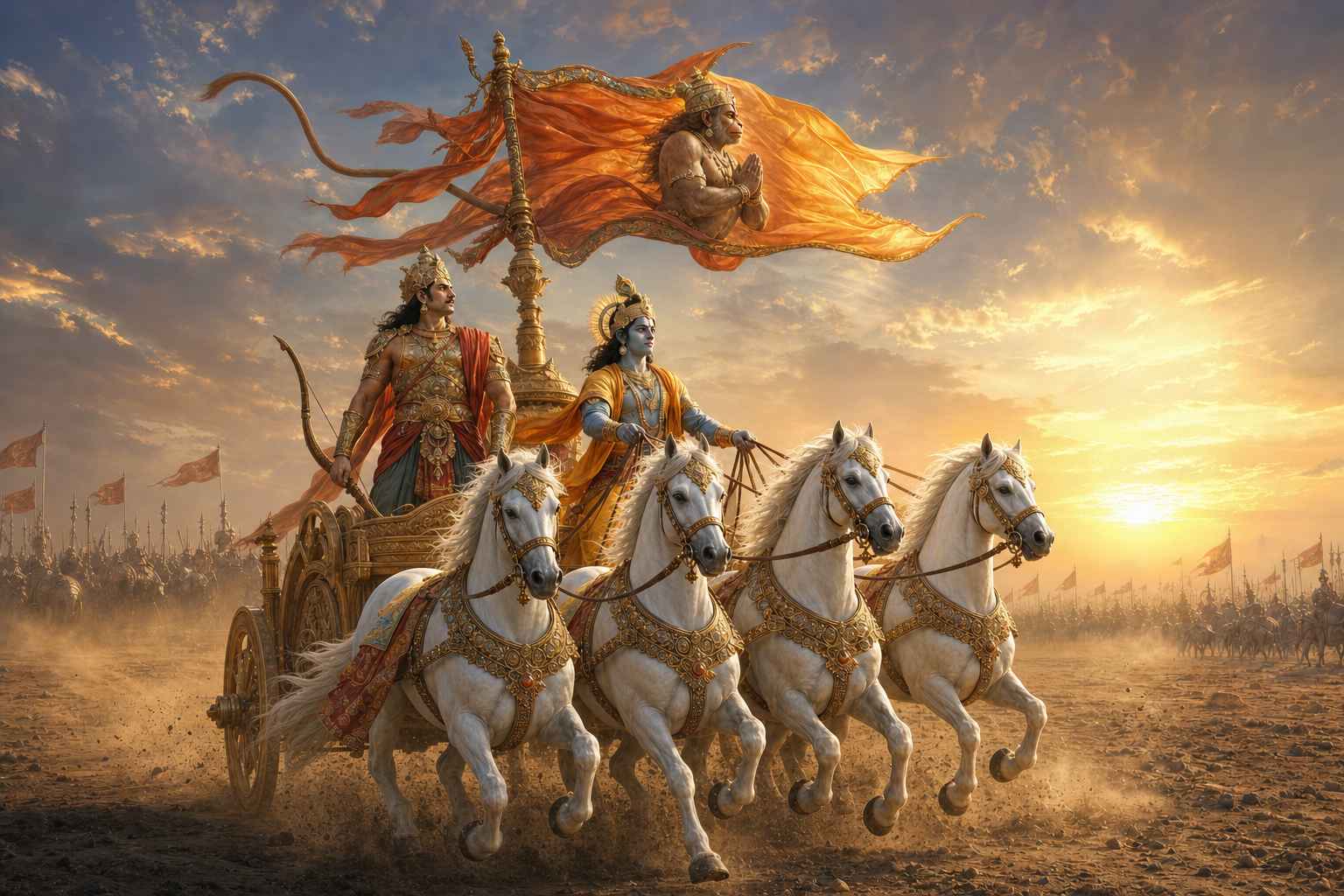
Arjuna’s Kapi Dhvajathe “ape-banner” of Hanumananchors the Bhagavad Gita’s battlefield in a powerful blend of scripture, strategy, and spirituality. The term kapidhvajaḥ in Gita 1.20 is not decorative; it signals divine sanction, morale-building semiotics, and an ethic of service above strength. Traditional lore explains Hanuman’s presence as a boon following Arjuna’s humility before Krishna, binding…
-
Hanumath Kalyanam Explained: Why Hanuman Weds SuvarchalaTexts, Symbolism, Ritual Life

Hanumath Kalyanam asks a striking question: why would a nitya-brahmachari like Hanuman marry? This exploration traces the South Indian legend in which Suvarchalaborn of Surya Bhagavan’s Varchasweds Hanuman, while his vow of brahmacharya remains intact. It clarifies that the Valmiki Ramayana is silent on this motif, which emerges richly in regional sthala-puranas and temple kathas.…