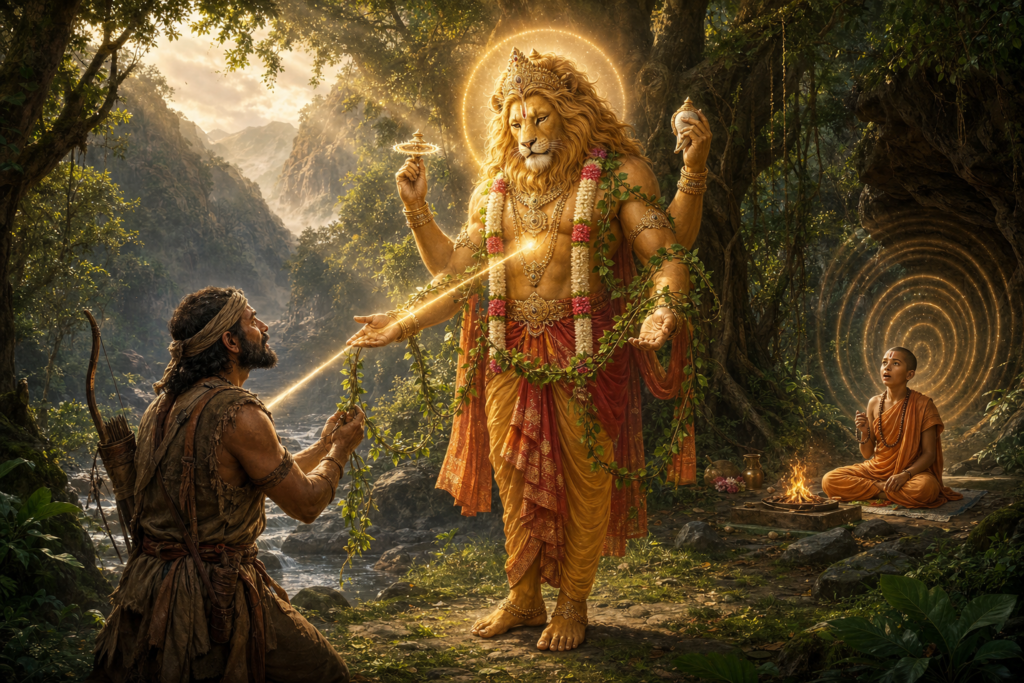
Artabhakti, literally the devotion of those in distress, denotes a powerful mode of bhakti in Hinduism that arises when a person seeks divine protection amid deep trouble. In the Bhagavad Gita (7.16), the artaone of four types of devoteesturns to the Divine in moments of acute suffering. This emotionally charged surrender is not viewed as lesser bhakti; rather, it is recognized as a potent catalyst for a profound connection with the sacred.
Scholars and practitioners alike note that states of crisis often dissolve ordinary defenses and narrow the mind toward one-pointedness. This sharpening of attention, combined with the vulnerability of the heart, naturally intensifies śaraṇāgati (surrender). In such moments, prayer, mantra, and remembrance frequently become spontaneous, transforming pain into a direct avenue for grace and inner strength.
Classic examples in Hindu scriptures illustrate the living power of Artabhakti. The Gajendra narrative in the Bhagavata Purana, often called Gajendra Moksha, depicts an elephant king seized by a crocodile who, in utter helplessness, offers a lotus and calls out to Vishnu. The response is immediate and compassionate: divine intervention arrives as liberation. The episode presents distress not as a barrier to devotion but as the very ground where devotion awakens with clarity and urgency.
Other exemplars deepen this insight. In the Mahabharata, Draupadi’s desperate appeal to Krishna during the vastraharana episode evokes divine protection beyond human capacity. In Srimad-Bhagavatam, Kunti’s prayers reveal how adversity fosters constant remembrance. Across the Ramayana and the Puranas, such moments of crisis underscore the same principle: when the heart turns wholly to the Divine, help and insight arrive in forms visible and invisible.
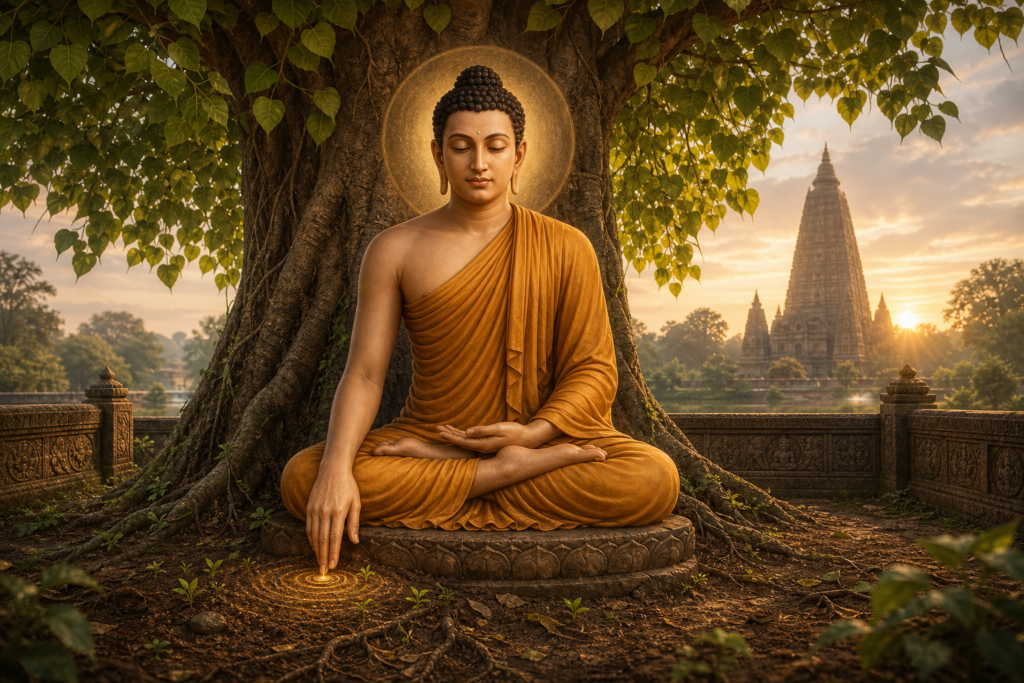
Resonances of Artabhakti can be discerned across the broader dharmic family. In Buddhism, the practice of taking refuge during periods of fear and suffering reflects a shared ethos of turning toward truth as a source of liberation. In Jainism, recitation of the Navkar Mantra in hardship centers the practitioner in non-violence, humility, and equanimity. In Sikhism, Ardas channels collective and personal supplication, transforming anguish into courage, trust, and seva. These parallels do not collapse distinctions among traditions; rather, they affirm a unifying dharmic insight: in times of crisis, sincere devotion, refuge, and ethical resolve open a path to relief and awakening.
Practically, Artabhakti takes accessible forms: a simple mantra remembered in fear, kirtan that steadies breath and mind, japa (silent or loud) that anchors attention, or a brief prayer offered before action. Many devotees describe how, during illness, loss, or uncertainty, these practices foster emotional resilience and a felt sense of companionship with the Divine. The emphasis is not on ritual complexity but on authenticity, humility, and trust.
Psychologically, distress may strip away pretenses and recalibrate priorities, allowing bhakti to emerge unfiltered. This process can quiet habitual rumination and redirect energy toward meaningful action rooted in dharma. From a contemplative lens, the fusion of emotional intensity and concentrated remembrance explains why Artabhakti is repeatedly portrayed as transformative in Hindu scriptures and commentarial traditions.
In contemporary lifeamid health crises, social upheavals, personal grief, or moral injuryArtabhakti offers a vocabulary of hope and a practice of steadiness. Short invocations, collective satsang, and small acts of seva help transmute helplessness into purposeful compassion. Over time, experiences of being held in distress often mature into gratitude, ethical clarity, and an abiding inward relationship with the Divine.
As a pathway, Artabhakti neither excludes nor competes with other forms of devotion or knowledge; instead, it complements jñana, karma, and dhyana by reminding that even in vulnerability, the human spirit retains agencythrough surrender, remembrance, and service. In this way, Artabhakti nourishes unity across dharmic traditions, honoring diversity in practice while celebrating a shared insight: heartfelt devotion in times of need can unveil the deepest sources of wisdom, courage, and grace.
Inspired by this post on Hindu Blog.