Muruganrevered in Tamil as Murugan and in Sanskrit traditions as Kartikeya or Skandaembodies an enduring bond between divine consciousness and linguistic heritage. Within the wider framework of Sanatana Dharma, this deity stands as a guardian of Tamil language, Tamil culture, and Tamil identity, illuminating how sacred tradition and linguistic creativity evolve together as living heritage.
The linguistic depth of this bond is documented in early Tamil sources, especially Tirumurukāṟṟuppaṭai, which maps Murugan’s sacred geography (arupadai veedu) and integrates poetics, place, and devotion. In classical Sangam literature, the kurinji (mountain) landscape is associated with Murugan, marrying ecology, aesthetics, and ethical ideals in a uniquely Tamil idiom that continues to shape community memory and cultural continuity.
Across centuries, Tamil devotional literature strengthened this synthesis. The Tiruppugazh of Arunagirinathar chisels complex Tamil prosody into luminous praise, demonstrating how spiritual insight and linguistic mastery can mutually refine one another. In these works, sound, rhythm, and meaning operate as a disciplined sadhanaan offering where Tamil language itself becomes a vehicle of darshana and a repository of timeless wisdom.
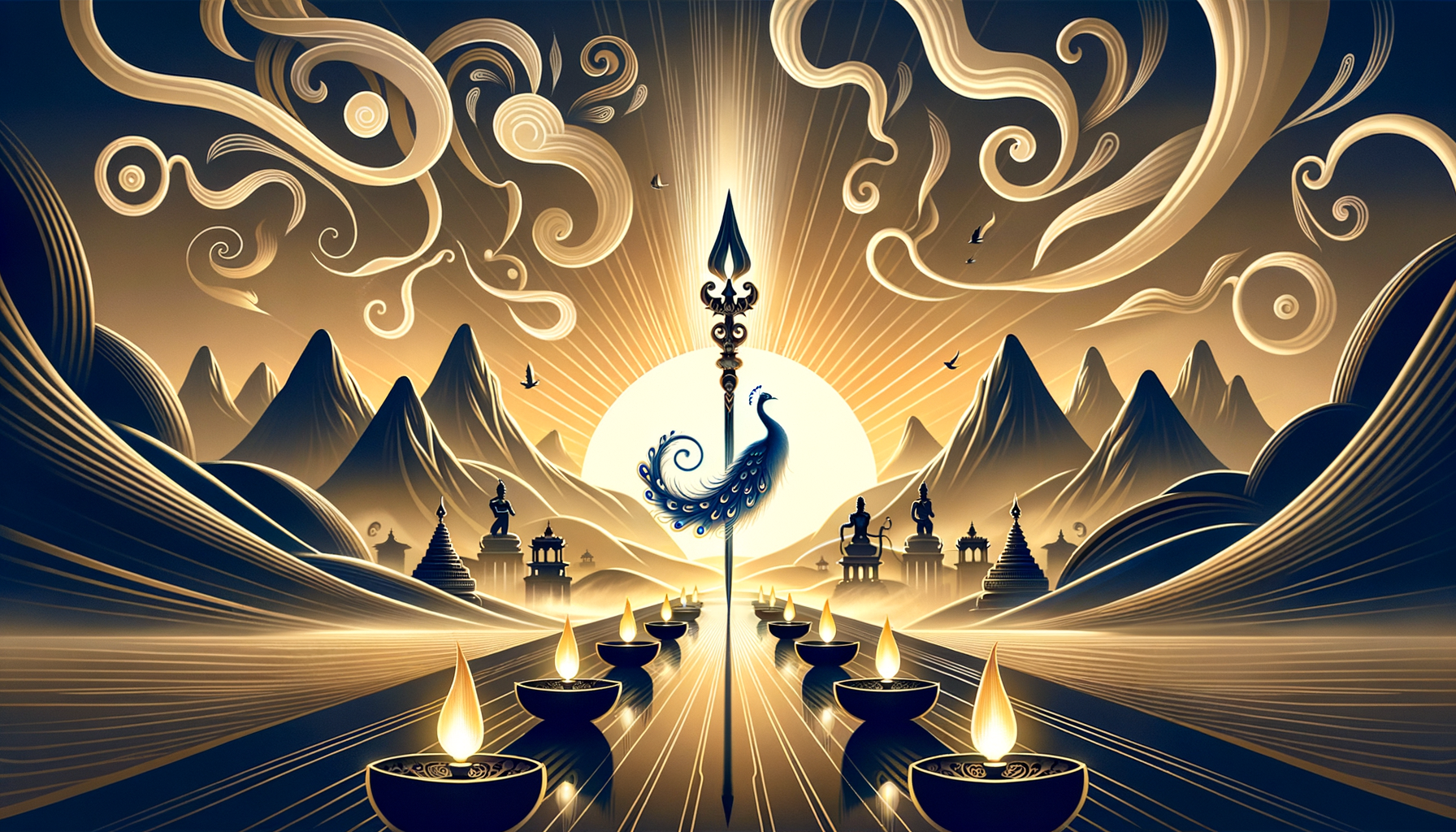
Cultural practices further animate the linguistic and theological dimensions of Murugan. Festivals such as Skanda Sashti and Karthigai Deepam nurture collective remembrance and moral imagination; Kavadi attam and Mayil Attam symbolize penance, grace, and the peacock’s auspicious guardianship (Peacock as vahana of Subrahmanya Swamy). These traditions bind households, villages, and urban communities through shared vows, songs, and narratives, sustaining a resilient Cultural Heritage rooted in Tamil values.
Temples like Palani, Tiruchendur, Swamimalai, Pazhamudircholai, Thiruthani, and Thiruparankundram function as scholarly and cultural archives no less than sacred spaces. Their inscriptions, ritual calendars, and oral histories preserve linguistic heritage, while architecture and music foster intergenerational learning. Pilgrimage circuits cultivate a gentle discipline of speech, conduct, and remembrance that keeps both language and ethics alive in everyday life.
Murugan’s presence also bridges regional and pan-Indic currents. Tamil traditions interact fruitfully with Sanskritic materials such as the Skanda Purana, allowing bilingual and bicultural exchange that enriches both canons. Rather than erasing difference, this encounter celebrates unity in diversityaffirming that linguistic pluralism and philosophical dialogue are intrinsic strengths of Indian civilization.
Contemporary communities, including the Tamil diaspora, continue to experience Murugan as a source of identity, resilience, and belonging. Processions, kirtan, and Tamil hymns foster social cohesion, while service activities linked to temple life reinforce ethical living. These living practices demonstrate how tradition adapts without losing integrity, offering a model for inclusive cultural regeneration.
Within the broader family of dharmic traditionsHinduism, Buddhism, Jainism, and Sikhismthe reverence for disciplined speech, compassion, and inner valor resonates across philosophical boundaries. The virtues associated with Muruganknowledge, courage (kshatra guided by dharma), and benevolenceharmonize with ahimsa-centered ethics and seva-oriented community life, encouraging mutual respect and shared flourishing.
For educators, parents, and youth, Murugan’s Tamil legacy offers a practical pathway: learn and recite classical verses, support local language instruction, study inscriptions and temple histories, and sustain arts such as Mayil Attam and Kavadi. Each action strengthens linguistic heritage while cultivating humility, discipline, and empathyqualities essential to cultural stewardship and civic harmony.
Ultimately, Murugan’s relationship with Tamil language and culture is not a static emblem but a living covenant. It invites communities to speak with clarity, act with integrity, and preserve what is beautiful, true, and unifying. In honoring this sacred bond, society renews a civilizational promise: that language, devotion, and culture can evolve together to uphold dignity, wisdom, and inclusive belonging.
Inspired by this post on Hindu Blog.