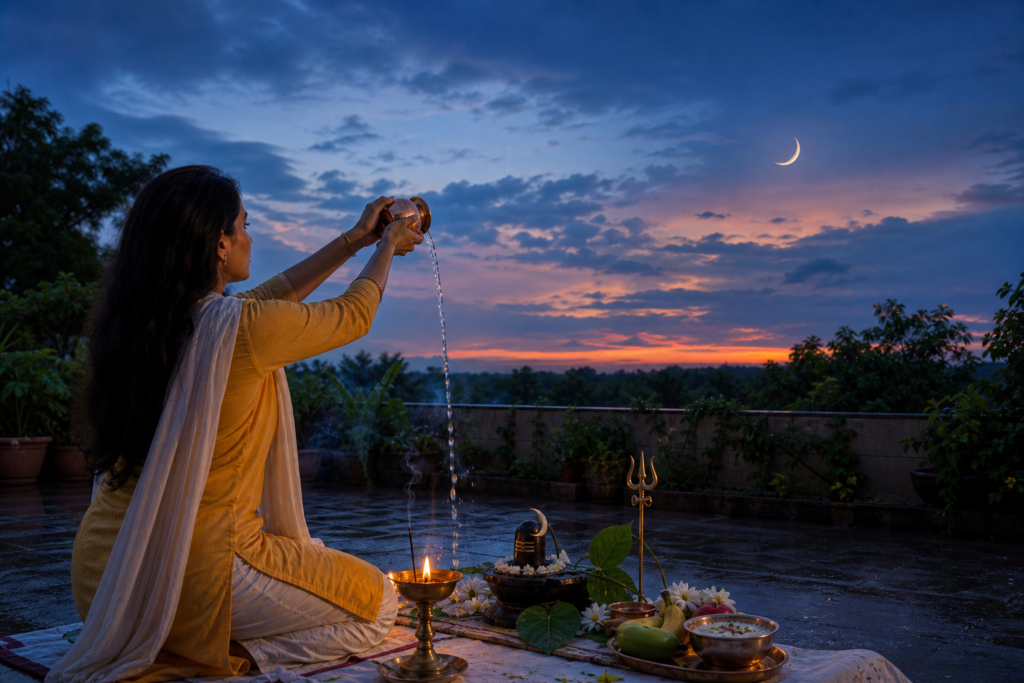
Panchayatana Puja, a classical Smarta practice often associated with Adi Sankara, embodies a refined vision of unity within diversity. It harmonizes devotion to multiple deities with contemplation of the Panchabhutasthe five elements of natureoffering a holistic framework for spiritual balance in Hinduism. By integrating symbolic worship with elemental awareness, this tradition guides practitioners toward inner equilibrium and a lived sense of cosmic order.
At its core, Panchayatana Puja centers an ishta-devata while honoring four companion deities in a quincunx (mandala) arrangement. The traditional set includes Shiva, Vishnu, Devi, Surya, and Ganesha (with Skanda sometimes included in regional variations). This deliberate layout is not merely ritual geometry; it functions as a spiritual statement that truth accommodates multiple sacred forms while pointing toward a single, unfragmented reality. In this way, devotion and metaphysics reinforce one another.
The PanchabhutasPrithvi (earth), Ap/Jala (water), Agni (fire), Vayu (air), and Akasha (space)inform both the symbolism and the sensory cadence of the puja. Through panchopachara (five offerings) or shodashopachara (sixteen offerings), practitioners engage the elements: gandha and pushpa evoke earth; abhisheka and arghya honor water; deepa reveals fire; dhupa suggests air; and the resonance of bell and mantra signifies space. The ritual thus transforms a household shrine into a living mandala where nature, body, and consciousness converge.
This elemental insight is echoed across sacred geography in the Pancha Bhoota Sthalas dedicated to ShivaKanchipuram (earth), Thiruvanaikaval (water), Tiruvannamalai (fire), Srikalahasti (air), and Chidambaram (space). Pilgrims often describe how each site deepens sensitivity to a specific element while reaffirming the unity of the whole. Panchayatana Puja brings this pilgrimage sensibility into daily life, allowing the devotee to experience the same integrative rhythm at home.
The elemental motif also resonates across the dharmic family. Buddhism reflects on the mahābhūta as foundations of embodied experience; Jain knowledge systems explore elemental and ontological categories that cultivate self-restraint and reverence for life; Sikh scripture evokes an ethic of elemental kinship“pavan guru pani pita mata dharat mahat.” Such convergences encourage mutual respect, demonstrating how Hinduism, Buddhism, Jainism, and Sikhism all nurture harmony with nature and compassion in society. Panchayatana Puja, by foregrounding elemental balance, naturally supports this shared ethos.
Philosophically, Panchayatana Puja accords with Advaita (advait) by using saguna upasana (worship of the divine with attributes) as a compassionate bridge to the nirguna (formless) truth. The ishta principle allows each practitioner to approach the Absolute through a form that aligns with temperament and samskara, while honoring other forms equally. This inclusive posture fosters communal harmony, reduces sectarian friction, and preserves the layered richness of Hindu traditions.
In lived practice, households often describe a quiet transformation when the elements are consciously invoked. The warmth of the lamp steadies attention; the fragrance of incense softens the breath; the cool touch of water during abhisheka instills humility; the solidity of flowers and sandal invites gratitude; the bell and mantra open a sense of spacious awareness. The ritual becomes a contemplative choreography through which everyday life, ethics, and devotion are gently integrated.
A simple approach can deepen the experience without complexity. Arrange the Panchayatana mandala with the ishta-devata at the center. Offer panchopachara, reflecting on each offering’s elemental correspondence. Sit briefly in mindful breathing, noticing how inhalation relates to Vayu and how the stillness between breaths hints at Akasha. Contemplate Prithvi in bodily stability, Jala in circulation, and Agni in warmth and clarity. Even a few minutes of such reflection aligns ritual action with inner awareness.
Contemporary relevance emerges naturally. The Panchabhutas teach ecological responsibility and gratitude for shared resources; the ritual’s inclusivity models social harmony in plural settings; and the ishta framework upholds freedom of conscience while honoring collective unity. In a world of accelerated change, Panchayatana Puja offers a steady practice that cultivates clarity, compassion, and a reverent relationship with the living world.
By integrating devotion to multiple deities with the Panchabhutas, Panchayatana Puja presents a mature spiritual pedagogy: many gateways, one sanctum; many elements, one cosmos. This vision aligns with the broader dharmic commitment to coexistence and wisdom. Honoring the five elements in daily worship nourishes inner balance and strengthens bonds across dharmic traditionsan enduring path of unity within diversity.
Inspired by this post on Hindu Blog.