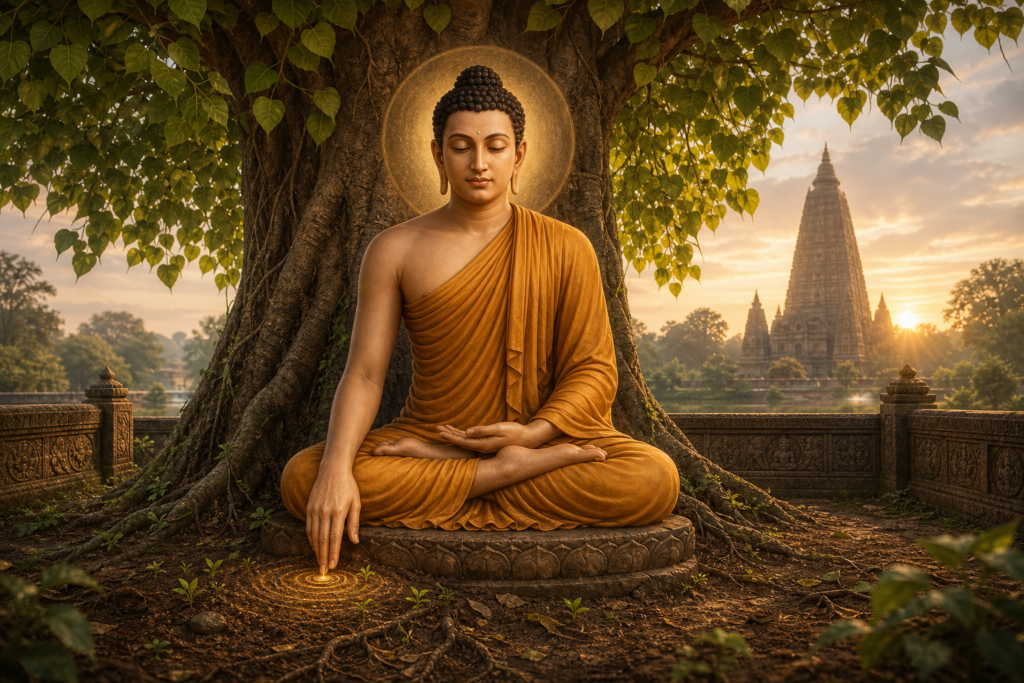
Hindu philosophy articulates a profound vision of ultimate reality through two complementary lenses: Nirguna Nirakar (the formless, attributeless absolute) and Sagun Sakar (the manifest, form-bearing divine). Rather than a contradiction, these perspectives present a dynamic, integrative framework that honors both transcendence and immanence, deepening understanding of Brahman and enriching everyday spiritual practice.
Nirguna Nirakar points to Brahman beyond all qualities and categoriesbeyond sattva, rajas, and tamasaligned with the Upanishadic method of neti neti (not this, not this). Sagun Sakar, by contrast, refers to Ishvara as accessible, compassionate, and relatable through names, attributes, and forms, enabling devotion, ritual, and contemplative visualization to flourish.
Scriptural currents affirm both modes. The Upanishads emphasize the ineffability of the absolute, while the Bhagavad-Gita validates devotion to both the unmanifest and the manifest, noting that either path can lead to realization when practiced with steadiness, humility, and ethical commitment. This theological elasticity allows seekers to approach the same summit from distinct yet convergent trails.
Different Vedantic schools highlight this duality in nuanced ways. Advaita Vedanta treats Nirguna Brahman as the ultimate reality, with Saguna Ishvara serving as a compassionate, pedagogical manifestation within the empirical realm. Vishishtadvaita and Dvaita affirm the reality of divine attributes, elevating Saguna as central while acknowledging that divine presence ultimately exceeds finite human description.
These two vistas shape spiritual practice. Nirguna-oriented sadhana leans toward silent meditation, inquiry, and the cultivation of witness-consciousness. Saguna-oriented sadhana embraces bhakti, kirtan, murti-puja, and the intimate relationship with Ishta Devata. Many practitioners move fluidly between both, finding that form can lead to formlessness, and formless awareness can overflow into loving reverence for the sacred in the world.
Relatable experiences underscore their complementarity. A temple darshan channels love and gratitude toward the divine as Sagun Sakar, while a period of stillness afterward can gently reveal the Nirguna substratum of awareness. Over time, devotion acquires depth from silence, and silence is softened and made resilient by devotion.
Dharmic traditions echo this integrative spirit. Buddhism’s emphasis on the ineffable nature of ultimate reality and Jainism’s Anekantavada (many-sidedness of truth) encourage humility before complexity. Sikh thought harmonizes Nirgun and Sargun, affirming that the Divine is both beyond attributes and present within creation. Across these traditions, unity in spiritual diversity is not merely toleratedit is celebrated as a pathway to wisdom and compassion.
Murti and mantra function as refined pedagogies rather than limitations. In Sagun Sakar practice, iconography becomes a contemplative doorway, helping the mind focus and the heart open. As understanding matures, seekers recognize that the form points beyond itself, serving as a symbolic map to the unbounded Nirguna reality it represents.
Language clarifies the distinction: “Nirguna” indicates freedom from the three gunas, while “Sagun” indicates the divine presence as qualities like compassion, kripa, and ananda operating within lived experience. “Nirakar” negates spatial form, whereas “Sakar” affirms meaningful forms that educate emotion, imagination, and ethics.
Ethically, both orientations converge on dharma. The insight into Nirguna nurtures equanimity and non-attachment, while Saguna awakens loving service and responsibility to community. Together, they encourage an integrated life of clarity in thought and tenderness in action, aligning individual transformation with social harmony.
Practical guidance follows naturally. Some begin with bhaktinamajapa, kirtan, and sevathen rest in silent awareness between breaths. Others anchor in contemplative inquiry and allow devotion to arise spontaneously as gratitude. Both pathways can be balanced within a single day’s rhythm, reflecting the Gita’s assurance that sincerity, steadiness, and humility are decisive.
Common misconceptions deserve gentle correction. The two modes do not represent competing gods or separate ultimates. Rather, they are facets of the same luminous truth seen through different epistemic posturesan interpretive pluralism that preserves rigor while validating the breadth of human experience.
Interfaith engagement benefits from this dharmic pluralism. When seekers appreciate both the ineffable depth of Nirguna and the relational beauty of Sagun, they become more capable of recognizing and honoring the sacred in diverse forms and vocabularies. Respect for multiple paths, coupled with self-reflective practice, strengthens unity among Hinduism, Buddhism, Jainism, and Sikhism while fostering harmony with other traditions.
Ultimately, Nirguna Nirakar and Sagun Sakar illuminate one divine paradox: reality is boundless and intimately present. Embracing bothas concept and as practiceinvites a life of inner freedom, empathetic action, and a shared commitment to unity in spiritual diversity. This is the enduring gift of Hindu philosophy: a capacious wisdom that guides seekers toward truth while holding the world in compassion.
Inspired by this post on Hindu Blog.