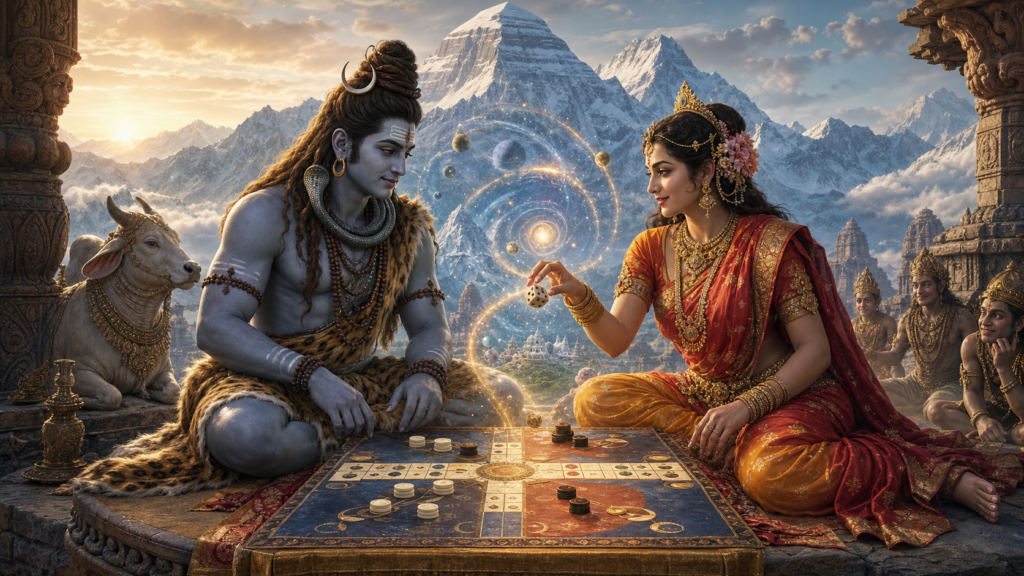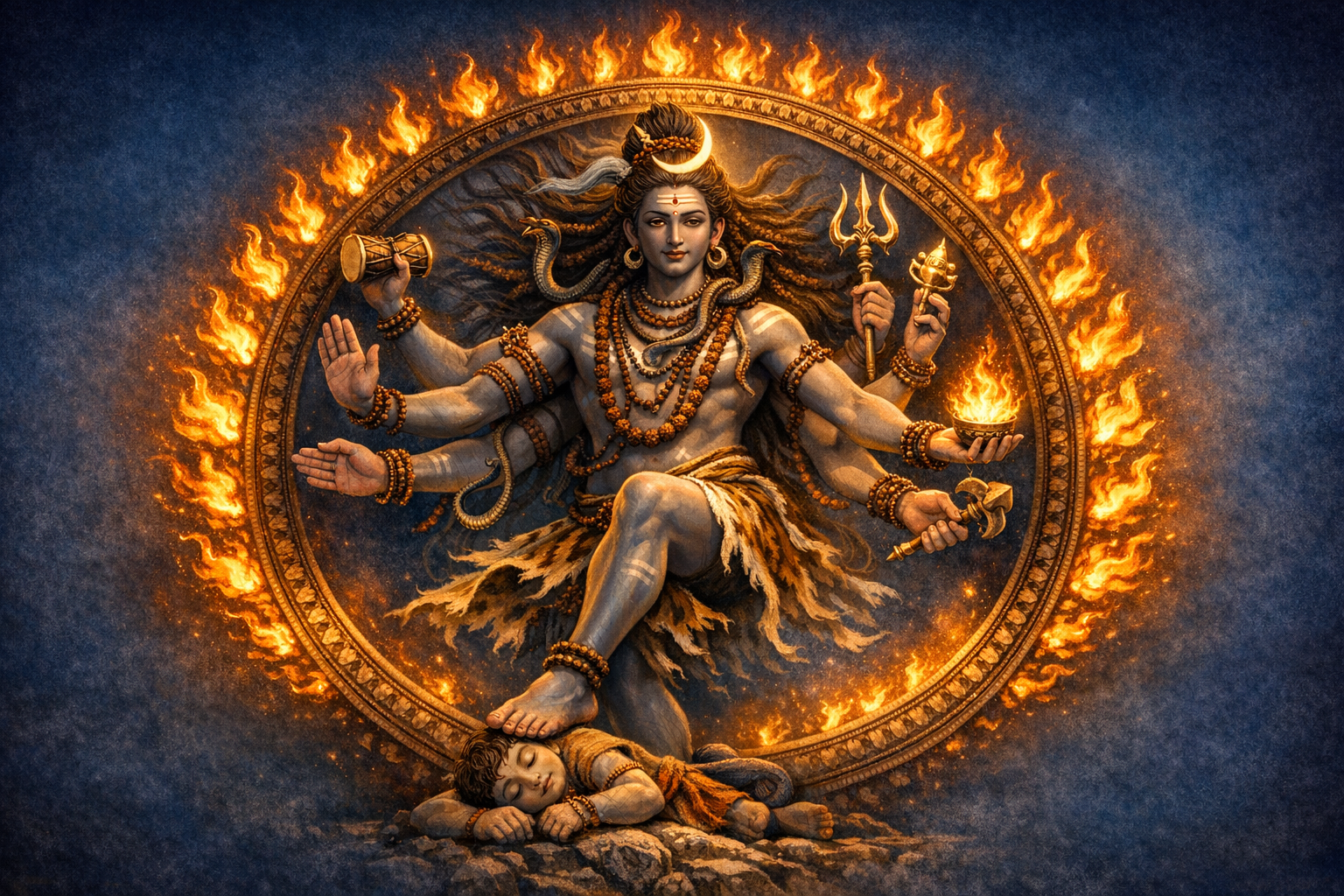
Kalika Tandava signifies one of the most potent and transformative expressions of Shiva’s cosmic dance, a vision where time, energy, and consciousness converge into a single luminous act. In this fierce yet compassionate form, Shiva is often portrayed with eight arms, revealing a complex iconography that encodes creation, preservation, dissolution, concealment, and grace. The image is not merely devotional art; it is a living diagram of metaphysics, psychology, and soteriology that has guided contemplatives, artists, and ritual specialists across centuries in Shaiva Siddhanta, Shakta Tantra, and related streams of Hindu philosophy.
The name Kalika invokes Kalitime as the inexhaustible ground of becomingand, by extension, the insight that transformation and renewal are intrinsic to reality. Tandava denotes Shiva’s dynamic dance: the primal pulsation through which the cosmos appears, unfolds, and returns to quiescence. Read together, Kalika Tandava communicates that dissolution is not annihilation but a rhythm that clears the field for new creation. It is a theology of resilience and return, consonant with the image of Shiva as Mahakala (Lord of Time) and the mutuality of Shiva-Shakti as the inseparable awareness-energy underlying all phenomena.
Textual and art-historical sources point to multiple lineages that inform this form. The Shaiva Agamas and ancillary Shilpa-Shastras (treatises on sacred art) outline multi-armed Tandava murtis and their attributes; the Natya Shastra and later abhinaya compendia codify the kinetic grammar (karanas) that temple bronzes freeze into immortal stillness. South Indian ateliers, especially during the Chola period, perfected bronze images of Nataraja and related Tandava forms, while Eastern Indian and Himalayan traditions preserved parallel fierce iconographies of Shiva and Bhairava. Within this interpretive spectrum, Kalika Tandava designates an intense, transformative mode of Shiva’s dance that is thematically allied with the energies of Kali.
In sculpture and painting, Shiva is shown in a dynamic posturehips subtly flexed, chest expanded, and one leg often lifted while the other subdues Apasmara, the dwarf of forgetfulness and ignorance. A prabha mandala (radiant aureole) may encircle the figure to signify the all-pervading fire of consciousness. Matted locks fan outward, sometimes bearing the crescent moon and the Ganga; serpents, tiger skin, and sacred ash mark the ascetic-yogic dimension of the deity. Each detail works as an iconographic sentence that, when read fluently, speaks a language of liberation.
The deity’s right hands, beginning from the lower right, display the Abhaya mudra (gesture of fearlessness). Other right hands in common variants hold the damaru (hourglass drum), the trishula (trident), or a vajra-like weapon, while the left hands may show the Varada mudra (boon-giving), support a bowl-like kapala (skull-cup), bear the agni (flame), or grasp a pasha/ankusha (noose/goad). Regional sthapana (installation) manuals and Agamic stipulations differ, so attributes can vary across temples and periods; the underlying symbolic architecture, however, remains intelligible across these lineages.
Each attribute encodes a layer of metaphysics. Abhaya assures refuge: the dance is fierce but not hostile; the awakened heart need not fear transformation. Varada confers grace: liberation (anugraha) is accessible. The damaru beats the primal rhythm of manifestationsound (nada) begetting form (rupa). The agni flame dissolves contracted patterns and old karmic formations, enacting the cosmic return. The trishula alludes to triadsgunas, time (past-present-future), and states of consciousness (waking-dreaming-deep sleep)brought into equipoise. The kapala underscores impermanence: forms change, awareness remains. The pasha and ankusha symbolize the restraint and redirection of the restless mind toward the Self.
Across Shaiva traditions, Shiva’s pañcakrityathe fivefold acts of creation (srishti), preservation (sthiti), dissolution (samhara), concealment (tirobhava), and gracious revelation (anugraha)are visible in the Kalika Tandava. The damaru corresponds to srishti; the steadying posture speaks to sthiti; the agni signals samhara; the veiling implied by dynamic motion and cosmic play evokes tirobhava; Abhaya-Varada convey anugraha. The dance thereby becomes an ontological map: the world is not a fallen exile but a living theater of divine activity, where each phase has meaning and momentum.
Kashmir Shaivism articulates this vision through the doctrine of spandathe subtle throb of universal consciousness that oscillates between expansion and contraction without losing its nature. Kalika Tandava serves as a visual-spiritual correlative of spanda: the universe is a dance of awareness, not an inert mechanism. Shakta Tantra complements this by celebrating the kinetic primacy of Shakti: Kali as time-energy animates the cycles through which Shiva’s stillness becomes the world’s movement. Both perspectives converge in asserting non-duality: to know the dance is to recognize the dancer and the stage as one reality.
Hindu aesthetics adds a kinetic grammar to this philosophy. The Natya Shastra’s catalogue of 108 karanas, the logic of nritta (pure dance) and nritya (expressive dance), and the codified mudras together translate metaphysics into movement. Temple bronzes immortalize these moments, especially in South India, where processional icons of Nataraja and allied Ugra Tandava forms are carried during Arudra Darshan and Maha Shivaratri. Kalika Tandava presides over rites that emphasize renewal through austerity and joyabhisheka (sacred bathing), deepa (lamp offerings), and chanted mantras like Om Namah Shivaya that align collective rhythm with cosmic cadence.
For practitioners, the image is a contemplative method. One may sit facing the murti or a visual representation, gently synchronizing breath with attention to the damaru (inhalation as emergence) and agni (exhalation as release). Abhaya inspires courage to witness one’s own patterns; Varada invites the willingness to accept grace. In tantric practice, bija mantras associated with Shiva and Kali are contemplated to harmonize apparent oppositesserenity and intensity, stillness and surge. Over time, the dance inscribed in metal or stone becomes a choreography of mind: the internalization of symbolism into stable insight.
Art history anchors these insights in matter. Chola bronzes exemplify supreme craftsmanship where metallurgical precision fuses with philosophical clarity. Eastern Indian and Nepalese ateliers elaborate fierce forms allied to Bhairava, while Odisha’s sculptural programs present kinetic reliefs that echo Tandava motifs. Despite regional variation, the visual language remains mutually legible: the lifted foot of grace, the subdued Apasmara, the arc of flames, and the cascade of locks form a pan-Indic vocabulary of liberation. Such continuities illuminate how “Shiva Nataraja,” “Rudra,” and Kalika-associated tandavas speak to a shared civilizational grammar.
Inter-dharmic resonances further deepen the significance. In Buddhism, sacred dancessuch as Cham in Vajrayana contextsritually subdue ignorance and enact compassion-in-action, paralleling Shiva’s trampling of Apasmara. Jain cosmology describes vast cycles of time and emphasizes inner restraint, offering a contemplative complement to Tandava’s theme of disciplined energy. Sikh teachings on the immanence of the Eternal (Akal Purakh) and the transformative power of sacred sound (Gurbani kirtan) reinforce the intuition that rhythm and remembrance restore alignment with truth. These traditions, while distinct, converge on the principle that disciplined movement and sound conduce to ethical clarity and liberation, honoring unity-in-diversity across the dharmic family.
Kalika Tandava also supports a psychological reading relevant to contemporary life. Abhaya trains fearlessness in the face of uncertainty; Varada cultivates generosity and receptivity. The damaru’s beat, mirrored in breath, steadies attention. The agni purifies rigid narratives and emotional residues that no longer serve. The trishula integrates multiple timelines and perspectives into coherent judgment. In this light, Kalika Tandava becomes a method of inner governance: an ethics of vitality where courage, clarity, and compassion co-originate.
Ritual specialists emphasize that worship (puja) of fierce forms is never a valorization of aggression but a consecration of power into responsibility. Offeringsflowers, water, lamps, incenseencode elemental harmonies; recitations stabilize attention; circumambulations align the practitioner’s microcosm with the cosmic orbit. Festivals like Maha Shivaratri foreground ascetic joy and wakefulness, while Arudra Darshan celebrates the epiphany of the cosmic dancer. In both, Kalika Tandava’s message remains consistent: renewal is possible, and grace is available to those who participate in the rhythm with sincerity.
Because historical manuals and regional practices differ, it is methodologically sound to treat the specific eight-armed attribute set in Kalika Tandava as a family of closely related iconographies rather than a single fixed template. This perspective accommodates local Agamic prescriptions, Chola-era workshop conventions, Himalayan tantric nuances, and modern temple reconstructions, while preserving the interpretive constantsShiva’s sovereignty, Kali’s transformative energy, and the dance as theophany of consciousness.
In sum, Kalika Tandava is an open invitation to experience what the image proclaims: reality as living dance, fierce enough to burn away delusion and tender enough to confer refuge. Whether approached through Shaiva Siddhanta, Kashmir Shaivism, Shakta Tantra, or through comparative conversations with Buddhist, Jain, and Sikh spiritual technologies, the form encodes a shared civilizational intuitionliberation flowers where wisdom and energy move as one. Studied as symbolism, performed as ritual, and integrated as contemplative practice, the eight-armed dance reveals why Shiva’s art is inseparable from Shiva’s grace.
Inspired by this post on Hindu Blog.