
A transition, not yet a transformation
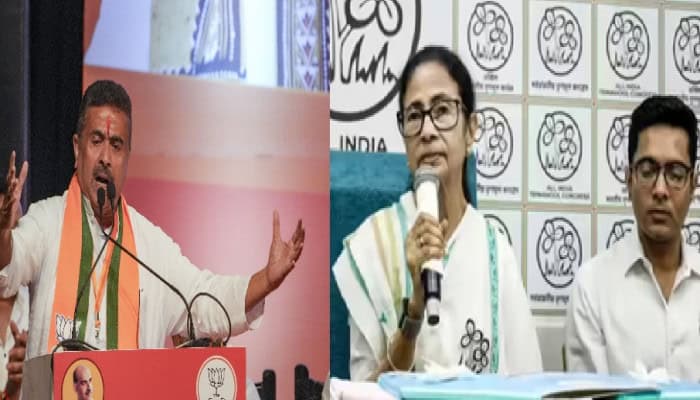
West Bengal’s 2026 electoral turnover is a constitutional fact with far-reaching political consequences. The Election Commission of India’s results record Bharatiya Janata Party victories in 207 of the 293 constituencies for which outcomes were reported, compared with 80 for the All India Trinamool Congress. The West Bengal Legislative Assembly now identifies an eighteenth Assembly under a BJP-led administration. Those facts establish a transfer of governmental authority; they do not, by themselves, establish a transformation in political conduct.
That distinction is the central challenge before the BJP. Elections can replace ministers, legislators and party symbols in a matter of weeks. They cannot instantly dissolve habits accumulated through decades of cadre-centred politics. Informal gatekeeping, local intimidation, preferential access, coerced payments and interference with administration can survive an election because the people, incentives and relationships sustaining them may remain embedded in neighbourhoods, markets, unions, transport networks and public offices.
For citizens, the issue is not theoretical. A shopkeeper who must surrender part of a week’s earnings, a transporter whose vehicle is stopped until an unofficial payment is made, or a family told to obtain a party recommendation before receiving an entitlement does not experience democracy as constitutional theory. Such people experience the state through the conduct of the person standing between them and a police station, permit, contract, hospital bed or welfare office. If that intermediary changes party allegiance but retains the same coercive power, electoral change becomes emotionally hollow.
What tolabaji means in institutional terms
Tolabaji is a colloquial political term rather than a self-contained statutory offence. In public discourse, it commonly denotes the coercive collection of money or benefits by people claiming political, organisational or local muscle. Related expressions—including dadabaji, cut-money, protection money and syndicate pressure—describe overlapping practices, but investigators must translate each allegation into specific conduct: who demanded what, from whom, through which threat or abuse of influence, at what time, and with what evidence.
This precision matters because not every payment connected with politics, labour or community organisation is illegal. A voluntary political contribution, a transparently authorised fee, a lawful union subscription or a genuinely negotiated commercial payment is different from money extracted through fear, obstruction or threatened administrative harm. The decisive questions are voluntariness, lawful authority, disclosure, consideration and coercion. A credible anti-tolabaji programme must protect legitimate association and collective bargaining while isolating extortionate conduct.
The legal baseline is already available. Section 308 of the Bharatiya Nyaya Sanhita, 2023 defines extortion through intentional fear of injury followed by dishonest inducement to deliver property, valuable security or a convertible signed instrument. Its provisions also address attempts involving fear and aggravated forms involving threats of death, grievous hurt or serious accusations. Depending on the evidence, a tolabaji complaint may also disclose criminal intimidation, wrongful restraint, assault, conspiracy, property offences or other violations.
Where a public servant demands or receives an undue advantage, or where an intermediary sells corrupt influence over a public servant, the Prevention of Corruption Act, 1988 may also become relevant. Party membership alone does not make a person a public servant, and criminal liability cannot be inferred from affiliation. Investigators must establish the role of each participant, the threatened or promised official act, the flow of value and the required mental element under the applicable law.
Bengal’s recurring institutional risk
West Bengal has experienced more than one major political turnover. The end of prolonged Left Front government in 2011 produced widespread expectations of paribartan—change that would extend beyond a new electoral majority. The present transition therefore carries a historical warning: public hope can be disappointed when a new ruling formation absorbs the operating methods, local brokers or coercive incentives associated with the order it displaced.
Cadre organisation is not inherently undemocratic. Political parties need volunteers who canvass, communicate policies, organise meetings and connect citizens with elected representatives. The danger begins when partisan organisation becomes an alternative administrative chain of command. A local worker then ceases to be a political advocate and becomes an unofficial licensing authority—deciding whose complaint is heard, whose vehicle moves, whose tender remains viable, whose land dispute receives attention or whose welfare application progresses.
This arrangement can become self-reproducing. Citizens comply because refusal appears costly. Officials accommodate intermediaries because resistance may threaten postings or careers. Businesses treat unofficial payments as a survival expense. Party leaders overlook misconduct because local brokers can mobilise crowds, votes and money. Each participant may regard the concession as individually rational, while the combined result is an institutionally destructive equilibrium.
Political turnover can intensify the risk when experienced power brokers change allegiance. Switching parties is lawful and cannot itself justify suspicion or exclusion. Yet an incoming party would be imprudent to equate a new membership card with reformed conduct. Organisational authority should be assigned through objective vetting, documented responsibilities and continuing supervision, especially where an entrant previously controlled contracts, transport, labour deployment, land transactions or access to public offices.
Allegations must prompt verification, not instant verdicts
The July 8, 2026 commentary underlying this analysis refers to reports of extortion or tolabaji involving people associated with the BJP in industrial areas. It does not provide case numbers, a systematic dataset or adjudicated findings. Academic and legal discipline therefore require these claims to be treated as allegations requiring independent verification—not as established guilt, and not as a basis for collective condemnation of party workers.
Dismissal would nevertheless be as irresponsible as exaggeration. In a state where citizens recognise the behavioural vocabulary of political extraction, even a small number of credible incidents can carry exceptional symbolic weight. Early allegations are diagnostic signals. A confident administration should invite evidence, protect complainants, investigate impartially and publish aggregate outcomes. That response simultaneously protects citizens from coercion and innocent people from politically motivated accusation.
The governing standard must be party-neutral: the same evidentiary threshold, investigative process and legal consequence should apply to a BJP functionary, former TMC worker, Left activist, contractor, union official, police officer or unaffiliated strongman. Selective enforcement would merely convert anti-extortion policy into another instrument of political control.
The administrative firewall
Democratic government rests on a simple institutional proposition: citizens are rights-bearing principals, while elected representatives and public servants exercise temporary, legally bounded authority. Party workers may help constituents understand procedures or submit representations, but they cannot acquire privileged command over state institutions. The BJP administration should codify this distinction through a public, enforceable firewall between partisan organisation and official decision-making.
At police stations, every representation from a political office-bearer should be logged in the same manner as a representation from any citizen. No oral party instruction should determine whether a complaint is registered, whom an officer summons or how an investigation proceeds. Meetings concerning active cases should be documented, and attempts to influence investigative decisions should be reportable through a protected supervisory channel.
In welfare, education and health services, eligibility must be determined through published rules and auditable records. A ration beneficiary, scholarship applicant, patient or elderly resident should never need proof of partisan loyalty or a recommendation from a local committee. Rejection notices should state reasons and provide an appeal route, reducing the space in which middlemen can sell access to an entitlement.
In business, transport and land administration, permissions should move through traceable workflows rather than personal referrals. Every application should receive a digital or paper acknowledgement, a responsible office, a deadline and a written decision. Delay without recorded reason is not merely inefficient; it creates the scarcity from which political intermediaries profit.
In public procurement, party offices must have no role in selecting bidders, subcontractors, material suppliers or labour providers. Tender conditions, evaluation criteria, awards, work orders, material variations and payments should be recorded in systems that permit audit. A contractor who is technically qualified and commercially competitive should not be compelled to purchase political protection or accept a designated local partner.
Two accountability systems, kept rigorously separate
West Bengal needs an official anti-extortion system, while the BJP needs an internal ethics and discipline system. These mechanisms should cooperate lawfully but must never be merged. Police and prosecutors determine criminal questions under public law. A political party determines whether a member has violated organisational rules. Party officials must not direct investigations, access protected complainant identities or use police information to settle factional disputes.
The official structure could consist of a state-level anti-extortion coordination unit supported by district desks in high-risk regions. Its staffing should combine experienced investigators, prosecutors, financial analysts, digital-evidence specialists and officers familiar with procurement, transport, land and industrial regulation. The unit’s mandate, jurisdiction, referral rules and reporting obligations should be published so that it does not become an opaque force operating through discretionary power.
Intake, investigation and oversight should be institutionally distinct. An intake team can classify urgency and protect identity; an investigation team can gather evidence; prosecutors can assess applicable offences; and an independent supervisory body can audit delay, closure and conflict of interest. Separation reduces the ability of any single official to bury a complaint, manufacture a case or leak sensitive information.
The BJP’s internal mechanism should adopt a written code prohibiting the use of the party’s name to demand money, influence policing, allocate contracts, control welfare access or threaten commercial activity. Members should be required to report approaches by people offering collections or political finance in exchange for protection. Disciplinary findings should be reasoned, reviewable and separate from criminal conclusions.
A complaint system citizens can actually trust
The state need not begin from zero. West Bengal Police already provides an online complaint-registration facility, while its official emergency page identifies 112 and 100 for urgent assistance. A dedicated anti-extortion interface should integrate with, rather than fragment, these systems. It should be accessible by telephone, web, mobile device and physical submission for residents who lack digital access.
Where reported facts disclose a cognizable offence, Section 173 of the Bharatiya Nagarik Suraksha Sanhita, 2023 permits information to be given orally or electronically irrespective of the area where the offence occurred; electronically supplied information must be signed within the prescribed three-day period. A new portal should explain these legal steps in plain Bengali, English and other locally used languages instead of leaving complainants uncertain about whether an online submission is merely a tip, a grievance or information for a criminal case.
Every submission should generate a unique tracking number, an acknowledgement time and a clearly identified next stage. The system should distinguish an emergency threat, a criminal allegation, an administrative grievance, a party-discipline complaint and an intelligence tip. Misclassification is dangerous: a person facing immediate violence should not be placed in a routine grievance queue, while a service-delay complaint should not automatically be publicised as a criminal case.
Anonymous reporting is valuable for detecting patterns, but anonymity has limits. An anonymous tip may support intelligence development and corroborative inquiry; it cannot automatically prove guilt. A safer design would store a known complainant’s identity in a restricted identity vault, assign investigators a pseudonymous case number and reveal identifying information only when legally necessary. The complainant must be told honestly that absolute secrecy may not always be possible in judicial proceedings.
Protection against retaliation is indispensable. The Supreme Court’s 2018 judgment approving the Witness Protection Scheme provides an established framework for threat assessment and protective measures. An anti-extortion unit should immediately screen reports for danger to life, livelihood, property, family members and employment. Protective responses may range from confidential contact protocols and patrol support to more intensive measures authorised under law.
A complainant should never be routed back, without safeguards, to the same local network alleged to be involved. Cases implicating local police, municipal personnel or influential intermediaries require automatic conflict review and, where warranted, transfer to a district or state team outside the affected chain of command.
Verification without factional espionage
An uncontrolled network of party informers would be hazardous. Rival factions could submit invented allegations, extort one another through threats of complaint or convert vigilance into surveillance of lawful dissent. Verification should instead follow a documented evidentiary protocol: preliminary risk assessment, conflict screening, corroboration, legal classification, supervisory review and a recorded decision to investigate, refer or close.
Unsubstantiated and deliberately false are not synonymous. A genuine complainant may lack enough evidence, misidentify a participant or describe conduct that does not satisfy a criminal provision. Penalties should be reserved for complaints shown through fair inquiry to be knowingly and maliciously fabricated. Punishing every unsuccessful complaint would silence precisely the vulnerable citizens the system is meant to protect.
Investigators should be trained to preserve lawful evidence from messages, call records, payment applications, bank or UPI transfers, CCTV footage, vehicle logs, tender files, gate registers, witness accounts and patterns of repeated demands. Digital material must be collected with proper authority, integrity checks and chain-of-custody documentation. A screenshot forwarded through social media may justify inquiry, but it should not be confused with authenticated proof.
Financial analysis can expose networks that individual complaints do not reveal. Repeated transfers to common accounts, identical payment descriptions, clusters of contractors using the same intermediary or sudden subcontracting to politically connected entities may warrant examination. Such analytics should generate leads rather than automated guilt, and access must be controlled through role-based permissions, audit logs and lawful retention limits.
Why industrial regions require specialised protection
Industrial areas concentrate contracts, land, labour, loading, transport, permits, utilities and cash flow. That concentration makes them productive centres and attractive targets for coercive collection. A single enterprise may encounter pressure at its gate, warehouse, transport route, labour-supply chain, construction site and licensing office. Treating each demand as an unrelated street-level incident can conceal the organised character of the network.
The economic damage extends beyond the amount collected. Unofficial extraction introduces uncertainty, rewards political access over productivity, disadvantages firms that refuse to participate and encourages businesses to remain small or informal. The World Bank’s governance research similarly associates unofficial payments with poorer service delivery, inefficient use of resources and weaker investment. The exact cost in West Bengal should be measured rather than assumed, but the direction of institutional risk is clear.
A district risk map should identify pressure points such as factory gates, freight routes, wholesale markets, sand and construction-material supply chains, industrial estates, land-conversion offices and labour-contracting networks. Mapping must rely on complaint patterns, verified incidents and business surveys—not partisan reputation or community identity. Hotspot designation should trigger additional oversight, not collective suspicion toward residents or workers.
Industry liaison desks should include channels for microenterprises, street-facing businesses, transporters and small manufacturers, not only major corporations. Large companies can retain counsel and escalate concerns; a single-shop entrepreneur may have neither institutional access nor financial resilience. For that person, even a modest recurring collection may consume school fees, medical savings or working capital.
Labour rights must remain protected. Workers and unions retain the right to organise, negotiate and protest lawfully. The administration should distinguish legitimate collective bargaining from forced hiring, coerced subcontracting, unauthorised gate collection, violence or demands unrelated to employment conditions. An anti-extortion programme that suppresses lawful labour activity would exchange one abuse of power for another.
Breaking syndicate pressure through procurement design
Syndicate power often flourishes where procurement and subcontracting are opaque. The remedy is not merely more policing; it is less discretionary scarcity. Tender notices should remain open for reasonable periods, eligibility conditions should be proportionate, evaluation criteria should be disclosed in advance and deviations should require recorded approval. Awards, change orders, completion milestones and payments should be visible to auditors and, where legally appropriate, the public.
Procurement analytics should flag repeated single-bid tenders, suspicious bid rotation, near-identical pricing, common contact information among nominal competitors, unusually narrow qualification terms, repeated emergency procurement and unexplained cost escalation. A flag is not a finding of collusion; it is a reason for human review. Random audits are also necessary because a system focused only on known patterns teaches sophisticated actors how to avoid detection.
Major works should disclose approved subcontractors and material suppliers, subject to legitimate confidentiality and security limits. Post-award substitutions should require documented justification. Contractors should have a protected method to report demands that they purchase from a designated supplier, employ a named intermediary or surrender a percentage of a payment certificate.
Removing political toll booths from everyday services
Cut-money survives when citizens cannot see the lawful value, timeline and route of a benefit. Every major welfare programme should publish eligibility criteria, application status, authorised deductions—if any—and appeal procedures. Beneficiary communication should state plainly that no party worker or intermediary is entitled to payment. Random, consent-based follow-up calls can help detect unofficial demands after a service is delivered.
Land mutation, building permissions, trade licences, transport clearances and utility connections deserve similar service standards. The administration should measure not only average disposal time but also unexplained variance between offices. A district where comparable applications take dramatically longer may have a capacity problem, a process defect or a rent-seeking bottleneck requiring audit.
Political representatives may legitimately raise systemic problems or help residents understand procedures. They should not handle money, retain original documents, promise outcomes or maintain private lists that supersede the official queue. Every citizen must be able to reach the same service without partisan sponsorship.
Police neutrality and professional continuity
Police independence cannot be created solely through officer transfers. Rotation may disrupt captured local relationships, but indiscriminate transfer can destroy expertise, weaken investigations and make postings more politically dependent. Transfers in identified high-risk areas should therefore follow recorded criteria, supervisory review and continuity plans for active cases.
Station-level performance should not be judged by low complaint numbers. A sudden absence of complaints may indicate safety, but it may also indicate fear or inaccessible reporting. Assessment should combine reporting rates with victimisation surveys, response times, case quality, community feedback, retaliation incidents and supervisory audits. Targets that reward fewer registered cases can encourage suppression rather than prevention.
Officers who resist improper influence need protected escalation routes and professional support. Accountability must operate in both directions: misconduct requires consequences, while lawful refusal to obey a partisan instruction should not damage an officer’s career. Without that assurance, the formal firewall will remain vulnerable to informal pressure.
Fair discipline within the BJP
The BJP’s organisational response should be swift without becoming arbitrary. A credible complaint involving misuse of the party’s name may justify temporary removal from a sensitive responsibility while facts are examined. Suspension should be an interim risk-control measure, not a public declaration of guilt. The member should receive notice of the allegation, an opportunity to respond and access to an internal appeal.
Confirmed misconduct should bring proportionate consequences, including loss of organisational office, expulsion or referral to law enforcement where warranted. Senior leaders who knowingly protect repeated coercion should face accountability for concealment or supervisory failure. District responsibility should mean a duty to establish controls and respond to warning signs; it should not become automatic collective punishment whenever one person offends.
New entrants from other parties should not be presumed corrupt. Objective safeguards are preferable to ideological screening: declarations of business interests, conflict-of-interest rules, review of publicly available criminal proceedings without treating charges as convictions, cooling-off periods before assignment to procurement- or industry-facing roles, and documented approval for sensitive responsibilities. The same rules should apply to long-standing BJP members.
Political finance also requires clarity. Party units should publish authorised collection methods, prohibit cash solicitation in exchange for governmental access and provide receipts where contributions are legally accepted. Businesses must be able to verify whether a fundraising request is genuine, voluntary and compliant. A political donation attached to an explicit or implicit threat is not rendered legitimate by being labelled a contribution.
Measurement that reveals performance rather than manufactures success
A public dashboard should report aggregate, district-level information without exposing complainants or prejudicing investigations. Useful measures include time to acknowledge a report, time to complete threat assessment, referrals for criminal investigation, administrative action, disciplinary outcomes, case closures with reason categories, reported retaliation, money recovered through lawful process and the age of pending matters.
The dashboard must distinguish allegations, verified administrative violations, registered criminal cases, filed charge sheets, acquittals and convictions. Combining these categories would mislead the public and damage due process. Raw complaint totals should also be interpreted cautiously: an initial increase may reflect improved trust in reporting rather than an increase in underlying extortion.
Independent citizen and business surveys should establish a baseline and repeat at six- or twelve-month intervals. Respondents can be asked whether they encountered an unofficial demand, whether they reported it, why they remained silent, whether retaliation followed and whether service access required political mediation. Survey instruments, sampling methods and anonymised aggregate results should be published so that progress claims can be evaluated.
Grievance design can draw on established public-administration principles. India’s Centralised Public Grievance Redress and Monitoring System demonstrates the value of tracking numbers, routing to responsible field offices, citizen feedback and appeal to a higher authority. West Bengal’s anti-extortion system requires stronger confidentiality and investigative safeguards, but it should adopt the same basic insight: closure by an office is not necessarily resolution for the citizen.
A practical 100-day programme
Days 1–15: The administration should issue a public zero-tolerance directive defining prohibited political interference and making clear that the standard applies across parties. It should appoint accountable leadership, publish the administrative firewall, map existing complaint channels, order preservation of relevant records and begin a conflict review of police, procurement and industrial interfaces in high-risk locations.
Days 16–30: A unified reporting interface should begin operation with multilingual guidance, unique case numbers, emergency escalation and identity protection. Police, magistrates, prosecutors and intake staff should receive training on legal classification, digital evidence, retaliation risk and the difference between an anonymous intelligence tip and admissible proof. The BJP should simultaneously publish its internal conduct code and protected reporting route.
Days 31–60: District pilots should commence in selected industrial, transport and construction corridors using published, evidence-based selection criteria. Procurement red-flag reviews, business listening sessions, worker consultations and service-delivery audits should identify recurring pressure points. Cases involving local conflicts of interest should move to independent teams.
Days 61–100: The government should publish its first anonymised performance report, including complaints by category, response times, referrals, closures and retaliation safeguards. An external review panel selected through transparent criteria should test a sample of closed and pending cases for delay, bias, evidence quality and privacy compliance. Identified process failures should produce a public corrective-action plan.
Beyond day 100: Temporary enforcement must mature into ordinary administration. Priorities should include stable police safeguards, transparent procurement, time-bound public services, audit-ready welfare delivery, lawful political-finance controls, recurring staff training and legislative oversight of aggregate outcomes. The objective is not a permanent emergency campaign but a state in which extortion becomes difficult, detectable and predictably punishable.
How citizen protection should feel in practice
If a shopkeeper receives a demand for a weekly payment backed by a threat, the system should permit immediate safe reporting, rapid risk assessment and preservation of messages or footage. The complaint should not be disclosed to a locally connected suspect before protection is considered. The shopkeeper should receive a case number and a lawful explanation of the next step rather than being told to negotiate privately.
If a factory is ordered to use a politically nominated transporter or subcontractor, its management should have a specialised industrial channel capable of examining contracts, gate records, communications and patterns affecting neighbouring firms. Workers’ legitimate representation must be preserved, while coercive commercial allocation is investigated on evidence. The business should not have to approach a party leader to obtain protection from another party functionary.
If a welfare applicant is asked for cut-money, the applicant should be able to verify eligibility directly, report the demand without losing the benefit and appeal any retaliatory rejection. Administrative records should reveal who handled the application and why a decision was made. Citizen protection becomes credible when refusal to pay does not produce punishment.
What the campaign must never become
An anti-tolabaji drive must not become revenge against TMC workers, Left activists or critics of the government. Political opposition is lawful, dissent is constitutionally protected and party switching is not evidence of crime. Searches, arrests, disciplinary action and public statements must remain tied to evidence and legal authority. Otherwise, a campaign announced in the name of citizen freedom could reproduce the coercive logic it claims to defeat.
It must not rely on public naming before verification, social-media accusation as a substitute for evidence, numerical arrest targets or rewards for producing cases. Such practices create incentives for fabrication and may drive genuine complainants away. The measure of success is not the volume of spectacle but the decline of coercive opportunity and the growth of safe, equal access to institutions.
It must not profile neighbourhoods, castes, religions, languages, unions or migrant groups. Tolabaji is conduct, not an identity. Hindus, Buddhists, Jains, Sikhs and members of every other community share the same interest in impartial policing, honest administration and freedom from political extraction. Protecting equal citizenship strengthens social trust and the unity of India’s diverse Dharmic and civic traditions.
The political and democratic dividend
The BJP has an obvious electoral interest in preventing early misconduct from defining its government, but electoral calculation should remain secondary to constitutional duty. Public reputations form long before the next Lok Sabha contest. Citizens may tolerate the ordinary difficulties of a new administration; they are less likely to forgive the reappearance of coercive practices presented in a different political colour.
A government demonstrates seriousness when it acts against wrongdoing connected to its own supporters with the same consistency it demands for opponents. That is the point at which anti-corruption rhetoric becomes institutional credibility. It also gives honest party workers protection from people who misuse the BJP’s name and enables police officers, businesses and citizens to refuse improper demands with confidence.
The democratic test can be stated through five non-negotiable principles: political identity cannot excuse extortion; access to government cannot depend on party sponsorship; lawful opposition cannot invite retaliation; businesses and workers cannot be forced into politically controlled arrangements; and every allegation must be handled through evidence, protection and due process.
West Bengal’s historic opportunity is therefore larger than a BJP victory over TMC. It is the opportunity to replace local political toll booths with predictable public institutions. If the new administration builds a credible firewall, protects complainants, disciplines its own organisation and publishes measurable results, citizens can begin to experience government as a service governed by law. If it allows coercive intermediaries to regenerate, the state will have changed its ruling party without escaping the political culture voters sought to reject.
Research note: This analysis develops concerns raised in the July 8, 2026 source commentary and examines them alongside official election results, current criminal-law provisions, existing West Bengal Police reporting facilities, witness-protection principles and public-grievance design. References to party-linked misconduct remain allegations unless supported by admissible evidence and determined through lawful proceedings.
Inspired by this post on Hindu Post.










Leave a Reply
You must be logged in to post a comment.