Tag: Rudra

  • Unlocking the Samakanda Shivling: Sacred Geometry, Agama Proportions, and Trimurti Harmony

    Unlocking the Samakanda Shivling: Sacred Geometry, Agama Proportions, and Trimurti Harmony

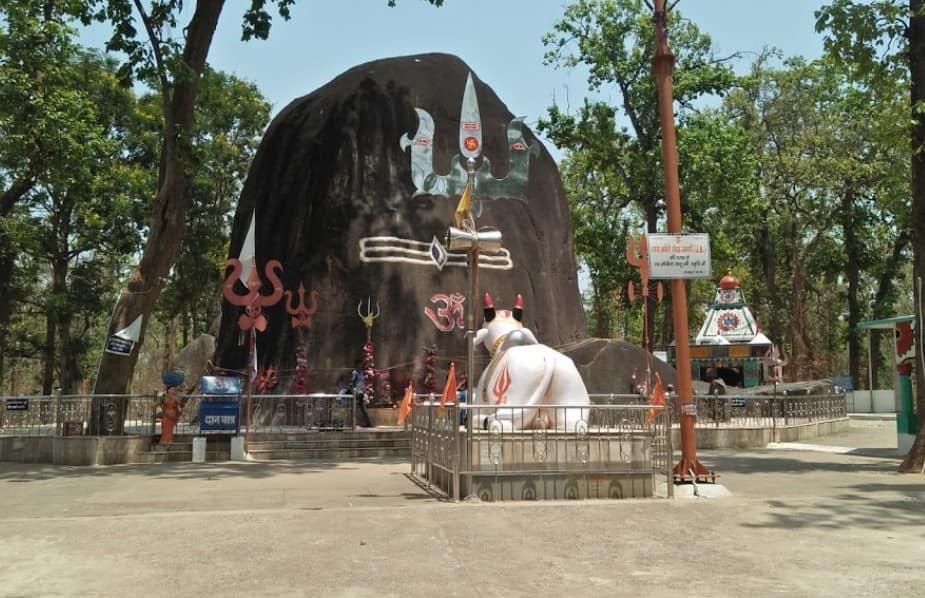
    The Samakanda Shivling is a mānuṣa liṅga crafted so that the Brahmā, Viṣṇu, and Rudra sections are exactly equal in height. This sacred geometry embodies the Trimūrti’s harmony, turning complex theology into an accessible visual and ritual language. Drawing on Śilpa-Śāstra and Śaiva Āgama guidance, it balances square, octagonal, and circular principles across the vertical…

  • Virabhadra vs Bhairava: Decoding Shiva’s Fierce Twins—Origins, Iconography, Tantra, Temple Worship

    Virabhadra vs Bhairava: Decoding Shiva’s Fierce Twins—Origins, Iconography, Tantra, Temple Worship

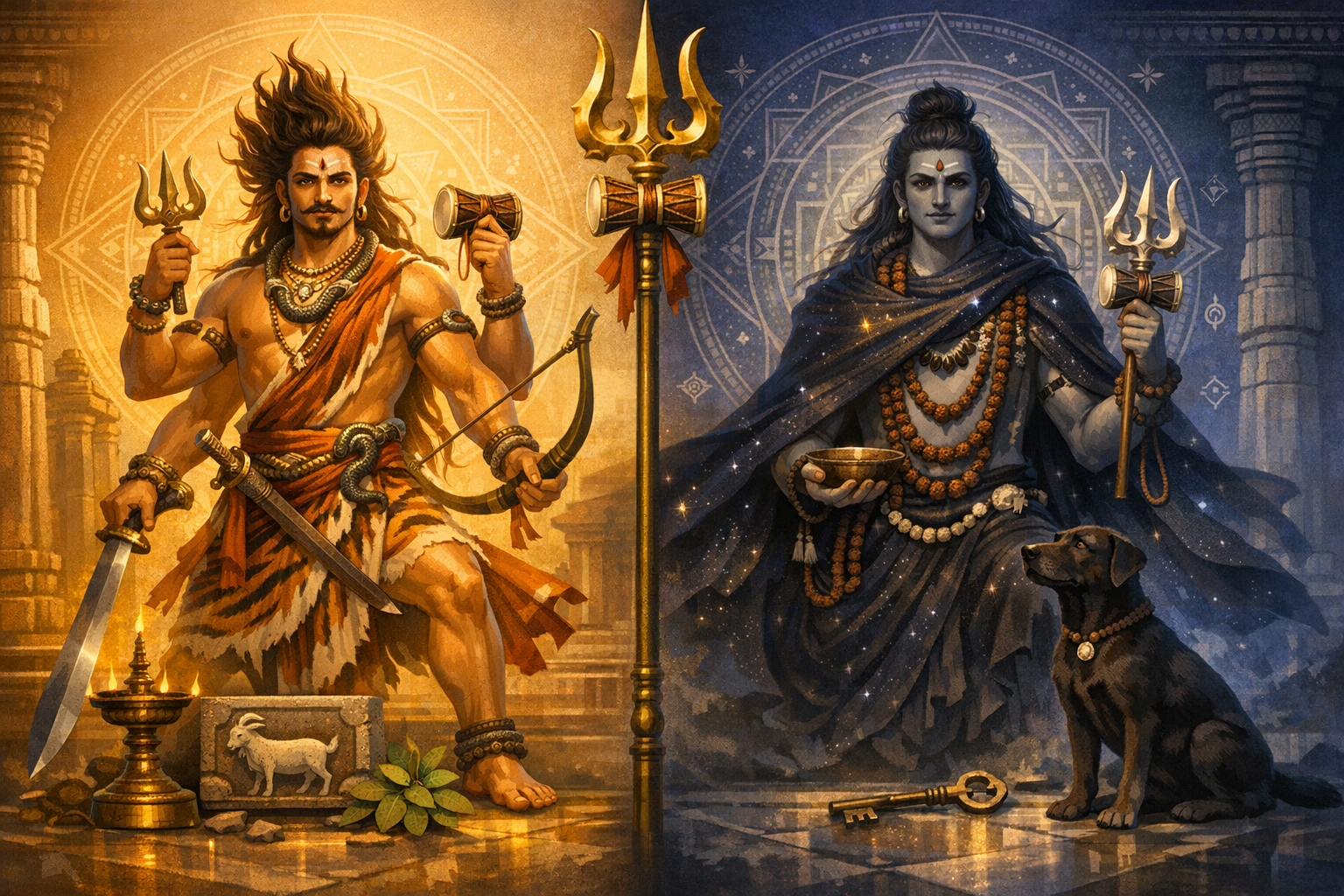
    Virabhadra and Bhairava are Shiva’s fiercest yet compassionate forms, distinguished by purpose, scope, and soteriology. Virabhadra embodies event-specific dharmic correction in the Daksha Yajna narrative, while Bhairava serves as perennial guardian of thresholds and time. Their iconographies differ—Virabhadra as heroic warrior and Bhairava as digambara sentinel with skull-bowl and dog vahana—yet both enact restorative justice.…

  • Kalika Tandava Decoded: Shiva’s Eight‑Armed Cosmic Dance of Renewal and Liberation

    Kalika Tandava Decoded: Shiva’s Eight‑Armed Cosmic Dance of Renewal and Liberation

    Kalika Tandava presents Shiva’s eight‑armed dance as a rigorous map of cosmic processes and inner transformation. The iconography—Abhaya and Varada mudras, damaru, agni, trishula, kapala, and more—translates metaphysics into a readable visual grammar. Drawing on Shaiva Agamas, Shilpa‑Shastras, and the Natya Shastra, the form aligns creation and dissolution with a living rhythm practitioners can contemplate…

  • Bhairava Unveiled: Symbolism, Meaning, Kala-Time Mastery, and Fearless Liberation

    Bhairava Unveiled: Symbolism, Meaning, Kala-Time Mastery, and Fearless Liberation

    Bhairava Roopaya—named first in the Bhairava Sahasranama—presents Bhairava as the omnipresent intelligence of Shiva that creates, sustains, dissolves, conceals, and liberates. This long-form exploration decodes the name’s etymology (bhaya + rava and Bha–Ra–Va), connects it to the Shaiva pañcakṛtya, and situates it within Kashmir Shaivism’s non-dual vision and Vijnana Bhairava Tantra’s contemplative methods. Readers gain…

  • Shoola vs Trishul: Decoding Sacred Weapons, Iconography, and the Timeless Power of Dharma

    Shoola vs Trishul: Decoding Sacred Weapons, Iconography, and the Timeless Power of Dharma

    Shoola (single-pointed spear) and Trishul (three-pronged trident) are often confused, yet they carry distinct forms and meanings in Hindu iconography. This article clarifies how a spear encodes one-pointed discernment while a trident integrates triadic powers—iccha, jnana, kriya; the gunas; and the three dimensions of time. Readers learn to identify each implement swiftly at temples and…

  • Shiva at the Margins: Why Mahadeva Reigns Over Ghosts, Outcasts, and Sacred Transgression

    Shiva at the Margins: Why Mahadeva Reigns Over Ghosts, Outcasts, and Sacred Transgression

    Shiva’s dwelling in cremation grounds and sovereignty over bhuta-ganas present a theology of fearless inclusion that dignifies what societies often cast aside. By tracing the arc from Vedic Rudra to Puranic Shiva, the discussion shows how ashes, serpents, and the smashana encode teachings on impermanence and compassion. Bhairava’s guardianship of thresholds clarifies why time, change,…

  • Compassionate Destroyer: Kinnara Shiva, Divine Healer Who Burns Away Disease and Suffering

    Compassionate Destroyer: Kinnara Shiva, Divine Healer Who Burns Away Disease and Suffering

    This study interprets Kinnara Shiva as a compassionate destroyer and divine healer within Hindu worship, framing disease and suffering through Shiva’s dual symbolism of purifying fire and cooling grace. It situates the epithet historically and doctrinally, clarifying that “Kinnara Shiva” functions as a living, vernacular honorific while grounding the healing theology in Sri Rudram and…

  • Jagath Samhara Moorthy: How Shiva’s Cosmic Dissolution Fuels Renewal and Liberation

    Jagath Samhara Moorthy: How Shiva’s Cosmic Dissolution Fuels Renewal and Liberation

    Jagath Samhara Moorthy—Shiva as the cosmic dissolver—expresses a lawlike rhythm in Hindu cosmology where endings prepare the ground for renewal. Drawing on the Puranas, Upanishads, and Shaiva philosophy, the article clarifies how samhara operates within the five divine acts: creation, maintenance, dissolution, concealment, and grace. It explains the four types of pralaya and situates them…

  • Ugra, Raudra, Samhara: Decoding Lord Shiva’s Ferocious Grace and Cosmic Protection

    Ugra, Raudra, Samhara: Decoding Lord Shiva’s Ferocious Grace and Cosmic Protection

    Ugra, Raudra, Samhara Murti presents Lord Shiva’s ferocious yet protective aspect as an ethical force that dissolves disorder and restores balance. The terms “Ugra” and “Raudra” mean “Terrible,” while “Samhara’ means to kill,” aligning this form with Shiva’s cosmic act of dissolution. In practice, devotees turn to this aspect to overcome inner obstacles and societal…

  • Shiva’s Invisible Justice: Subtle Cycles of Cosmic Destruction in the Skanda Purana

    Shiva’s Invisible Justice: Subtle Cycles of Cosmic Destruction in the Skanda Purana

    This analysis reframes Shiva’s role in “divine destruction” as subtle dissolution guided by time and karma, echoing insights hinted in the Skanda Purana. Instead of catastrophic spectacle, the process appears as an ethical and metaphysical recalibration—an unseen justice restoring balance. Readers gain a practical lens to interpret endings in personal and social life as compassionate…

  • Rudra from Brahma’s Third Eye: Profound Symbolism and Cosmic Balance in the Devi Bhagavata Purana

    Rudra from Brahma’s Third Eye: Profound Symbolism and Cosmic Balance in the Devi Bhagavata Purana

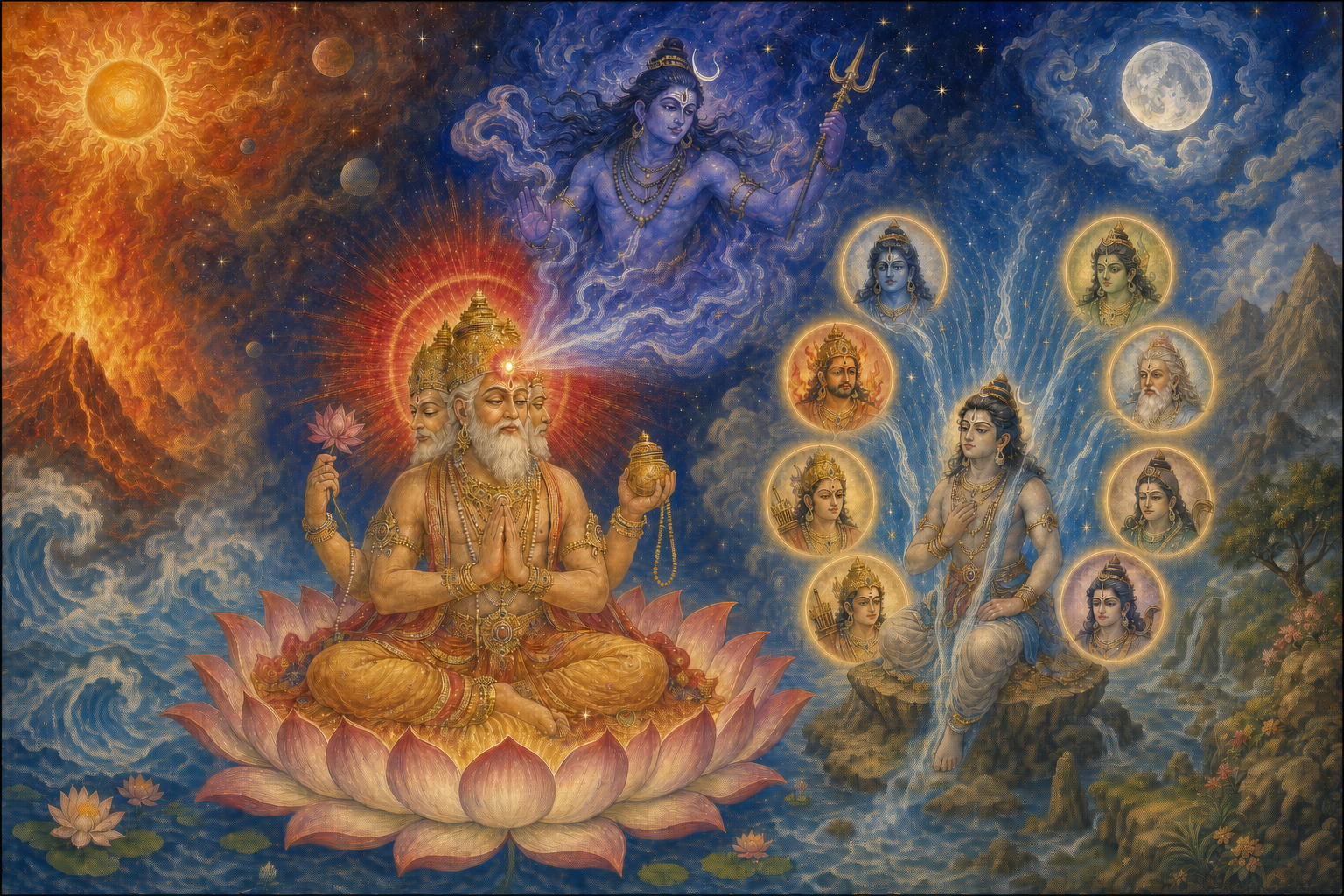
    This analysis explores the Devi Bhagavata Purana’s account of Rudra emerging from Brahma’s third eye, highlighting its profound symbolism for cosmic balance and inner transformation. It explains how the narrative frames creation, preservation, and transformation as a harmonious continuum within the Trimurti. Readers gain practical insights into the third eye as discernment, the pancha mahabhutas…

  • Kala Rudra: Shiva’s Awe-Inspiring Face of Time, Destruction, and Renewal Explained

    Kala Rudra: Shiva’s Awe-Inspiring Face of Time, Destruction, and Renewal Explained

    Kala Rudra, Shiva’s awe-inspiring form of time and transformation, reveals the compassionate purpose behind cosmic dissolution. Readers will learn how “Kala” (time) and “Rudra” (purifying force) together symbolize the end of stagnation and the beginning of renewal. The article clarifies iconography across Shaiva traditions while emphasizing the inner meaning: fearlessness, detachment, and clarity. Practical insights…

  • Bhairava and Shiva’s Fierce Compassion: Trimurti Legend, Ego-Cutting Symbolism, Inner Protection

    Bhairava and Shiva’s Fierce Compassion: Trimurti Legend, Ego-Cutting Symbolism, Inner Protection

    Bhairava represents the raudra, or fierce, aspect of Shiva—not unrestrained anger, but disciplined power that protects dharma and cuts through ego. Puranic narratives describe Shiva manifesting as Kala Bhairava to humble Brahma’s pride, symbolically severing the fifth head that represents arrogance. The legend culminates in Varanasi, where Bhairava becomes the guardian of Kāśī, affirming the…

  • Rudra Shiva, the Great Healer: Discover the Ancient, Proven Science of Sacred Medicine

    Rudra Shiva, the Great Healer: Discover the Ancient, Proven Science of Sacred Medicine

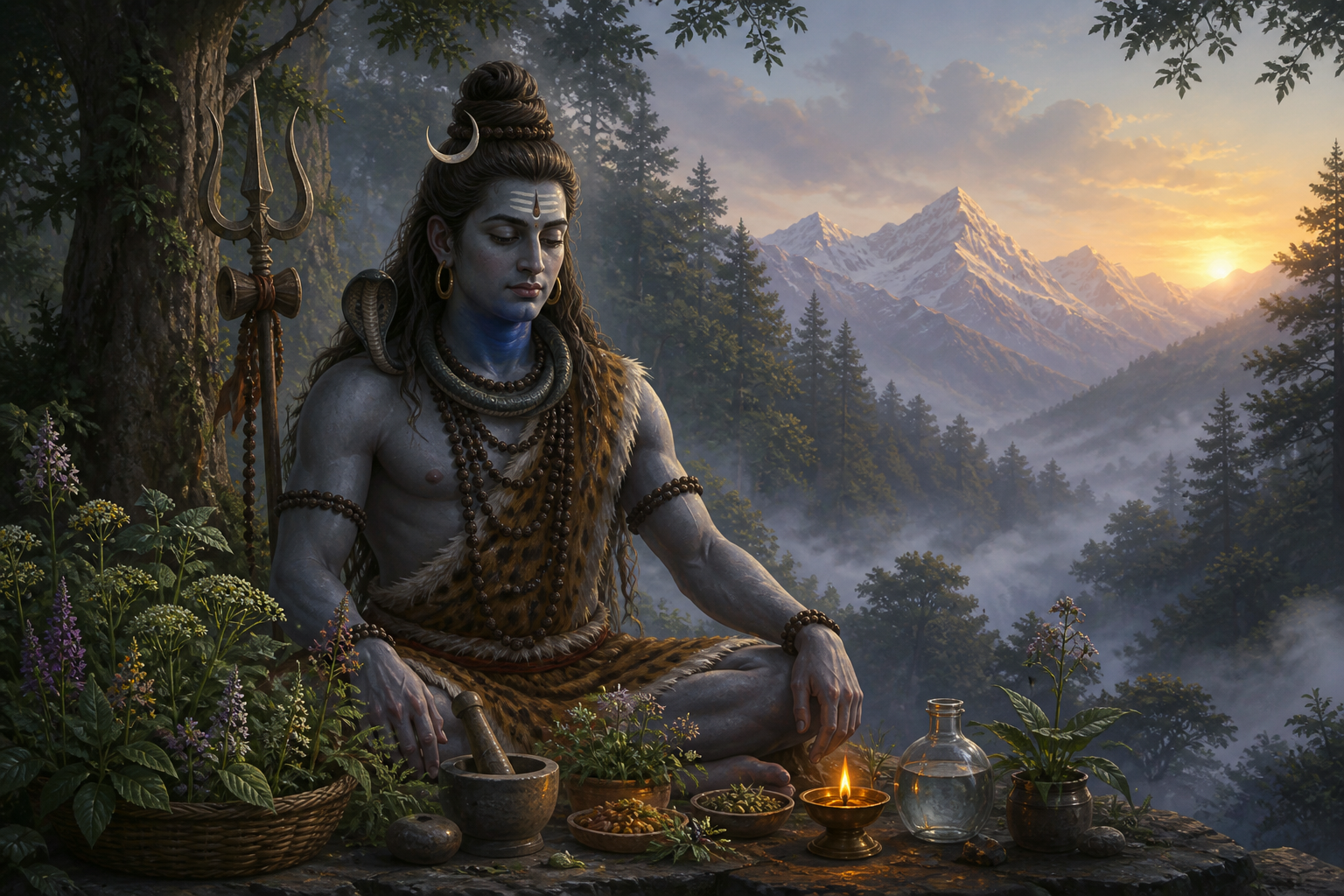
    Rudra Shiva is not only a fierce deity but the great physician and healer of Vedic tradition. Associated with forests and mountains, Rudra symbolizes mastery over herbs and remedies for both body and mind. Vedic hymns and the Mahamrityunjaya invocation highlight a holistic healing vision that integrates mantra, medicine, and inner steadiness. Ayurveda complements this…

  • Discover Tatpurusha: The Complete Guide to Shiva’s Eastern Face on the Shivalinga

    Discover Tatpurusha: The Complete Guide to Shiva’s Eastern Face on the Shivalinga

    This exploration of Tatpurusha—the eastern face of Shiva on the Panchamukha Linga—clarifies its sacred symbolism, directional meaning, and contemplative value. It explains why east-facing worship aligns with dawn’s illumining power and how the Rudra Gayatri supports breath-centered focus. The discussion situates Tatpurusha within the five cosmic functions of Shaiva theology and shows how disciplined practice…

  • The Worship of Shiva Linga in Sanatan Dharma

    The Worship of Shiva Linga in Sanatan Dharma

    Shiva Linga worship is a practice that has been a part of Hinduism for centuries, and yet it remains a controversial and often misunderstood aspect of the religion. At the heart of this controversy is the idea that the Shiva Linga, a symbol of Lord Shiva, represents the male reproductive organ, and that its worship…

  • Navaratri and it’s broad spectrum dharmic influence

    Navaratri and it’s broad spectrum dharmic influence

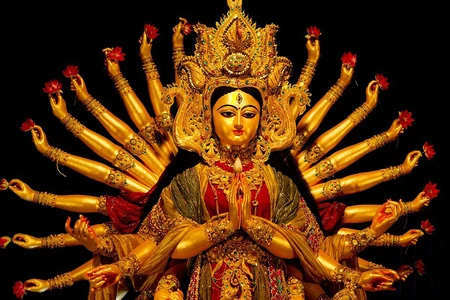
    According to our ancient Sanatani scriptures which are the Saptasudhi, the theory of the Navratri festival has been described. We are normally aware of two types of Navratri that are Chaitra Navratri and Shardiya Navratri. But, you will be amazed to hear that Navratri falls four times in a year.