-
Rakshasa Linga Explained: How Fierce Tapas Wins Shiva’s Non‑Discriminating Grace

This in-depth exploration clarifies what a Rakshasa Linga is and why it matters: a Shivalinga worshipped or installed by a Rakshasa in Purana and sthala-mahatmya traditions. It explains how Skanda Purana and Shiva Purana preserve narratives—such as Gokarna’s Atma Linga and Baidyanath Jyotirlinga—that highlight Ravana’s fierce tapas and Shiva’s impartial grace. It situates these accounts…
-
Kalika Tandava Decoded: Shiva’s Eight‑Armed Cosmic Dance of Renewal and Liberation

Kalika Tandava presents Shiva’s eight‑armed dance as a rigorous map of cosmic processes and inner transformation. The iconography—Abhaya and Varada mudras, damaru, agni, trishula, kapala, and more—translates metaphysics into a readable visual grammar. Drawing on Shaiva Agamas, Shilpa‑Shastras, and the Natya Shastra, the form aligns creation and dissolution with a living rhythm practitioners can contemplate…
-
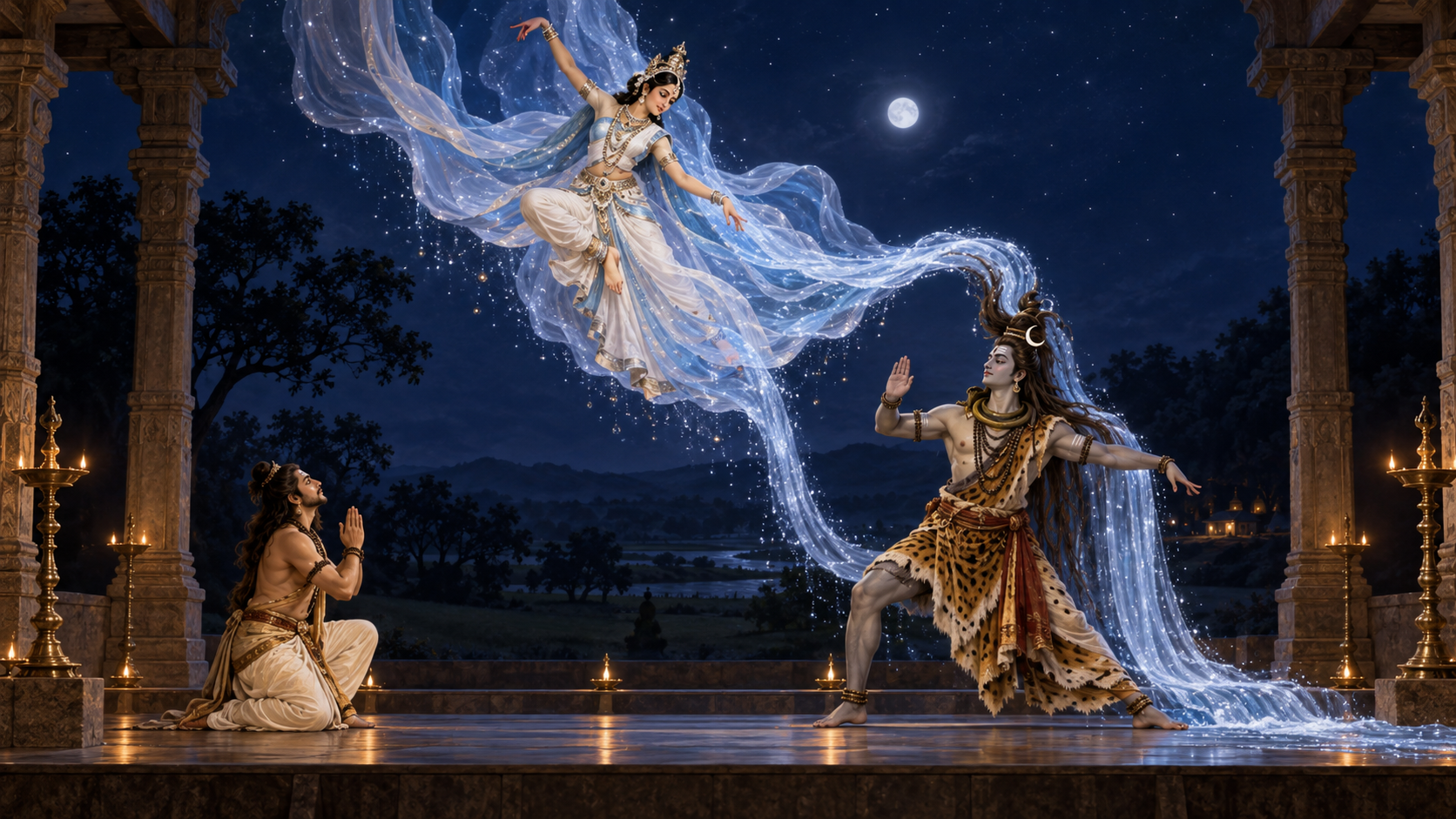
Sandhya Tandava at Dusk: Decoding Shiva Nataraja’s Twilight Dance and Its Living Wisdom

Sandhya Tandava is the twilight expression of Shiva Nataraja’s cosmic dance, performed before an illustrious assembly with Goddess Parvati as witness. It ritualizes the liminal hour when day turns to night, aligning personal worship with cosmic rhythm. Iconography—damaru, flame, abhaya mudra, and Apasmara—maps directly to the five divine acts and becomes especially evocative at dusk.…
-
Purva Linga and Achala Shivlings: Uncreated Symbols of Shiva’s Eternal Presence

This article explains why the Purva Linga is counted among the Achala Shivlings in Shaivism and how it epitomizes an uncreated, immovable presence of Shiva. It clarifies the philology of “pūrva” and the aniconic meaning of the Shivalinga, linking these ideas to Lingodbhava and Maha Shivaratri. Readers learn how temple architecture, Abhishekam, and daily puja…
-
Shiva at the Margins: Why Mahadeva Reigns Over Ghosts, Outcasts, and Sacred Transgression

Shiva’s dwelling in cremation grounds and sovereignty over bhuta-ganas present a theology of fearless inclusion that dignifies what societies often cast aside. By tracing the arc from Vedic Rudra to Puranic Shiva, the discussion shows how ashes, serpents, and the smashana encode teachings on impermanence and compassion. Bhairava’s guardianship of thresholds clarifies why time, change,…
-
Compassionate Destroyer: Kinnara Shiva, Divine Healer Who Burns Away Disease and Suffering

This study interprets Kinnara Shiva as a compassionate destroyer and divine healer within Hindu worship, framing disease and suffering through Shiva’s dual symbolism of purifying fire and cooling grace. It situates the epithet historically and doctrinally, clarifying that “Kinnara Shiva” functions as a living, vernacular honorific while grounding the healing theology in Sri Rudram and…
-
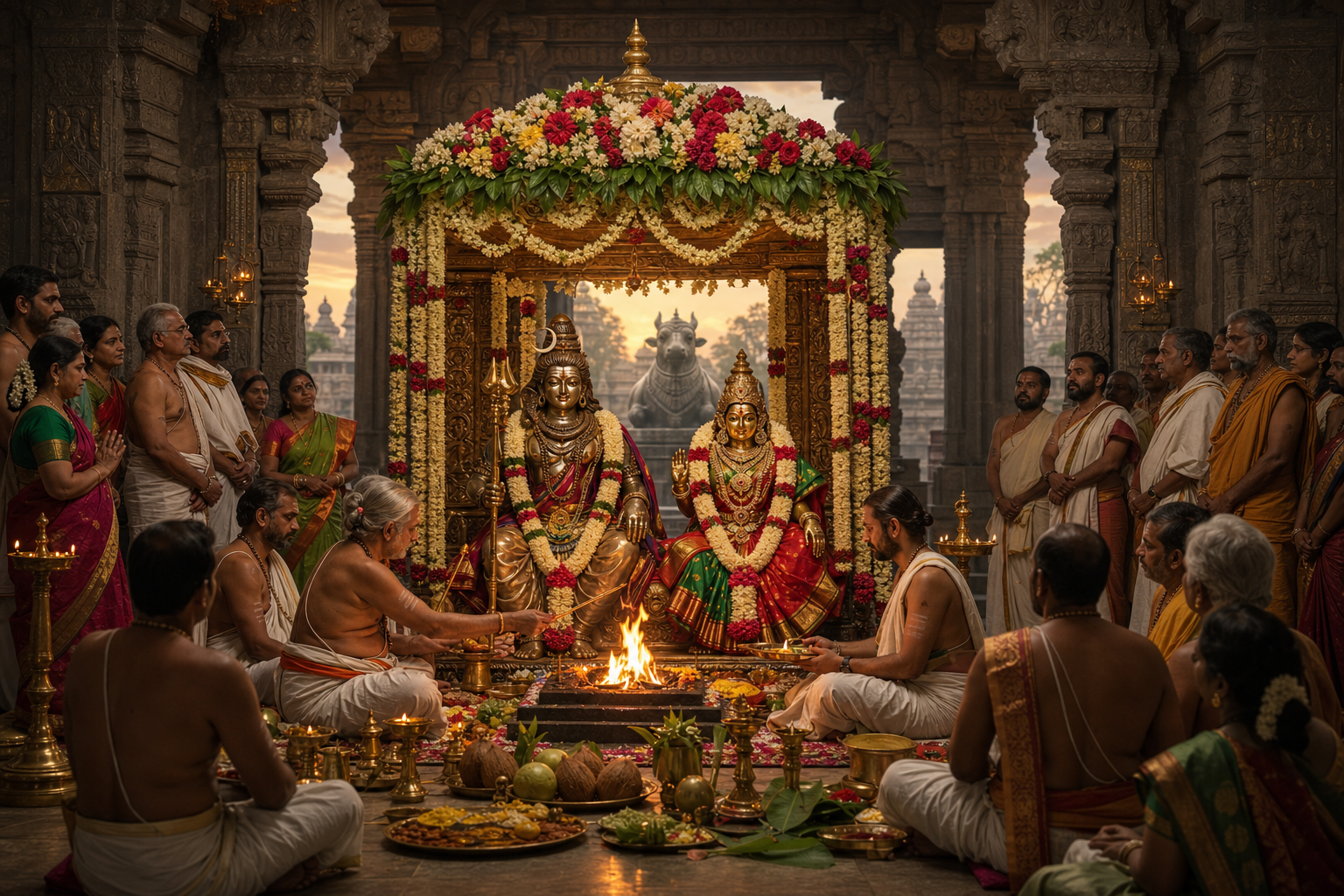
Thiruloki Sundareswara Swamy: Akhilandeswari’s Timeless Grace, History, Rituals, Travel

The Sri Akhilandeswari Samedha Sri Sundareswara Swamy Temple at Tiruloki in the Thanjavur region presents a living synthesis of Shaiva theology, Dravidian temple architecture, and community ritual. This guide explains the paired deities—Akhilandeswari and Sundareswara—their iconography, and the Agamic framework that shapes daily worship. It outlines major festivals such as Maha Shivaratri, Pradosham, Arudra Darshan,…
-
Shiva–Shakti Raasa Leela: Unveiling the Cosmic Dance of Love, Consciousness, and Creation

Shivashakti Raasa Leela—also known as Sri ShivShakti Rasalila—presents the union of Śiva and Śakti as a continuous dance and embrace that render Shaiva metaphysics visible and livable. Anchored in Natyashastra aesthetics, Shaiva Āgamas, and Kashmir Shaivism’s rasa theory, it interprets creation as spanda (vibration) and devotion as aesthetic savoring (rasa). Iconography of Śiva Naṭarāja, Somāskanda,…
-
Jagath Samhara Moorthy: How Shiva’s Cosmic Dissolution Fuels Renewal and Liberation

Jagath Samhara Moorthy—Shiva as the cosmic dissolver—expresses a lawlike rhythm in Hindu cosmology where endings prepare the ground for renewal. Drawing on the Puranas, Upanishads, and Shaiva philosophy, the article clarifies how samhara operates within the five divine acts: creation, maintenance, dissolution, concealment, and grace. It explains the four types of pralaya and situates them…
-
Kalantaka Shiva Unveiled: Tantric Iconography and the Fearless Conquest of Death and Time

Kalantaka Shiva embodies Lord Shiva’s sovereignty over death and time, uniting narrative, ritual, and art into a coherent path of fearlessness. Drawing on Puranic sources—especially the Markandeya episode—this study unpacks the icon’s ugra yet compassionate character and explains how the trishula, damaru, and noose operate as precise Tantric symbols. Readers gain a field guide to…
-
Kashi’s Tilbhandeshwar Mahadev: The Shivling Said to Grow a Sesame Each Year and Its Meaning

In Varanasi’s Tilbhandeshwar Mahadev Temple, devotion, memory, and material processes meet around a unique tradition: the Shivalinga is said to grow by a sesame seed each year. The temple’s name, lore, and ritual life together illustrate how communities preserve sacred knowledge through practice. Technical factors—mineral accretion from abhishekam and subtle structural shifts—offer plausible mechanisms for…
-
Mahashivratri in Raigarh: 272 participants reaffirm dharma in a reverent ghar wapsi

On Mahashivratri in Kharsia, Raigarh district, 272 individuals publicly reaffirmed their adherence to the Hindu way of life in a dignified ghar wapsi ceremony at the Bargarh Dham complex. The rite, led by Prabal Pratap Singh Judev, featured the traditional washing of feet, symbolizing humility, respect, and reintegration into community life. Situated within India’s constitutional…
-
Kuravi Veerabhadra Swamy Temple: Fierce Shaivite Power, Kakatiya Heritage, Rituals & Guide

Kuravi Veerabhadra Swamy Temple in Mahabubabad, Telangana, is a living Shaivite kshetra where Veerabhadra’s fierce compassion is honored through precise daily rites and major festivals like Maha Shivaratri and Karthika masam. The shrine’s iconography, ritual cycle, and Dravida architectural grammar offer a clear, research-informed window into Telangana’s sacred heritage. Visitors gain practical guidance on access,…
-
Kuravi Veerabhadra Swamy Temple: Fierce Grace, Living History, Rituals, and Travel Guide

Kuravi Veerabhadra Swamy Temple in Mahabubabad, Telangana, is a living Shaivite sanctuary where fierce grace meets compassionate protection. Dedicated to Veerabhadra Swamy, iconographically known for three eyes and ten arms, the shrine embodies the Daksha Yajna narrative as a lesson in restoring balance through dharma. Visitors encounter a contemplative experience shaped by daily abhishekam, Sri…
-
Historic Milestone: Pran Pratishtha of 12 Jyotirlingas at Shri Goveshwar Devasthan, Old Goa

Shri Goveshwar Devasthan (Mahashiv Temple) in Old Goa has marked a historic milestone with the Pran Pratishtha of twelve Jyotirlinga representations in a single precinct. The ceremony aligns with Agamic and Shilpa Shastra principles, transforming crafted icons into a living locus of presence through mantric and liturgical precision. The twelve-Jyotirlinga configuration offers a compact, pedagogical…
-
SZA’s Viral Mahashivratri Dance at Isha: A Powerful Bridge Between Pop Culture and Dharma

A viral appearance by Grammy Award-winning artist SZA at Sadhguru’s Mahashivratri in Coimbatore showcased how respectful celebrity participation can amplify Hindu spirituality without diluting its depth. The event highlighted Mahashivratri’s core practices—devotional chant, dance, and meditative vigil—while illustrating soft power at work through cultural appreciation rather than appropriation. For the diaspora, the moment served as…
-
Mahashivratri 2026 Puja Mantras: Timings, Vidhi, Abhishekam & Stotras (Bilvashtakam, Lingashtakam)

Mahashivratri 2026 falls on 15 February and is observed through a structured, night-long vigil of puja, stotra chanting, abhishekam, and japa. This comprehensive guide explains exact puja components—Panchopachara vs. Shodashopachara, samagri, bilva patra significance, and safe, traditional abhishekam sequences. It details the role of key mantras—ॐ नमः शिवाय and the Mahamrityunjaya mantra—and outlines when to…
-
Shivaratri Jatara 2026 at Vemulawada: Dates, Rituals, Travel and a Devotional Deep Dive

Maha Shivaratri 2026 at Vemulawada Rajarajeshwara Swamy Temple will be observed on 15 February, with the three-day Shivratri Jathara running from 14–16 February. This guide explains the festival’s lunar timing, the four-prahar night vigil, and Lingodbhava Kalam at midnight. It details distinctive local practices such as Kode-Mokku and the Dharma Gundam snana, while highlighting bilva…