Tag: dance

  • Vakresvara Pandita’s Ecstatic Dance: Powerful Lessons in Bhakti, Seva, and Unity

    Vakresvara Pandita’s Ecstatic Dance: Powerful Lessons in Bhakti, Seva, and Unity

    Vakresvara Pandita is remembered in the Gaudiya Vaisnava tradition as a deeply beloved servant of Lord Caitanya Mahaprabhu and as one of the chief dancers in the devotional gatherings at Srivasa Pandita’s house. His ability to dance in ecstatic devotion for seventy-two hours is understood as a sign of complete absorption in bhakti rather than…

  • Bhaumi Chari Explained: Powerful Earth-Bound Footwork in Classical Dance

    Bhaumi Chari Explained: Powerful Earth-Bound Footwork in Classical Dance

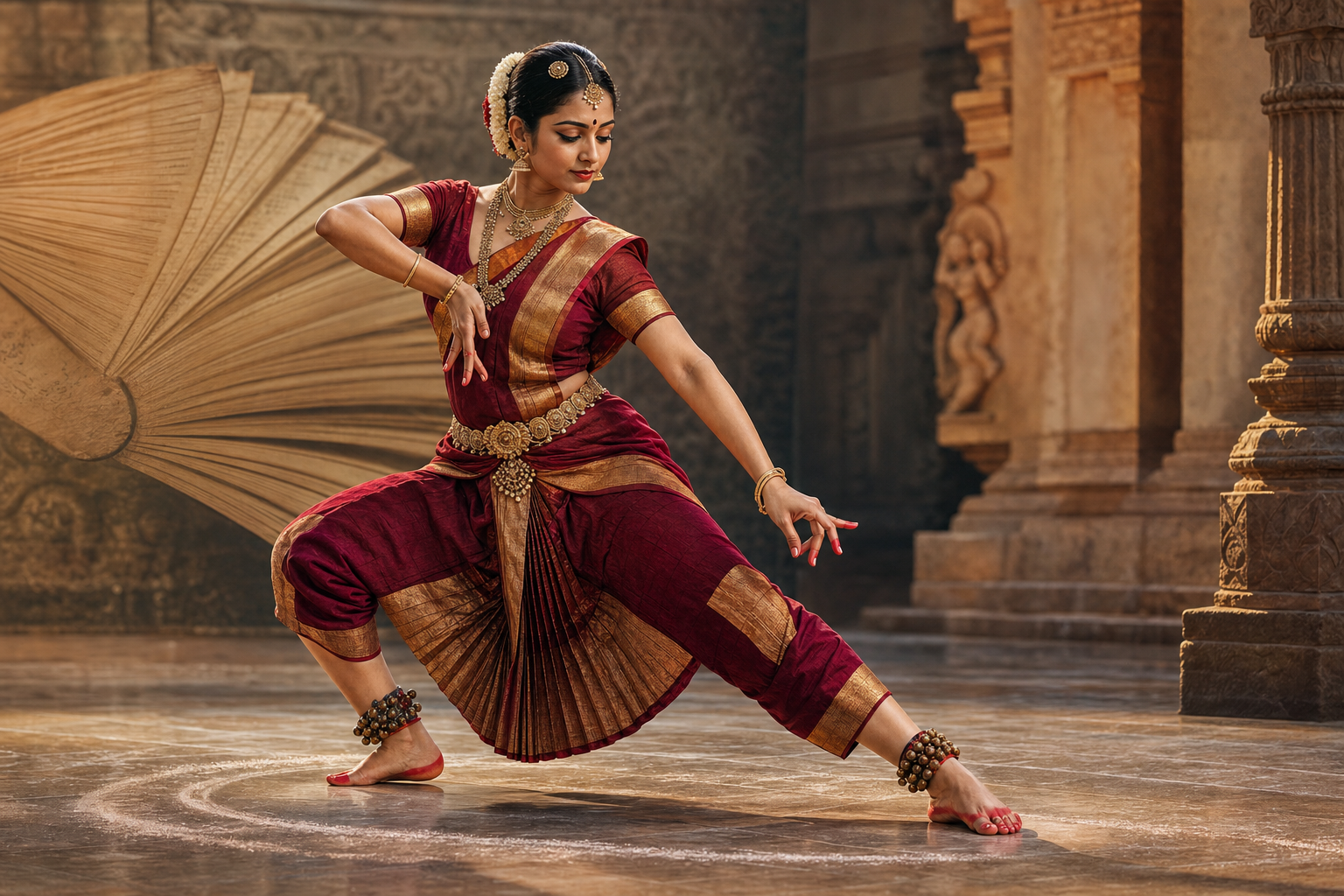
    Bhaumi Chari refers to the earth-bound movement vocabulary of Hindu classical dance. It forms one of the two major categories of charis, the codified movements of the feet and body described in classical Indian performance theory. This article explains how Bhaumi Chari coordinates the feet, calves, thighs, hips, torso, rhythm, and dramatic intention into a…

  • Matak Hulāre Unveiled (Part 2): Swaying Rhythms, Folk Aesthetics, and Punjabi Dance Science

    Matak Hulāre Unveiled (Part 2): Swaying Rhythms, Folk Aesthetics, and Punjabi Dance Science

    Matak Hulāre captures the essence of Punjabi folk movement as a disciplined sway animated by joy, community, and musical pulse. This in-depth second installment analyzes its cultural history across Giddha and Bhangra, explains rhythmic foundations such as keherva cycles, and details the roles of dhol, algoza, chimta, and tumbi. It explores boliyan as living oral…

  • Bhujanga Lalita Tandava: Decoding Shiva’s Serpentine Grace and the Defeat of Avidya

    Bhujanga Lalita Tandava: Decoding Shiva’s Serpentine Grace and the Defeat of Avidya

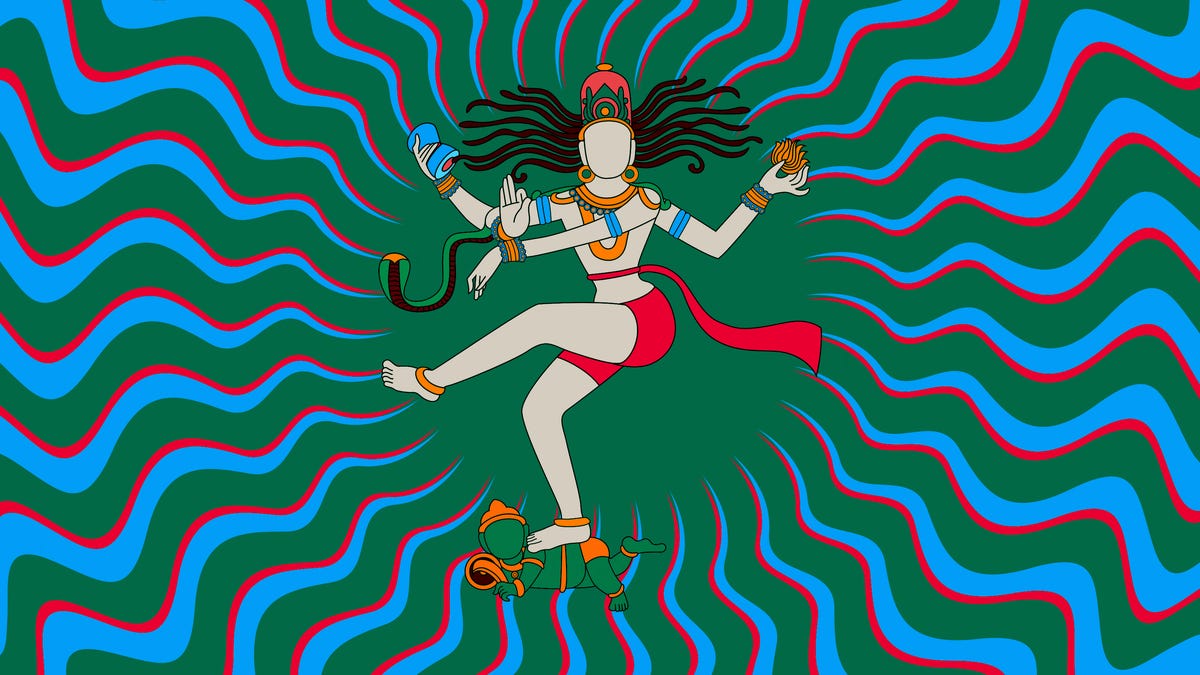
    Bhujanga Lalita Tandava unites Shiva’s dynamic tandava with the soft cadence of lalita, translating complex Shaiva metaphysics into a clear, embodied grammar of movement. The dance’s serpentine wave, read through kundalini symbolism, demonstrates how intelligence and grace transform raw force into awakened action. Iconography of Natarajaespecially the subduing of Apasmara (avidyā)grounds an ethics where clarity…

  • Kalika Tandava Decoded: Shiva’s Eight‑Armed Cosmic Dance of Renewal and Liberation

    Kalika Tandava Decoded: Shiva’s Eight‑Armed Cosmic Dance of Renewal and Liberation

    Kalika Tandava presents Shiva’s eight‑armed dance as a rigorous map of cosmic processes and inner transformation. The iconographyAbhaya and Varada mudras, damaru, agni, trishula, kapala, and moretranslates metaphysics into a readable visual grammar. Drawing on Shaiva Agamas, Shilpa‑Shastras, and the Natya Shastra, the form aligns creation and dissolution with a living rhythm practitioners can contemplate…

  • Kalita Tandava Unveiled: Shiva’s Eight-Armed Cosmic Dance of Balance, Time, and Renewal

    Kalita Tandava, an eight-armed manifestation of Shiva’s cosmic dance, illuminates the cycles of creation, preservation, and dissolution through a precise symbolic grammar. Readers gain a clear map of its iconographydamaru, agni, triśūla, and protective mudrāsand how these elements encode the pañcakṛtya and expanded functions of grace and discernment. The article connects Vedānta, Kashmir Śaivism, and…

  • Empowering Safety: Kranti Petkar Calls for Self‑Defence Training for Young Women in Pune

    Empowering Safety: Kranti Petkar Calls for Self‑Defence Training for Young Women in Pune

    At Dance Festival 2025 in Pune, Ms. Kranti Petkar of the Ranragini wing emphasized that self‑defence is essential to women’s empowerment. The focus extended beyond techniques to include situational awareness, assertive communication, and de‑escalation. Framed through shared dharmic values, the message aligned personal safety with a unifying ethos across Hinduism, Buddhism, Jainism, and Sikhism. Traditional…

  • Unlocking Abhinaya Dharma: Natyadharma vs. Lokadharma in India’s Timeless Dance-Drama

    Unlocking Abhinaya Dharma: Natyadharma vs. Lokadharma in India’s Timeless Dance-Drama

    Abhinaya Dharma denotes the guiding codes of Indian dance-drama, balancing stylized Natyadharma with naturalistic Lokadharma. Understanding these two modes clarifies how performers move from bhava (inner feeling) to rasa (aesthetic experience). Natyadharma refines gesture, voice, costume, and inner affect into a luminous grammar; Lokadharma anchors performance in everyday realism. Together, they deepen narrative clarity, audience…

  • Complete Comparative Guide: Discover Bhagavata Mela vs Krishnattam and Their Unified Spirit

    Complete Comparative Guide: Discover Bhagavata Mela vs Krishnattam and Their Unified Spirit

    Bhagavata Mela (Tamil Nadu) and Krishnattam (Kerala) are classical dance-dramas devoted to Lord Krishna that developed in distinct regional ecologies yet share a unifying bhakti ethos. This comparison clarifies their originsMelattur’s community-centered ritual theatre versus Guruvayur’s temple-offering cycleand explains how aesthetics, music, language, and costume differentiate their experiences. Readers gain practical insight into Carnatic versus…

  • What Bharat offers to the world on International Dance Day

    What Bharat offers to the world on International Dance Day

    Bharat is a land of diverse cultures and traditions, each with its own unique dance form. From the energetic Bhangra of Punjab to the graceful Mohiniyattam of Kerala, the colorful Garba of Gujarat to the soulful Sattriya of Assam, every dance form reflects the rich heritage and history of its respective region. However, amidst this…