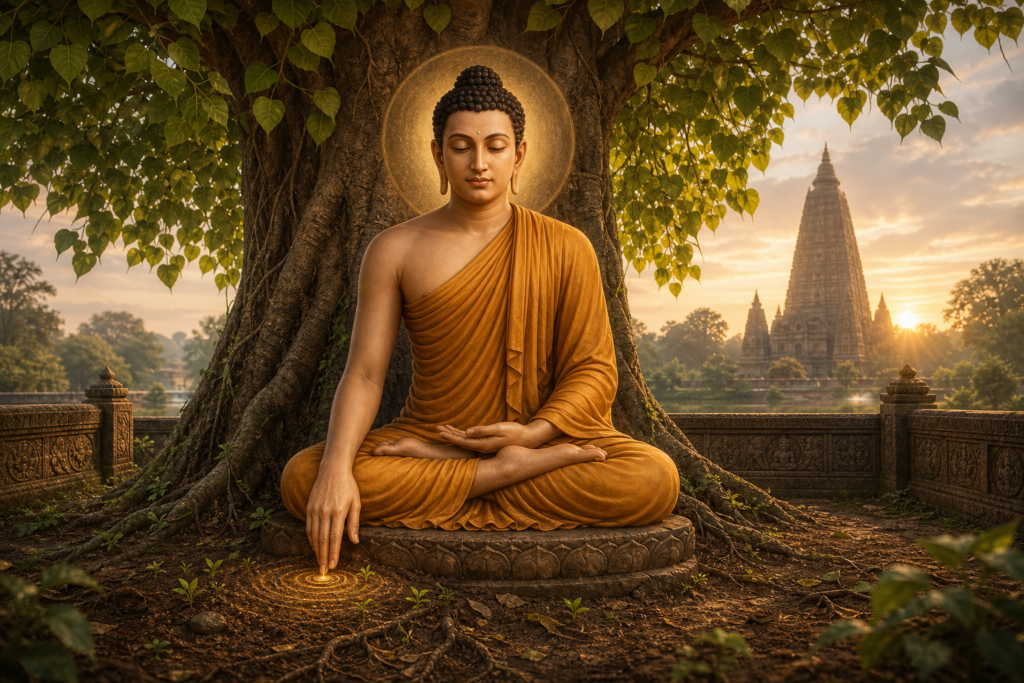
Ethical conduct stands at the heart of the dharmic vision of life, nurturing trust, confidence, and social harmony. Rooted in the principle of dharma (righteousness), this understanding in Hinduismand resonant across Buddhism, Jainism, and Sikhismpresents ethics not as abstraction but as a daily discipline that strengthens relationships, institutions, and inner stability.
Within this framework, dharma encompasses time-tested virtues such as satya (truthfulness), ahimsa (non-harm), asteya (non-stealing), aparigraha (non-possessiveness), daya (compassion), and seva (selfless service). These virtues have clear parallels across Dharmic Traditions: karuṇā (compassion) and mindfulness in Buddhism, the paramountcy of ahimsa and aparigraha in Jainism, and seva and sat in Sikhism. Together, they offer a shared ethical vocabulary that supports unity in diversity while honoring each tradition’s distinctive insights.
Trust in society grows where ethical action is consistent, transparent, and accountable. In families, keeping one’s word builds reliability; in workplaces, honest communication prevents conflict; in public life, fairness and integrity foster legitimacy. Patterns of ethical behavior create predictability, and predictability cultivates trusta virtuous cycle that strengthens both community bonds and civic life.
Ethical conduct also generates confidenceboth inwardly and outwardly. Living in alignment with dharma reduces inner conflict, clarifies priorities, and supports steady decision-making. Externally, ethical consistency signals credibility, inviting cooperation and goodwill. In this way, personal virtue becomes a public asset, reinforcing social cohesion through everyday choices.
Practical applications are straightforward and impactful: honoring commitments, practicing fairness in financial dealings, communicating with care, moderating speech on digital platforms, and exercising stewardship over shared resources. Such practices reflect the spirit of ahimsa and compassion while making ethics visible in ordinary momentswhere trust is most easily built or broken.
Classical texts underscored these imperatives in ways that remain contemporary. The Bhagavad Gita frames dharma as principled action grounded in clarity and self-mastery. The Upanishads elevate truth as a transformative force in knowledge and conduct. In Yogic philosophy, the yamas and niyamassatya, ahimsa, asteya, brahmacharya, aparigraha; śauca, santoṣa, tapas, svādhyāya, īśvarapraṇidhānaoffer a systematic path for character formation that enhances individual well-being and collective trust.
Dharmic ethics naturally encourage religious tolerance and respectful coexistence. By affirming that sincere pursuit of truth may take diverse paths, this perspective welcomes the plurality of worship and practice found across Hinduism, Buddhism, Jainism, and Sikhism. Such inclusivity deepens mutual respect while focusing on shared valuescompassion, self-discipline, service, and truththat hold communities together.
In leadership and institutions, ethical conduct enhances legitimacy and effectiveness. Transparent processes, equitable policies, and accountability mechanisms not only fulfill moral responsibility but also drive long-term stability. When leaders embody dharma through fairness and restraint, public trust becomes durable, enabling meaningful collaboration and social progress.
Ultimately, ethical conduct is both a personal discipline and a societal strategy. It strengthens character, dignifies relationships, and stabilizes institutions. By embracing dharma-inspired virtuesahimsa, satya, compassion, and sevacommunities across dharmic traditions cultivate confidence and trust, affirming that ethical living is the surest path to enduring harmony and shared flourishing.
Inspired by this post on Hindu Blog.