Tag: Hindu Dharma

  • GBC Resolutions 2026: Strengthening ISKCON Governance and Srila Prabhupada’s Vision

    GBC Resolutions 2026: Strengthening ISKCON Governance and Srila Prabhupada’s Vision

    The 2026 Annual General Meeting formally recognized the paper affirming the GBC as ISKCON’s ultimate managing authority, aligning contemporary governance with Srila Prabhupada’s original instructions. This decision consolidates decades of guidance into a clear framework that supports accountability, subsidiarity, and doctrinal fidelity across ISKCON’s global footprint. It emphasizes practical mechanisms—audits, ethical safeguards, grievance redress, and…

  • Shyam Manav’s Pune Remarks Ignite Fierce Debate: Free Speech, Faith, and Social Harmony

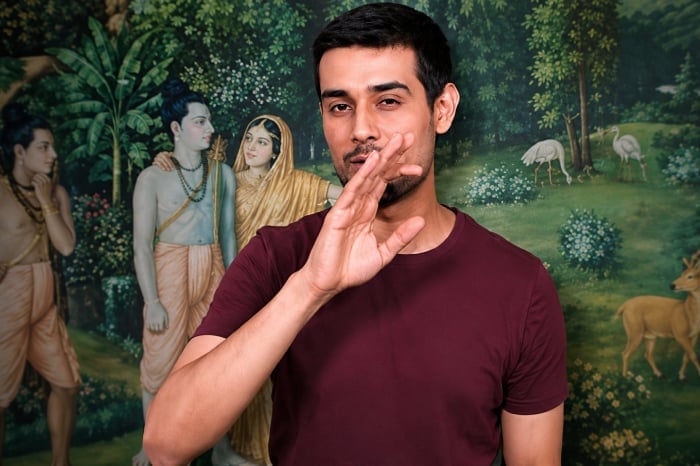
    Shyam Manav’s Pune Remarks Ignite Fierce Debate: Free Speech, Faith, and Social Harmony

    A public programme in Pune featuring rationalist activist Shyam Manav sparked a forceful debate about the boundaries of criticism, constitutional protections for free speech, and the duty to uphold dignity around Hindu Dharma, saints, and traditions. This analysis frames the incident through a dharmic-unity lens, emphasizing shared values across Hinduism, Buddhism, Jainism, and Sikhism. It…

  • The Peril of Vaishnava Aparādha: SB 11.1.13–15 and the Yadu Dynasty’s Devastating Fall

    The Peril of Vaishnava Aparādha: SB 11.1.13–15 and the Yadu Dynasty’s Devastating Fall

    Srimad Bhagavatam 11.1.13–15 warns that mocking saintly persons—illustrated by the Yadu youths disguising Samba as a pregnant woman—carries devastating karmic and social consequences. Drawing on HH Guru Prasad Swami Maharaj’s insights, this analysis clarifies the doctrine of Vaishnava aparādha and shows how even technical fixes cannot undo moral causes. Readers gain precise context for the…

  • Conquering the Disease of Envy: SB 3.29’s Remedy for Respect, Ahimsa, and Dharmic Unity

    Conquering the Disease of Envy: SB 3.29’s Remedy for Respect, Ahimsa, and Dharmic Unity

    This deep-dive, inspired by a Brambleton, VA discourse on May 21, 2026, examines why envy (īrṣyā, asūyā, mātsarya) is the principal obstacle to authentic respect and spiritual growth. Drawing on Srimad Bhagavatam 3.29, it maps how envy aligns with rajas and tamas and why non-envious devotion in sattva is essential. The analysis integrates parallel remedies…

  • West Bengal Flashpoint: Police Complaint Over Mamata Banerjee’s Alleged Anti-Hindu Remarks

    West Bengal Flashpoint: Police Complaint Over Mamata Banerjee’s Alleged Anti-Hindu Remarks

    A police complaint against Mamata Banerjee over alleged anti-Hindu remarks has ignited a West Bengal flashpoint where constitutional rights, statutory limits on hate speech, and communal harmony meet. This analysis explains the relevant IPC provisions (295A, 153A, 505), the Supreme Court’s tests for intent and harm, and the procedural safeguards including Section 65B electronic evidence…

  • Safeguarding the Sacred in Goa: A Strong Policy Case to Rename Deity-Named Liquor Shops

    Safeguarding the Sacred in Goa: A Strong Policy Case to Rename Deity-Named Liquor Shops

    The Gomantak Mandir Mahasangh has urged Goa Chief Minister Dr Pramod Sawant to bar liquor outlets from using names of Hindu deities and to require existing shops to rename. A carefully designed, religion-neutral policy that covers sacred signifiers across Hindu, Buddhist, Jain, and Sikh traditions can protect sanctity while preserving business freedoms. Constitutionally, a narrow…

  • Kumar Chellappan on HJS Outreach: A Powerful Call to Unite and Empower Every Hindu

    Kumar Chellappan on HJS Outreach: A Powerful Call to Unite and Empower Every Hindu

    A courtesy visit by a Hindu Janajagruti Samiti (HJS) delegation to senior journalist and Sanatan Prabhat contributor Kumar Chellappan spotlighted a shared priority: scaling inclusive, evidence-based outreach so that HJS’s work reaches every Hindu household. The engagement illustrates how responsible journalism and civil society can co-create value through accurate reporting, ethical collaboration, and community-centered communication.…

  • Religious Significance of the Yamuna River: Mythology, Pilgrimage, and Dharmic Ecology

    Religious Significance of the Yamuna River: Mythology, Pilgrimage, and Dharmic Ecology

    This in-depth overview explains why the Yamuna River—reverentially known as Yamunaji and Kalindi—holds enduring religious significance in Hindu Dharma and stands as a unifying symbol across the dharmic traditions of Hinduism, Buddhism, Jainism, and Sikhism. Readers will discover the river’s Vedic and Puranic foundations, her identity as Yami (sister of Yama and daughter of Surya),…

  • Rakshasa Linga Explained: How Fierce Tapas Wins Shiva’s Non‑Discriminating Grace

    Rakshasa Linga Explained: How Fierce Tapas Wins Shiva’s Non‑Discriminating Grace

    This in-depth exploration clarifies what a Rakshasa Linga is and why it matters: a Shivalinga worshipped or installed by a Rakshasa in Purana and sthala-mahatmya traditions. It explains how Skanda Purana and Shiva Purana preserve narratives—such as Gokarna’s Atma Linga and Baidyanath Jyotirlinga—that highlight Ravana’s fierce tapas and Shiva’s impartial grace. It situates these accounts…

  • Encountering Mahaperiyava: A scholarly, soul-stirring journey with the Sage of Kanchi

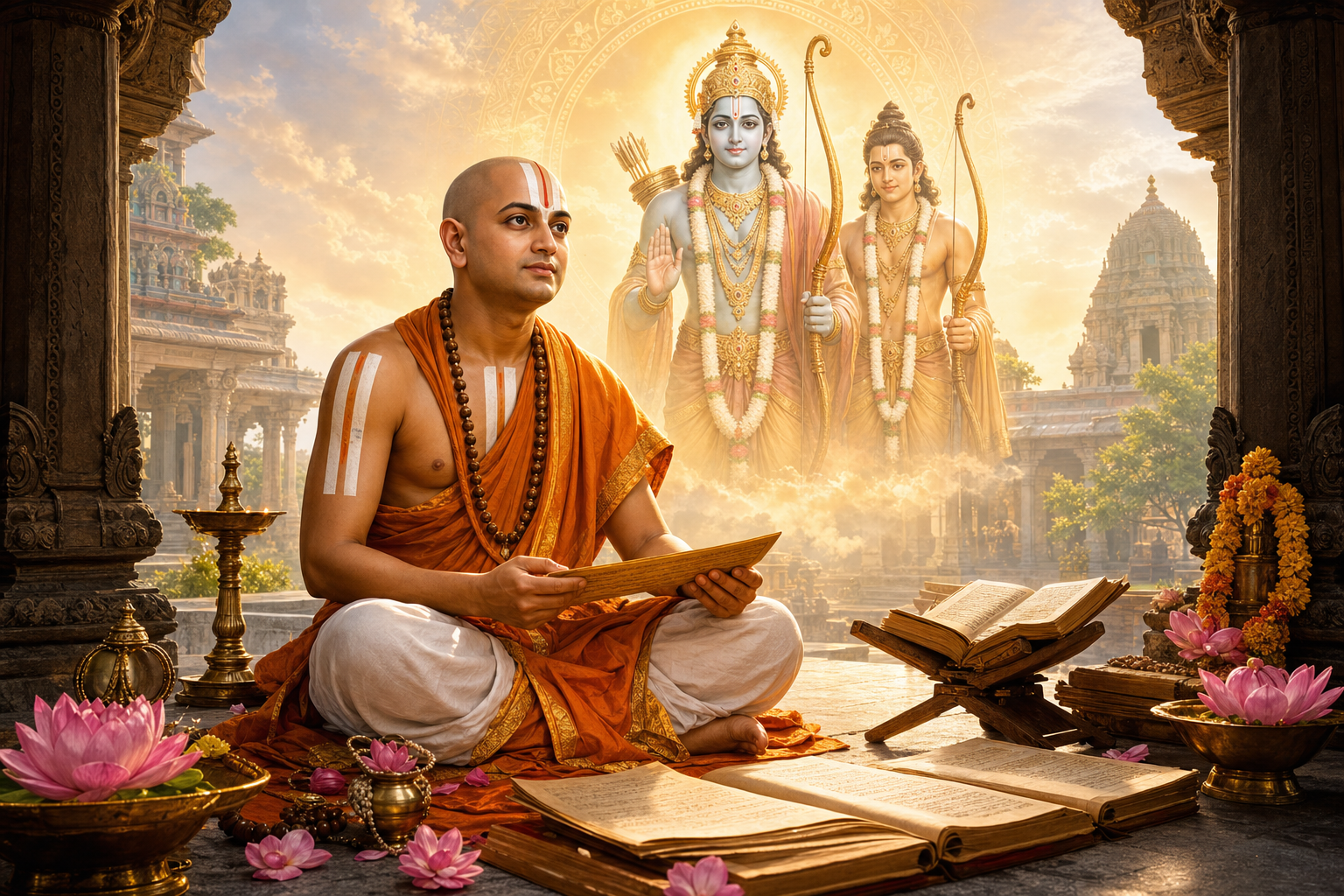
    Encountering Mahaperiyava: A scholarly, soul-stirring journey with the Sage of Kanchi

    Shri Chandrashekarendra Saraswati Swamigal (Mahaperiyava), the 68th Jagadguru of the Kanchi Kamakoti Peetham, united rigorous Advaita Vedanta with a lived ethic of compassion and service. This academically grounded reflection explains how his padayatra, pedagogy, and daily austerities shaped an enduring model of spiritual leadership. Readers gain a clear overview of his scriptural method, practical household…

  • Sura Linga Revealed: Celestial Shivalingas of the Devas, Cosmic Order, Ritual Science, Protection

    Sura Linga Revealed: Celestial Shivalingas of the Devas, Cosmic Order, Ritual Science, Protection

    Sura Lingas—Shivalingas believed to be installed by Devas—embody a sophisticated synthesis of metaphysics, temple architecture, and ritual science in Hinduism. This long-form guide explains how Sura Lingas anchor cosmic order (ṛta) and provide a protective axis for communities, drawing on Puranic, Agamic, and śilpa-śāstra perspectives. Readers gain clarity on consecration (prāṇa-pratiṣṭhā), canonical Linga morphology, vastu-aligned…

  • Dissolving Trishna’s Hidden Fire: Timeless Dharmic Strategies to Transform Craving into Freedom

    Dissolving Trishna’s Hidden Fire: Timeless Dharmic Strategies to Transform Craving into Freedom

    This long-form, research-driven exploration explains trishna (craving) as the subtle energy that precedes action—the “root before the root.” It integrates Hindu, Buddhist, Jain, and Sikh perspectives to present a unified Dharmic framework for transforming craving into clarity and freedom. Readers gain a technical map (kleśas, vāsanās, vedanā, dependent arising), scriptural anchors (Yoga Sutra, Bhagavad Gita,…

  • Satara Hindu groups seek decisive legal action to protect legacy of Rashtraguru Samarth Ramdas

    Satara Hindu groups seek decisive legal action to protect legacy of Rashtraguru Samarth Ramdas

    Representatives of pro-Hindu groups in Satara have sought decisive, lawful action against derogatory and unverified claims about Rashtraguru Samarth Ramdas Swami. The report explains why such appeals matter for cultural heritage, outlines the legal framework balancing free speech and public order, and clarifies relevant IPC provisions and due process. It highlights the civic role of…

  • Srila Prabhupada’s 1976 Vrindavan Marathon: Seva, Scholarship, and Global Sankirtana

    Srila Prabhupada’s 1976 Vrindavan Marathon: Seva, Scholarship, and Global Sankirtana

    In 1976 at Vrindavan, Srila Prabhupada’s day began at mangal arotik and ended past midnight with a Mathura pandal program before more than twenty thousand attendees. Eyewitness details—such as the right-hand lesson during a morning walk—reveal how subtle etiquette conveyed dharmic principles. His apology for speaking in Hindi at the pandal highlighted humility and inclusive…

  • Beyond Chant and Dance: The Transformative Science of Nama, Naam Simran, and Scriptural Hearing

    Beyond Chant and Dance: The Transformative Science of Nama, Naam Simran, and Scriptural Hearing

    Chanting the Holy Name stands supreme in Sri Caitanya Mahaprabhu’s teaching, yet it flourishes when supported by hearing, reflection, and ethical alignment. Drawing on Srimad-Bhagavatam’s ninefold path of devotion, this article explains why sravana (hearing) provides the sambandha-jnana that turns sound into a living relationship with Krishna (Krsna). It clarifies the difference between mere “shadow…

  • Manusmriti in Modern India: Separating Myth from Method for a Dharmic, Inclusive Future

    Manusmriti in Modern India: Separating Myth from Method for a Dharmic, Inclusive Future

    This evidence-based exploration separates myth from method to answer whether Manusmriti is relevant today. It explains what the text is within Dharmashastra, how it actually functioned through custom and commentary, and why colonial codification distorted public perception. It clarifies hotly debated verses on women and caste with historical context while affirming modern constitutional equality. It…

  • Dharma Unveiled: The Living Code of Virtue Guiding Daily Life Across Dharmic Traditions

    Dharma Unveiled: The Living Code of Virtue Guiding Daily Life Across Dharmic Traditions

    Dharma is presented as a living, context-sensitive code of virtue shared across Hinduism, Buddhism, Jainism, and Sikhism. The article clarifies its scope—from universal virtues like ahiṃsā and satya to role-specific duties—and shows how it governs the pursuit of prosperity and well-being without compromising conscience. It draws on classical sources (Dharmashastras, the Bhagavad Gita, Buddhist canons,…

  • HG Daivi Shakti Mataji on Srila Prabhupada Lilamrita: Unveiling a Transformative Gaudiya Legacy

    HG Daivi Shakti Mataji on Srila Prabhupada Lilamrita: Unveiling a Transformative Gaudiya Legacy

    This analysis situates HG Daivi Shakti Mataji’s focus on Srila Prabhupada Lilamrita within a rigorous, source-aware approach to Gaudiya Vaishnavism. It explains how the biography blends archival research, oral histories, and textual study to illuminate Srila Prabhupada’s life, teachings, and institution-building. Readers gain a clear framework for study—triangulating letters, interviews, and BBT records while appreciating…

  • Srila Prabhupada in Living Memory: HG Pancharatna Das on Bhakti and ISKCON Sunday Feast (03 May 2026)

    Srila Prabhupada in Living Memory: HG Pancharatna Das on Bhakti and ISKCON Sunday Feast (03 May 2026)

    This long-form analysis of “Moments with Srila Prabhupada,” a Sunday Feast talk by HG Pancharatna Das on 03 May 2026, examines how living memory functions as a disciplined pedagogical tool in the Bhakti Tradition. It explains the ISKCON Sunday Feast as a triadic pedagogy—kirtan, philosophy, and prasadam—that translates scripture into embodied practice. The piece situates…

  • Servant of a Glorious Master: The Transformative Power of Seva and Guru-Tattva Across Dharmic Paths

    Servant of a Glorious Master: The Transformative Power of Seva and Guru-Tattva Across Dharmic Paths

    This long-form reflection reframes ‘Servant of a Glorious Master’ as a disciplined path of seva, wisdom, and devotion shared across Hindu Dharma, Buddhism, Jainism, and Sikhism. It clarifies how dasya-bhava, prapatti, nam-simran, refuge, ahimsa, and anekantavada converge as a common grammar of service. Drawing on the Bhagavad Gita and classical Bhakti theory, it distinguishes service…