
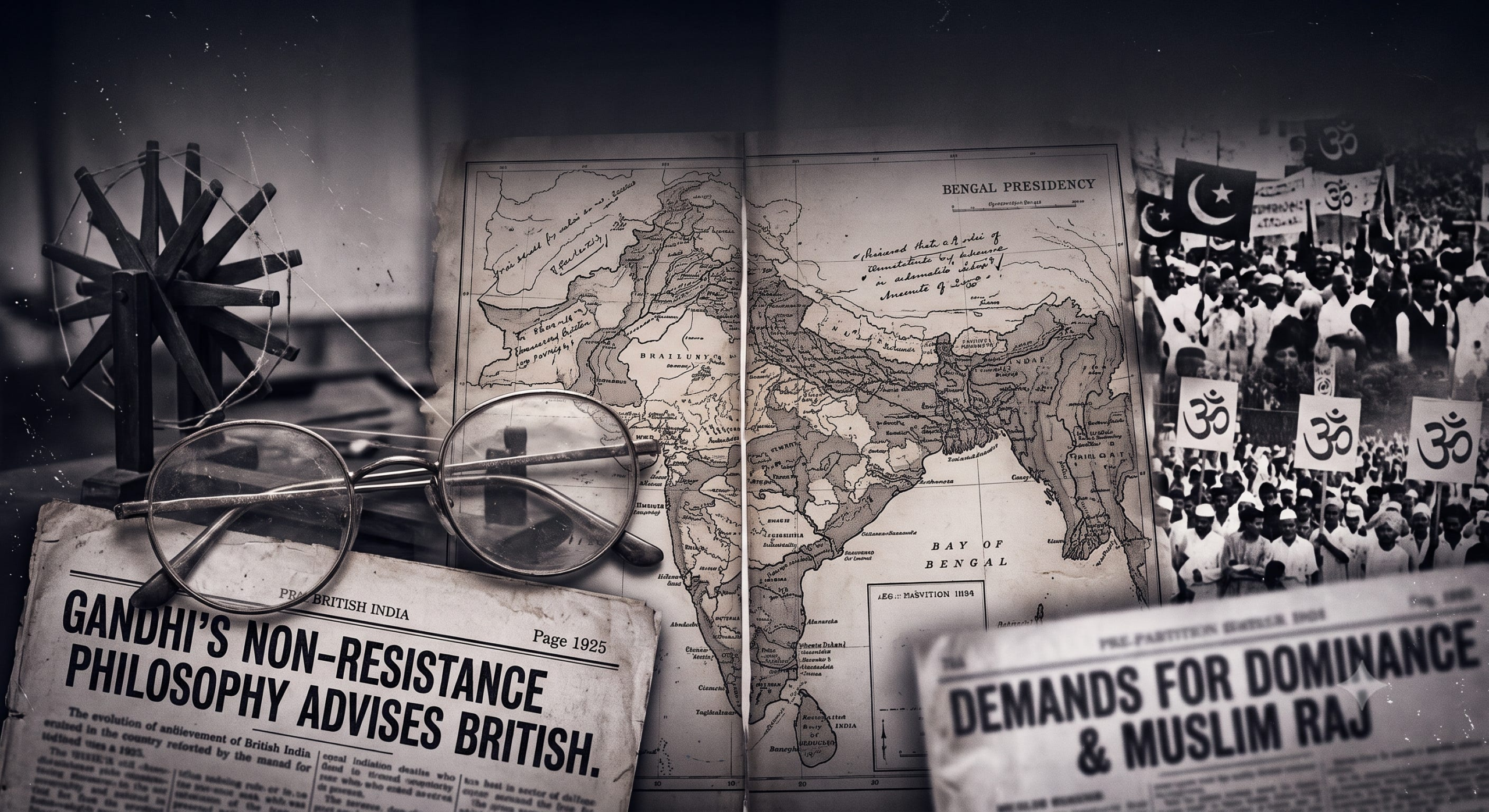
The debate over Mahatma Gandhi’s political philosophy often becomes most intense at the point where moral idealism meets the obligations of statecraft. Gandhi’s language of ahimsa, sacrifice, repentance, and brotherhood gave India’s freedom struggle a vocabulary that could mobilize millions. Yet the same vocabulary also raises a difficult historical question: can a nation preserve freedom, dignity, and civilisational continuity if its politics is built on moral appeal alone, especially when confronted by organised coercion, imperial power, ideological separatism, or external aggression?
This question must be handled with care. Gandhi should neither be reduced to a saint beyond criticism nor dismissed through polemical labels that prevent serious inquiry. The charge that he was guilty of “treason,” found in some nationalist critiques of the period, belongs to the heated rhetoric of political struggle. A more useful and factual assessment is that Gandhi’s ethical absolutism often stood in tension with the practical responsibilities of national security, constitutional order, and collective self-preservation.
The central issue is not whether compassion is valuable. Hindu, Buddhist, Jain, and Sikh traditions all honour compassion, restraint, discipline, and the conquest of hatred. The deeper issue is whether compassion can be separated from discernment. Dharmic thought does not treat non-violence as weakness, passivity, or refusal to protect the vulnerable. It places compassion within dharma, and dharma requires moral judgment, protection of society, and resistance to adharma when necessary.
Gandhi’s political ahimsa became controversial because he sometimes appeared to extend the principle of non-resistance beyond the realm of personal ethics and into the realm of national defence. In 1940, during the Second World War, Gandhi wrote in Harijan in a manner that advised Britain to resist Nazi Germany through non-violent moral courage rather than armed defence. To his admirers, this represented the highest consistency of conscience. To his critics, it revealed the danger of applying a personal vow to the life-and-death decisions of a state.
A nation is not merely an administrative machine. It is a political trust, created to protect people, culture, law, territory, and inherited ways of life from disorder and aggression. This does not mean that war is desirable or that force should be glorified. It means that the first duty of political authority is protection. When the innocent are threatened, the refusal to defend them can become a moral failure disguised as spiritual elevation.
This is where Gandhi’s philosophy invites rigorous historical scrutiny. His insistence on Hindu-Muslim unity was rooted in a generous moral impulse and in a strategic desire to build a broad anti-colonial coalition. However, the politics of brotherhood becomes fragile when it refuses to examine asymmetries of power, incompatible political objectives, or the organised ambitions of communal leadership. Brotherhood can be a noble social ideal, but it cannot substitute for constitutional clarity, mutual responsibility, and equal standards.
The historical record of the early twentieth century shows that Indian politics was not shaped by a single moral imagination. Alongside Congress nationalism, there were competing visions of power: imperial British interests, revolutionary nationalism, Hindu consolidation, pan-Islamic sentiment, constitutional liberalism, Marxist frameworks, regional ambitions, and Muslim separatist politics. Gandhi’s greatness as a mass mobiliser lay in his ability to speak across communities, but his limitation lay in underestimating how deeply some political actors understood community not as spiritual fellowship, but as a route to sovereign power.
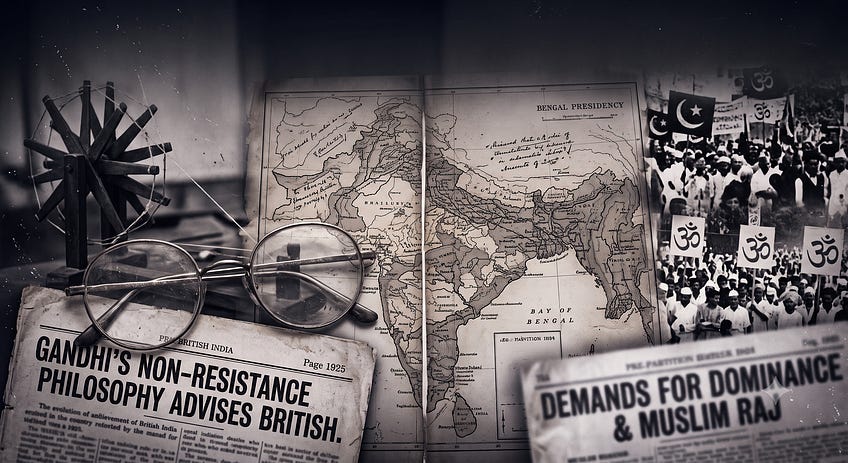
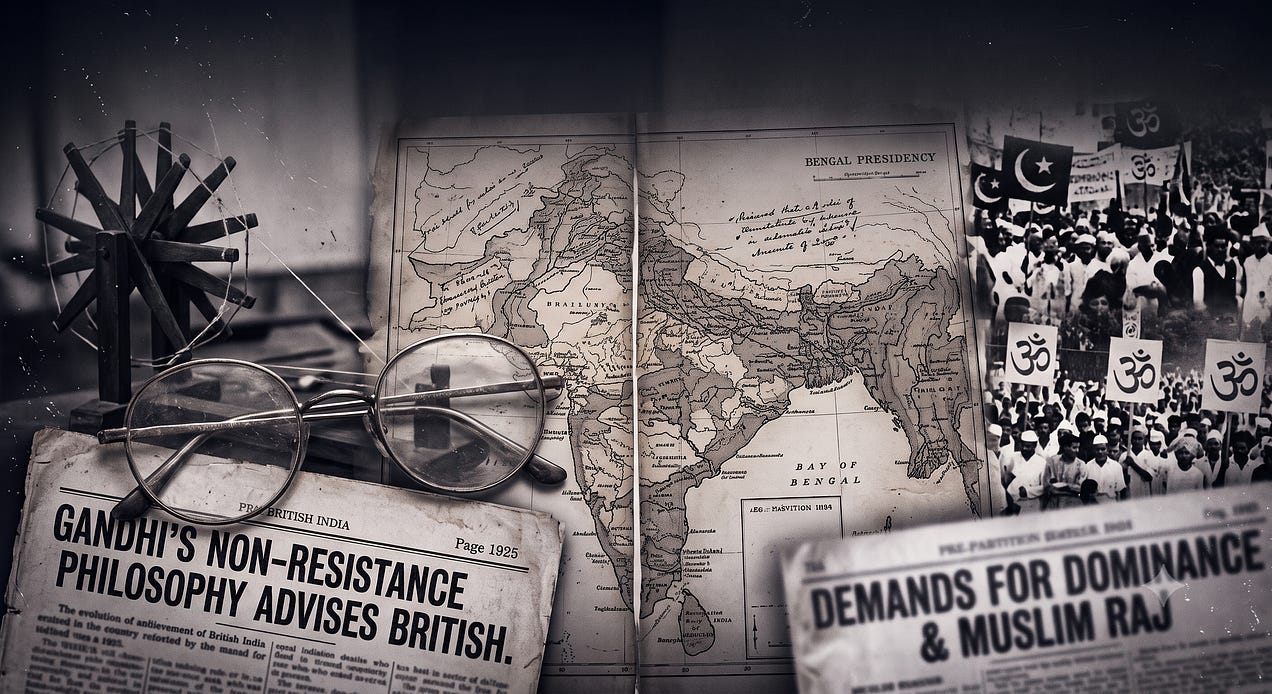
The source text points to the 1925 controversy around the Muslim Outlook of Lahore and the Tanzeem of Amritsar. These publications are cited to illustrate a dispute over whether the end of British rule would lead to a “Muslim Raj” or an “Islamic Raj.” The language quoted from these debates is severe, and it reflects a period in which political imagination was increasingly shaped by communal arithmetic, fears of domination, and rival claims to the future Indian state.
One cited passage from the Muslim Outlook argued that, after British withdrawal, Muslims would “appropriate” power, if necessary with Afghan assistance, and that conflict with Hindus would be politically educative. Such language cannot be treated as a casual editorial flourish. It reveals the presence of a hard political current that viewed power in majoritarian, martial, and separatist terms. At the same time, responsible analysis must avoid turning such a passage into a timeless judgment on all Muslims. It is evidence of a specific ideological tendency in a specific historical setting, not a licence for collective blame.
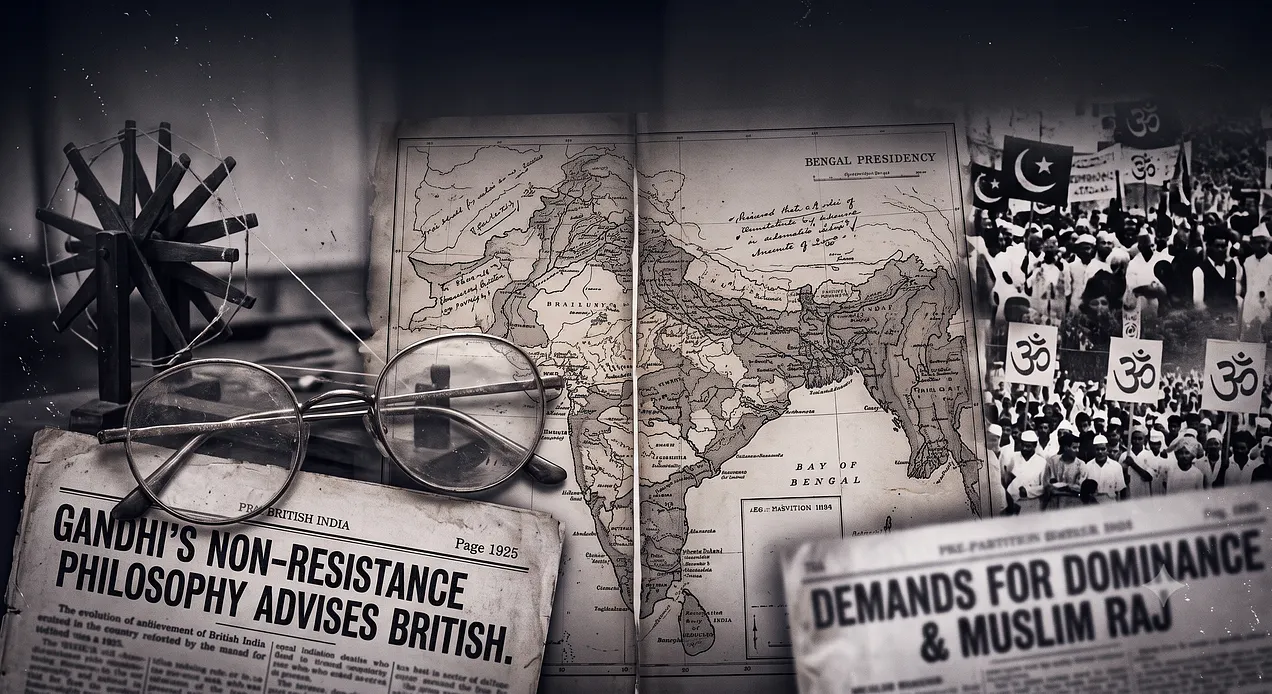
The second cited passage, from The People dated 18 October 1925, describes a debate between the Muslim Outlook and Dr. Saifuddin Kitchlew’s Tanzeem. The dispute was framed around whether the post-British order should be Muslim rule or Islamic rule with Hindu participation. The significance of this debate lies not in hostility toward a community, but in the political categories being normalised: rule by religious identity, participation conditioned by ideological conformity, and the question of whether non-Muslims could be equal partners in a religiously defined state.
For students of Indian political history, this is where the contrast with dharmic statecraft becomes important. The classical Indian vocabulary of rajadharma, kshatra, danda, samvada, and loka-sangraha did not imagine politics as sentimental goodwill alone. It recognised that social harmony requires order, justice, credible authority, and the capacity to restrain aggression. A ruler or political movement that speaks only of affection, while ignoring power, risks leaving society intellectually disarmed.
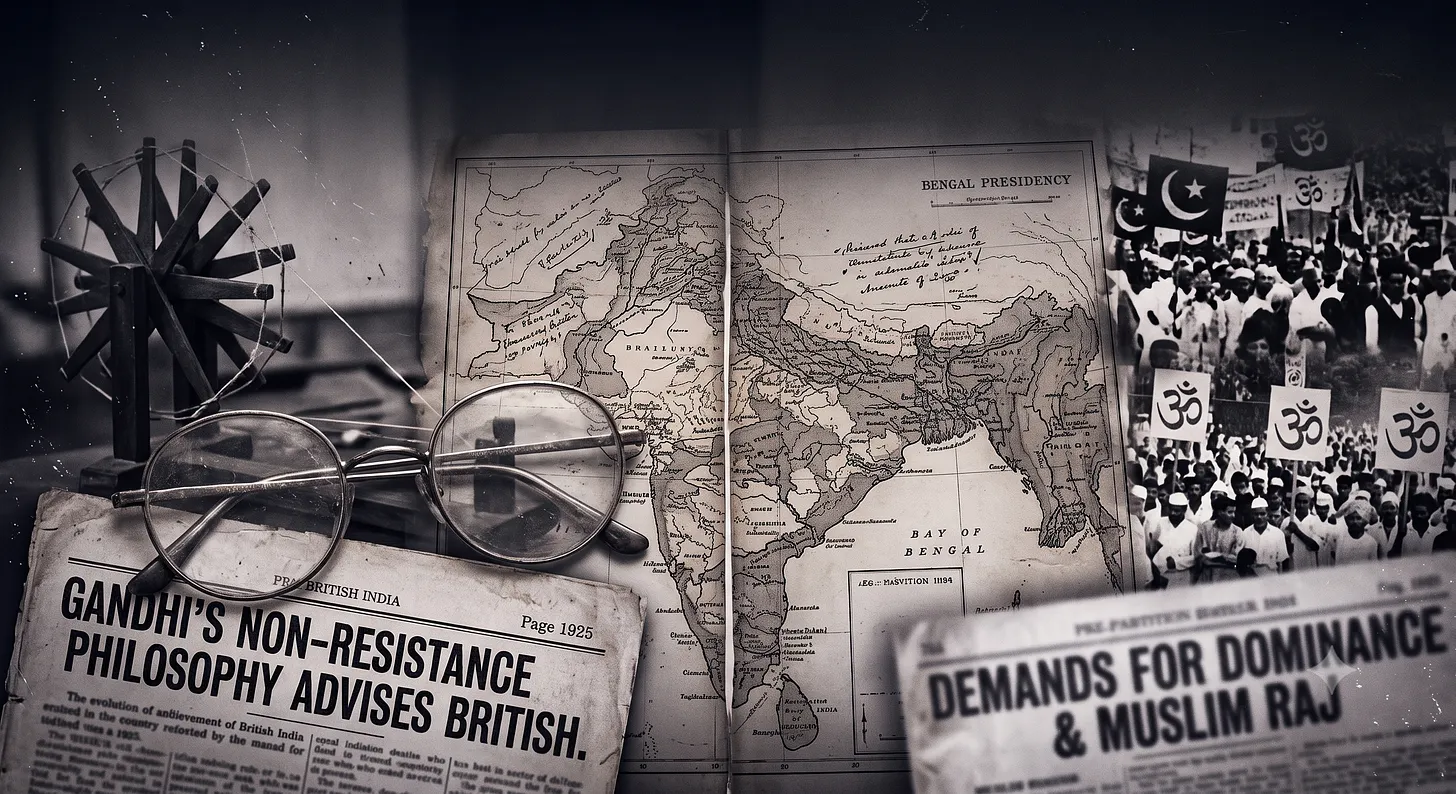
Gandhi’s critics therefore accused him of being “state-blind.” This phrase captures a serious critique, even if some older polemics expressed it harshly. State-blindness means the inability to see politics as an arena of institutions, incentives, coercive capacity, strategic calculation, and competing collective interests. In that condition, kindness becomes detached from prudence. Generosity becomes a one-sided demand. Unity becomes a slogan rather than a durable civic compact.
The example of Emperor Humayun is often invoked in this context because his career is remembered as a lesson in the dangers of political softness, misplaced trust, and failure to secure power at decisive moments. Whether every comparison is exact or not, the larger point remains relevant: history repeatedly shows that personal virtue cannot compensate for weak institutions, poor strategic judgment, or inability to distinguish reconciliation from appeasement.
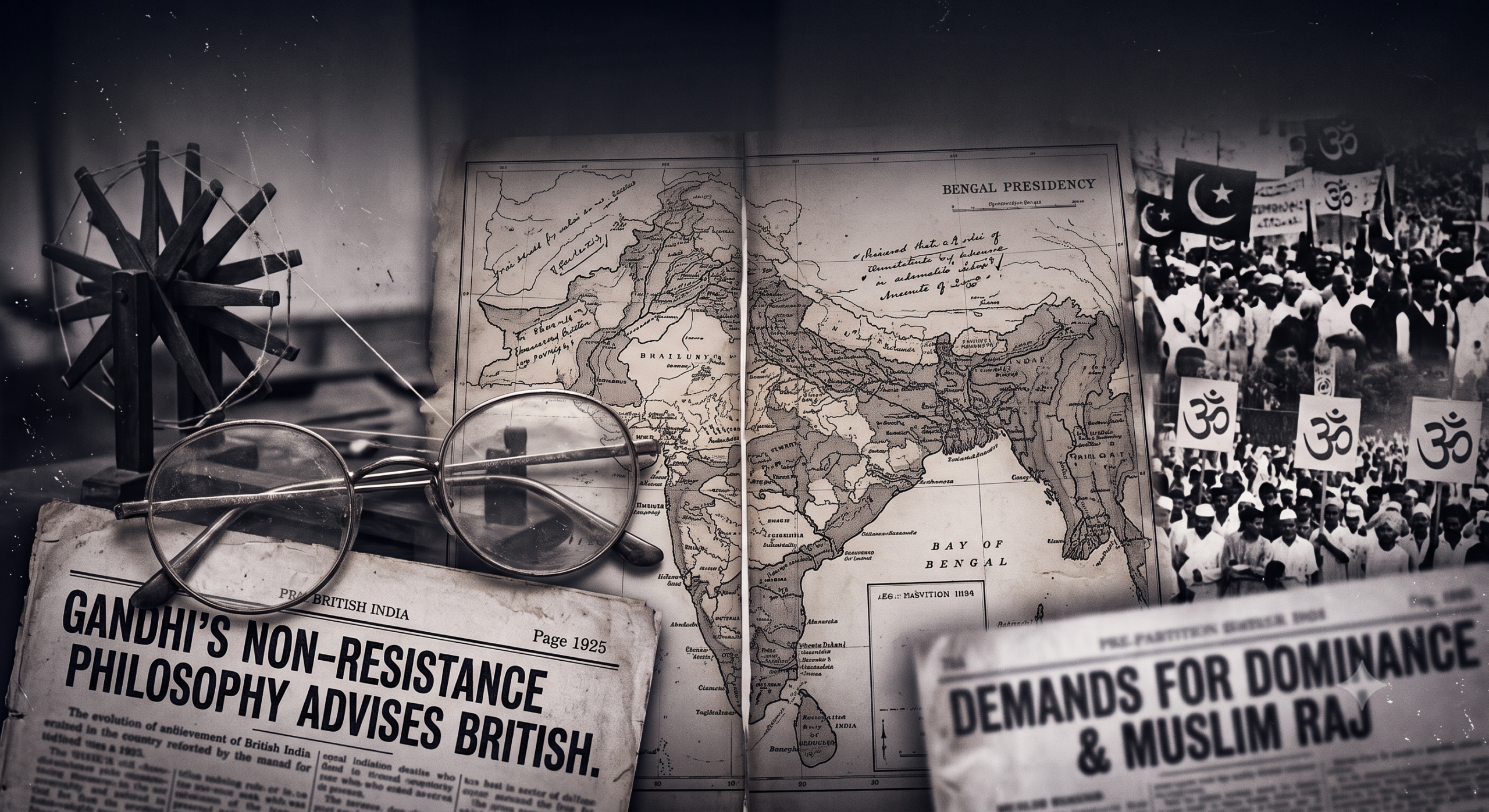
The dharmic traditions offer a more balanced framework than either absolutist non-resistance or reckless militancy. Jainism gives profound attention to ahimsa, but also to discipline, self-restraint, and the complexity of worldly action. Buddhism speaks of compassion, but also of wisdom and right effort. Sikh history honours seva and spiritual equality, yet also remembers the duty to defend righteousness. Hindu thought contains both ahimsa and kshatra dharma, recognising that the protection of society is itself a moral duty.
This shared dharmic inheritance helps clarify the difference between peace and passivity. Peace is not the absence of resistance to injustice. Peace is the condition created when justice, mutual respect, and restraint are upheld. A society that refuses to name threats cannot protect pluralism. A society that demonises entire communities cannot preserve dharma either. The challenge is to cultivate clarity without hatred and strength without cruelty.
Gandhi’s language of treating Muslims as brothers must therefore be read in two ways. As an ethical appeal against vengeance and dehumanisation, it has enduring value. As a substitute for political analysis, it becomes inadequate. Brotherhood can flourish only when it is reciprocal, lawful, and grounded in equal citizenship. Without reciprocity, the language of brotherhood may place moral burdens on one side while leaving aggressive politics unexamined on the other.
This distinction is especially important for Hindu-Muslim relations and for the wider question of Indian national integration. Honest historical analysis does not require hostility. It requires the courage to examine documents, speeches, movements, riots, constitutional demands, separatist claims, and ideological programmes without fear. It also requires the discipline to avoid collective condemnation. Political Islam, Muslim separatism, Congress accommodation, British divide-and-rule tactics, and Hindu disunity are all subjects of analysis; none should be flattened into emotional slogans.
The British Raj exploited social divisions with great skill. Separate electorates, communal representation, selective patronage, and constitutional bargaining created incentives for leaders to speak as representatives of blocs rather than as builders of a common civic order. Gandhi attempted to overcome this fragmentation through moral politics. Yet moral politics could not fully neutralise institutional incentives that rewarded separatist bargaining and communal mobilisation.
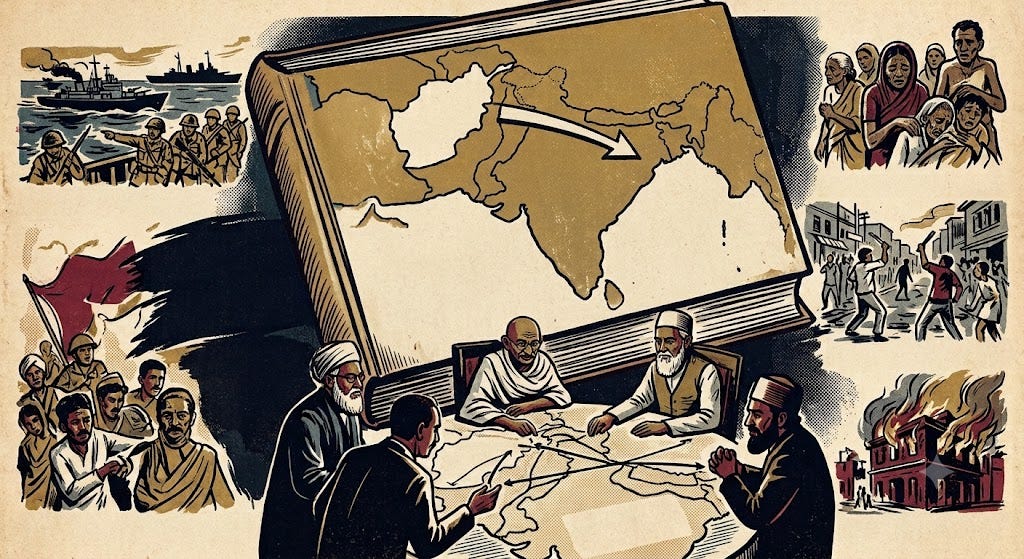
The tragedy of the period is that many Indians desired freedom, but not all imagined freedom in the same way. For some, swaraj meant civilisational renewal and cultural self-respect. For others, it meant constitutional democracy. For some ideological groups, it meant class revolution. For sections of separatist leadership, it meant political safeguards that eventually hardened into demands for sovereign separation. Gandhi’s faith in unity was sincere, but sincerity alone could not dissolve these conflicting ambitions.
A technical reading of this problem requires attention to three levels: moral doctrine, political institution, and strategic behaviour. Gandhi’s moral doctrine privileged ahimsa as both means and end. His political method depended on mass mobilisation, symbolic suffering, and the conversion of the opponent’s conscience. His strategic weakness appeared when the opponent did not share the same moral universe, or when political actors treated concessions not as gestures of trust, but as proof that pressure worked.
This pattern is not unique to Gandhi or to India. Political history across the world shows that conciliatory gestures can reduce conflict when both sides seek coexistence. The same gestures can intensify danger when one side reads them as surrender. The difference lies in institutions, incentives, leadership signals, enforcement mechanisms, and the willingness of society to uphold equal rules. Idealism without these safeguards becomes vulnerable to manipulation.

The lesson for contemporary India is not to abandon harmony. It is to build harmony on firmer ground. Hindu-Muslim unity, interfaith respect, and peaceful coexistence cannot be sustained by denial. They require historical memory, civilisational confidence, equal legal treatment, protection of minority and majority rights alike, and a shared rejection of supremacist politics in every form.
For dharmic communities, the more immediate lesson is internal cohesion. Hindu, Buddhist, Jain, and Sikh traditions have distinct histories, doctrines, rituals, and institutional forms. Yet they also share civilisational memories, ethical vocabularies, and a long experience of coexistence on the Indian subcontinent. Their unity should not be built on fear, but on cultural literacy, mutual reverence, and the recognition that dharma survives through both compassion and courage.
The critique of Gandhi’s political idealism is strongest when it avoids bitterness and returns to first principles. A society must be humane, but it must also be alert. It must honour saints, but it must not outsource statecraft to saintliness. It must seek peace, but it must understand the structures that make peace possible. It must welcome brotherhood, but it must insist that brotherhood be mutual, lawful, and anchored in truth.
Gandhi’s legacy remains powerful because it forces India to confront a permanent ethical dilemma: how should a civilisation committed to restraint respond to aggression? The answer cannot be hatred, nor can it be helplessness. The dharmic answer is disciplined strength, moral clarity, and the refusal to confuse appeasement with compassion. In that balance lies a more mature politics of unity, one capable of protecting freedom without surrendering conscience.
Inspired by this post on Dharma Dispatch.





Leave a Reply
You must be logged in to post a comment.