

In the aftermath of the devastating twin earthquakes reported in Venezuela on Wednesday, June 24, 2026, the humanitarian response in Caracas became a powerful example of how medical service, spiritual resilience, and international solidarity can converge in a moment of mass suffering.
Indian medical teams reportedly established a mobile hospital in Caracas to treat survivors from the quake-hit region, including those injured in and around La Guaira. Early accounts placed the death toll at 1,719, with more than 5,000 injured and thousands displaced, while subsequent media reporting indicated that casualty figures remained fluid as rescue teams continued searching through collapsed structures and damaged neighborhoods.
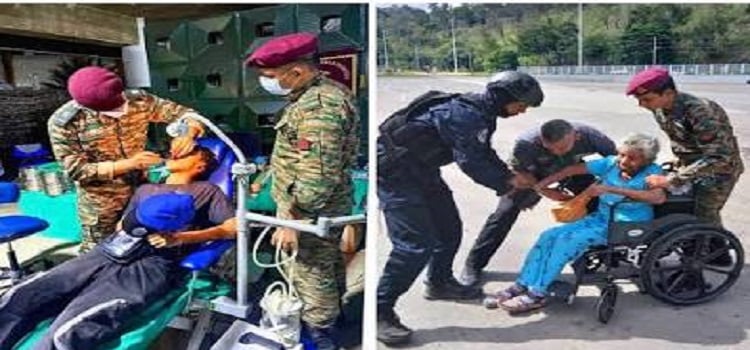
The image of Indian doctors treating Venezuelan survivors while Ram Siya Ram played in the background carried a significance beyond ordinary disaster coverage. It suggested that humanitarian aid is not merely logistical assistance; at its best, it becomes a disciplined form of compassion, where clinical skill and cultural memory work together to restore dignity to people who have lost homes, loved ones, and a sense of safety.

One survivor’s appreciation for the Indian doctors captured the emotional core of the relief mission. Her statement that treatment helped ease her pain after the terror of the earthquake reflected a larger truth familiar to disaster medicine: survivors need more than bandages, pain relief, and emergency surgery. They also need reassurance, calm communication, and the human experience of being seen at a time when catastrophe can make individuals feel anonymous.
From a technical perspective, the deployment of a mobile hospital after a major earthquake is critical because fixed healthcare infrastructure is often damaged, overwhelmed, or inaccessible. Field medical teams must rapidly organize triage, trauma stabilization, wound care, infection prevention, maternal and child health support, medication distribution, and referral pathways for cases requiring advanced surgical or intensive care. In the first days after such an event, speed and coordination often determine whether survivable injuries become fatal complications.
Earthquakes create a distinctive public health burden. Crush injuries, fractures, lacerations, head trauma, dehydration, exposure, and psychological shock appear quickly, while secondary risks emerge as water systems fail, sanitation weakens, shelters become crowded, and routine medical care is interrupted. For Venezuela, where many communities already face healthcare constraints, the arrival of international medical teams added meaningful capacity at a time when local systems were under extraordinary stress.
The reported epicentral impact around La Guaira also matters geographically. Coastal and urban regions can face compounded risks after strong seismic events: unstable slopes, damaged transport corridors, power disruption, communication failures, and dense residential collapse. Rescue operations in such environments require not only medical expertise but also engineering assessment, debris removal, supply-chain management, and disciplined coordination among local authorities, volunteers, and international partners.
Against this difficult background, the presence of Ram Siya Ram at the medical camp became a symbol of dharmic service rather than a narrow sectarian marker. In Hindu traditions, seva is not passive sympathy; it is service performed with humility, steadiness, and recognition of shared humanity. The same ethic resonates across Buddhism, Jainism, and Sikhism through compassion, ahimsa, dana, karuna, and selfless service. In a disaster zone, these principles become practical: feed the hungry, treat the injured, comfort the grieving, and protect the vulnerable.
The connection to Sri Sathya Sai Baba’s teachings added another layer to the story. Venezuela’s Acting President Delcy Rodriguez had recently visited Sathya Sai Baba’s Ashram in India, and the sound of Ram Siya Ram in a Venezuelan medical camp therefore appeared to many observers as part of a wider spiritual and cultural relationship. Such moments should be understood carefully: the central issue remains humanitarian relief, while the devotional atmosphere reflects how communities often draw strength from familiar sacred sounds during grief.
The Sri Sathya Sai International Organization Venezuela was also reported to be active on the ground, with volunteers assisting affected communities through food distribution, supplies, rescue support, and cleanup work. In disaster response, volunteer networks can be especially valuable because they often know local neighborhoods, languages, and community needs more intimately than external agencies. Their effectiveness depends on coordination, accountability, and the ability to complement professional emergency services.
The message associated with the organization opened with Dear Brothers and Sisters and Om Sri Sai Ram, and expressed grief over the reported magnitude 7.2 and 7.5 earthquakes in La Guaira. It noted that media reports as of June 27 described more than 1,400 deaths and nearly 70,000 people unaccounted for. Those figures conveyed the scale of uncertainty in the early phase of the disaster, when collapsed buildings, disrupted communication, and displaced populations make accurate accounting extremely difficult.
In such circumstances, responsible reporting must distinguish between confirmed figures, preliminary reports, and evolving estimates. Earthquake casualty numbers often change substantially as rescue teams gain access to blocked areas, hospitals update records, and missing-person lists are reconciled. Academic and humanitarian analysis therefore benefits from cautious language: the tragedy was severe, the human toll was large, and the full accounting required time.

The relief work also demonstrates a larger pattern in India’s humanitarian outreach. Indian doctors and medical teams have often been associated with rapid deployment, field care, and service in difficult conditions. In Venezuela, the reported mobile hospital became not only a place of treatment but also a visible expression of India’s soft power, civilizational ethos, and medical professionalism. The strongest form of diplomacy in such moments is not ceremonial language but competent care delivered to people in pain.
For affected families, the technical vocabulary of disaster response can feel distant. Terms such as triage, logistics, casualty management, and epidemiological risk are necessary, but they do not fully describe the experience of waiting for news of missing relatives or standing before the ruins of a home. The emotional force of this story lies in that gap between systems and suffering. A mobile clinic, a doctor’s reassurance, a familiar prayer, or a volunteer’s meal can become a point of stability when ordinary life has collapsed.
Bhagawan Sri Sathya Sai Baba’s emphasis on sincere prayer as a way to assuage grief and suffering was reflected in reports that devotees around the world had begun chanting the Gayatri mantra for the welfare of the people of Venezuela. In an academic reading, this should not be treated as a substitute for medical aid, engineering support, shelter, sanitation, and recovery planning. Rather, prayer and chanting function as moral and emotional practices that help communities sustain compassion over time.
The broader lesson is that dharmic traditions are most persuasive when they appear as service. Whether expressed through Hindu seva, Buddhist compassion, Jain ahimsa, or Sikh langar and selfless duty, the shared ethical center is clear: suffering must be met with action. The Venezuela earthquake relief effort, especially the reported role of Indian doctors and local volunteers, showed how that shared dharmic vocabulary can become visible in a global humanitarian crisis.
The story also cautions against reducing disaster relief to symbolic moments alone. Ram Siya Ram playing at a medical camp may touch hearts, but the deeper measure of success lies in patient outcomes, transparent coordination, safe shelters, clean water, trauma care, disease prevention, and long-term rebuilding. Sentiment can inspire attention; disciplined service must carry the work forward.
As Venezuela continued rescue and relief operations, the presence of Indian doctors in Caracas offered a moving case study in humanitarian aid shaped by competence and compassion. It showed that in the face of earthquake devastation, the most meaningful response is neither rhetoric nor spectacle, but sustained service to the injured, the displaced, and the grieving.
Inspired by this post on Hindu Human Rights Blog.

Leave a Reply
You must be logged in to post a comment.