-
Indus Waters Treaty After Pahalgam: The Strategic Pause India Could Not Ignore

The Indus Waters Treaty pause after the Pahalgam terrorist attack was not a sudden diplomatic impulse but the result of years of legal, strategic, and security tensions. This analysis explains how Article 370, India’s 2023 modification notice, and the Kishenganga-Ratle dispute created the background for the 23 April 2025 decision. It clarifies what abeyance means,…
-
Bharat’s 5G Network Slicing Moment: Powerful Lessons from China’s Telecom Leap

Network slicing marks a decisive shift in Bharat’s 5G journey, moving telecom from simple speed claims to assured service quality. Airtel’s Priority Postpaid launch shows how Indian operators are beginning to address real-world congestion in traffic, concerts, markets, and public spaces. China’s more advanced standalone 5G slicing tests demonstrate the power of ecosystem coordination across…
-
Punjab’s Hard Truth: Why Khalistani Extremism Must Be Confronted With Unity

Punjab’s renewed debate over Damdami Taksal, Bhindranwale, and Khalistani symbolism highlights a deeper national security and civilisational challenge. The issue is not Sikh religious identity, which remains an integral dharmic tradition rooted in seva, courage, and spiritual discipline. The real concern is the political rehabilitation of extremist narratives that once pushed Punjab into years of…
-
Venezuela Earthquake Relief: Indian Doctors, Ram Siya Ram, and Seva Amid Ruins

Indian medical teams reportedly established a mobile hospital in Caracas after Venezuela’s devastating June 24, 2026 twin earthquakes, treating survivors amid rising casualties and widespread displacement. The presence of Ram Siya Ram at the medical camp became a moving symbol of dharmic seva, linking clinical service with spiritual resilience. This rewritten account explains the technical…
-
Gandhi, Ahimsa, and Statecraft: A Hard Lesson in Idealism, Power, and Unity

This article revisits Gandhi’s philosophy of ahimsa through the lens of statecraft, national security, and Hindu-Muslim relations in colonial India. It explains why Gandhi’s moral idealism inspired millions while also creating serious political tensions when applied to questions of defence, communal bargaining, and organised power. The discussion examines 1920s debates around Muslim political aspirations without…
-
NASM-SR Salvo Test: Powerful Boost to Bharat’s Indigenous Naval Strike Edge

The NASM-SR salvo test marks a major advance in Bharat’s indigenous naval strike capability. By launching two Naval Anti-Ship Missile Short Range weapons in quick succession from a helicopter platform, DRDO and the Indian Navy demonstrated a more realistic and tactically demanding combat capability. The test matters because salvo firing can complicate enemy ship defences…
-
Uttarakhand Anti-Halal Drive Sparks Urgent Debate on Shops, Law, and Harmony

The reported anti-halal campaign in Uttarakhand raises serious questions about consumer choice, religious freedom, lawful trade, and communal harmony. This analysis separates legitimate concerns about certification transparency from identity-based targeting of Muslim shopkeepers. It explains why allegations of funding linked to jihadi activity must be handled by investigators and courts, not by street pressure or…
-
India, Hinduism, and the Powerful Freedom of Dharmic Pluralism and Insight

This reflection presents India and Hinduism as living civilizational realities rather than fixed systems that can be reduced to ritual, geography, or linear history. It explains why Indian traditions often preserve memory through symbols, narratives, philosophy, sacred geography, and direct experience as much as through dates and documents. The essay explores Hinduism’s decentralized structure, its…
-
Takht Sri Hazur Sahib, Nanded: Final Abode of Guru Gobind Singh and the Living Heart of Khalsa

Takht Sri Hazur Sahib in Nanded, Maharashtra, is one of the five Takhts of Sikhism and the final earthly abode of Guru Gobind Singh Ji. Situated on the Godavari, it unites sacred memory with living practice, preserving Khalsa traditions such as shastar veneration, kirtan, and the daily maryada of the Guru Granth Sahib. The complex…
-
Allegations at Wipro Pune ignite debate on religious bias: law, due process, and inclusive fixes

Allegations of religion-based harassment at a Wipro campus in Hinjawadi, Punefollowing earlier controversies in Nashik and Mumbaihave reignited an urgent discussion on how Indian workplaces manage belief and difference. This analysis clarifies what constitutes religious harassment, explains the Indian legal and corporate governance context, and outlines due-process investigations that protect all parties. It highlights data…
-
Saligao case sparks call: Sakal Hindu Samaj seeks urgent Goa safeguards for child protection

Sakal Hindu Samaj’s call in Goa, prompted by a reported Saligao case involving a minor, has sharpened the focus on how best to protect children from coercion and exploitation while preserving constitutional freedoms. This analysis outlines how existing toolsPOCSO, IPC provisions, the Goa Children’s Act, and the Special Marriage Actalready address core harms when effectively…
-
Ghaziabad Teen Killed During Eid: Hard Facts, Justice Roadmap, and Paths to Harmony

A 17-year-old student, Surya Pratap Chauhan, was fatally stabbed in Ghaziabad’s Khoda area on a Thursday during Eid (Bakri Eid) celebrations, sparking grief and public anger. This long-form analysis consolidates verified details, distinguishes allegations from facts, and outlines the investigative steps typically pursued under IPC and CrPC. It emphasizes victim-centered justice, including avenues for legal…
-
‘Savarkar Sadan’ under threat: HJS seeks urgent Maharashtra action and National Monument status

Hindu Janajagruti Samiti (HJS) and allied groups in Ratnagiri have sought urgent Government of Maharashtra intervention to secure ‘Savarkar Sadan’ from a reported builder-led demolition threat. The demand anchors itself in constitutional duties (Articles 49 and 51A[f]) and established heritage law, including the AMASR Act (1958, amended 2010) and state-level protections. A sequenced planimmediate stop-work…
-
Shahuwadi Tehsildar Office Toilets: Hindu Vidhidnya Parishad Demands Urgent, Dignity-Centered Steps

Hindu Vidhidnya Parishad has sought urgent remediation of unhygienic public toilets at the Shahuwadi Tehsildar office in Kolhapur, placing public health and dignity at the center of the discussion. The issue engages constitutional protections for sanitation under Article 21 and long-standing Supreme Court guidance on abating public health nuisances. National standards (Swachh Bharat Mission, National…
-
Jharkhand Governor to raise ‘corporate jihad’ grievances with PM, seeking a transparent probe

A memorandum submitted in Jharkhand alleging coordinated corporate misconductdescribed by petitioners as “corporate jihad”will be conveyed by the Governor to the Prime Minister for appropriate consideration. The constitutional pathway emphasized here prioritizes due process, evidence, and regulatory competence over rhetoric. A rigorous inquiry, if initiated, would likely engage the MCA, SEBI, and the CCI to…
-
Ulhasnagar Interfaith Marriage Tensions: Legal Rights, Policing Protocols, and Paths to Harmony

Reports from Ulhasnagar on 13 May 2026 describe an alleged post-marriage family altercation linked to an interfaith union; this analysis uses the case as a lens to clarify law, policing, and peacebuilding. Readers will learn how Article 21, landmark Supreme Court rulings, and the Special Marriage Act protect adult choice while guiding authorities to deter…
-
Radha-Krishna Idols Near Toilets in Delhi: Respectful Removal, Law, and Harmony

Idols of Radha-Krishna were found near a toilet at Indian Cottage Industry in Mehrauli, Delhi, prompting a swift, respectful removal by Youths Stand For Society (YSS) and a commitment to prevent recurrence. The episode highlights why sacred imagery across Hinduism, Buddhism, Jainism, and Sikhism should never be placed adjacent to sanitation areas and how such…
-
VHP’s Milind Parande Backs BJP in Bengal: Security, Demography and a Dharmic Unity Plan for 2026

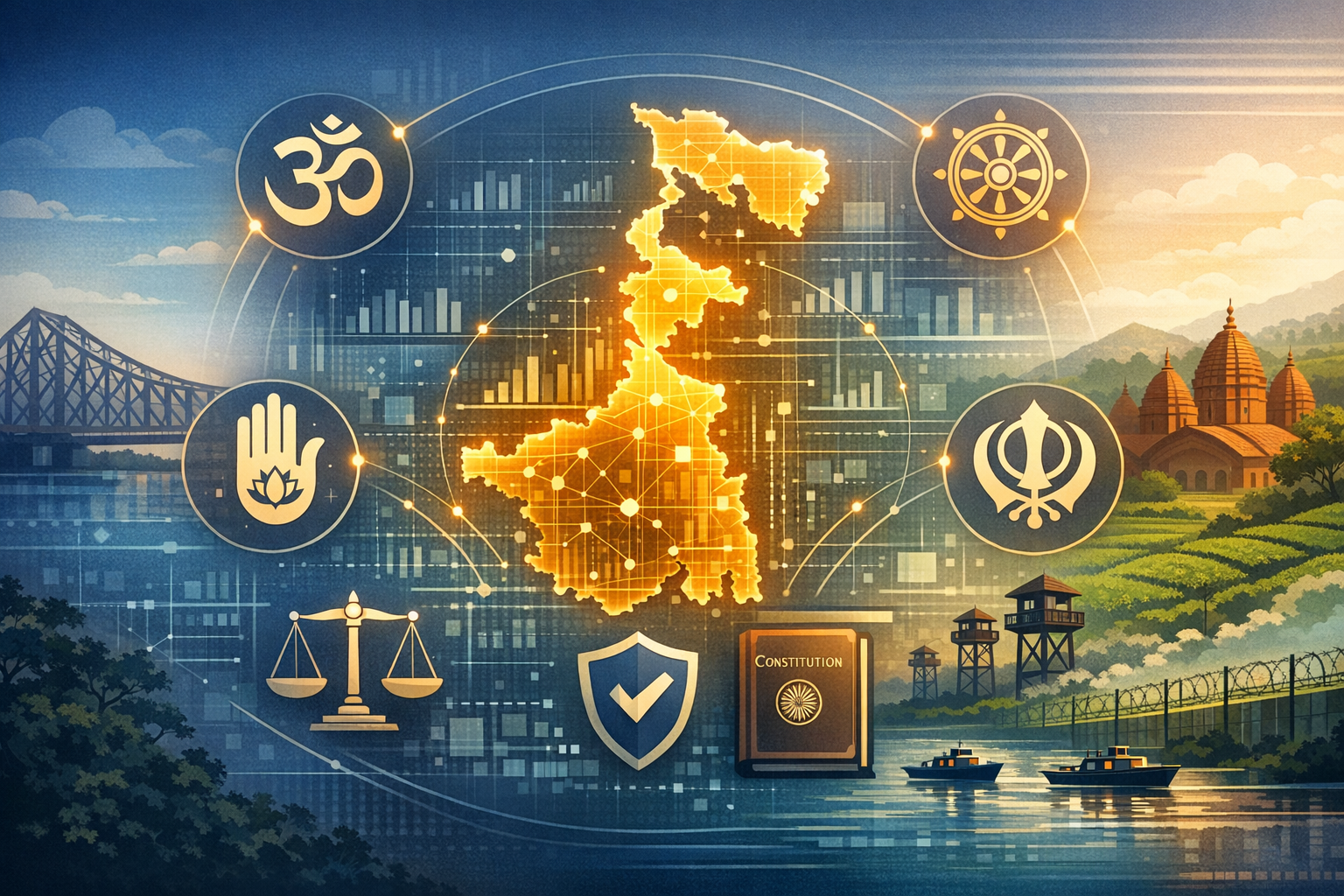
At a 1 May 2026 press interaction in Shimla, VHP’s Milind Parande said a future BJP government in West Bengal would work in Hindus’ interest, foregrounding security and demographic concerns ahead of WB Assembly Election 2026. This analysis interprets those claims through India’s constitutional guarantees (Articles 14–15, 25–30), outlining how community safety and religious freedom…
-
Mumbai Harassment Arrest: Practical POSH Compliance and Cyber Evidence Guide for Safer Workplaces

A recent Mumbai workplace harassment arrest has spotlighted what truly keeps offices safe: credible POSH compliance, careful digital evidence preservation, and a culture that upholds dignity over divisive narratives. This analysis explains how the POSH Act interfaces with the IPC and IT Act, what the Internal Committee must do, and why confidentiality and due process…