
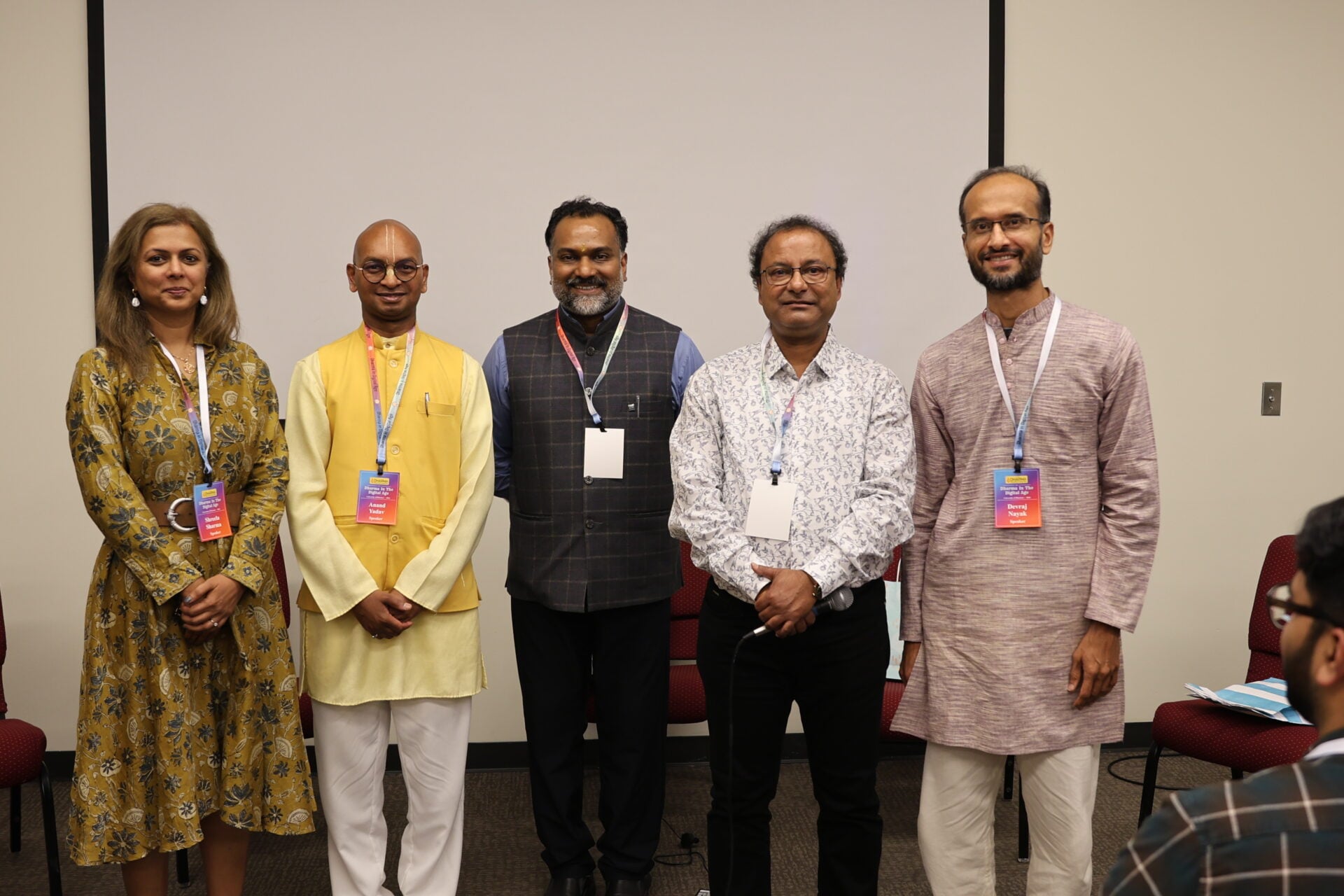
Health beyond medicine is best understood as a disciplined vision of human flourishing, not as a rejection of clinical care. The Bhagavad Gita approaches well-being through the integration of body, mind, intellect, conduct, relationship, and spiritual orientation. Modern public health uses a similarly broad vocabulary: the World Health Organization describes health as physical, mental, and social well-being, not merely the absence of disease. This convergence is significant because it shows that healing cannot be reduced to pills, procedures, or diagnostic reports alone, however valuable those may be in their proper place.
Medicine treats disease; a dharmic life also asks how one lives before disease appears, how one responds when suffering comes, and how one remains inwardly steady when external conditions are uncertain. The Gita does not offer a medical manual in the modern biomedical sense. It offers a psychology of action, attention, restraint, resilience, devotion, and self-mastery. These themes can deepen contemporary conversations about holistic health, mental health, Yoga, Ayurveda, self-care, and spiritual well-being without confusing scriptural wisdom with professional medical treatment.
The first principle is balance. In the sixth chapter of the Bhagavad Gita, Krishna teaches that Yoga is not for one who eats too much, eats too little, sleeps too much, or sleeps too little. The discipline of Yoga becomes a path of relief from suffering when food, recreation, work, sleep, and waking are moderated. This teaching is profoundly practical. It places health in daily rhythm rather than dramatic intervention. It also challenges the modern habit of treating exhaustion as ambition and overstimulation as productivity.
From a technical standpoint, this moderation resembles what health sciences now describe through circadian regulation, stress physiology, metabolic balance, behavioral consistency, and sleep hygiene. Irregular sleep, unmanaged stress, sedentary living, and poor diet do not merely produce temporary discomfort; they shape long-term risk patterns. The Gita’s language is ethical and spiritual, while modern medicine’s language is physiological and epidemiological, yet both recognize that repeated habits become embodied consequences.
This is why the phrase “health beyond medicine” must be handled carefully. It should never mean avoiding doctors, refusing diagnosis, neglecting medication, or replacing evidence-based care with wishful thinking. A dharmic understanding would consider such negligence a failure of responsibility. The more accurate meaning is that medical treatment works within a wider field of life: diet, sleep, movement, emotional regulation, community, purpose, prayer, meditation, ethical conduct, and disciplined attention.
The World Health Organization’s recent framing of self-care is useful here because it defines self-care as the ability of individuals, families, and communities to promote and maintain health, prevent disease, and cope with illness, with or without support from health workers. This definition does not isolate the individual. It includes families and communities. That emphasis resonates with dharmic traditions, where well-being is rarely imagined as private self-optimization alone. Health is personal, but it is also relational and social.
The Gita begins in crisis. Arjuna is not physically ill, yet he is overwhelmed, trembling, grief-stricken, morally confused, and unable to act. This is one of the great insights of the text: human suffering is not always reducible to bodily pathology. A person may be physically capable and still internally paralyzed. The battlefield becomes a study of the nervous system, moral injury, attachment, fear, identity, and responsibility. In that sense, the Gita speaks directly to modern experiences of anxiety, burnout, overthinking, and emotional collapse.
Krishna’s response is not sentimental reassurance. He does not merely tell Arjuna to feel better. He teaches him to see more clearly. This distinction matters for mental health. The Gita’s method is cognitive, ethical, contemplative, and devotional at once. It invites inquiry into the nature of the self, the impermanence of bodily states, the discipline of action, and the need to perform one’s duty without being enslaved by the result. Such teaching does not replace therapy or psychiatric care, but it can provide a philosophical framework for inner steadiness.
One of the most important psychological teachings of the Gita appears in the idea that the mind can become either a friend or an enemy. This is not a condemnation of mental struggle; it is a call to training. Untrained attention is easily captured by fear, craving, resentment, comparison, and regret. Trained attention becomes capable of patience, discernment, courage, and self-correction. In contemporary language, the Gita is describing the practical importance of metacognition: the ability to observe thoughts rather than be ruled by them.
Yoga, in this framework, is not merely posture. The National Center for Complementary and Integrative Health describes Yoga as a practice that may include physical postures, breathing techniques, and meditation or relaxation. Traditional dharmic understanding is even wider. Yoga is discipline, integration, union, attention, ethical refinement, and the harmonization of human faculties. Asana can support the body; pranayama can refine breath awareness; dhyana can steady attention; karma yoga can purify action; bhakti can soften ego; jnana can clarify understanding.
This multidimensional character of Yoga is essential for unity among dharmic traditions. Hindu, Buddhist, Jain, and Sikh traditions differ in metaphysics, ritual vocabulary, and historical development, yet they share a civilizational concern for self-discipline, compassion, restraint, truthfulness, inner purification, and liberation from compulsive ego. Health beyond medicine becomes a bridge among these traditions when it is framed as the cultivation of sattva, ahimsa, seva, mindfulness, and responsible living rather than as sectarian superiority.
Ayurveda adds another layer to this discussion through its emphasis on dinacharya, ritucharya, digestion, constitution, moderation, and harmony with nature. Its classical categories should not be flattened into modern biochemistry, yet its practical concern with routine, food quality, seasonal adjustment, and preventive care remains culturally and philosophically important. A careful academic approach can respect Ayurveda as a traditional knowledge system while also acknowledging that specific medical claims require evidence, clinical judgment, and professional guidance.
The Gita’s emphasis on food is especially relevant. In the seventeenth chapter, foods are discussed in relation to qualities of mind and life. Sattvic food is associated with clarity, vitality, steadiness, and well-being; rajasic food with agitation and overstimulation; tamasic food with dullness and neglect. These categories are not identical to modern nutrition labels, but they capture an experiential truth: food affects mood, energy, attention, and discipline. Eating is not only biochemical intake; it is also cultural habit, ethical choice, sensory training, and self-respect.
Modern health guidance similarly emphasizes dietary patterns rather than isolated miracles. Healthy eating is not sustained by fear, guilt, or fashionable extremes. It is sustained by rhythm, moderation, nourishment, and awareness. The dharmic contribution is to place food within gratitude and restraint. A meal is not merely fuel; it is a relationship with soil, water, labor, community, body, and consciousness. Such a view naturally supports mindful consumption and reduces the restless tendency to use food as emotional compensation.
Movement is another major component of health beyond medicine. Contemporary physical activity guidelines commonly encourage adults to engage in regular moderate-intensity movement and muscle-strengthening activity, adapted to age and condition. The Gita does not prescribe an exercise regimen, but its teaching rejects inertia. Tamas, understood as heaviness, dullness, and avoidance, is not conducive to clarity. A dharmic life requires energy directed by wisdom. Walking, asana, work, service, and disciplined bodily care can all become part of a larger practice of embodied responsibility.
Breath occupies a distinctive place between body and mind. In daily experience, breath changes with fear, anger, grief, concentration, and relief. Yogic breathing practices, or pranayama, therefore became a refined method for working with attention and the nervous system. The point is not spectacle or force. The point is regulation. Slow, careful, appropriately taught breath practice can help one notice agitation before it becomes speech, impulse, or harmful action. This is health in a moral as well as physiological sense.
The Gita also offers a profound framework for stress management through karma yoga. Stress often intensifies when identity becomes fused with outcomes: success, failure, praise, blame, gain, loss, visibility, and comparison. Krishna’s teaching of disciplined action without attachment to fruits is not passivity. It is skillful engagement. One acts with full sincerity, competence, and responsibility, while refusing to let the result become the sole measure of self-worth. This is a powerful antidote to modern burnout.
In professional life, this teaching has practical consequences. A person may work carefully, meet obligations, improve skill, accept feedback, and still recognize that outcomes depend on many variables beyond individual control. Such understanding reduces both arrogance and despair. It encourages excellence without obsession. It also protects ethical judgment, because when results alone become supreme, people may justify manipulation, dishonesty, exploitation, or self-harm in the name of achievement.
Emotional health in the Gita is inseparable from the discipline of desire. Desire itself is not treated simplistically; human motivation is necessary for action. The danger arises when desire becomes compulsive, when craving matures into anger, delusion, loss of memory, and destruction of discernment. This sequence, described in the second chapter, is psychologically acute. Many modern conflicts follow the same pattern: fixation, frustration, emotional escalation, poor judgment, regret, and repeated suffering.
Health beyond medicine therefore includes the training of response. One may not control every sensation, emotion, or circumstance, but one can cultivate the space between impulse and action. This is where dharma becomes therapeutic in the broad sense. Truthfulness, restraint, compassion, forgiveness, courage, and humility are not abstract virtues. They are stabilizing forces. They reduce inner fragmentation and improve the quality of relationships, which in turn affects mental and social well-being.
Community is central to this wider health. Loneliness, distrust, and social fragmentation harm the human being at subtle and visible levels. Dharmic traditions have long recognized the importance of satsang, sangat, sangha, seva, pilgrimage, shared ritual, and intergenerational learning. These are not merely religious accessories. They are social technologies for meaning, accountability, memory, and mutual care. A person who is supported by wise company often carries suffering differently from one who is isolated.
The concept of seva is especially important. Service turns health outward. It prevents spirituality from collapsing into self-absorption. In Sikh tradition, seva and langar embody dignity, equality, and nourishment. In Hindu traditions, seva can be offered to deity, guru, society, family, and all beings. Buddhist compassion and Jain ahimsa likewise expand the field of care beyond the isolated self. When health is understood through service, one’s own well-being becomes connected with the reduction of suffering around oneself.
This is also where the Gita’s vision becomes socially responsible. Krishna does not advise Arjuna to escape the world in the name of inner peace. He teaches him to act rightly within the world. Health beyond medicine must therefore include ethical participation in society: honest work, care for elders, protection of children, ecological responsibility, respect for women, compassion for vulnerable communities, and the refusal to normalize cruelty. A diseased society cannot produce healthy individuals merely through private wellness routines.
Spiritual health does not mean the absence of sorrow. The Gita is realistic about grief, death, conflict, and impermanence. Its contribution is to place these experiences within a larger understanding of Atman, dharma, and the enduring search for liberation. Even for readers who approach the text philosophically rather than devotionally, this perspective can reduce the tyranny of immediate events. The self is invited to become deeper than circumstance and more stable than praise, blame, pleasure, or pain.
Bhakti adds tenderness to this discipline. Without devotion, self-mastery can become harsh, proud, or mechanical. Devotion allows surrender, gratitude, humility, and love to enter the healing process. In the Gita, Krishna’s presence is not merely instructional; it is relational. Arjuna is guided, challenged, and held in a dialogue that honors his confusion while leading him beyond it. Many people discover that prayer, mantra, kirtan, and remembrance provide emotional strength that purely intellectual methods cannot supply.
At the same time, dharmic spirituality should not be used to shame those who suffer. Illness is not proof of moral failure. Depression is not lack of faith. Chronic disease is not spiritual inferiority. A mature reading of the Gita avoids such cruelty. It recognizes karma as a vast and subtle principle, not a weapon for blaming the vulnerable. Compassionate health culture must combine personal responsibility with humility, scientific care, social support, and reverence for the mystery of human life.
The technical language of modern health and the contemplative language of the Gita can therefore enrich each other. Medicine contributes diagnosis, emergency care, surgery, pharmacology, rehabilitation, public health, and evidence-based treatment. The Gita contributes disciplined attention, ethical action, moderation, self-knowledge, devotion, resilience, and meaning. The wise approach does not set them against each other. It allows each to function in its proper domain.
A practical model of health beyond medicine may be organized around five layers. The first is bodily care: food, sleep, movement, hygiene, medical consultation, and responsible prevention. The second is pranic regulation: breath, energy, rest, and rhythm. The third is mental discipline: attention, emotional literacy, meditation, and restraint. The fourth is ethical relationship: truth, non-harm, service, and community. The fifth is spiritual orientation: meaning, devotion, self-inquiry, and surrender.
This layered model resembles the broader dharmic intuition that the human being is not merely a biological unit. The body matters deeply, but it is not the whole person. The mind matters deeply, but it is not the highest self. Social belonging matters deeply, but it must be guided by dharma. Spiritual aspiration matters deeply, but it must not become an excuse for neglecting ordinary duties. The Gita repeatedly returns the seeker to integration.
For contemporary readers, the most relatable lesson may be this: many people do not need more information as much as they need alignment. They know sleep matters, yet they sacrifice it. They know anger harms relationships, yet they feed it. They know comparison creates misery, yet they return to it. They know the body needs movement, yet they postpone it. The Gita addresses this gap between knowledge and embodiment. It teaches that wisdom must become practice.
Such practice begins modestly. A person may start with regular waking and sleeping, a few minutes of silent sitting, mindful eating, honest speech, reduced sensory excess, daily movement, gratitude before meals, scripture study, or one act of seva. These are not dramatic gestures. Their power lies in repetition. In dharmic psychology, repetition shapes samskara; in behavioral science, repetition shapes habit. Both point to the same practical truth: the life one repeats becomes the life one inhabits.
Health beyond medicine is ultimately a call to wholeness. It honors the physician, but it also honors the teacher, the parent, the farmer, the community kitchen, the meditation seat, the honest workplace, the disciplined breath, the compassionate word, and the quiet act of self-restraint. The Bhagavad Gita’s contribution is not a replacement for healthcare; it is a deeper education in how to live. When body, mind, society, and spirit are brought into dharmic alignment, health becomes more than survival. It becomes a path toward clarity, courage, and inner freedom.
Inspired by this post on Dharma Civilization Foundation.









Leave a Reply
You must be logged in to post a comment.