
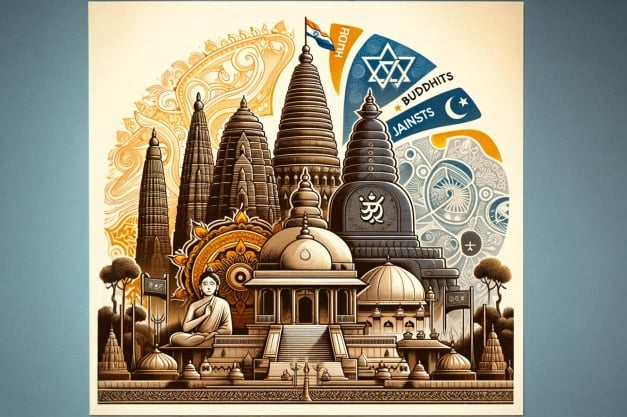
1. Historical Roots and Origins
Bharat, or India, is the birthplace of Hinduism, Buddhism, Jainism, and Sikhism. These religions originated and evolved in this land, deeply intertwined with its history, culture, and civilization. The ancient texts, teachings, and traditions of these faiths were composed, practiced, and disseminated across the Indian subcontinent, making Bharat their natural home.
2. Cultural and Spiritual Heritage
The cultural and spiritual heritage of Bharat is a testament to its significance as the natural home for Sanatanis. The country is dotted with countless temples, monasteries, gurdwaras, and pilgrimage sites that hold immense religious and spiritual significance. From Varanasi and Bodh Gaya to Amritsar and Shravanabelagola, these sacred places attract millions of devotees, preserving and celebrating the spiritual essence of these religions.
3. Preservation of Ancient Knowledge
Bharat has been the custodian of vast bodies of ancient knowledge, scriptures, and philosophical treatises. The Vedas, Upanishads, Puranas, Tripitaka, Agamas, and Guru Granth Sahib are integral to the religious and philosophical landscape of Sanatanis. The preservation and study of these texts continue to be a central aspect of religious and academic life in India, fostering a deep connection to the roots of these faiths.
4. Socio-Cultural Practices and Festivals
The socio-cultural fabric of Bharat is interwoven with the practices and festivals of Hinduism, Buddhism, Jainism, and Sikhism. Festivals such as Diwali, Holi, Vesak, Mahavir Jayanti, and Vaisakhi are celebrated with great fervor, reflecting the diversity and unity of the Sanatani traditions. These cultural practices reinforce the collective identity and continuity of these faiths in their natural home.

5. Philosophical and Ethical Contributions
Bharat’s contribution to world philosophy and ethics is profound, with concepts such as Dharma, Ahimsa (non-violence), Karma, and Moksha originating from this land. These principles have influenced not only the followers of these religions but also global philosophical and ethical discourses. The teachings of the Buddha, Mahavira, and Guru Nanak continue to inspire millions worldwide, rooted in the Indian philosophical tradition.
6. Continuity and Resilience
Despite centuries of invasions, colonization, and external influences, Bharat has maintained the continuity and resilience of its Sanatani traditions. The ability to adapt, integrate, and thrive amidst changing circumstances underscores the strength and vitality of these religions in their natural home. This resilience is a testament to the deep-seated connection between the land and its spiritual traditions.
7. Modern-Day Relevance and Practice
In contemporary times, Bharat remains the epicenter of religious practice, education, and discourse for Sanatanis. Institutions such as Banaras Hindu University, Nalanda University, and various religious seminaries continue to be hubs of learning and preservation of Sanatani traditions. The presence of vibrant communities and the practice of these religions in everyday life affirm Bharat’s status as their natural home.
8. Legal and Constitutional Recognition
The Indian Constitution provides legal recognition and protection to the practice of Hinduism, Buddhism, Jainism, and Sikhism. The freedom to practice, profess, and propagate one’s religion is enshrined in the Constitution, reflecting the inclusive and pluralistic ethos of Bharat. This legal framework ensures the safeguarding of religious rights and the promotion of harmony among Sanatanis.
9. Global Influence and Diaspora
While Bharat is the natural home for Sanatanis, its influence extends globally through a vast diaspora. Indian communities worldwide continue to practice and promote their religious traditions, contributing to the global understanding and appreciation of Sanatani faiths. This global presence underscores the universal relevance and adaptability of these traditions, rooted in their Indian origin.
10. Integral to National Identity
The Sanatani religions are integral to the national identity of Bharat. They have shaped the country’s art, architecture, literature, music, and social values. The rich tapestry of Indian civilization is a reflection of the harmonious coexistence and mutual respect among these religions, making Bharat the natural and irreplaceable home for Hindus, Buddhists, Jains, and Sikhs.
