Tag: bharat

  • The Indus Waters Treaty Reckoning: How Nehruvian Statecraft Cost Bharat Leverage

    The Indus Waters Treaty Reckoning: How Nehruvian Statecraft Cost Bharat Leverage

    This analysis separates hydraulic fact from televised spectacle in the debate over the Indus Waters Treaty. It explains how the 1960 pact divided the six-river system, why the familiar 80:20 shorthand requires context, and what rights Bharat retained on the western rivers. It assesses Jawaharlal Nehru’s settlement in its post-Partition setting while identifying the strategic…

  • Sacred Cycles of Shakti: How Bharat Honors Menstruation With Reverence

    Sacred Cycles of Shakti: How Bharat Honors Menstruation With Reverence

    This article offers a comprehensive, factual, and culturally rooted exploration of how Bharat’s traditions have understood menstruation through sacred symbolism rather than stigma alone. It examines Kamakhya Temple and Ambubachi, Odisha’s Raja Parba, Kerala’s Chengannur tradition, Karnataka’s Keddasa, Lajja Gauri iconography, and regional menarche ceremonies. The discussion shows how menstruation has been associated with Shakti,…

  • Jaishankar’s Sharp Warning on European Arms Exposes India’s Security Dilemma

    Jaishankar’s Sharp Warning on European Arms Exposes India’s Security Dilemma

    Dr. S. Jaishankar’s Finland remarks exposed a major contradiction in Western criticism of India’s Russia ties. He argued that European weapons have been used against India, while Indian weapons have not threatened Europe. The issue goes beyond rhetoric because Pakistan has long been a central factor in India’s national security calculations. SIPRI-style arms-transfer data helps…

  • Genetic Clues Reveal Bharat’s Deep Role in Human Origins Beyond Colonial Myths

    Genetic Clues Reveal Bharat’s Deep Role in Human Origins Beyond Colonial Myths

    Recent genetic and archaeological research has reopened major questions about Bharat’s role in early human history. The evidence points to deep antiquity, complex population continuity, and the Indian subcontinent’s importance in early non-African dispersals. Colonial racial theories about “Aryans” are increasingly inadequate because they confused language, culture, ancestry, and power. Modern ancient-DNA studies show a…

  • India’s Police at a Breaking Point: Cybercrime, Narco-Terror and Urgent Reform

    India’s Police at a Breaking Point: Cybercrime, Narco-Terror and Urgent Reform

    India’s policing challenge has moved far beyond traditional crime control into cybercrime, narco-terrorism, hybrid warfare, financial fraud, and AI-enabled threats. The article explains why a colonial-era police structure cannot adequately respond to crimes that cross borders, platforms, currencies, and jurisdictions. It highlights the scale of cybercrime complaints, the strategic use of narcotics by hostile networks,…

  • Bharat That Is India: A Powerful Review of Civilizational Identity and Memory

    Bharat That Is India: A Powerful Review of Civilizational Identity and Memory

    This review examines Abhijit Joag’s Bharat That Is India: Reclaiming Our Real Identity as a serious contribution to Indian civilizational studies. The book argues that Bharat is not merely a modern political formation but a long cultural continuum shaped by dharma, sacred geography, philosophical inquiry, and Indian knowledge systems. It challenges colonial and postcolonial frameworks…

  • Why Bharat’s PL-15 Shock Demands More Than a Powerful Long-Range Missile

    Why Bharat’s PL-15 Shock Demands More Than a Powerful Long-Range Missile

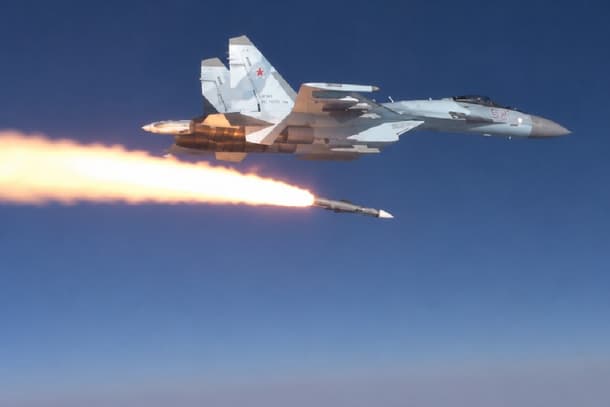
    Bharat’s reported interest in the Russian R-37M missile is best understood as an interim response to Pakistan’s J-10C and PL-15 combination, not as a complete solution. The PL-15 challenge is rooted in networked air warfare, where sensors, datalinks, AEW&C aircraft, electronic warfare, and pilot training matter as much as missile range. The R-37M can threaten…

  • BrahMos to UAE: Russia’s High-Stakes Calculus Behind Bharat’s Defence Rise

    BrahMos to UAE: Russia’s High-Stakes Calculus Behind Bharat’s Defence Rise

    The possible BrahMos sale to the UAE highlights the changing logic of defence diplomacy in a multipolar world. Russia may approve the deal because it strengthens military-technical cooperation with Bharat while keeping Moscow relevant in a major joint weapons platform. The UAE’s interest reflects its desire for deterrence, defence diversification, and greater strategic autonomy amid…

  • Sam Manekshaw’s Decisive Leadership and Bangladesh’s Hard-Won Freedom

    Sam Manekshaw’s Decisive Leadership and Bangladesh’s Hard-Won Freedom

    Field Marshal Sam Manekshaw’s role in the 1971 Liberation War remains one of the most important examples of disciplined military leadership in modern South Asian history. His insistence on preparation before action helped ensure that the campaign for Bangladesh’s freedom was swift, coordinated, and strategically decisive. The surrender of nearly 93,000 Pakistani personnel on 16…

  • Bharat’s Strategic Reset: Why De-Americanising Must Not Mean Trusting China

    Bharat’s Strategic Reset: Why De-Americanising Must Not Mean Trusting China

    The debate over de-Americanising Indian statecraft must be treated with historical depth rather than emotional reaction. Bharat was never fully Americanised, as its record of non-alignment, the 1971 Indo-Soviet Treaty, and repeated resistance to external pressure demonstrate. At the same time, disappointment with Washington should not lead India to romanticise China or ignore the realities…

  • NASM-SR Salvo Test: Powerful Boost to Bharat’s Indigenous Naval Strike Edge

    NASM-SR Salvo Test: Powerful Boost to Bharat’s Indigenous Naval Strike Edge

    The NASM-SR salvo test marks a major advance in Bharat’s indigenous naval strike capability. By launching two Naval Anti-Ship Missile Short Range weapons in quick succession from a helicopter platform, DRDO and the Indian Navy demonstrated a more realistic and tactically demanding combat capability. The test matters because salvo firing can complicate enemy ship defences…

  • Bharat’s Drone-Age Army: Powerful Lessons in Self-Reliant Future Warfare

    Bharat’s Drone-Age Army: Powerful Lessons in Self-Reliant Future Warfare

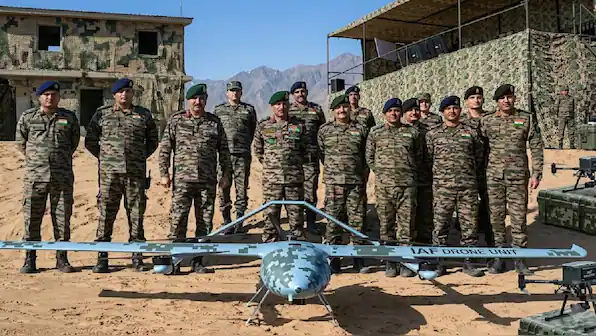
    Bharat’s Indian Army is entering a decisive phase of military modernisation shaped by drones, artificial intelligence, electronic warfare, cyber operations, and precision fires. General Upendra Dwivedi’s tenure is significant because it accelerated the move from manpower-heavy structures toward a more technology-enabled and future-ready force. The rapid expansion of drone and counter-drone capabilities reflects hard lessons…

  • Bharat That Is India: A Powerful Review of Civilizational Identity and Dharma

    Bharat That Is India: A Powerful Review of Civilizational Identity and Dharma

    Bharat That Is India by Abhijit Joag is a serious contribution to debates on Indian history, civilizational identity, and decolonial interpretation. The book presents Bharat as a long cultural continuum shaped by dharma, Indian Knowledge Systems, philosophy, education, economy, and spiritual traditions. It challenges colonial and Eurocentric frameworks while inviting readers to examine India through…

  • Bharat Before 1947: Powerful Historical Evidence Against a Colonial Myth

    Bharat Before 1947: Powerful Historical Evidence Against a Colonial Myth

    The modern Republic of India began with independence in 1947 and constitutional consolidation in 1950, but Bharat as a civilizational idea is far older. This article separates modern statehood from cultural geography, sacred memory, political history, and dharmic continuity. It examines Bharatavarsha, the Constitution’s phrase ‘India, that is Bharat,’ the mahajanapadas, Ashokan inscriptions, pilgrimage networks,…

  • Why Imported Secularism Still Fails India’s Dharmic Civilizational Reality

    Why Imported Secularism Still Fails India’s Dharmic Civilizational Reality

    This essay examines why Western secularism does not map neatly onto India’s dharmic civilizational experience. It traces the term “secular” to European Christian conflicts between Church and State and contrasts that history with India’s decentralized traditions of Dharma, Rajadharma, sampradaya, and sacred plurality. The discussion explains how the 42nd Amendment inserted “secular” into the Preamble…

  • Bharat: The Natural Home for Sanatanis (Hindus, Buddhists, Jains, and Sikhs)

    Bharat: The Natural Home for Sanatanis (Hindus, Buddhists, Jains, and Sikhs)

    “Bharat: The Natural Home for Sanatanis (Hindus, Buddhists, Jains, and Sikhs)” explores why India is the intrinsic homeland for these ancient religions. The post highlights India’s historical roots as the birthplace of these faiths, its rich cultural and spiritual heritage, and the preservation of ancient knowledge and texts. It emphasizes the socio-cultural practices and festivals…

  • Jaishankar affirms India’s growing global role, says “This is an India that is more Bharat”

    Jaishankar affirms India’s growing global role, says “This is an India that is more Bharat”

    External Affairs Minister S Jaishankar highlights India’s evolving role on the global stage, emphasizing the nation’s fusion of traditional values with modern advancements. Reflecting on India’s progress, from cashless payments to lunar missions, he underscores the country’s strides in women’s empowerment and inclusive growth. Jaishankar emphasizes India’s diplomatic initiatives, navigating complex global scenarios like the…

  • “We have been ruling the Deccan for the last 800 years!”- Excerpts from Kasim Razvi’s 1948 Speech

    “We have been ruling the Deccan for the last 800 years!”- Excerpts from Kasim Razvi’s 1948 Speech

    The excerpt captures the fervent speech of Kasim Razvi, depicting the tumultuous period during Hyderabad’s integration into India in 1947-48. Razvi’s inflammatory rhetoric, emphasizing an Islamic state and inciting violence against Hindus, underscores the atmosphere of fear and division orchestrated by the Razakars, his militant group. The speech not only reflects a deep-seated religious animosity…

  • Parliament Of The World’s Religions Features Discussion On Distinguishing The Sacred Swastika From Hitler’s Hakenkreuz

    Parliament Of The World’s Religions Features Discussion On Distinguishing The Sacred Swastika From Hitler’s Hakenkreuz

    The panel at the Parliament of the World’s Religions in Chicago focused on distinguishing the sacred Swastika from Hitler’s Hakenkreuz, featuring representatives from various faiths who highlighted the historical, cultural, and spiritual disparities between these symbols. Emphasizing the Swastika’s ancient origins and positive connotations across Hindu, Buddhist, Jain, and Native American traditions, the discussion clarified…

  • How Operation Polo Aborted a Pakistan in South India

    How Operation Polo Aborted a Pakistan in South India

    The article explores the historical intricacies behind the liberation of Hyderabad, shedding light on the oppressive regime of the Nizams and the atrocities committed by the Razakars against the Hindu populace. It discusses the missed opportunity of the Marathas to dismantle the Nizam’s rule, attributing it to historical factors that allowed the Nizams’ sustained dominance.…