-
Punjab’s Sikh Heartland: Powerful History, Sacred Geography, and Living Heritage

Punjab is best understood as the sacred and cultural heartland of the Sikhs, shaped by geography, agriculture, language, devotion, and community institutions. This long-form study explains how Guru Nanak’s teachings, the Guru Granth Sahib, the gurdwara, langar, kirtan, and the Khalsa gave Punjab a distinctive spiritual and historical identity. It also places Sikh heritage within…
-
Historic 327th Baisakhi: Khalsa Spirit and Dharmic Unity Ignite Gatherings Worldwide

The historic 327th Baisakhi united Sikh communities across India and the global diaspora in a powerful commemoration of Khalsa Sirjana Diwas. Centered on Amrit Sanchar, kirtan, Ardas, and the Hukamnama, observances highlighted discipline, equality, and the living legacy of Guru Gobind Singh’s 1699 institution of the Khalsa. Processions (Nagar Kirtan) and Gatka demonstrations intertwined martial…
-
‘Gems of Sikhism’ Review: Timeless Teachings, Khalsa Ethos, and Dharmic Unity Today

This academically grounded review of ‘Gems of Sikhism’ distills the core teachings of SikhismIk Onkar, Naam, Seva, Kirat Karni, Vand Chakna, Sarbat da bhala, and the Khalsa ethosinto a coherent, accessible framework. It explains how Sikh practices like Langar and Seva institutionalize equality and compassion, while Miri–Piri and the Sant–Sipahi ideal provide a disciplined theory…
-
Matak Hulāre Unveiled: The Swaying Rhythms of Punjabi Grace and Sacred Dharmic Unity

Matak Hulāre distills the Punjabi ideal of graceful sway and jubilant lift into a recognizable movement-music dialect spoken across Giddha, Bhangra, and festival gatherings. The piece unpacks its biomechanics, showing how pelvic sway, spinal curves, and shoulder release create the matak, while rhythmic accents and chest lift generate the hulāre. It maps the form’s rhythmic…
-
Vaishakh 2026 Guide: Verified Dates, Auspicious Observances, and Dharmic Unity

Vaishakh (Vaisakh) is the second month of the Hindu lunisolar calendar. In 2026, it runs from 3 April to 1 May in North Indian (Purnimanta) calendars and from 18 April to 16 May in Telugu, Kannada, Marathi, and Gujarati (Amanta) calendars. This guide explains why the two month-spans differ, how tithi controls festival dates nationwide,…
-
Vaisakhi Through Sikh Art: An Invitation to the VillaA Powerful Blueprint for Unity

This exhibition blueprint frames Vaisakhi as an academic and community-centered journey through Sikh art within an intimate villa setting. It traces the Khalsa’s founding at Anandpur Sahib, highlights Gurmukhi calligraphy and manuscript traditions, and situates paintings, textiles, and martial regalia within rigorous historical context. Preventive conservation, ethical display practices, and bilingual interpretation ensure scholarly integrity…
-
Boishakh Mash 2026, Bengali Calendar 1433: Dates, Poila Boishakh 2026, Rituals, and Dharmic Unity

Boishakh Mashalso known as Baisakh or Baishakhopens Bengali Calendar 1433 in mid-April 2026, setting the cultural and seasonal tone for West Bengal and Bangladesh. This guide clarifies region-specific dates (15 April–15 May in West Bengal; 14 April start in Bangladesh), explains the sidereal solar mechanics behind Mesha Saṅkrānti, and shows how time zones and civic…
-
Vaisakhi 2026 Explained: Timeless Khalsa Legacy, Sacred Rituals, and Dharmic Unity

Vaisakhi 2026 offers a comprehensive moment of renewalhonoring the Khalsa’s founding at Anandpur Sahib while welcoming the Punjabi agrarian new year tied to the Sun’s entry into sidereal Aries. The guide explains why many communities will observe Vaisakhi on April 13–14 in 2026, clarifying the role of solar calculations, sunrise, and regional calendars. Readers gain…
-
Vishu Kanji & Vishu Katta: Authentic Kerala Vishu Breakfast, Ritual Meaning, and Recipe Guide

This long-form guide clarifies the cultural and culinary essence of Vishu Kanji and Vishu Katta, the traditional Kerala breakfast served after Vishukkani Darshan on Vishu. It explains how both dishes share core ingredientsunakkalari or pacha ari, fresh grated coconut, cumin, and saltwhile diverging in texture through different liquid ratios and techniques. A detailed, time-efficient workflow…
-
Vishu Festival Unveiled: Astronomical New Year of Kerala, Sacred Kani, Kaineettam & Sadya

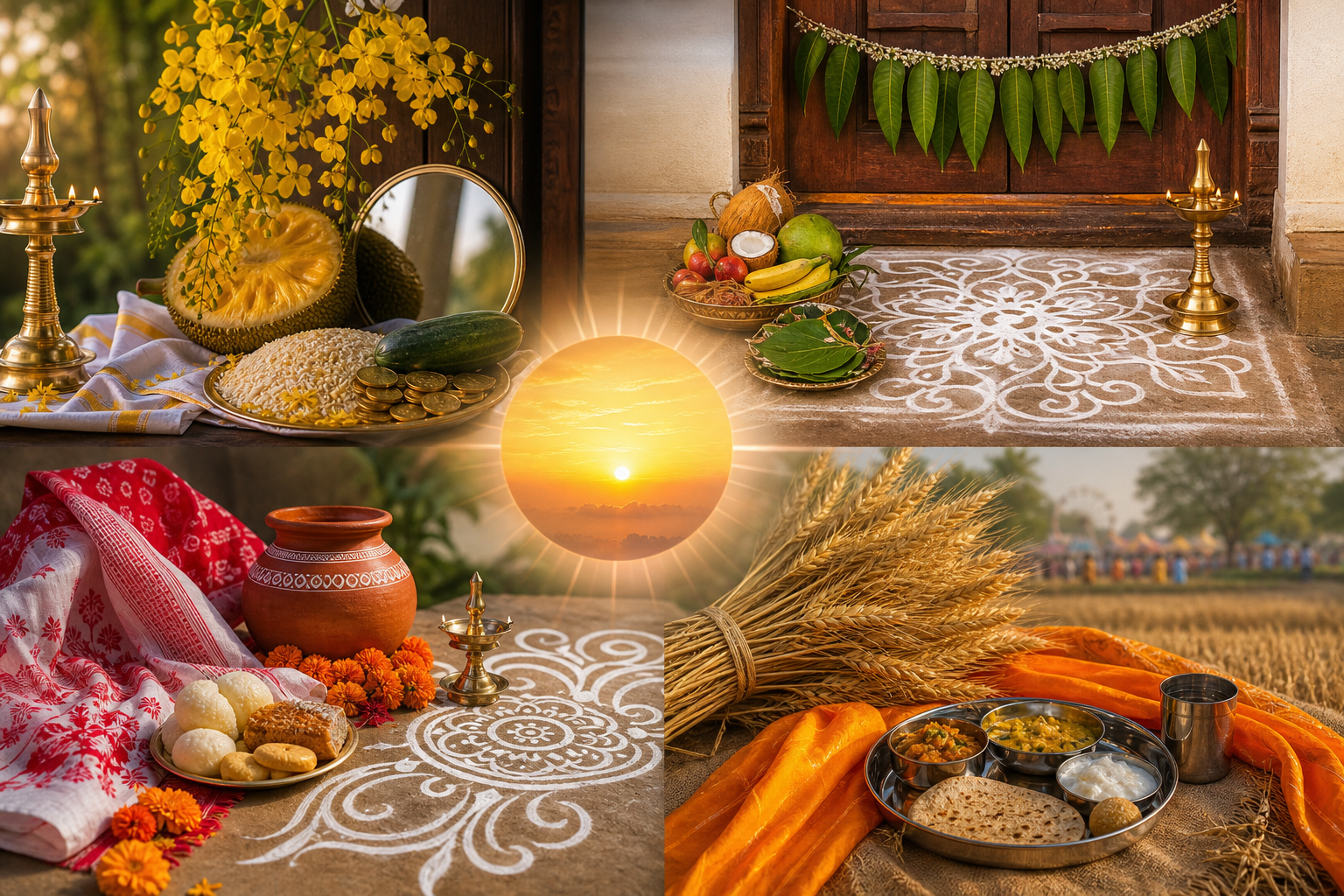
Vishu, Kerala’s Astronomical New Year, is celebrated at Mesha Sankramana when the Sun enters sidereal Aries, aligning the festival with the first day of Medam in the Malayalam calendar. The hallmark Vishukkani Darshanan arrangement of uruli, konna blossoms, lamp, coins, sacred text, and mirrorencapsulates prosperity, knowledge, and self-reflection in a single auspicious sight. Vishu Kaineettam…
-
Pana Sankranti 2026 on April 14: Odia New Year’s astronomy, rituals, and dharmic unity

Pana Sankranti on 14 April 2026 marks the Odia New Year (Maha Vishuva Sankranti/Meru Sankranti) and the Sun’s ingress into sidereal Aries (Mesha Sankranti). This long-form guide explains the astronomical basis (sidereal vs tropical frameworks and ayanamsa), clarifies why solar months run from Sankranti to Sankranti while some lunar months run from Purnima to Purnima,…
-
Baisakhi 2026 (April 14): Definitive Guide to Khalsa Day, Sikh New Year, and Mesha Sankranti

Baisakhi (Vaisakhi) 2026 falls on Tuesday, 14 April, uniting harvest gratitude in Punjab with the Khalsa legacy of 1699 and India’s wider Mesha Sankramana solar New Year. The day is widely observed as the Sikh New Year within Punjabi solar tradition and the fixed-date Nanakshahi calendar. This definitive guide explains the festival’s history, the Khalsa’s…
-
Maha Vishuba Sankranti 2026: Odia New Year Date, Timeless Rituals, and Shared Dharma

Maha Vishuba Sankranti 2026, the Odia New Year, falls on April 14 and coincides with the Sun’s sidereal ingress into Mesha (Aries). The post explains the astronomical basis for Mesha Sankranti, how precession shapes its mid-April timing, and why local panchang consultation ensures ritual precision. It details core observances such as snana, arghya to Surya,…
-
Baisakhi (Vaisakhi) 2026 on April 14: Sikh New Year, Harvest Joy, and Mesha Sankranti

Baisakhi (Vaisakhi) 2026 falls on April 14 in India, uniting Sikh New Year observances, Khalsa remembrance, and Punjab’s harvest celebrations with the pan-Indian solar milestone of Mesha Sankranti. The date aligns with 1 Vaisakh in the Solar Nanakshahi framework while also intersecting with regional new-year festivals like Puthandu, Vishu, Rongali Bihu, and Maha Vishuva Sankranti.…
-
Chithirai Vishu (Puthandu) 2026: Astronomical Timings, Sacred Rituals, and Cultural Unity

Chithirai Vishu, observed as Puthandu and Varusha Pirappu, inaugurates the Tamil New Year on 14 April 2026 with Mesha Sankranti marking the Solar New Year (Souramana Ugadi). The exact Mesha Sankramana punyakalam is at 9:25 AM IST, a window revered as Vishvath Punyakalam for meritorious acts such as snana, dana, and japa. This New Year…
-
Sikh New Year Unveiled: Time, Grace, and the Soul’s Journey across Dharmic Pathways

The Sikh New Year is observed through two complementary frames: 1 Chet in the Nanakshahi calendar in mid-March and Vaisakhi (Baisakhi) in mid-April, when the Khalsa was inaugurated at Anandpur Sahib in 1699. Grounded in Gurmat, the New Year weaves time (hukam), grace (nadar, kirpa), and the soul’s aspiration into a coherent path centered on…
-
Gudi Padwa 2026 (March 19): Rituals, Panchang, History, and Dharmic New Year Harmony

Gudi Padwa 2026 falls on March 19, aligning with Chaitra Shukla Pratipadathe first bright lunar day of the Hindu year for Maharashtrians and Konkanis, and observed as Yugadi/Ugadi in Telangana, Andhra Pradesh, and Karnataka. This guide explains the festival’s Panchang basis, the 60-year Samvatsara cycle (commencing Parabhava in 2026), and the sunrise muhurat logic to…
-
Baishakhi Sankranti at Kshirgram: The Sacred Awakening of Maa Jogadya and New Beginnings

Baishakhi Sankranti at Kshirgram Maa Jogadya Temple marks the Sun’s entry into Mesha (Aries) and the start of Baishakh, aligning with the Bengali New Year. The festival’s centerpiece is a solemn yet celebratory divine awakening of Maa Jogadya that symbolizes renewal, ethical intention, and harmony with seasonal cycles. Visitors encounter an immersive atmosphere of conch…
-
Nishan Sahib Etiquette: How Gurudwaras Maintain, Honor, and Protect the Sacred Sikh Flag
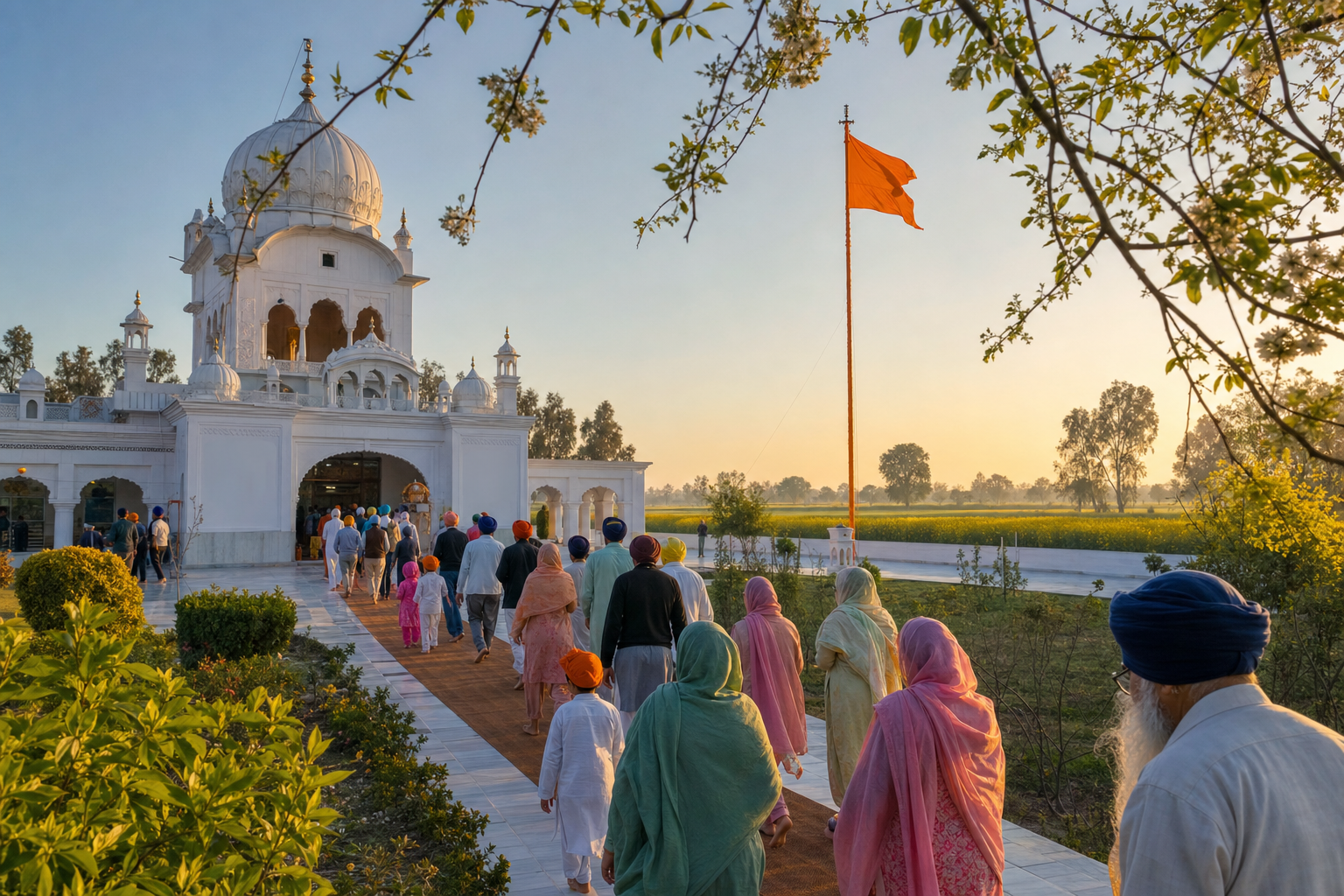
The Nishan Sahib stands as a global emblem of Sikh identity, seva, and equality, maintained with care in Gurudwaras worldwide. This guide explains its symbolism, daily respect, and the ceremonial renewal often performed during Vaisakhi or Gurpurabs. Readers learn practical maintenance protocols, from fabric selection and chola wrapping to lightning protection and responsible lighting. It…
-
Guru Gobind Singh’s Enduring Legacy: Sacrifice, Justice, and Dharmic Unity Across Faiths

Guru Gobind Singh’s legacy exemplifies an unwavering commitment to justice, seva, and the protection of religious freedom that resonates across Hinduism, Sikhism, Buddhism, and Jainism. Rooted in formative events at Anandpur Sahib and the martyrdom of Guru Tegh Bahadur, his vision culminated in the Khalsa Panth at Baisakhi 1699an institution dedicated to equality and the…