Tag: Ancient Texts

  • Padma Samhita Unveiled: Timeless Pancharatra Rituals to Elevate Modern Spiritual Life

    Padma Samhita Unveiled: Timeless Pancharatra Rituals to Elevate Modern Spiritual Life

    Padma Samhita is a cornerstone of the Pañcarātra tradition, detailing thirty-one chapters that integrate temple construction, mūrti consecration, daily worship, and ethical formation. This overview explains its core theology—the vyūha doctrine and arcā avatāra—and shows how mantras such as Om Namo Nārāyaṇāya and Om Namo Bhagavate Vāsudevāya shape steady household practice. Readers gain a practical…

  • Does Time Flow or Does Space Evolve? A Profound Reconciliation of Relativity and Dharmic Wisdom

    Does Time Flow or Does Space Evolve? A Profound Reconciliation of Relativity and Dharmic Wisdom

    This comprehensive analysis reconciles a popular paradox: modern physics is said to claim that time changes while space is constant, whereas ancient dharmic texts appear to say the opposite. Clarifying the science, general relativity treats spacetime as dynamic, with evolving spatial geometry and observer-dependent time. Clarifying the traditions, Hindu, Buddhist, Jain, and Sikh sources distinguish…

  • Did Goddess Lakshmi Slay Demons? Scriptural Evidence on Kolhasura and Mahishasura

    Did Goddess Lakshmi Slay Demons? Scriptural Evidence on Kolhasura and Mahishasura

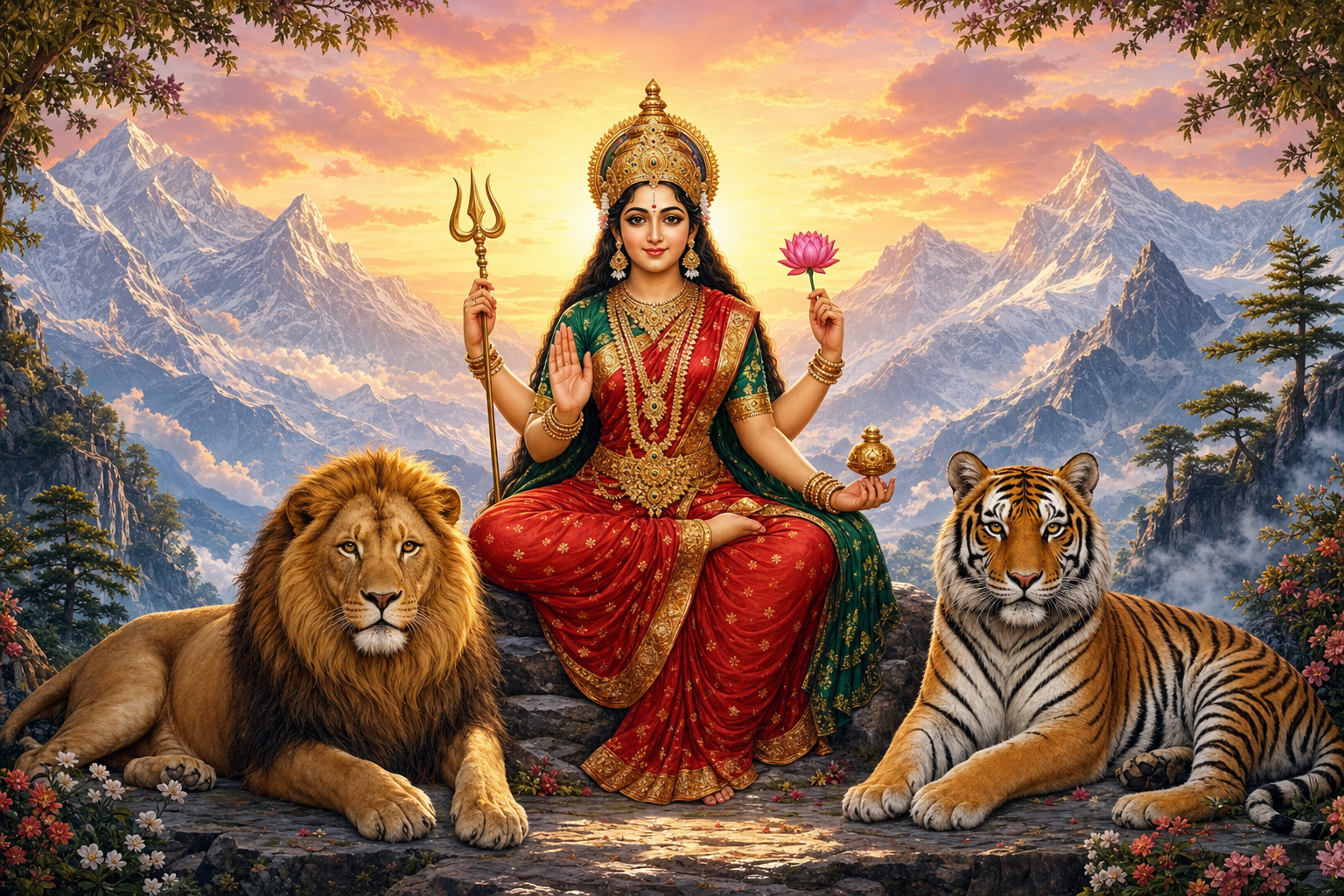
    Did Goddess Lakshmi slay demons? Scriptural and regional traditions answer yes in her fierce Mahalakshmi form. The Skanda Purana’s Karavira Mahatmya narrates Mahalakshmi (Ambabai) defeating Kolhasura at Kolhapur, while the Devi Mahatmya’s Mahishasuramardini cycle—often assimilated devotionally to Mahalakshmi—captures the goddess’s triumph over Mahishasura. This article clarifies how Śrī-Lakshmi’s benevolent identity and Mahalakshmi’s protective power coexist…

  • Smriti Chandrika: The Definitive 12th‑Century Dharmashastra Digest That Shaped Hindu Law

    Smriti Chandrika: The Definitive 12th‑Century Dharmashastra Digest That Shaped Hindu Law

    Smriti Chandrika (Smṛticandrikā), attributed to the 12th‑century South Indian scholar Devannabhatta, is a landmark Dharmashastra digest (nibandha) that shaped Hindu law in the Drāviḍa school. Distinguished by meticulous citations and minimal authorial intrusion, it consolidates earlier authorities on conduct (Achāra), life‑cycle rites (Saṃskāra), expiations (Prāyaścitta), ancestor rites and charity, and especially on legal procedure (Vyavahāra),…

  • Abhinavabharati Unveiled: Abhinavagupta’s Masterwork on Bharata’s Natyashastra and Rasa Theory

    Abhinavabharati Unveiled: Abhinavagupta’s Masterwork on Bharata’s Natyashastra and Rasa Theory

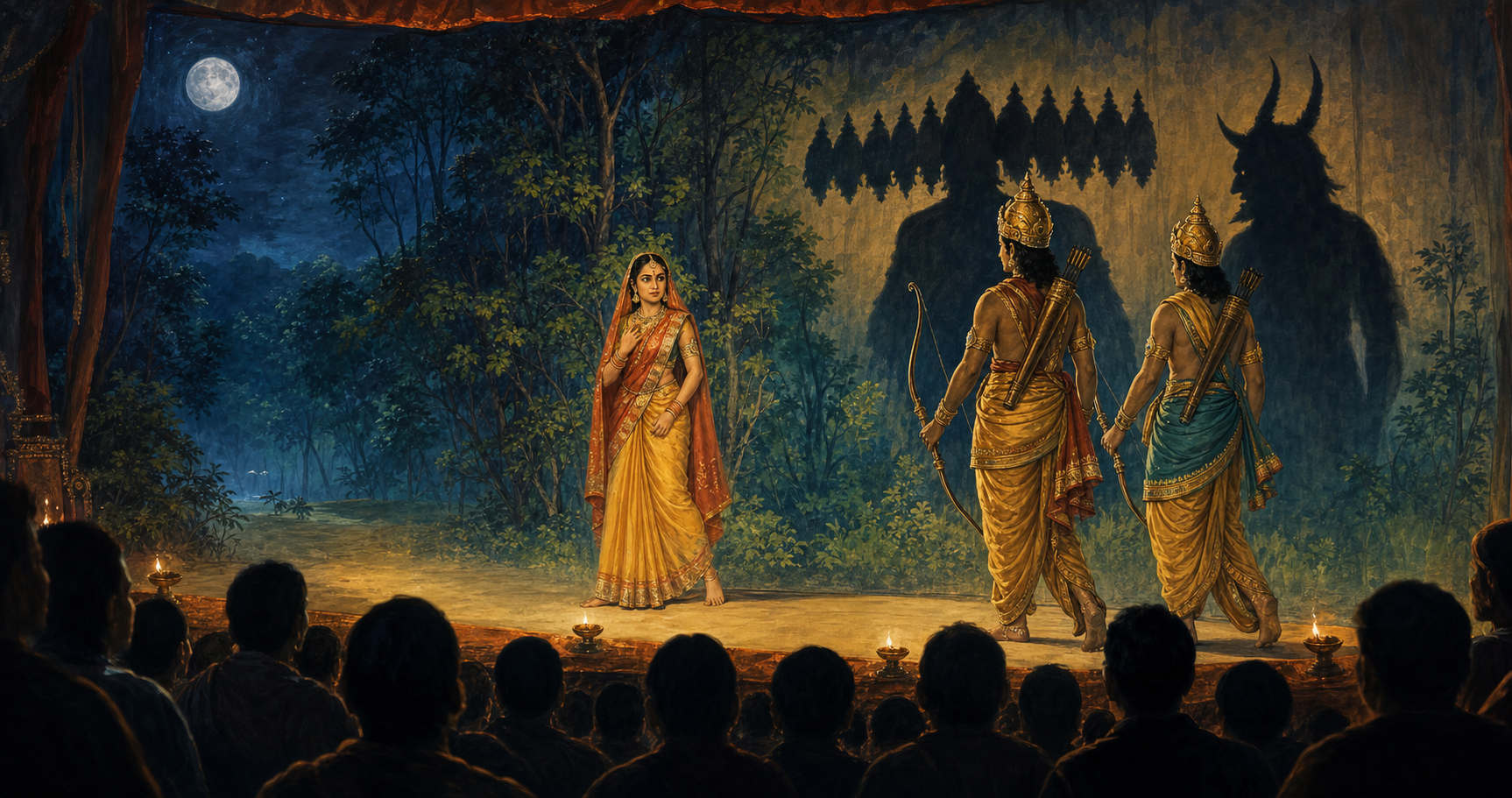
    Abhinavabharati, Abhinavagupta’s celebrated commentary on Bharata Muni’s Natyashastra, clarifies how drama, dance, and music yield rasa through vibhavas, anubhavas, and vyabhicari-bhavas in the receptive sahridaya. It accepts śānta rasa as the apex, harmonizing aesthetic passion with contemplative calm in line with dharmic ideals shared across Hinduism, Buddhism, Jainism, and Sikhism. By integrating dhvani (suggestion) from…

  • Rama on Hanuman, Lakshman on Angada: Decoding Yuddha Kanda Strategy and Sacred Symbolism

    Rama on Hanuman, Lakshman on Angada: Decoding Yuddha Kanda Strategy and Sacred Symbolism

    This study examines Rama’s march to Lanka through the dual lenses of strategy and symbolism in the Yuddha Kanda. It traces how intelligence from Sundara Kanda matured into a disciplined campaign: ritual diplomacy with the ocean, Nala’s engineering of Rama Setu, and Sugriva’s team-of-teams command across a high-mobility Vanara army. It clarifies that Valmiki does…

  • Dama in Hindu Iconography: Unveiling the Sacred Neck Chain of Restraint, Grace, and Power

    Dama in Hindu Iconography: Unveiling the Sacred Neck Chain of Restraint, Grace, and Power

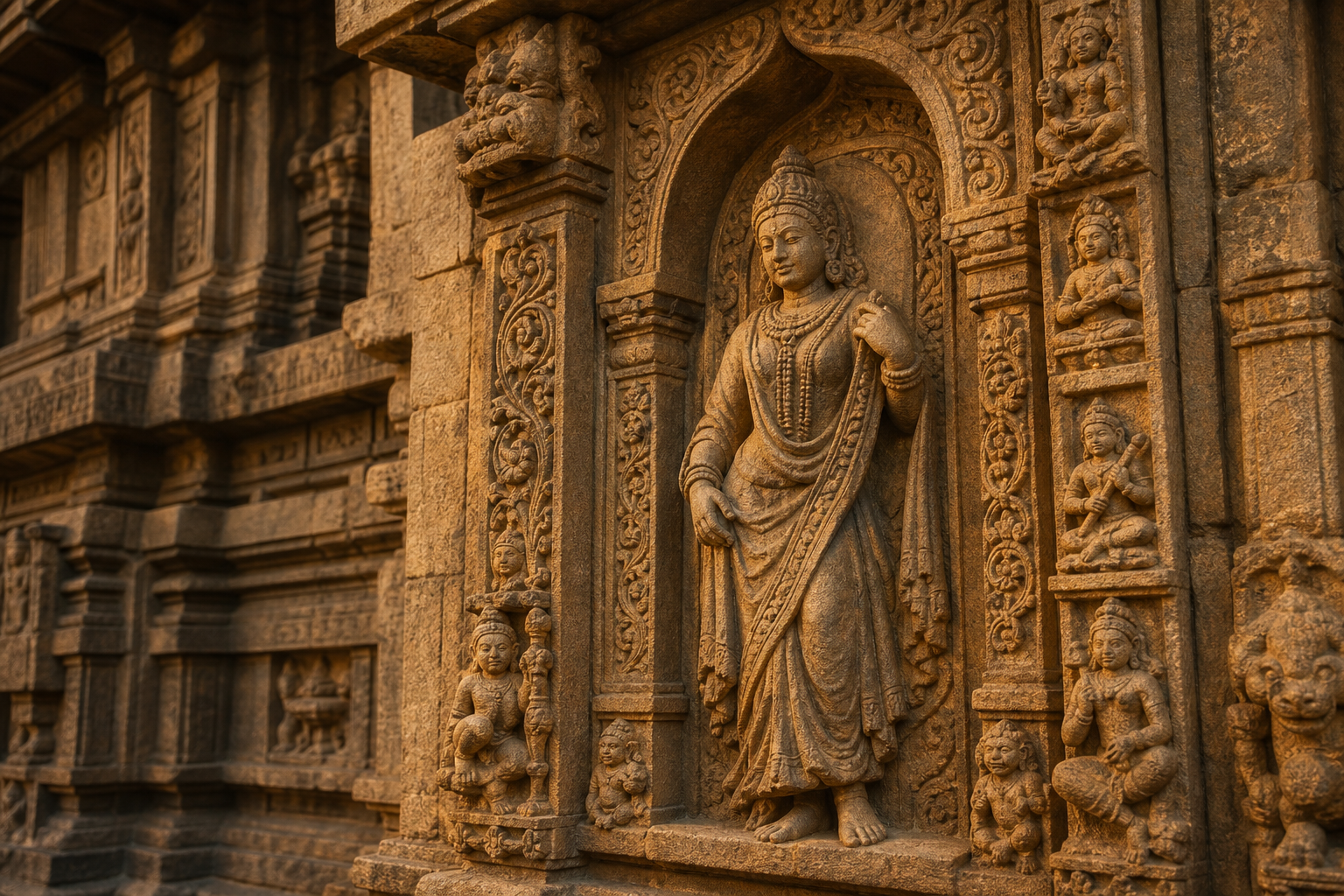
    This article decodes the dama—the sacred neck chain—in Hindu iconography as a short, structured collar that balances longer necklaces while signaling restraint, protection, and grace. It clearly distinguishes dama/graiveyaka from kanthika (choker), muktavali (pearl strings), and hara (long necklace) using the taxonomy preserved in Shilpa Shastras. Readers learn how major treatises (Vishnudharmottara Purana, Shilparatna, Manasara,…

  • Shantadevi of the Ramayana: The Overlooked Princess Who Shaped Sri Rama’s Destiny

    Shantadevi of the Ramayana: The Overlooked Princess Who Shaped Sri Rama’s Destiny

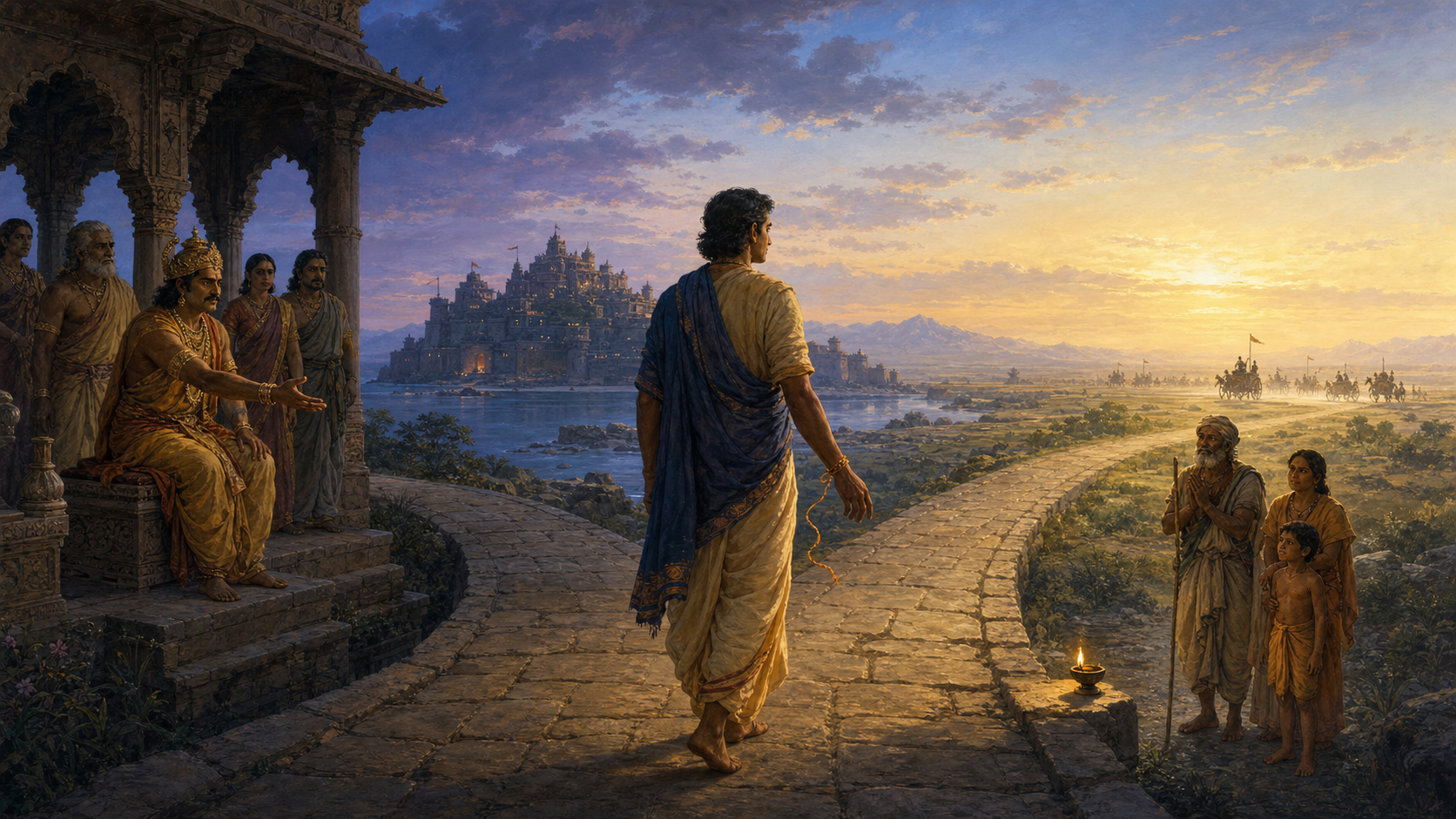
    Shantadevi (Śāntā) is a pivotal yet overlooked figure in the Ramayana, remembered in many traditions as King Daśaratha’s daughter and the bride of Ṛṣyaśṛṅga. Her marriage anchors the ritual sequence that culminates in the Putrakameshti Yajna and the births of Sri Rama and his brothers. This article clarifies textual variations between Valmiki’s Bala Kanda and…

  • Unveiling Prishni: The Speckled Celestial Mother of the Maruts in Rigvedic Cosmology

    Unveiling Prishni: The Speckled Celestial Mother of the Maruts in Rigvedic Cosmology

    Prishni, the “speckled” celestial mother of the Maruts in the Rigveda, illuminates how Hindu scriptures bind natural phenomena to sacred meaning. This analysis clarifies her etymology, traces her presence in Vedic hymnody, and examines her relationship to Indra, Rudra, and the storm-host. Readers gain a precise understanding of how “speckling” functions as Vedic symbolism for…

  • Kapal‑Muni in Bhagat Maalaa: Unifying Hindu, Buddhist, Jain, and Sikh Wisdom Today

    Kapal‑Muni in Bhagat Maalaa: Unifying Hindu, Buddhist, Jain, and Sikh Wisdom Today

    This article examines the Kapal‑Muni motif within the broader Bhagat Maalaa/Bhaktamal tradition as a didactic lens on impermanence, ego, and compassion. It clarifies how skull‑cup symbolism functions ethically rather than sensationally, inviting readers to privilege inner transformation over outward austerity. The discussion surveys convergences and distinctions across Hindu Śaiva and Vaishnava currents, Sikh teachings centered…

  • Damara Tantra Decoded: Unmatta Bhairava’s Fierce Wisdom, Structure, and Practice

    Damara Tantra Decoded: Unmatta Bhairava’s Fierce Wisdom, Structure, and Practice

    Damara Tantra stands out in Shaiva Tantra by presenting Shiva as Unmatta Bhairava instructing Pārvatī, organizing its teachings into six paricchedas framed by a Mangalacharana. The text’s eight Unmatta Bhairavas, including Kapali, Samhara, and Krodha, function as precise modalities for transforming fear and reactivity into wisdom and compassion. This analysis clarifies structure, core ideas, and…

  • Indrajit’s Invisible Fury: Astras, Ethics, and Strategy on Day Two of the Lanka War

    Indrajit’s Invisible Fury: Astras, Ethics, and Strategy on Day Two of the Lanka War

    Day two of the Lanka war showcases Indrajit’s mastery of maya-yuddha and astras, culminating in the Naga-pasha binding of Rama and Lakshmana. The narrative explains how divine weapons operate within a rigorous ethical code, illustrating the Ramayana’s union of strategy, spirituality, and restraint. Garuda’s arrival provides the precise counter to serpent energies, reaffirming dharma’s corrective…

  • Sanskrit vs Prakrit in Ancient India: A Sacred Dialogue Shaping Faith, Culture, and Power

    Sanskrit vs Prakrit in Ancient India: A Sacred Dialogue Shaping Faith, Culture, and Power

    Sanskrit and Prakrit formed a sacred dialogue in Ancient India, shaping ritual, philosophy, drama, and everyday communication across Hinduism, Buddhism, Jainism, and later Sikhism. Rather than rigid opposites, they functioned as complementary registers within a diglossic ecology that prized both precision and accessibility. The article maps their historical development from Old to Middle to New…

  • Matrisadbhava of Kerala: Authoritative Guide to Shakta Tantra and Bhadrakali (Rurujit)

    Matrisadbhava of Kerala: Authoritative Guide to Shakta Tantra and Bhadrakali (Rurujit)

    Matrisadbhava stands out in Hindu scriptures as a Kerala-centered Shakta Tantra that systematically encodes the worship of Goddess Bhadrakali, also revered as Rurujit. It unites doctrinal depth with Kerala’s temple pragmatics—nyāsa, mantra, yantra, homa, and bali—while foregrounding an ethic of care and precision. The text’s maternal vision affirms unity in diversity across Dharmic traditions, highlighting…

  • Beyond Indra’s Heaven: King Arishtanemi’s Bold Renunciation and Yoga Vasishta’s Vairagya

    Beyond Indra’s Heaven: King Arishtanemi’s Bold Renunciation and Yoga Vasishta’s Vairagya

    The opening narrative of the Yoga Vasishta, where King Arishtanemi declines Indra’s heaven, distills the text’s core teaching: lasting freedom arises from vairagya (renunciation) grounded in clear discrimination (viveka). Rather than reject joy, the king outgrows the promise of celestial pleasure by recognizing its impermanence and karmic limits. This analysis situates the story within Yoga…

  • Madanaratna (Madanapradipa): The Timeless Dharmashastra Masterwork Illuminating Hindu Law

    Madanaratna (Madanapradipa): The Timeless Dharmashastra Masterwork Illuminating Hindu Law

    Madanaratna (also known as Madanaratnapradipa or Madanapradipa) is a major Dharmashastra digest attributed to Vishwanatha, son of Bhattapujya, that consolidates Hindu legal, ethical, and ritual norms into a practical jurisprudence. It organizes doctrine across achara, vyavahara, and prayaschitta while engaging classical Smriti sources and renowned commentaries such as Mitakshara and Dayabhaga. The work’s method honors…

  • From Curse to Cosmic Steward: Brahma’s Transformative Boons to Kubera, Lord of Wealth

    From Curse to Cosmic Steward: Brahma’s Transformative Boons to Kubera, Lord of Wealth

    This study traces Kubera’s ascent from a troubled birth to his installation by Lord Brahma as Dhanada and guardian of the North, showing how austerity and grace transform adversity into stewardship. It clarifies Kubera’s genealogy from Brahma through Pulastya and Vishravas, anchoring his status in a sacred lineage. The analysis synthesizes Puranic and epic motifs—Pushpaka…

  • Varuna in the Vedas: Majestic Sovereign of rta, Waters, and Nature’s Vital Powers

    Varuna in the Vedas: Majestic Sovereign of rta, Waters, and Nature’s Vital Powers

    Varuna, among the oldest deities in the Rigveda, stands as sovereign of rta (cosmic order), guardian of the waters, and witness to truth. The Vedic hymns credit him with distributing nature’s vital powers—strength in horses, milk in cows, vitality in the heart, and even fire concealed within the waters—expressing a grand ecology of interdependence. His…

  • Plantain-Born Kadaligarbha in Kathasaritsagara: Divine Origins, Relentless Karma, and Vairagya

    Plantain-Born Kadaligarbha in Kathasaritsagara: Divine Origins, Relentless Karma, and Vairagya

    The Kathasaritsagara’s tale of Kadaligarbha, the plantain-born maiden, fuses literary beauty with precise philosophical instruction. It stages the inevitability of karma while demonstrating how dharma and vairagya (detachment) reshape response without denying consequence. Readers gain a clear map of the classical classification of karma—sancita, prarabdha, and agami—and see why only disciplined non-attachment can blunt compulsive…

  • Kokamukha Unveiled: The Jackal-Faced Mahakali in Texts, Temple Inscriptions, and Tantra

    Kokamukha Unveiled: The Jackal-Faced Mahakali in Texts, Temple Inscriptions, and Tantra

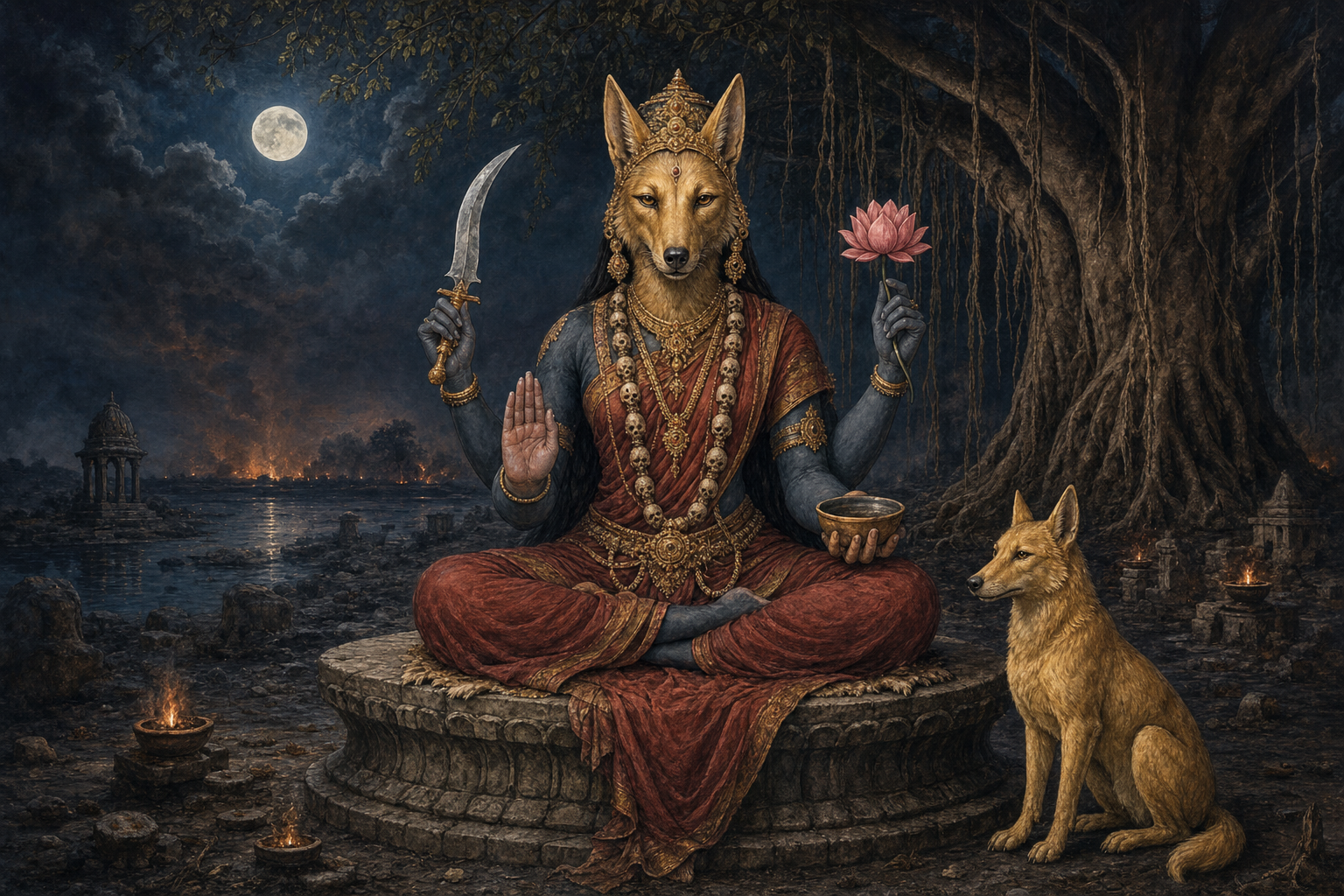
    Kokamukha, remembered as the jackal-faced manifestation of Mahakali, emerges in the Shakta landscape at the intersection of Hindu scriptures, temple traditions, and Tantric iconography. The article clarifies the name’s philological roots and situates the form within cremation-ground theology, where fierce imagery communicates protection, fearlessness, and ethical clarity. It connects Kokamukha with Yogini traditions and early-medieval…