Khandobavenerated across Maharashtra and the Deccan as Martanda Bhairava, Malhari, and Mallariembodies a distinctive synthesis of Shiva’s protective grace, martial valor, and divine kingship. The idol form communicates a complete visual theology: a guardian of place and people (kshetrapala), a righteous warrior aligned with Dharma-Yuddha, and a sovereign who bestows order, prosperity, and moral courage. This layered symbolism resonates not only with regional history and Maratha-era statecraft but also with the broader dharmic ethos of upholding righteousness through strength tempered by compassion.
Historically and textually, Khandoba’s persona is rooted in the Malhari Mahatmya and regional sthala-purāṇas that associate him with the slaying of the asuras Malla and Mani. As Martanda Bhairavaconnoting a solar Bhairavahe integrates Shiva’s fierce protective energy with auspicious, life-affirming qualities reminiscent of solar radiance. This dual profileterrible to malevolence yet benevolent to devoteesbecame a powerful idiom for agrarian-pastoral communities, warrior houses, and urban guilds who recognized Khandoba as a guardian deity ensuring fertility, security, and just leadership.
Two complementary murti traditions define Khandoba’s idol form. The aniconic lingaoften revered at Jejurianchors the deity in pan-Indic Shaiva ritual frameworks, while the anthropomorphic equestrian form renders martial sovereignty and swift protection visible. In the latter, Khandoba appears as a regal, mustachioed warrior, crowned or turbaned, mounted on a spirited horse, with weapons that include the khanda (straight sword), spear, and occasionally the trishula. Across images, the posture projects readiness, guardianship, and the assurance of protection (abhaya).
Weapons in Khandoba iconography are not mere implements; they encode the ethics of Kshatra Dharma. The khanda, whose phonetic kinship echoes the deity’s very name, signifies decisive action in defense of dharma, while the spear conveys penetration of ignorance and the capacity to remove obstacles threatening communal well-being. Where a trishula appears, it recalls Shiva’s triadic governance over creation, preservation, and dissolution, suggesting that righteous force is most sacred when guided by cosmic order rather than personal wrath.
The horse, Khandoba’s vahana, symbolizes speed, vigilance, and the mobile sovereignty required to safeguard dispersed settlements, trade routes, and pastoral circuits. In a region historically shaped by cavalry warfare and fortified hill-temples, the equestrian idiom communicates both historical memory and theological meaning: protection arrives swiftly, and divine kingship adapts to terrain, time, and social need.
The widespread use of turmeric (bhandara) in Khandoba worship, especially at Jejuri, adds an unmistakable chromatic theology. Turmeric’s golden hue evokes Martanda (the sun), auspicious prosperity (śrī), and ritual purity. Its application and public scattering transform space into a radiant field of well-being, where devotees experience protection as warmth and vitality rather than coercion. The visual spectacleclouds of gold across stone stepsturns doctrinal ideas into embodied memory for families and communities.
Khandoba’s consorts, Mhalsa and Banai (Banubai), express social integration through sacred kinship. Mhalsa is often associated with mercantile-urban spheres and formal temple culture, while Banai resonates with pastoral lifeways, especially among Dhangar communities. Their presence alongside the deity unifies complementary social economiestrade and transhumance, market and meadowunder a single dharmic canopy. This theological inclusivity aligns with the broader Indic vision that honors multiple pathways without hierarchy.
The narrative of Malla and Mani further discloses Khandoba’s juridical compassion. After vanquishing the asuras, Khandoba grants Mani a boon to be remembered in worship, signaling that justice includes transformation and reintegration, not annihilation. As a symbol system, the idol thus conveys both deterrence against adharma and magnanimity toward the reformedan ethic that has historically allowed diverse groups to see themselves reflected in the deity’s grace.
Regalia complete the program of divine kingship. Crowns or ceremonial turbans mark sovereignty; the standard (dhvaja), often saffron, proclaims guardianship over realm and rite; and martial accoutrements inscribe a pledge of service to dharma. Devotees recognize in these signs a model of rulership that protects the vulnerable, upholds fair order, and privileges duty over dominationan ideal that inspired Maratha-era statecraft and continues to shape civic imagination in Maharashtra.
Jejuri, the preeminent Khandoba kshetra, situates theology in stone. The temple complexfortress-like on a hill with imposing deepmalas (lamp towers)embodies the union of sacred and strategic. Architectural rhythms characteristic of the Maratha period and regional basalt masonry render the space liminal: ascent through successive courts prepares the mind for darśana, while the elevated plinth and gateways recall a watchful kingship over surrounding valleys and settlements.
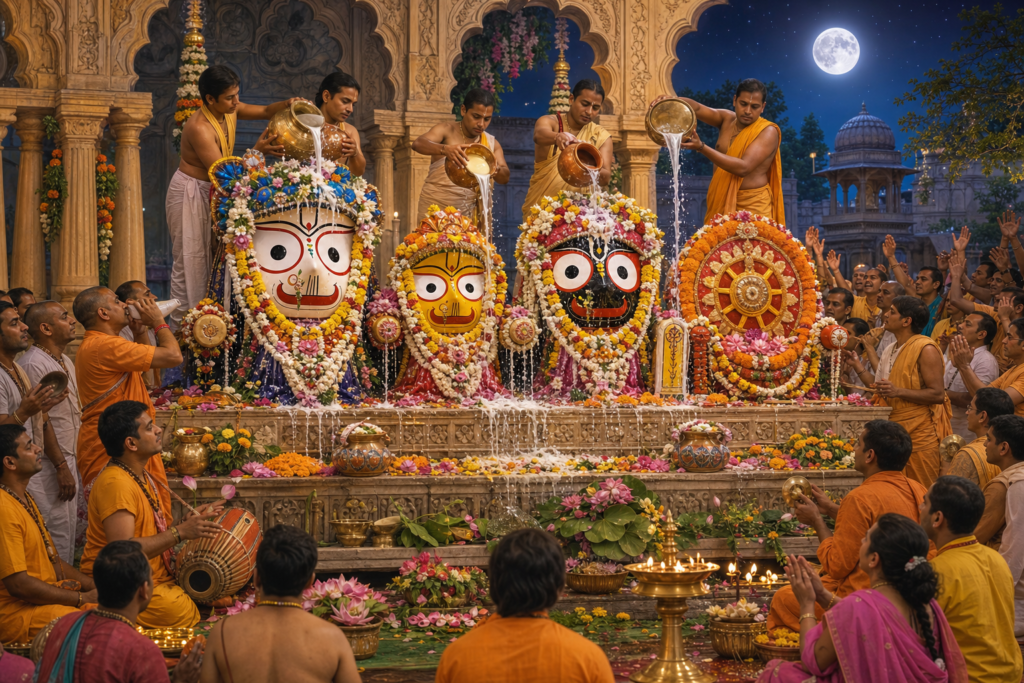
The ritual calendar deepens these visual cues. Champa Shashti, a six-day observance in the month of Margashirsha, commemorates the victory over Malla and Mani through fasting, communal singing, and processions. The festival channels martial memory into ethical self-discipline, affirming that true valor includes inner conquest. Other occasions highlight bhandara rites and palakhi processions that extend the deity’s protective presence into streets and homes, strengthening social bonds and shared purpose.
Ethnographic accounts note how families describe Jejuri’s turmeric-laden steps as formative journeysmoments when elders transmit stories, gestures of reverence, and vows of service to younger generations. Devotees from agrarian, pastoral, artisanal, and warrior lineages converge in a lived interdependence: invoking Khandoba for rainfall and harvest, for safe travel and honest trade, for courage in public duty and restraint in private life. The idol becomes a focal pedagogy of dharma in everyday practice.
Across India’s dharmic tapestry, Khandoba’s symbolism harmonizes with parallel ideals. In Sikh thought, the sant-sipahi (saint-soldier) integrates devotion with duty; in Buddhist traditions, dharmapālas embody compassionate protection of the path; in Jain frameworks, royal and martial metaphors are ethically reframed to elevate ahiṁsā without denying the language of disciplined strength. Within Hinduism, Khandoba thus stands as an integrative figure whose martial imagery safeguards rather than subjugates, embodying unity in spiritual diversity.
The idol’s solar-Bhairava synthesis offers a precise theological grammar: anugraha (grace) and nigraha (restraint) co-operate under rajadharma (just kingship). Martial attributes remain subordinated to ethical ends, warning against excess while legitimizing resolute protection. This is the heart of Dharma-Yuddhaconflict governed by dharma, channeling power toward the preservation of life, law, and spiritual opportunity for all communities.
Contemporary practice reflects this maturing ethic. Where historical rites once included animal offerings in some locales, many communities today emphasize sāttvika worshipturmeric, flowers, lamps, and collective service (seva)reorienting energy from propitiation through fear to participation through love and responsibility. The continuity of devotion alongside ethical reform illustrates how living traditions preserve essence while refining expression.
Read as a whole, Khandoba’s idol form is a rigorous visual doctrine: the horse denotes mobility in protection; the khanda, discriminating courage; the crown, accountable sovereignty; turmeric, auspicious vitality; and the consorts, social harmony. Together they articulate a comprehensive Dharma politicscivic guardianship that honors multiple paths, encourages inner discipline, and translates spiritual conviction into collective well-being.
In Maharashtra and neighboring regions, this theology is not abstract. It breathes through hill-temples like Jejuri, through festivals that turn stone into song and color, and through communities that continue to see in Khandoba a living exemplar of valor, protection, and divine kingship. The idol’s enduring appeal rests in a promise as relevant today as in the past: strength in service of dharma, and unity in the many ways people seek, safeguard, and celebrate the sacred.
Inspired by this post on Hindu Blog.