
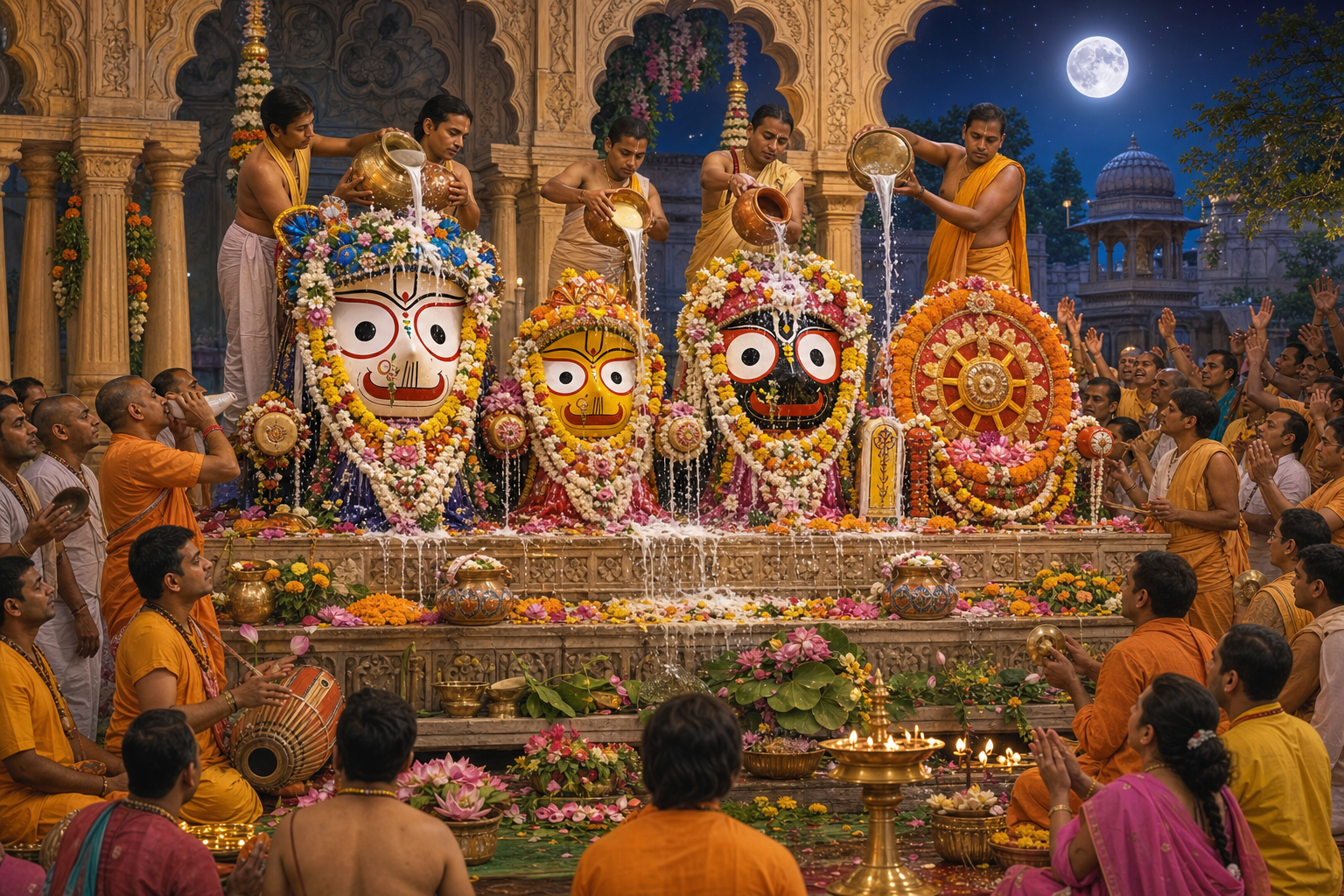
Jagannatha Snana Yatra, also known as Deva Snana Purnima or Snana Purnima, occupies a distinctive place in the sacred calendar of Lord Jagannath worship. In 2026, the observance fell in the period of Jyeshtha Purnima, with the full moon tithi associated in many panchang traditions with June 29, 2026. The festival is remembered as the ceremonial bathing of Lord Jagannath, Lord Balabhadra, Devi Subhadra, and often Sudarshana, and it functions as a devotional bridge between the intimate temple worship of the deities and the public, expansive joy of Ratha Yatra.
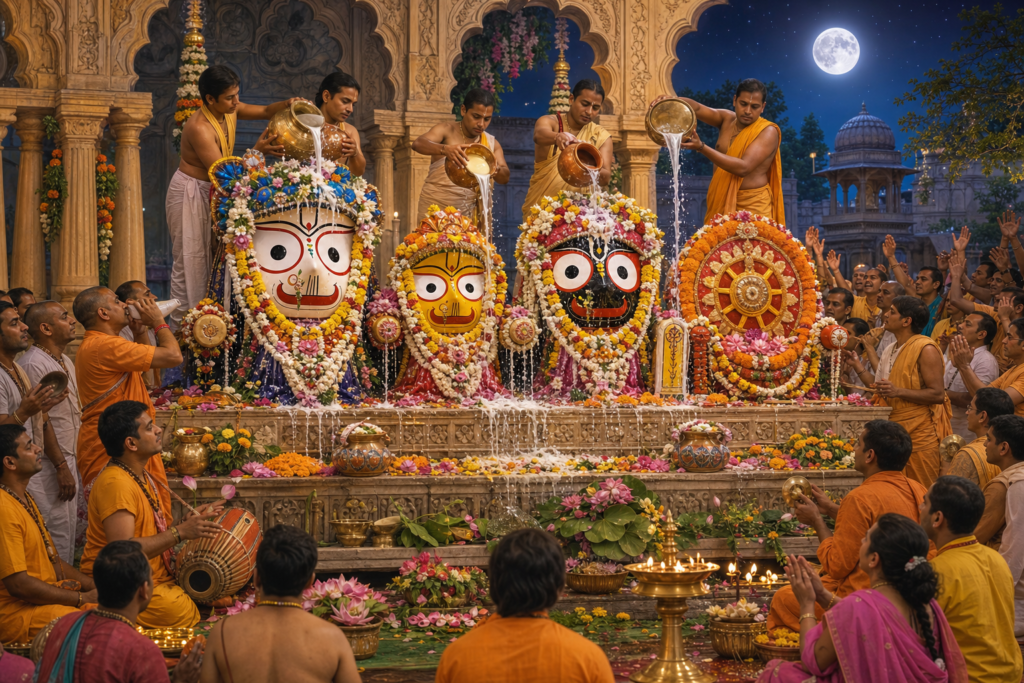
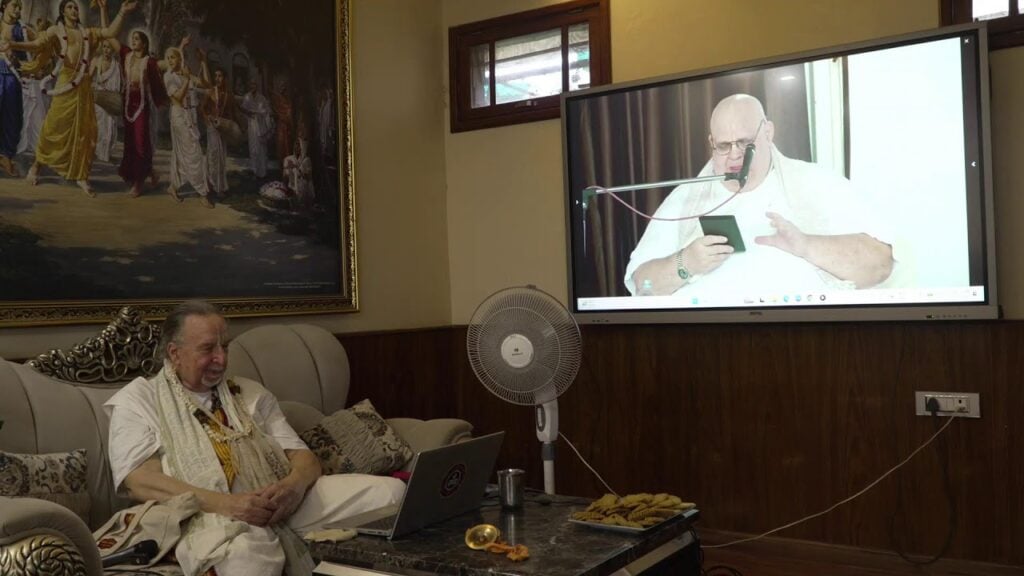
The available visual source for the ISKCON Vrindavan highlight presents the festival through the language of darshan rather than extended written commentary. That is appropriate for Snana Yatra itself, because the festival is not merely explained; it is seen, heard, and felt. The sight of the Lord receiving ceremonial bathing, flowers, kirtan, and reverent offerings gives devotees a concentrated experience of bhakti, where theology becomes embodied through ritual action.
In the Jagannath tradition, Snana Yatra is closely associated with the Puri Srimandir, where the deities are brought from the sanctum to the Snana Bedi, the bathing platform, for public darshan. The traditional understanding treats this day as the appearance or birthday celebration of Lord Jagannath. The ritual has deep scriptural and regional roots, especially in Odisha, yet its devotional reach is now pan-Indian and global through temples, homes, and spiritual communities connected to Vaishnava practice.
ISKCON Vrindavan gives the observance a particular emotional and theological texture. Vrindavan is revered as the land of Sri Krishna’s intimate pastimes, while Lord Jagannath is widely worshipped in Gaudiya Vaishnava understanding as Krishna in a deeply compassionate and accessible form. When Snana Yatra is celebrated in Vrindavan, the devotee encounters a devotional convergence: the Lord of Nilachala is honored in the land of Braj, and the ritual bath becomes a meditation on divine accessibility, tenderness, and public grace.
The ceremony usually centers on abhisheka, the sacred bathing of the deity with sanctified substances. In different temples, the offerings may include water, milk, yogurt, honey, ghee, fruit juices, herbal preparations, sandalwood water, and fragrant flowers. These substances are not decorative additions alone. They express theological ideas about purity, nourishment, cooling grace, auspiciousness, and loving service. The deity is treated not as an abstract symbol but as a living center of relationship.
The traditional Puri observance is especially known for the bathing of the deities with 108 pots of sanctified water. This number carries ritual gravity in Hindu practice, and the repeated pouring of sacred water creates a rhythm of devotion that is both formal and deeply affective. The act of bathing the Lord reverses ordinary assumptions about worship. The devotee may come seeking blessings, but first offers care, attention, and service to the deity.
After the ceremonial bath, the deities are traditionally dressed and decorated for darshan. In Puri, the Hati Besha, or elephant attire, is one of the most recognizable features of Snana Yatra. This form is often connected with the broad inclusiveness of Jagannath worship, where different devotional moods and regional memories are absorbed into the Lord’s public celebration. The visual beauty of the festival is therefore not mere ornamentation; it is a theology of form, color, fragrance, sound, and shared emotion.
The ISKCON setting adds the strong presence of sankirtana. Hare Krishna kirtan, mridanga, kartal, conch sounds, and congregational chanting shape the atmosphere of the celebration. In such a setting, Snana Yatra is not only watched by devotees; it is participated in through sound. The collective chanting of the holy names turns the temple space into a shared field of remembrance, where individual devotion is carried by communal rhythm.
For many devotees, the emotional center of Deva Snana Purnima is the feeling that the Lord becomes especially approachable. Jagannath already means the Lord of the universe, yet his form is intimate, smiling, and welcoming. The bathing festival brings that accessibility forward. It allows devotees to see divinity not as distant sovereignty alone, but as a beloved presence who accepts service, flowers, water, song, and heartfelt attention.
The festival also prepares the devotional imagination for Anasara, the period that follows the bathing ceremony in the Puri tradition. After the elaborate bath, Lord Jagannath, Lord Balabhadra, and Devi Subhadra are understood to enter a period of seclusion, popularly described as a time when the deities rest and recover. This tender tradition gives Jagannath worship a strikingly human quality. The divine is not diminished by such intimacy; rather, the relationship between deity and devotee becomes more affectionate and personal.
In devotional psychology, this phase carries a profound lesson. Darshan is temporarily limited, and the devotee learns to honor absence as part of spiritual life. The public joy of Snana Yatra leads into a period of waiting, longing, and remembrance before Ratha Yatra. This movement from celebration to separation and then to reunion mirrors an important principle in bhakti traditions: love matures not only through presence, but also through patient remembrance.
Ratha Yatra, which follows after this period, becomes more meaningful when seen through the lens of Snana Yatra. In 2026, the Puri Ratha Yatra was associated with July 16, continuing the traditional sequence from the bathing festival to the chariot festival. Snana Yatra can therefore be understood as the devotional threshold of the Ratha Yatra season. It begins the public unfolding of Jagannath’s mercy, while Ratha Yatra carries that mercy into the streets.
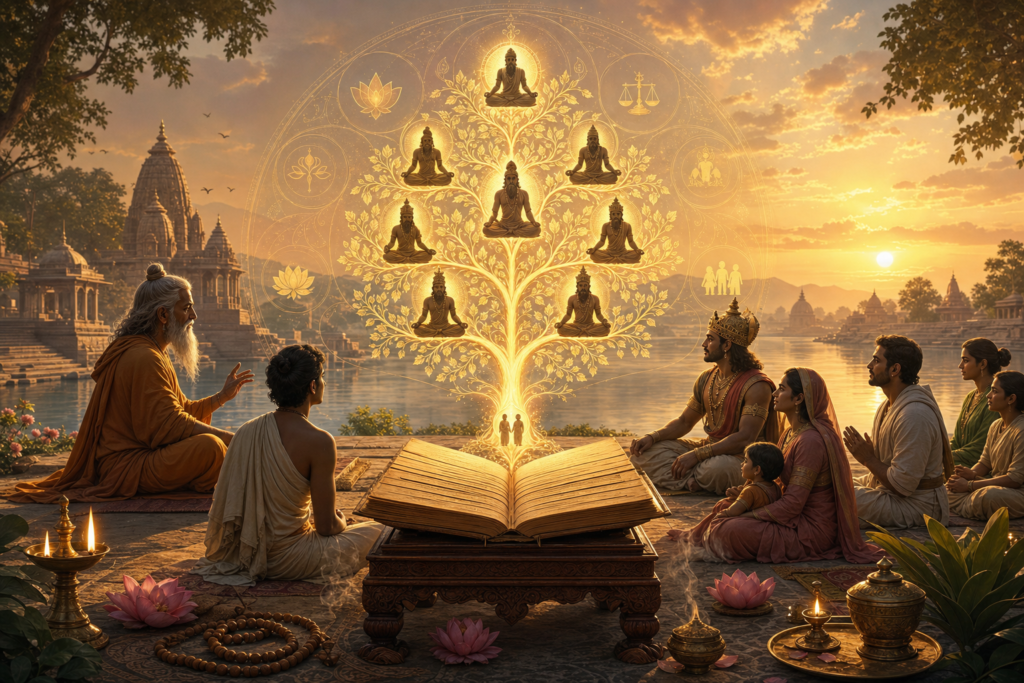
The Vrindavan setting is also important because it frames the festival within the wider unity of Hindu spiritual traditions. Jagannath worship brings together Vedic, Puranic, temple, regional, tribal, Vaishnava, and bhakti elements in a single living tradition. This layered heritage demonstrates how Sanatana Dharma has historically allowed multiple forms of devotion to coexist, enrich one another, and create shared sacred memory across regions and communities.
Such a festival also helps strengthen unity among dharmic traditions more broadly. Hinduism, Buddhism, Jainism, and Sikhism differ in theology, practice, and historical formation, yet they share deep civilizational commitments to discipline, sacred memory, compassion, self-transformation, reverence, and ethical life. A celebration like Snana Yatra can be appreciated as part of the larger dharmic vocabulary of ritual purification, humility, community gathering, and the refinement of consciousness.
From an academic perspective, the festival may be studied as a ritual of embodiment. The deity is bathed, dressed, decorated, offered food, and surrounded by music. These actions communicate religious meaning through the body and senses. The sacred is encountered through water, fragrance, rhythm, movement, and sight. This helps explain why a brief visual highlight can carry emotional force even without a long spoken explanation.
The festival may also be studied as a public theology of seva. Service is not treated as secondary to belief; it is the mode through which belief becomes real. The devotee does not merely assert faith in Lord Jagannath, but enacts reverence by assisting, singing, preparing offerings, arranging flowers, cleaning spaces, receiving prasadam, and helping others participate in darshan. The ritual creates a community of practice rather than a passive audience.
ISKCON’s contribution lies in presenting these traditional practices to a global devotional audience while retaining the central grammar of Vaishnava worship: nama sankirtana, deity service, prasadam, scriptural remembrance, and congregational celebration. At ISKCON Vrindavan, the mood is naturally tied to Krishna consciousness, and Lord Jagannath is received not as a regional deity alone but as Sri Krishna’s merciful form who welcomes all sincere seekers.
The flowers often associated with Snana Yatra visuals deserve attention as well. Floral decoration in Hindu ritual is not simply aesthetic. Flowers signify freshness, surrender, fragrance of intention, and the fleeting beauty of embodied life. When offered to the Lord, they represent the devotee’s desire to place the best and most delicate part of life at the feet of the divine. In Vrindavan, where flower offerings are deeply connected with Radha Krishna devotion, this symbolism becomes even richer.
The presence of water is equally significant. Water purifies, cools, sustains, and consecrates. In abhisheka, water becomes a medium of devotion, transforming ordinary material contact into sacred exchange. The ritual reminds devotees that purity in dharmic traditions is not merely external cleanliness, but alignment of intention, speech, action, and consciousness. The bath of the deity becomes a mirror for inner purification.
Snana Yatra also speaks to the importance of calendar discipline in Hindu life. Festivals are not randomly placed celebrations; they are linked to tithi, lunar rhythm, seasonal transition, and inherited ritual memory. Deva Snana Purnima on Jyeshtha Purnima occurs at a time of heat and seasonal intensity in much of India. The cooling bath of the Lord, therefore, resonates both ritually and environmentally. It expresses care for the deity in a season when cooling, fragrance, and water carry practical and symbolic meaning.
For contemporary devotees, especially those outside Odisha, the festival offers a way to enter Jagannath culture with reverence. It encourages learning about Puri, the Jagannath Temple, the Ratha Yatra sequence, Hati Besha, Anasara, and the devotional literature that surrounds Lord Jagannath. It also invites humility: regional traditions have their own depth, and wider participation is most meaningful when grounded in respect for those inherited forms.
The 2026 ISKCON Vrindavan highlights can therefore be read as more than a festival memory. They are a reminder of how sacred traditions travel without losing their center when carried by devotion, discipline, and respect. The Lord of Puri is celebrated in Vrindavan, yet the devotional essence remains recognizable: ceremonial bathing, public darshan, kirtan, seva, flowers, prasadam, and longing for the approaching Ratha Yatra.
In a time when religious practice is often reduced to spectacle or debate, Snana Yatra preserves a quieter but more durable teaching. It shows that devotion is built through repeated acts of care. The Lord is bathed, dressed, sung to, honored, and remembered. The community gathers not to consume an event, but to participate in sacred service. That distinction is crucial for understanding why the festival continues to move hearts across generations.
Jagannatha Snana Yatra 2026 at ISKCON Vrindavan ultimately highlights the living strength of bhakti. It joins theology with beauty, tradition with public participation, and personal emotion with disciplined ritual. Its enduring message is simple yet profound: the divine becomes accessible where service is offered with sincerity, where communities gather in harmony, and where sacred memory is preserved through loving practice.
Inspired by this post on Dandavats.



Leave a Reply
You must be logged in to post a comment.