-
Kapi Dhvaja Unveiled: How Hanuman on Arjuna’s Banner Powered Dharma at Kurukshetra

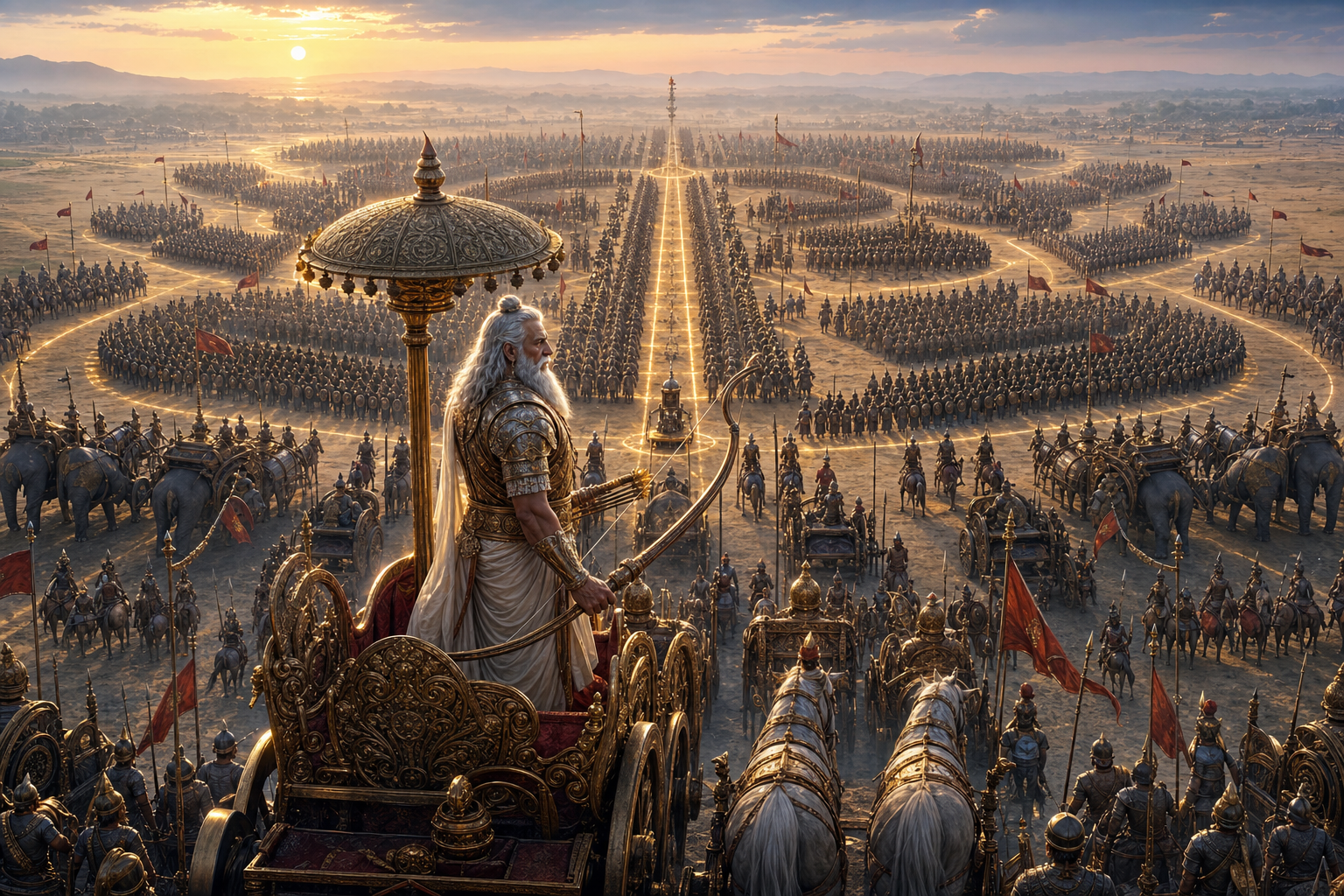
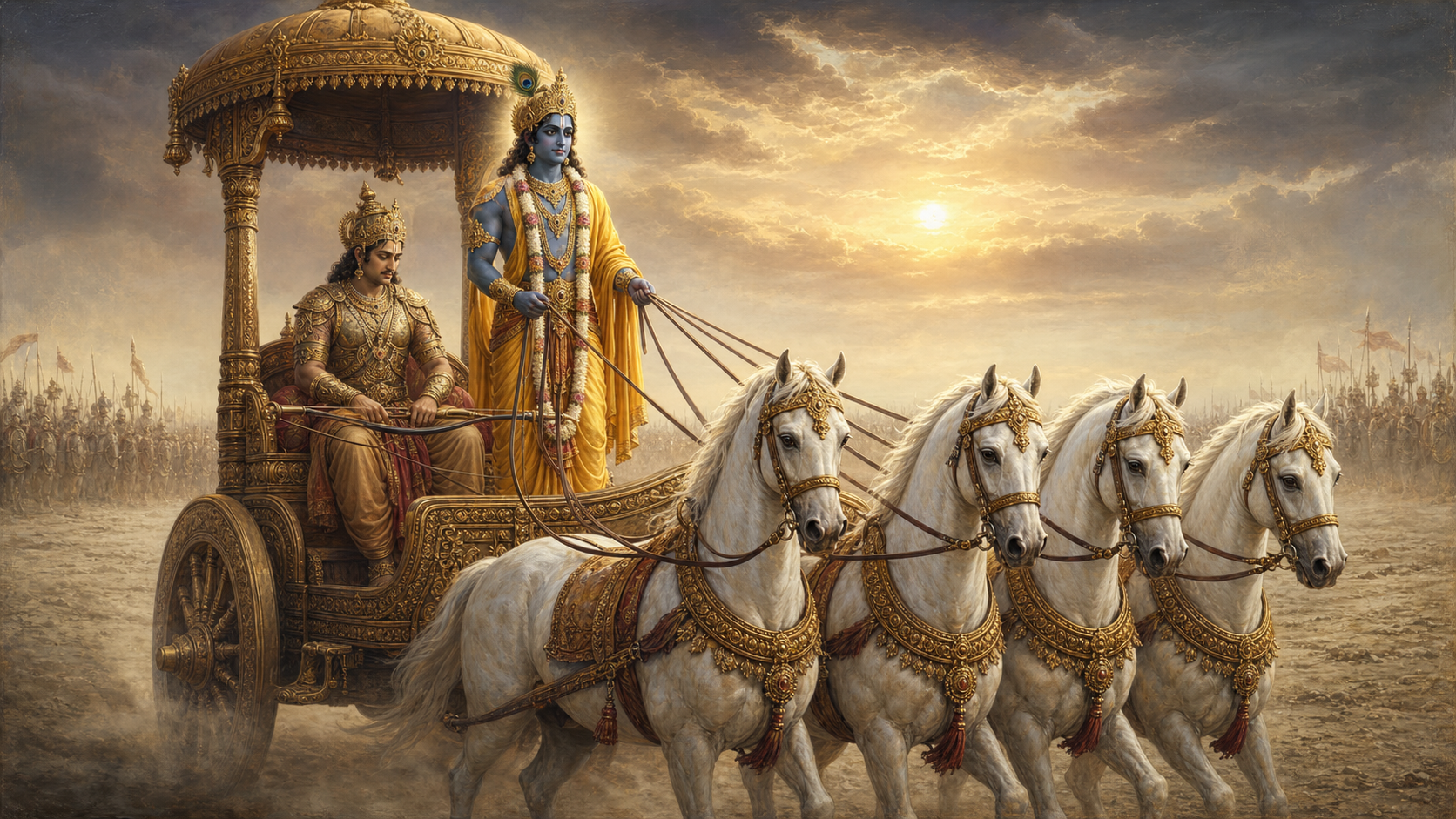
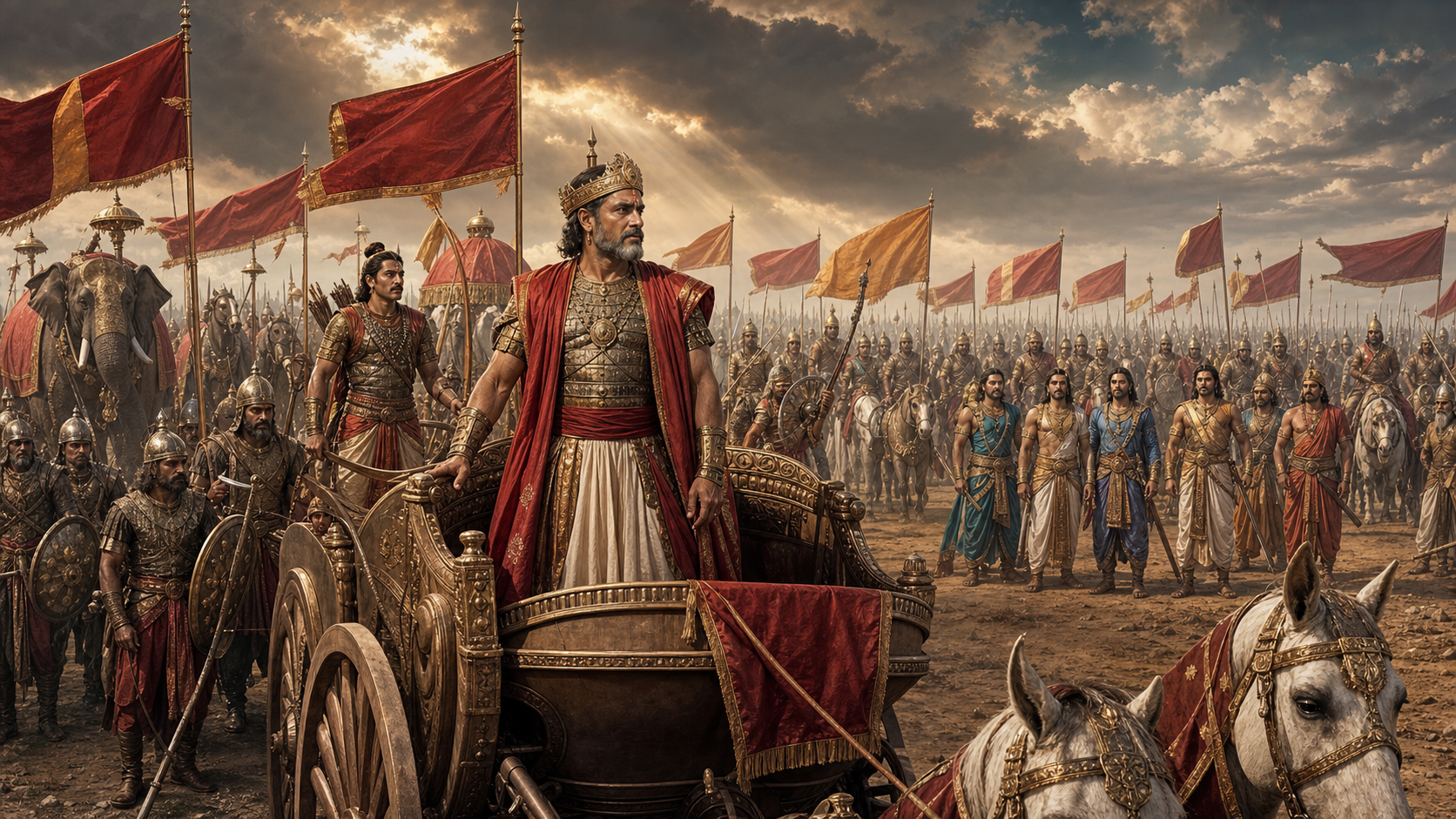
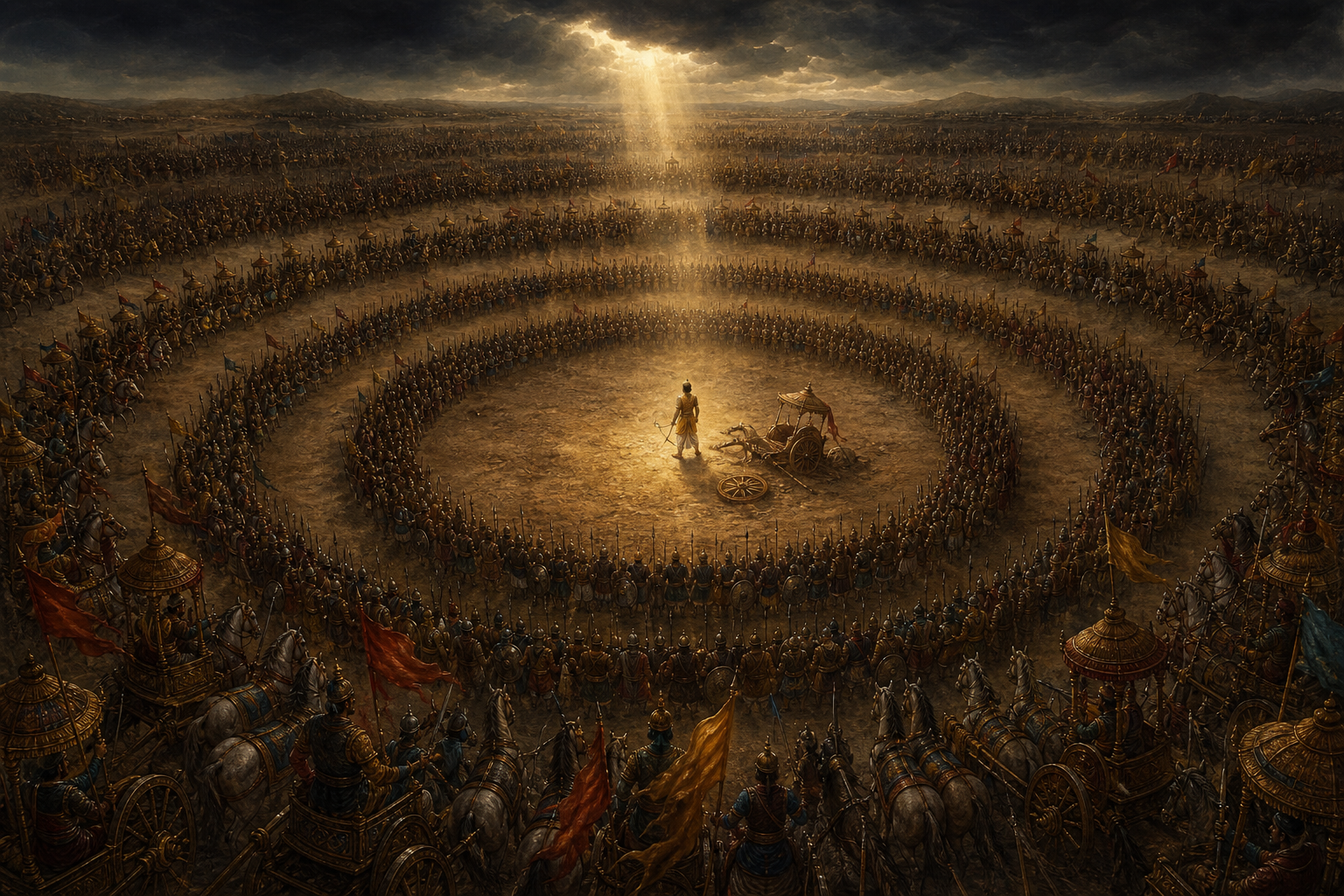
Arjuna’s Kapi Dhvaja—the “ape-banner” of Hanuman—anchors the Bhagavad Gita’s battlefield in a powerful blend of scripture, strategy, and spirituality. The term kapidhvajaḥ in Gita 1.20 is not decorative; it signals divine sanction, morale-building semiotics, and an ethic of service above strength. Traditional lore explains Hanuman’s presence as a boon following Arjuna’s humility before Krishna, binding…
-
Indrajit’s Final Penance: A Riveting Study of Dharma, Filial Loyalty, and Redemption in Ramayana

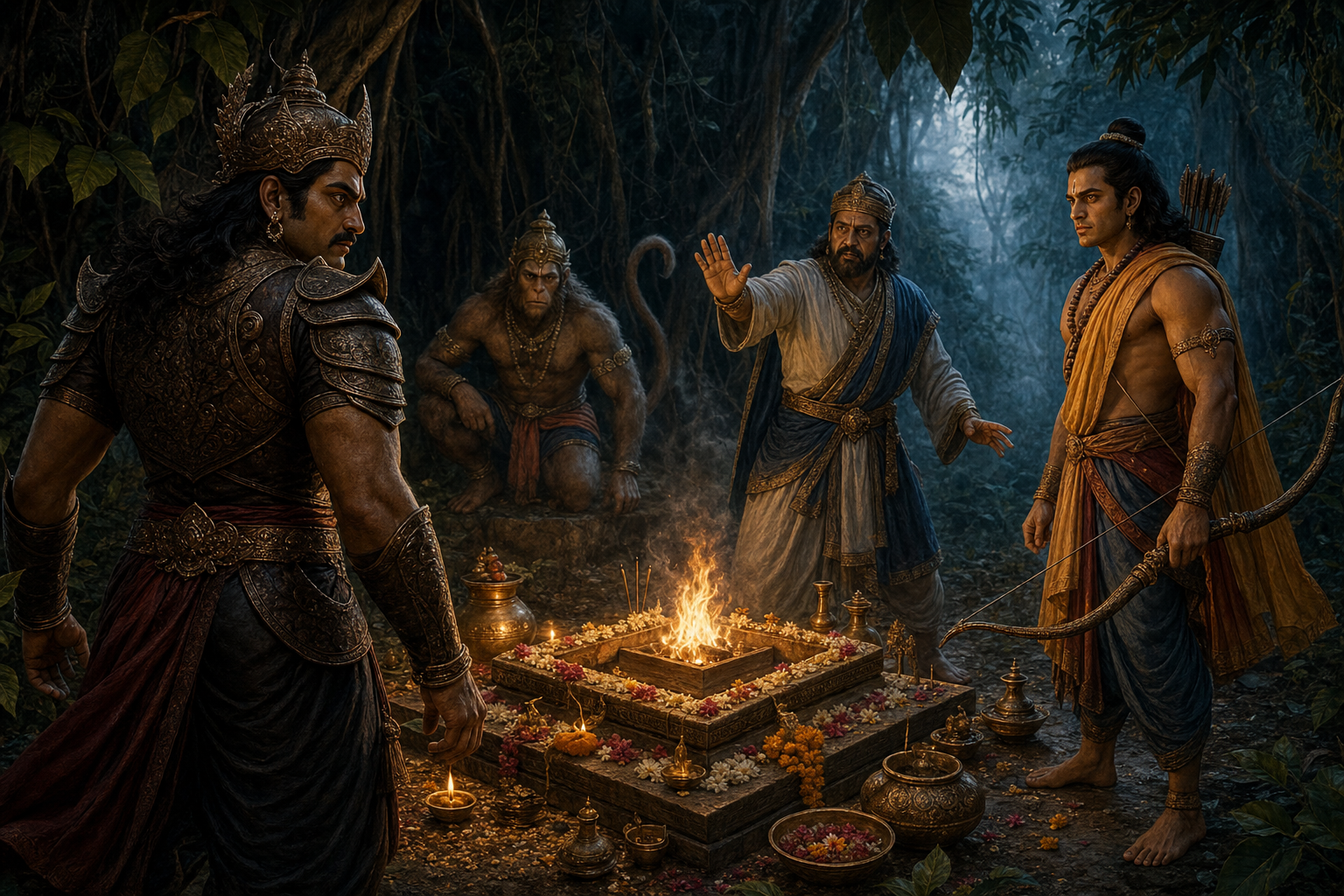
This long-form analysis explores Indrajit (Meghanada) as one of the Ramayana’s most complex figures—an invincible warrior confronting a profound dharmic dilemma between filial loyalty and moral law. Anchored in the Valmiki Ramayana and enriched by regional traditions such as the Krittivasi Ramayana, it explains how the Nikumbhila sanctuary—often associated with Kali—frames his final yuddha-yajna as…
-
Baba Deep Singh Ji: Scholar‑Warrior who safeguarded the Guru’s Word and Amritsar’s sanctity

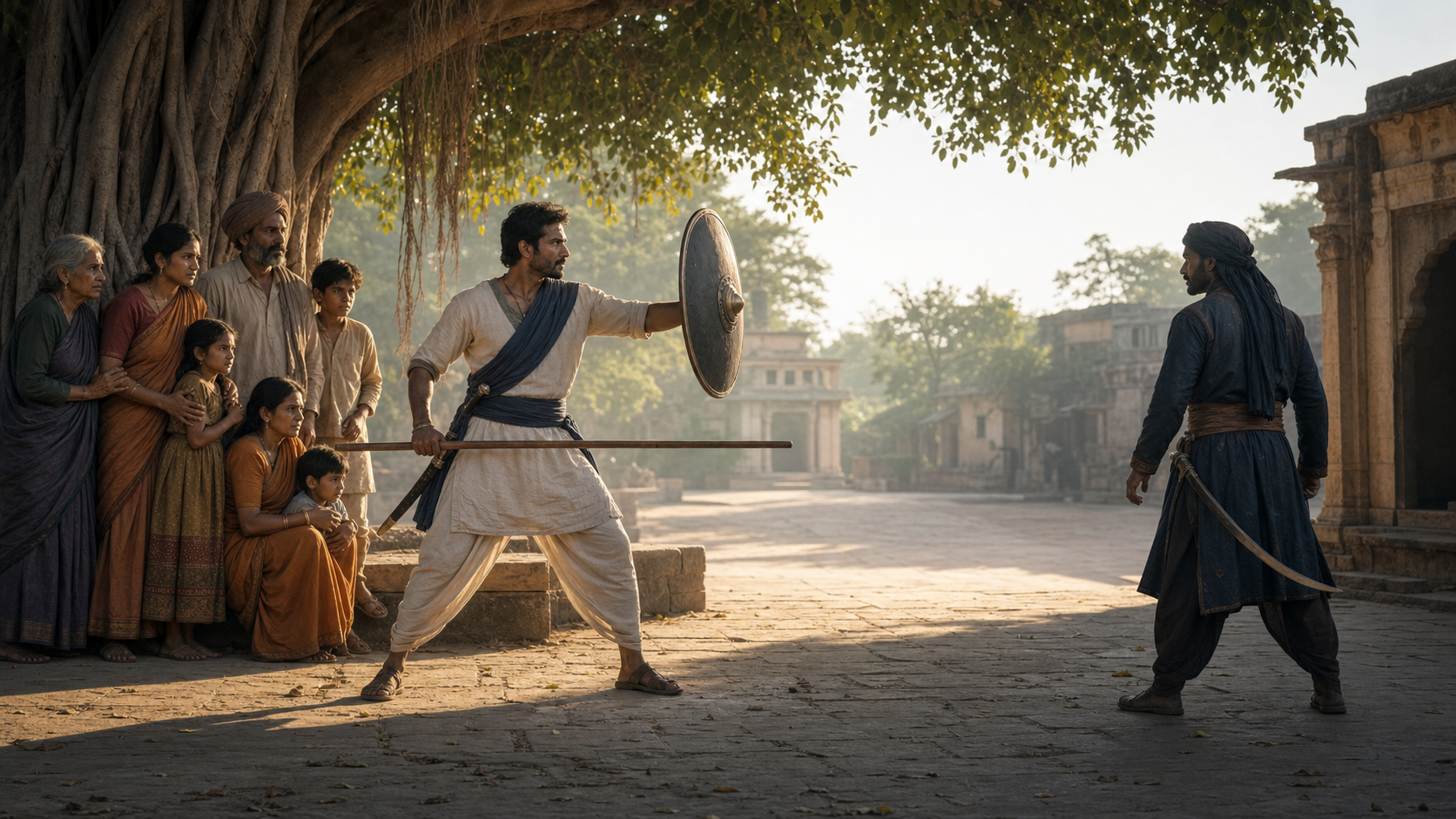
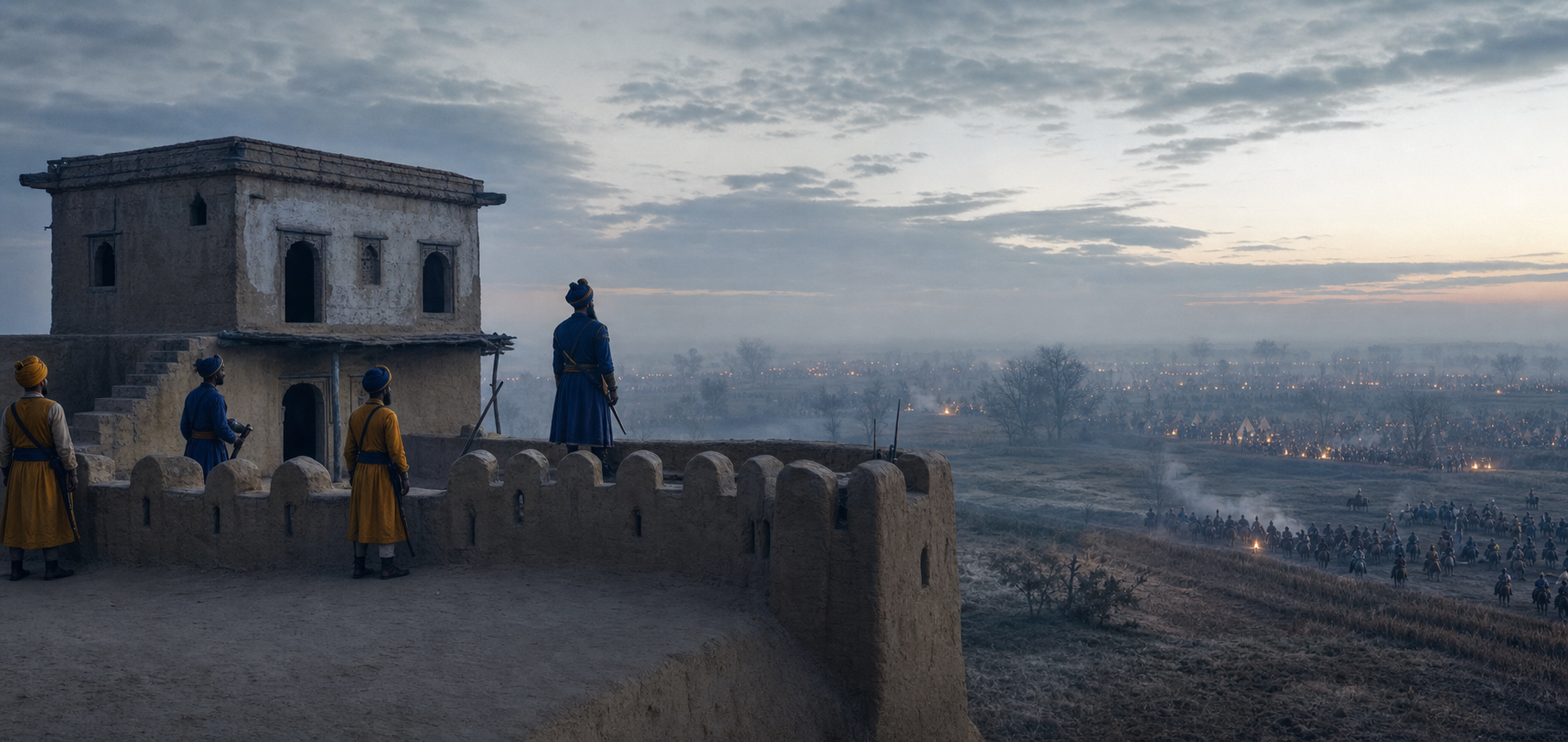
Baba Deep Singh Ji (1682–1757) embodies the Sikh Sant‑Sipahi ideal, uniting rigorous scholarship with principled courage. This comprehensive account situates his formation at Anandpur Sahib and Damdama Sahib, his role in scribing and standardizing Gurbani manuscripts, and his leadership within the Dal Khalsa and the Shaheedan Misl. It presents the 1757 defense of Amritsar with…
-
Dandaniti and Rajadharma: Ancient Hindu Statecraft for Just, Stable, Ethical Governance

Dandaniti—ancient India’s science of governance—unites authority with ethics by treating punishment as a disciplined last resort under dharma. Drawing on Arthasastra, Dharmasastra, and Vidura-niti, it details institutions, courts, revenue, internal security, diplomacy, and just war norms. The saptanga model organizes the state’s limbs and anticipates modern concerns for fiscal prudence and checks on power. Procedural…
-
Beyond the Flute: Why Bala‑Krishna Thrives as Parthasarathi’s Warrior Ethos Lies Dormant

Images of Bala‑Krishna dominate homes and temples, while Parthasarathi—the charioteer and teacher of the Bhagavad Gita—appears less often in popular devotion. This long‑form analysis explains the imbalance through rasa theory, bhakti history, temple networks, pedagogy, and modern media. It shows how intimacy‑focused worship naturally favored child and flute‑playing forms, whereas Krishna’s kshatra ethics are harder…
-
Aparajita, the Invincible: Ancient Hindu War Rites, Dharma-Yuddha Ethics, and Strategy

Aparajita—“the unconquered”—was venerated by kings, commanders, and communities as the victory-bestowing face of the Goddess in ancient India. The worship synchronized statecraft and spirituality, binding warfare to Dharma-Yuddha and Kshatra Dharma. Textual traditions linked Aparajita with Durga and embedded victory hymns from the Devi Mahatmya into pre-campaign rites. Rituals integrated muhurta selection, sankalpa, weapon consecration,…
-
Atikaya’s Tragic Valor: Reclaiming Ramayana’s Forgotten Warrior and His Quest for Belonging

Atikaya emerges in the Ramayana as a formidable yet under-remembered warrior whose courage is matched by a poignant quest for recognition in Ravana’s court. Drawing on Yuddha Kanda and regional retellings, this analysis situates his duel with Lakshmana within the ethics of dharma-yuddha, highlighting the disciplined use of astras and the decisive counsel of Vibhishana.…
-
Kumbhakarna vs Karna: Loyalty’s Tragic Valor and Vibhishana’s Dharma in the Ramayana

The crisis in Lanka dramatizes a timeless ethical conflict: should loyalty to kin outrank allegiance to universal righteousness? Through Vibhishana’s principled dissent and Kumbhakarna’s tragic loyalty, the Ramayana clarifies how Dharma-Yuddha prioritizes justice over faction. A comparative glance at the Mahabharata’s Karna sharpens this lesson, showing that valor cannot redeem complicity in adharma. Read alongside…
-
Khandoba’s Idol Decoded: Valor, Protection, and Sacred Kingship in Maharashtra’s Jejuri

Khandoba—revered as Martanda Bhairava, Malhari, and Mallari—unites Shiva’s protective grace, martial valor, and divine kingship in a compelling idol form central to Maharashtra’s sacred geography. The anthropomorphic equestrian murti and the aniconic linga together encode a complete theology of guardianship, justice, and prosperity. Weapons such as the khanda and spear symbolize Kshatra Dharma and Dharma-Yuddha,…
-
Unraveling Prahasta: Lanka’s Grand Strategist and Dharma-Yuddha in Ramayana & Ramcharitmanas

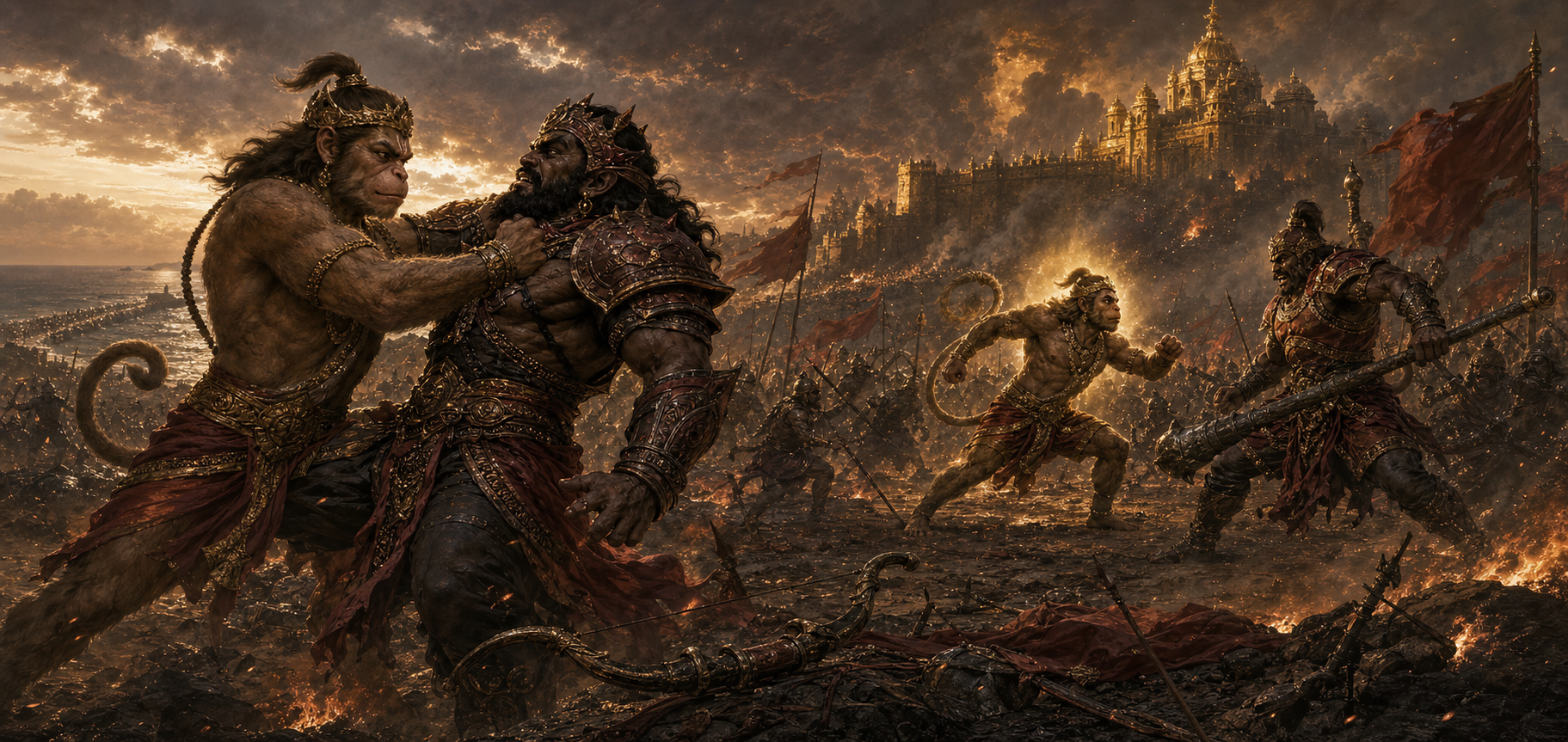
Prahasta—Lanka’s commander-in-chief in the Ramayana and acknowledged in the Ramcharitmanas—embodies the intersection of high strategy and Dharma-Yuddha. Valmiki’s narrative details his role in intelligence, deployment, and direct command, culminating in his fall to the Vanara general Nila, a turning point in the war. Ramcharitmanas compresses battlefield specifics but preserves his stature as a formidable rākṣasa…
-
Inside Ravana’s Swabhava: Pride, Passion, and the Tragic Integrity of the Asura Emperor

This essay reframes Ravana in the Ramayana as a philosophical study of swabhava—inner nature—rather than a mere antagonist. It explores how pride and passion, empowered by learning and tapas, evolve into adharma when unrestrained by counsel and maryada. Drawing on Hindu philosophy, Jain Anekantavada, Buddhist analysis of the kleshas, and Sikh reflections on haumai and…
-
Indrajit’s Invisible Fury: Astras, Ethics, and Strategy on Day Two of the Lanka War

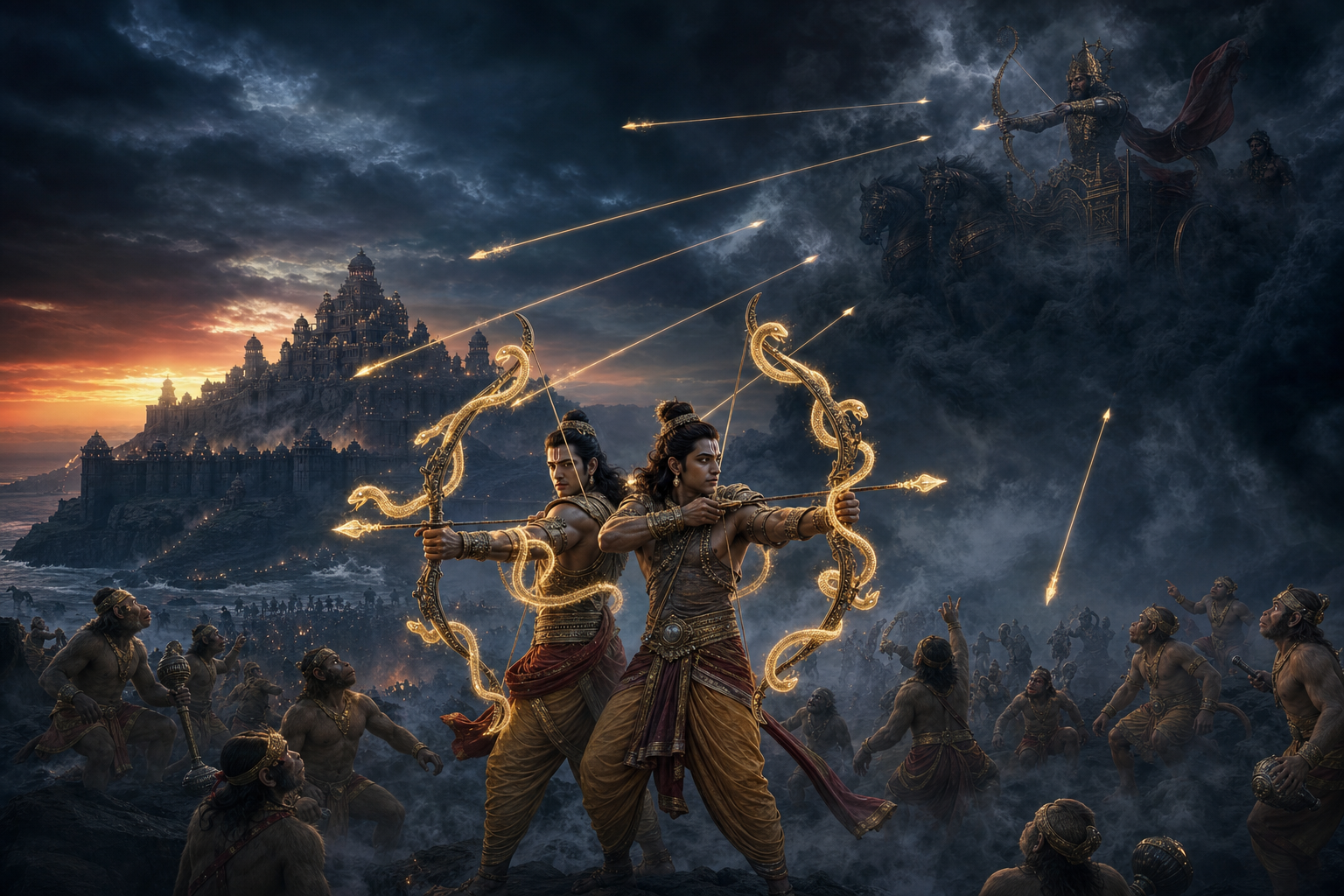
Day two of the Lanka war showcases Indrajit’s mastery of maya-yuddha and astras, culminating in the Naga-pasha binding of Rama and Lakshmana. The narrative explains how divine weapons operate within a rigorous ethical code, illustrating the Ramayana’s union of strategy, spirituality, and restraint. Garuda’s arrival provides the precise counter to serpent energies, reaffirming dharma’s corrective…
-
Inside Yuddha Dharma: How Hindu War Ethics Contrast Kutayuddha, Asura Vijaya, and Jihad

This long-form analysis explores Yuddha Dharma—the Indic ethics of war—through the lens of Kutayuddha, Dharma-Yuddha, and Asura Vijaya, drawing on the Atharva-Veda, the Arthasastra, and epic literature. It explains how Kutayuddha functions as the negation of Sanatana war ethics by permitting perfidy, poisoned weapons, and harm to non-combatants. The essay clarifies Kautilya’s pragmatic reciprocity when…
-
The Day-One Blunder Ravana Signed: A Proud Pact That Crippled Lanka’s Ramayana War Strategy

This analysis examines the opening day of the Ramayana’s Lanka campaign and the strategic pact that shaped it. By consenting to daylight, rules-based fighting and initial restraint on deception, Ravana muted Lanka’s natural advantages in night warfare and illusion. The study situates this decision within dharma-yuddha norms, Arthashastra categories of open versus concealed war, and…
-
From Crisis to Command: Sugriva’s Recklessness and Angada’s Rise in the Ramayana War

At the height of the Lanka campaign in the Ramayana, a reckless duel by Sugriva exposed a grave command risk and precipitated Angada’s rise to operational leadership. The episode illustrates how dharmic statecraft balances courage with restraint, preserving continuity of command in a just war (Dharma-Yuddha). Readers will discover how Angada’s diplomacy, battlefield composure, and…
-
Why Dushasana’s Savage End in the Mahabharata Became Dharma’s and Karma’s Verdict

Dushasana’s death in the Mahabharata is not gratuitous violence but a juridical and karmic reckoning anchored in dharma. The Sabha Parva’s humiliation of Draupadi creates an ethical debt that battlefield dharma later settles when institutions fail. Bhima’s vow and its fulfillment on the sixteenth day fit the epic’s vow-driven architecture of justice, illustrating apad-dharma under…
-
When Dharma Bows Before Battle: Yudhishthira’s Sacred Humility and the Ethics of Kurukshetra

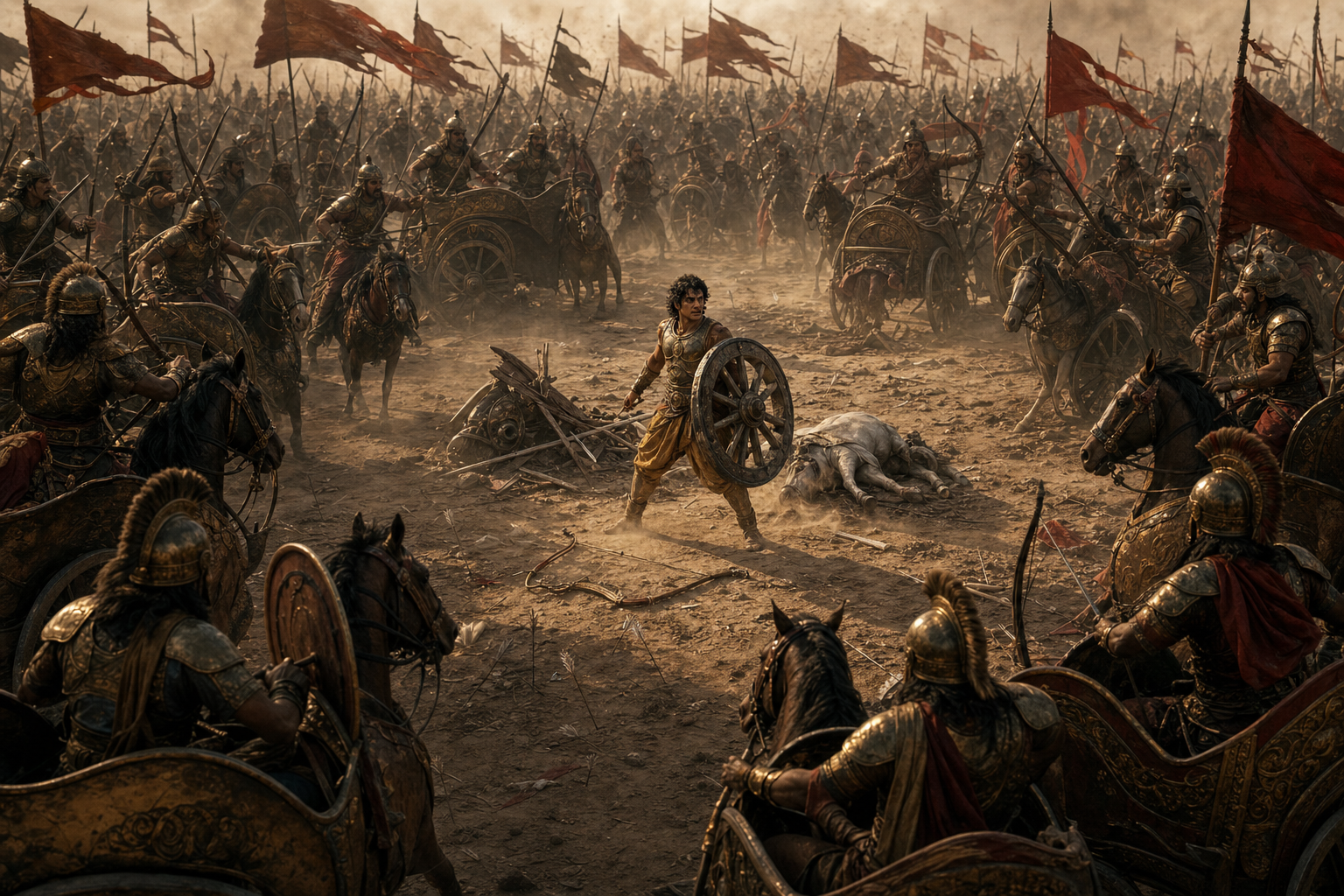
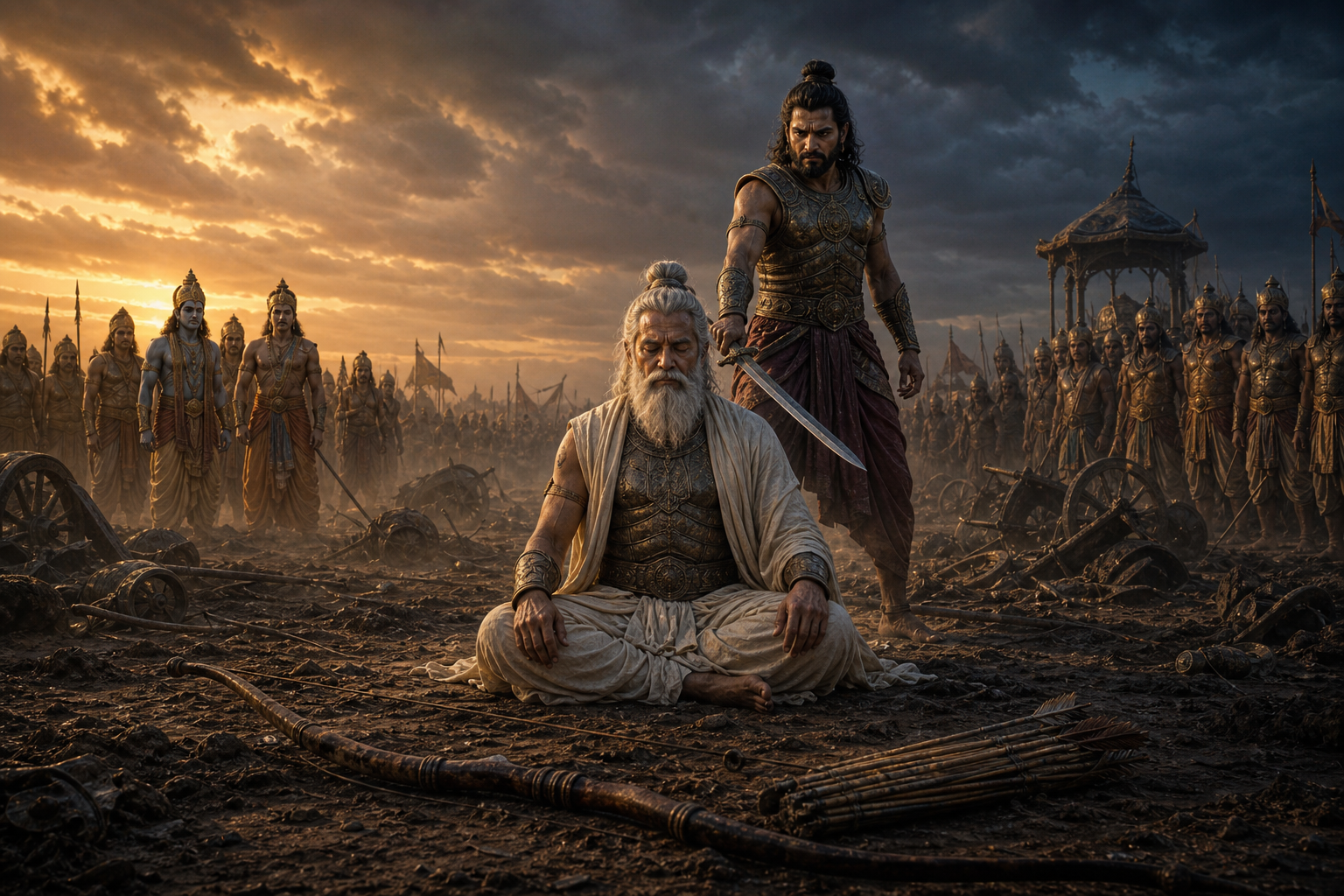
Before the first arrow flies at Kurukshetra, the Mahabharata pauses for an indelible act of humility: Yudhishthira lays down his arms and seeks blessings from elders on both sides. This ethical rite aligns rajadharma and kshatra-dharma, signaling that even warfare must be governed by Dharma-Yuddha. The gesture affirms the guru–shishya tradition, anchors strength in reverence,…
-
Vikarna’s Tragic Fall at Kurukshetra: Bhima’s Uncommon Reverence and the Paradox of Dharma

Vikarna’s death at Kurukshetra, and Bhima’s rare public respect for him, reveal the Mahabharata’s refusal to reduce war to simple binaries. The episode traces Vikarna’s lonely protest during Draupadi’s humiliation, his later loyalty under kṣātra-dharma, and Bhima’s empathetic yet resolute response in battle. Read through the lens of Dharma-Yuddha, it becomes a case study in…
-
Courage and Compassion in Statecraft: Hindu War Ethics from Hemu to Kautilya and Ashoka

Hemachandra Vikramaditya’s remarkable rise and fall reframes a larger, enduring question in Indian statecraft: how should force be guided by dharma? This long-form analysis traces the Hindu ethics of war—from Sama, Dana, Bheda as last resort to strict noncombatant immunity—across sources like the Arthasastra, Dharmasastra, and Mahabharata. It decodes the tripartite ideal of Dharma Vijaya,…
-
Dharma Paripalana Moorthy: Sri Rama’s Timeless Blueprint of Rajadharma in Rama Rajya

Sri Rama as Dharma Paripalana Moorthy embodies a rigorous model of ethical governance—Rama Rajya—that continues to inform discussions on justice, welfare, and leadership. Grounded in the Valmiki Ramayana, including the Uttara Kanda’s portrayal of an 11,000-year reign, the narrative articulates rajadharma as personal virtue aligned with fair institutions and compassionate law. The analysis situates this…