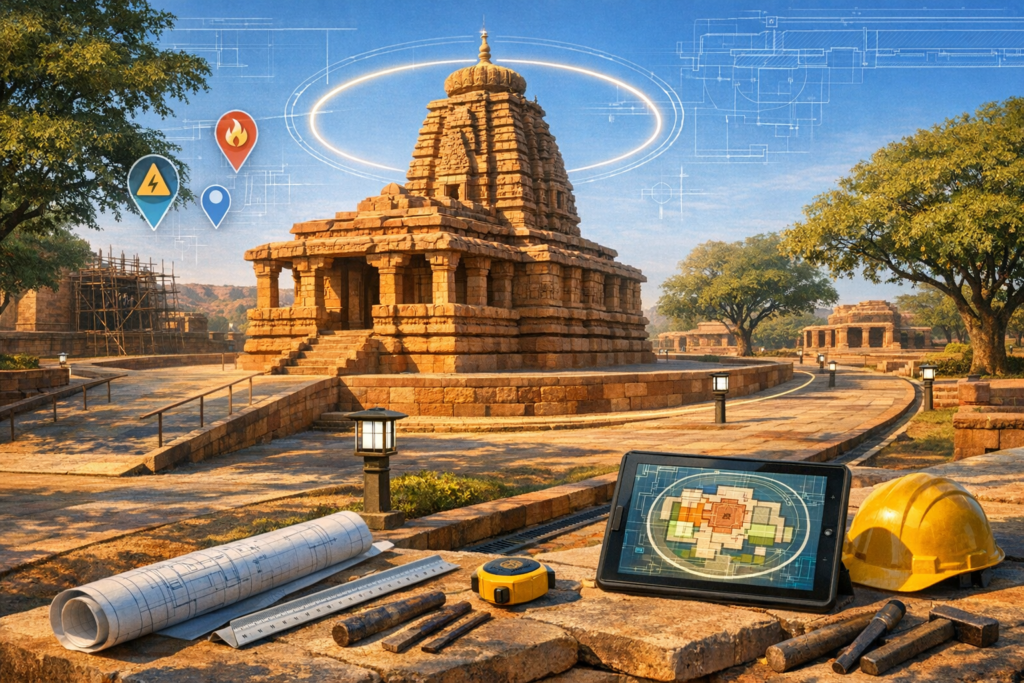
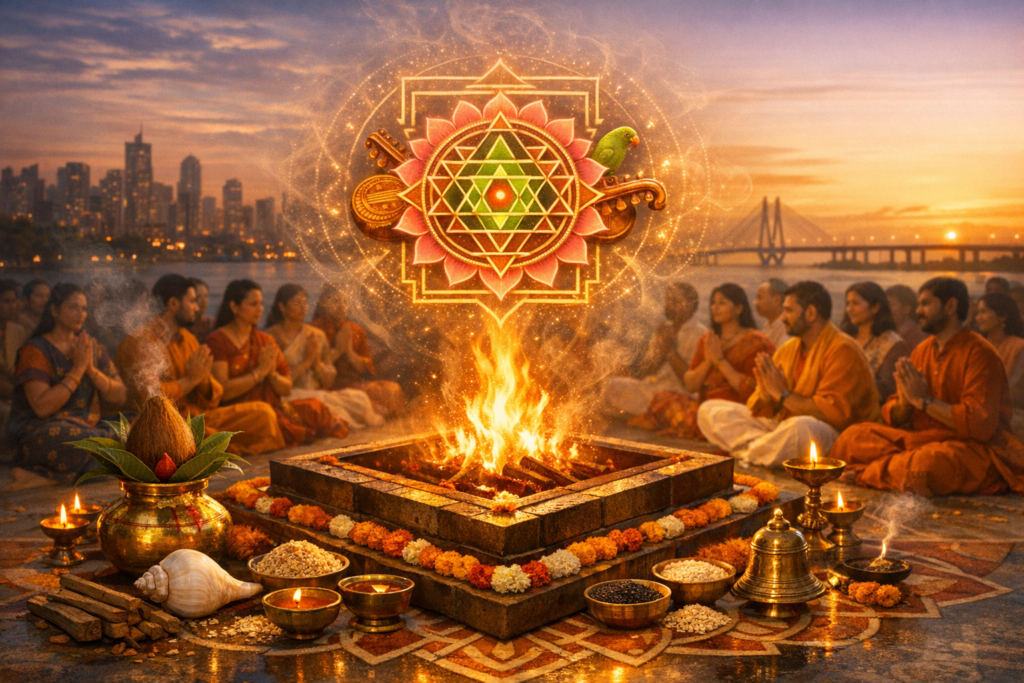
Temple worship and the doctrine of divine omnipresence occupy complementary places in Hindu thought. Rather than opposing the concrete and the abstract, the Hindu path treats form (saguna) and formlessness (nirguna) as stages on a single arc of God-realization. In contemporary discourse, advice to abandon temples in favor of purely formless meditation often appears philosophically refined, yet it risks creating a false choice. A more faithful reading of the tradition recognizes that temples cultivate the very inner capacities required to perceive the Divine everywhere.
Hindu philosophy, especially as interpreted through the Upanishads and Advaita Vedanta, maintains that Brahman pervades all. At the same time, the bhakti traditions affirm that the heart awakens most effectively when devotion is given a living focus—murti, mantra, and mandir. This is not contradiction but pedagogical wisdom: the journey moves from gross to subtle, from sthula to sukshma, as attention is trained, purified, and finally universalized. Temple worship thus becomes an instrument through which the mind learns to behold the one Reality in all forms.
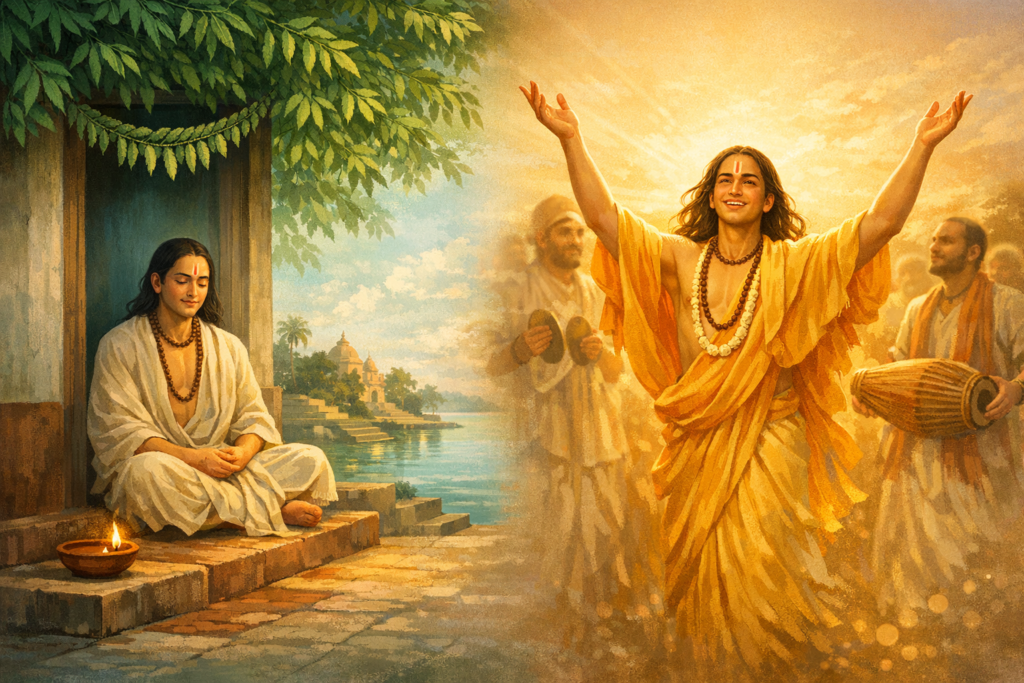
The concept of Ishta offers a powerful lens for understanding this movement. Ishta does not limit the Divine; it personalizes the relationship so that devotion can mature. By honoring a chosen form—Krishna, Shiva, Devi, or another—practitioners align sadhana with their psychological temperament. Over time, love for the particular opens into reverence for the universal. The same river that begins as a stream in the hills ultimately merges with the ocean; the same heart that learns to love one image learns, with practice, to love the All.
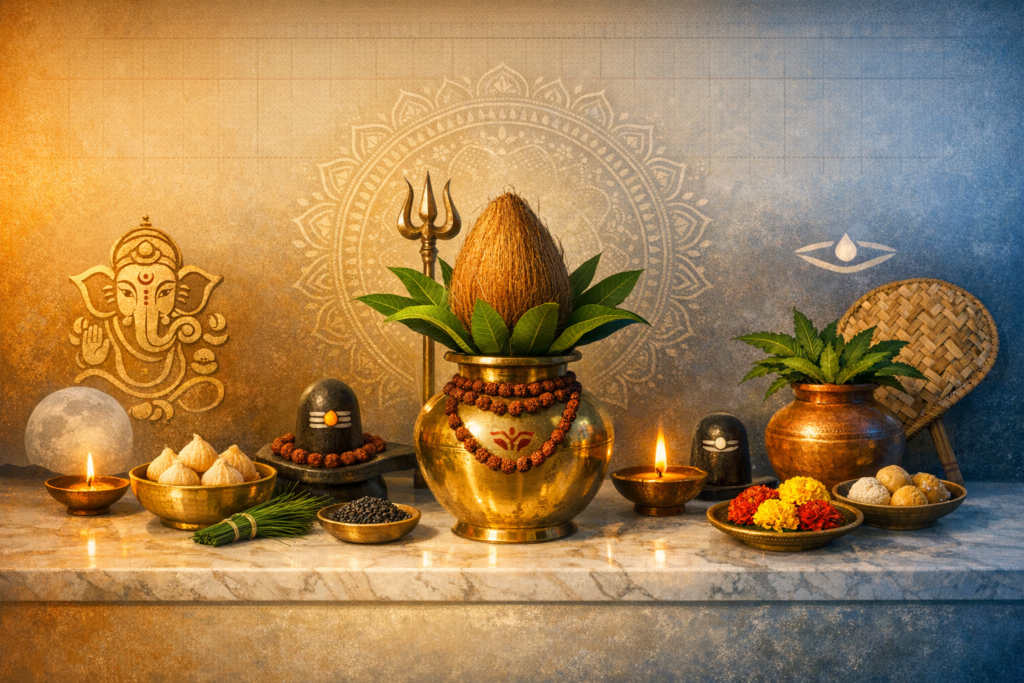
Rituals in the temple are structured attention training. Darshan teaches stillness and receptivity; aarti cultivates gratitude and surrender; japa quiets the discursive mind; prana-pratishtha signals that life is sacred and presence is palpable. These practices integrate body, breath, and mind—yoga in its holistic sense—so that cognition becomes luminous rather than distracted. When devotion ripens in this way, abstract meditation ceases to be a struggle against restlessness and becomes a natural flowering of a disciplined heart.
Such practice generates a durable inner poise that extends beyond temple walls. Many practitioners describe a pattern: after lingering before the murti, the same quiet awareness follows into the marketplace and the home. The ear grows more sensitive to mantra in the hum of daily life; the eye finds darshan in the faces of strangers; service (seva) becomes spontaneous. In this sense, the temple does not confine the Divine; it trains perception to recognize the Divine everywhere.
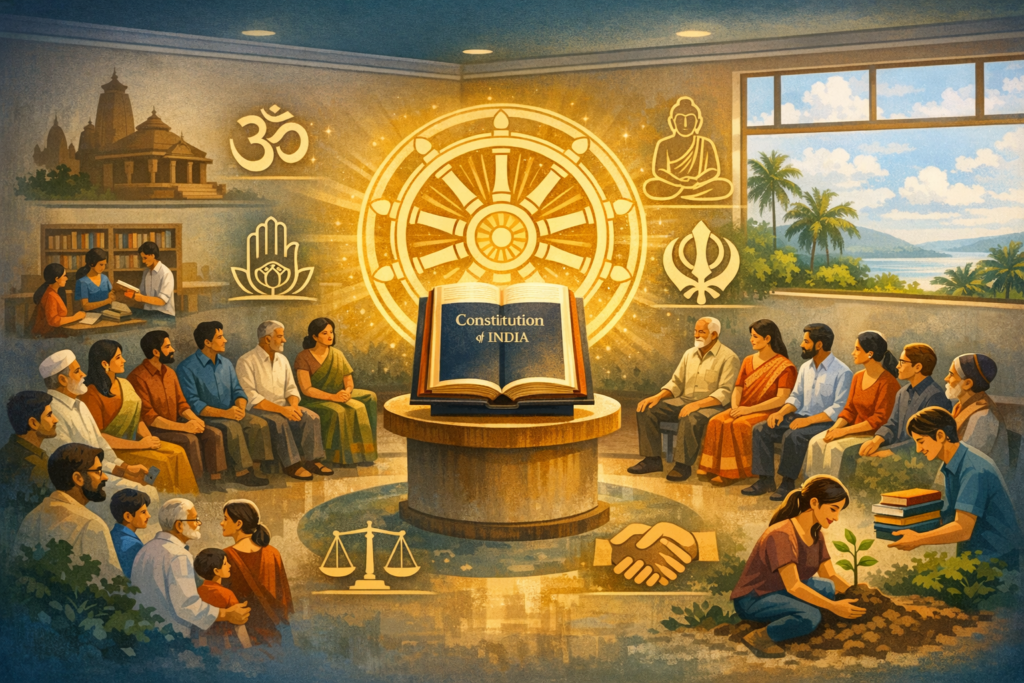
Importantly, this pedagogy resonates across the broader dharmic family. Buddhist mindfulness disciplines attention within the vihara and monastery so that compassion animates every step beyond them. Jain pratikraman refines conscience in the derasar, deepening ahimsa in thought, word, and deed in the world outside. Sikh simran and sangat in the gurdwara kindle remembrance of the Naam, which then suffuses seva in ordinary life. Each tradition employs sacred space and collective practice to awaken an expansive, universal vision—distinct paths, shared insight.
Seen through this lens, the modern dilemma—temple versus meditation—dissolves. Both are legitimate and mutually reinforcing. Bhakti anchors the emotions; jnana clarifies understanding; raja yoga stabilizes attention; karma yoga sanctifies action. When harmonized, these streams converge in God-realization. To insist on formlessness while dismissing form is to ask a sapling to bear fruit without first rooting in soil and sun.
Common misconceptions about “idolatry” also yield under closer examination. The murti is not an inert object; it is a pedagogical focus, a consecrated locus of attention, and a symbol whose meaning becomes transparent through practice. Just as a national flag concentrates collective identity without being mistaken for the nation itself, the murti concentrates devotion without confining the Divine. The aim is not the stone, but the Spirit shining through it.
Practical guidance follows from this understanding. Begin where the heart responds: a temple visit, a simple puja at home, or a period of quiet meditation. Let ritual be meticulous without rigidity, and let study (svadhyaya) illuminate practice. Combine temple worship with daily meditation; add service that benefits others; and keep the company of seekers whose lives inspire steadiness. In time, the threshold between sacred and ordinary thins, and awareness of divine omnipresence stabilizes.
Hinduism’s spiritual tapestry has long affirmed unity in spiritual diversity: multiple Ishtas, multiple methods, one Reality. Aligning with this ethos fosters harmony across Hindu, Buddhist, Jain, and Sikh paths, each honoring a different doorway into the same house of Truth. Temples are not endpoints but springboards—structures that cultivate inner architecture. From stone to spirit, the journey leads to a sustained, universal vision in which every place is sanctuary and every moment a chance for God-realization.
Inspired by this post on Hindu Blog.