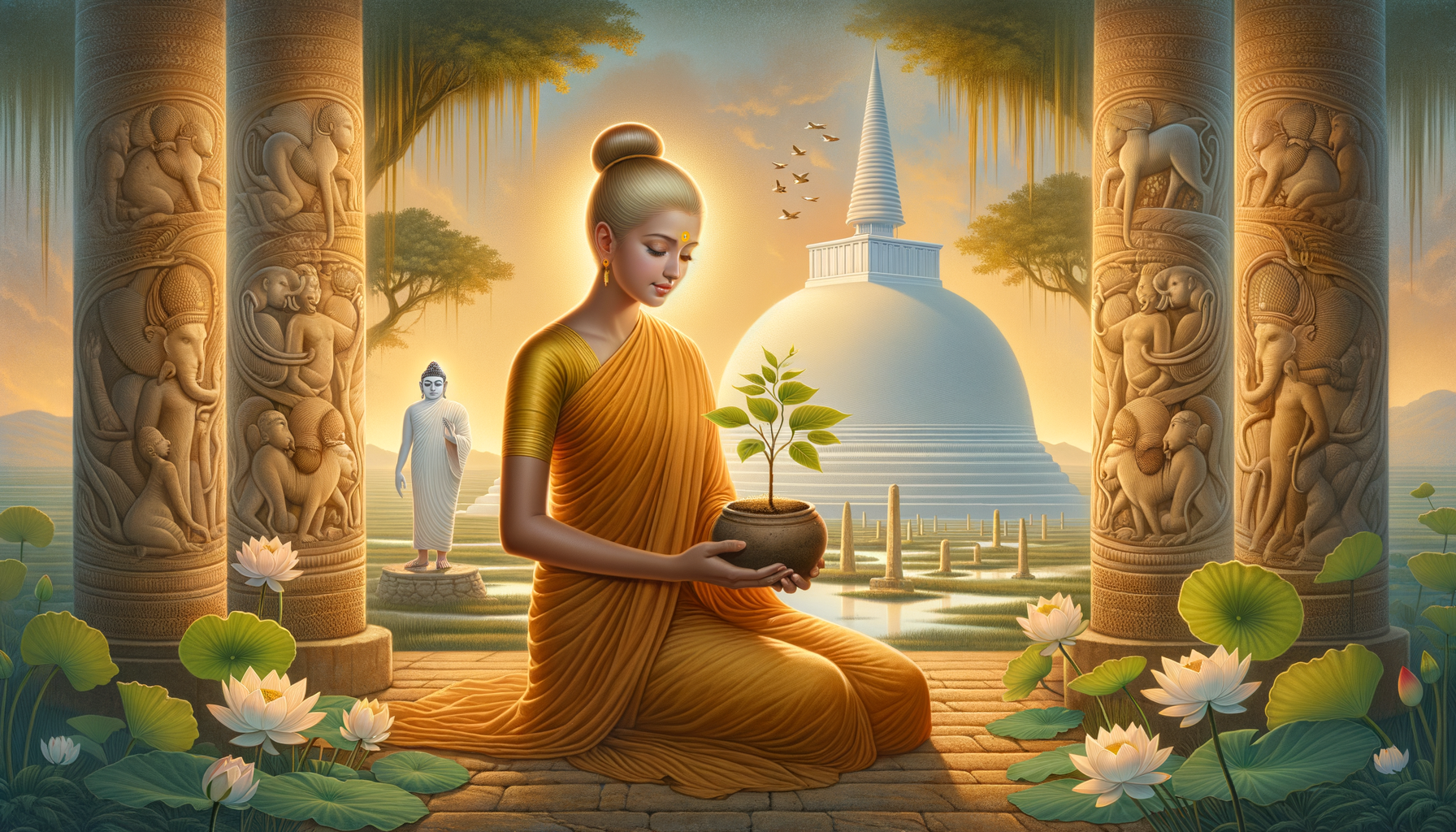
Sanghamitra (3rd century BCE), the revered daughter of Emperor Ashoka of the Mauryan Empire, stands as a luminous figure in Ancient India for her role in nurturing Buddhism’s growth beyond the subcontinent. Remembered for piety, resolve, and scholarship, she helped anchor a spiritual and cultural bridge between India and Sri Lanka that endures to this day.
Alongside her brother Mahinda, Sanghamitra embraced the teachings of the Buddha as part of a wider dharmic milieu that included Hindu, Jain, and other ascetic traditions. Their quest reflected a hallmark of the age: learning, debate, and practice flourishing within a shared dharmic framework. In this spirit, Buddhism’s spread was not a rupture from India’s civilizational roots but a continuation of values such as ahimsa, compassion, and disciplined living.
Historical accounts note Emperor Ashoka’s initial reluctance to send his daughter overseas. Yet, recognizing the ethical significance of the mission and the deepening friendship with Sri Lanka’s King Devanampiya Tissa, he consented. The decision combined statecraft and spirituality, as Sanghamitra’s voyage symbolized cultural diplomacy grounded in dharma. For contemporary readers, her journey evokes the timeless courage of crossing seas for service, learning, and peace.
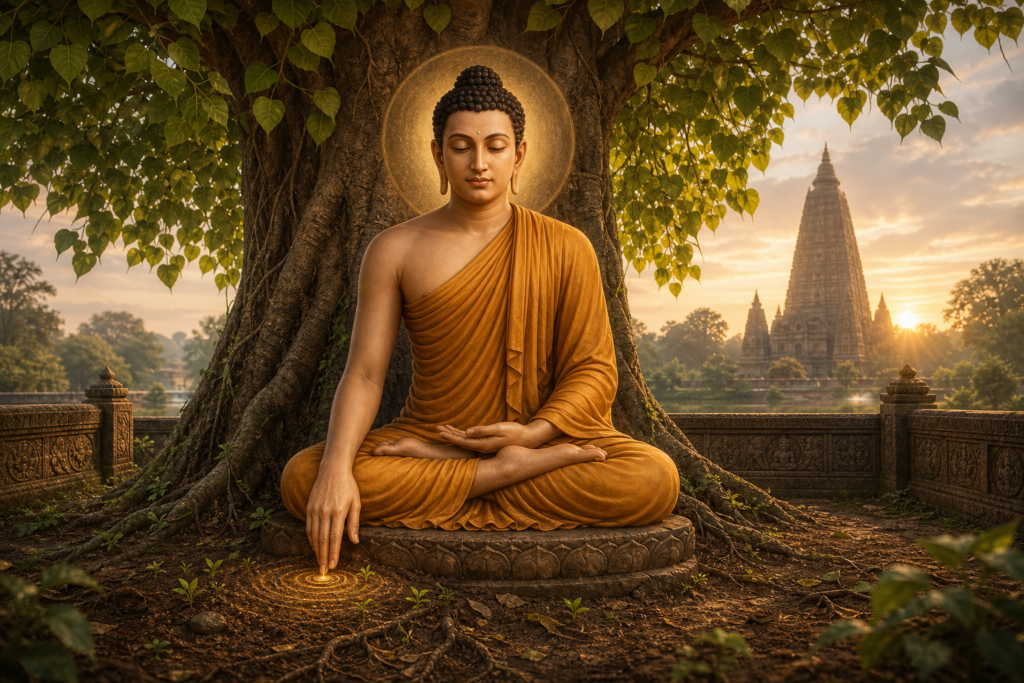
In Sri Lanka, Sanghamitra is credited with helping establish the Bhikkhuni (nuns’) order, guiding royal households and lay communities in monastic discipline and ethical living. Tradition holds that she brought a sapling of the Bodhi tree from Bodh Gaya, planted at Anuradhapura as the Sri Maha Bodhia living symbol of awakening and a testament to India–Sri Lanka bonds. These contributions strengthened Buddhist institutions, shaped ritual life, and fostered scholarship across generations.
Texts such as the Mahavamsa, along with archaeological and ritual continuities at Anuradhapura, sustain the historical memory of Sanghamitra’s work. While details vary across sources, scholarly consensus affirms her pivotal role in consolidating Buddhism on the island and extending the moral reach of the Mauryan dharma. Her legacy demonstrates how spiritual ideals can travel through trust, friendship, and careful cultivation.
Sanghamitra’s life offers a compelling model of dharmic unity: traditions within Hinduism, Buddhism, Jainism, and, in later centuries, Sikhism, share foundational ethics and a commitment to humane living. Rather than sectarian division, her story invites appreciation of diverse paths within a common civilizational ethosan ethos in which spiritual inquiry, disciplined practice, and compassionate action coexist harmoniously.
For readers today, Sanghamitra’s mission resonates as a study in leadership, women’s agency, and interfaith harmony in Ancient India. Her work illustrates how ethical governance and spiritual vision can reinforce one another, how cultural exchange strengthens community, and how unity in diversity becomes a lived reality. In honoring her, one honors an enduring India–Sri Lanka friendship and a shared dharmic inheritance that continues to guide seekers and societies alike.
Inspired by this post on Hindu Pad.