-
Beyond ‘God of War’: Murugan’s origins, Vel symbolism, and Thaipusam’s transformative devotion

Murugan, revered across Hindu, Buddhist, Jain, and Sikh milieus as a symbol of disciplined compassion, emerges in Tamil sources as the mountain-born “Beautiful One” whose power is guided by wisdom. Classical narratives from the Tolkappiyam and Puranic traditions explain his sixfold awareness, the gift of the Vel, and the transformation of Surapadman from pride into…
-
Ashes of Lanka: Subaltern Ramayana Insights on Dharma, Civilians, and War Ethics

This essay reframes the burning of Lanka in Sundara Kanda through a subaltern, ethically rigorous lens that centers the ordinary people of the golden city. It retains reverence for Hanuman’s strategic brilliance and Sri Rama’s cause while probing the moral costs of urban fire on artisans, traders, elders, and children. Drawing on Dharmayuddha norms and…
-
Hindu Population 2050: Pew Projections, South Asian Demographic Shifts, and India’s Roadmap

Pew Research Center’s cohort-component projections to 2050 indicate that Hindus will grow substantially in absolute numbers while maintaining a broadly stable global share. India remains the demographic center of gravity and a Hindu-majority nation, even as fertility converges across communities due to education, urbanization, and health gains. Nepal sustains a Hindu-majority profile, Sri Lanka and…
-
Lankapuri’s Golden Splendor: Ramayana’s City on Trikuta and a Timeless Warning on Greed

Lankapuri, the golden city of the Ramayana, unites mythic splendor with ethical instruction by showcasing how dharma tempers power and prosperity. Fashioned by Vishvakarma and set upon Mount Trikuta, Lanka’s luminous architecture, maritime horizons, and courtly spectacle are balanced by a sharp critique of lobha—greed. The narrative contrasts Kubera’s trusteeship of wealth with Ravana’s extractive…
-
Sanghamitra’s Sacred Mission: How Ashoka’s Daughter Forged India–Sri Lanka Buddhist Ties

Sanghamitra, the daughter of Emperor Ashoka, exemplifies the dharmic spirit of Ancient India through her pivotal role in bringing Buddhism to Sri Lanka. Alongside her brother Mahinda, she embodied a culture of learning and compassion that connected Hindu and Buddhist traditions within a shared ethical framework. Historical traditions credit her with establishing the Bhikkhuni order…
-
Shankari Devi Shakti Peetham at Trincomalee: Mythic Origins, Sacred Power, and Visitor Insights

Shankari Devi Shakti Peetham in Trincomalee stands among the 51 Shakti Peethas, revered for its Puranic association with Sati and its deep Shakta–Shaiva devotion. Set within the Koneswaram Temple complex on Swami Rock, the shrine blends mythic origins with a dramatic oceanfront landscape to create an atmosphere of contemplative power. Traditional sources variously link the…
-
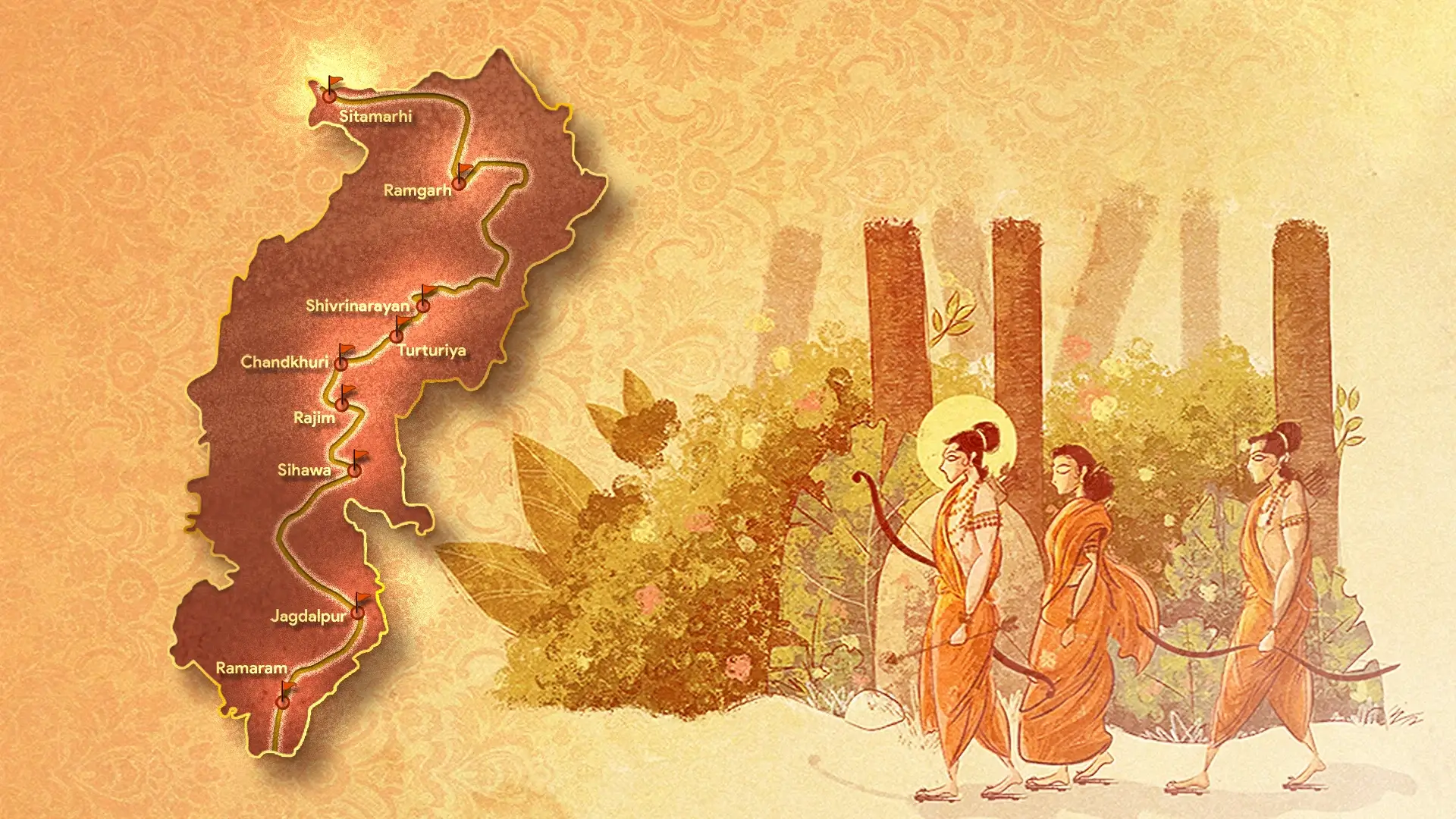
Tracing the Route of Lord Shri Ram’s Vanvaas

In Sanatan Itihaas – Ramayana, Lord Shri Ram is considered one of the most revered and worshipped deities. He is known as the seventh avatar of Lord Vishnu and is believed to have taken birth on Earth to restore Dharma or righteousness. Lord Shri Ram’s life is an inspiring tale of courage, sacrifice, and devotion,…