
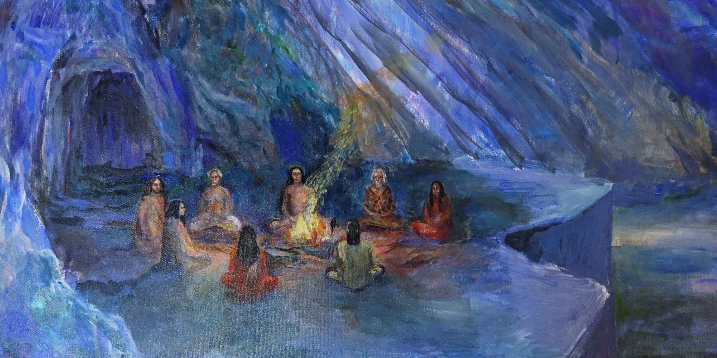
Mahavatar Babaji occupies a singular place in the living memory of Kriya Yoga. In the tradition associated with Lahiri Mahasaya, Paramahansa Yogananda, and later kriya lineages, he is revered as an immortal Himalayan master whose presence is understood less as a historical biography in the ordinary sense and more as a continuing spiritual force. The inherited account states that Mahavatar Babaji appeared more than 5000 years ago and, when he was about to leave his physical body 1800 years ago, his sister Mataji appealed to him with the words, ‘If it makes no difference to you, then please stay in your body until everyone has attained the true purpose of their lives.’ Within this devotional framework, his continued life in the Himalayas is interpreted as an act of compassion for humanity and as a vow to assist seekers in Self-realisation and God-realisation.
The importance of this narrative is not merely in its miraculous claim, but in its ethical meaning. The story presents the realized master as one who has no personal need to remain in the world, yet chooses service because others still struggle with ignorance, restlessness, suffering, and spiritual forgetfulness. In academic terms, this is a classic dharmic motif: liberation is not treated as private escape, but as compassionate participation in the welfare of beings. The liberated one remains available, not from bondage, but from grace. For many practitioners, this is why Mahavatar Babaji is not approached only as a distant figure of legend; he is contemplated as a living symbol of spiritual responsibility.
Kriya Yoga, in this context, should be understood as both discipline and transmission. The Sanskrit word kriya can mean action, deed, or intentional spiritual practice. In yogic usage, Kriya Yoga refers to methods that work through breath, awareness, subtle energy, concentration, mantra, and interiorized attention. Different lineages preserve different details, and responsible discussion should not reduce the practice to a single mechanical technique. Its central aim, however, is clear: to refine the body-mind instrument so that the practitioner can move from distraction toward steadiness, from ego-identification toward Self-awareness, and from ordinary mental turbulence toward direct spiritual experience.
The source tradition describes Mahavatar Babaji as the father of all modern kriya-yoga traditions. This statement reflects the way many kriya lineages trace their authority to him through the guru-shishya relationship, the disciplined transmission from master to disciple. In the modern period, this lineage is most commonly associated with Lahiri Mahasaya, who is said to have received Kriya Yoga from Mahavatar Babaji in 1861 in the Himalayan region and then made it accessible to householders. This development is significant because it brought advanced yogic practice into ordinary family and professional life. Spiritual realization was no longer presented only as the domain of renunciants living outside society; it became a path that could be pursued while fulfilling daily responsibilities.
The householder dimension of Kriya Yoga is one of its most important contributions to modern spirituality. In a world of work, family duties, social obligations, and constant mental stimulation, the idea that inner realization can unfold within disciplined daily life carries practical relevance. The tradition does not romanticize escape from responsibility. Instead, it suggests that the same life that appears to distract the mind can become the field of sadhana when approached with awareness, restraint, devotion, and sincerity. This approach resonates deeply with the Bhagavad Gita’s insistence that action, when offered rightly, can become yoga.
Over time, the kriya stream became known globally through figures such as Swami Sri Yukteswar and Paramahansa Yogananda. Yogananda’s work in the twentieth century introduced many readers outside India to Kriya Yoga, the guru-disciple tradition, and the figure of Mahavatar Babaji. The historical spread of these teachings shows how Indian spiritual traditions entered global religious discourse through meditation, yoga philosophy, and the language of direct experience. Yet the core remained recognizably dharmic: disciplined practice, reverence for the guru, purification of consciousness, and the conviction that the Divine can be realized inwardly rather than merely believed intellectually.
Atma Kriya Yoga, as presented in the Bhakti Marga tradition, means ‘action with awareness of the soul’. The phrase emphasizes that yoga is not only something performed on a mat or during a fixed meditation session. It points to a deeper reorientation of life, where breath, thought, action, relationship, service, and devotion are gradually brought into alignment with the soul’s awareness. The system is described as a complete yoga and meditation practice intended to support Self-realisation and God-realisation. Its language is devotional, but its structure also reflects technical yogic concerns: purification, concentration, energetic awakening, and the stabilization of awareness.
The technical value of Kriya Yoga lies in its disciplined treatment of attention and prana. Yogic traditions generally hold that the mind and breath are closely linked: when breath is agitated, thought tends to be restless; when breath is refined, attention becomes steadier. Kriya methods work through this relationship by cultivating breath awareness, interiorization, and subtle energetic balance. The goal is not mere relaxation, although calmness may arise. The deeper purpose is transformation of consciousness, where the practitioner becomes less governed by habitual reaction and more capable of perceiving the inner Self with clarity.
This is why Kriya Yoga is often described as a science of inner transformation. The word science should be used carefully here. It does not mean laboratory science in the modern empirical sense, but it does suggest a repeatable discipline with methods, preparation, observation, and results verified in the practitioner’s own consciousness. The laboratory is the embodied mind. The instruments are breath, attention, mantra, devotion, ethical restraint, and disciplined repetition. The result sought is not external power, but inner freedom, clarity, love, and direct awareness of the Divine presence.
The role of the guru is central to this understanding. In many Hindu, Buddhist, Jain, and Sikh traditions, spiritual learning is not treated as information alone. It is relational, embodied, and transmitted through example, discipline, and grace. The Hindu guru-shishya tradition, the Buddhist teacher-student relationship, Jain reverence for tirthankaras and acharyas, and Sikh devotion to the Guru Granth Sahib and the lineage of Gurus all affirm, in distinct ways, that spiritual life requires guidance beyond egoic self-certainty. Kriya Yoga belongs to this larger dharmic ecosystem of disciplined transmission.
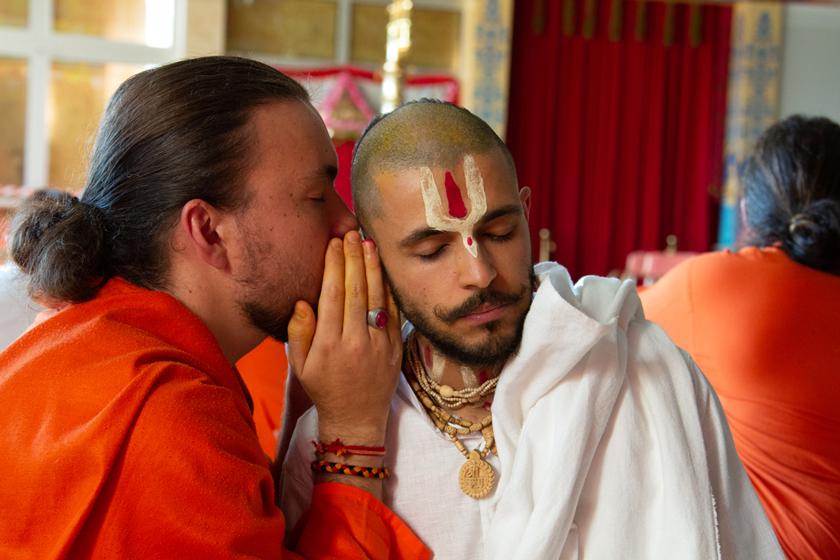
Shaktipat Initiation is presented as the distinctive grace-bearing element of Atma Kriya Yoga. Shaktipat literally means the descent or transmission of Shakti, divine energy. In the source tradition, it is described not merely as a blessing, but as a hands-on spiritual transmission from master to student. Its purpose is to protect, guide, and energize the practitioner’s kriya practice. The tradition further teaches that, after receiving Shaktipat, the grace of the kriya masters accompanies the practitioner whenever the practice is performed. This is an explicitly devotional claim, but it also serves a practical function: it frames spiritual discipline as supported, guided, and accountable rather than isolated or self-invented.
The language of grace does not remove the need for effort. In dharmic traditions, grace and practice are often complementary. Effort purifies the vessel; grace fills it. Practice steadies the mind; grace softens the heart. Discipline creates receptivity; the guru’s blessing awakens confidence and direction. This balance prevents two common errors: the belief that spiritual awakening can be forced by technique alone, and the belief that no personal discipline is required because grace will do everything. Kriya Yoga stands between these extremes by emphasizing both method and surrender.
Paramahamsa Sri Swami Vishwananda is described in the Bhakti Marga account as a direct disciple of Mahavatar Babaji. The tradition states that Mahavatar Babaji first appeared to him when he was five years old and later guided him in his mission. It further presents Paramahamsa Vishwananda as having been born with knowledge of kriya techniques and as having received Mahavatar Babaji’s instruction in 2007 to begin teaching the techniques now known as Atma Kriya Yoga. Such claims belong to the devotional self-understanding of the lineage. Their significance lies in how the community understands authority, continuity, and the living presence of the masters.
For practitioners, the emotional power of this teaching comes from the idea that spiritual life is not walked alone. The modern seeker often faces exhaustion, skepticism, loneliness, and fragmented attention. Meditation can easily become another self-improvement habit if it is disconnected from reverence and purpose. The Mahavatar Babaji narrative counters this by presenting the path as held within a lineage of compassion. The practitioner sits, breathes, chants, or meditates, but the inner meaning is larger than personal technique. The practice becomes a meeting point between human effort and divine assistance.
At the same time, an academically responsible approach must distinguish between historical claim, lineage memory, and spiritual meaning. Mahavatar Babaji’s life cannot be documented in the same way as a modern public figure. The tradition itself presents him as a Himalayan yogi who remains largely hidden, appearing to select disciples according to spiritual need. This does not make the tradition meaningless; rather, it places it within the category of sacred biography, where the purpose is not only to record events but to communicate a model of realization, compassion, and divine intervention. Sacred biography shapes practice by showing what a tradition values most.
What the tradition values here is clear: immortality is secondary to service. The most important point is not that Mahavatar Babaji is said to have mastered bodily longevity, but that he is said to remain for the liberation of others. In that sense, the narrative becomes a teaching on the highest use of spiritual attainment. Realization is not self-display. Yogic power is not spectacle. The master’s greatness is measured by his willingness to serve the awakening of beings. This is a deeply dharmic principle and one that connects across Hindu, Buddhist, Jain, and Sikh sensibilities: wisdom matures as compassion.
The practice of Kriya Yoga also draws attention to the relationship between inner purification and ethical living. Breath and meditation techniques are meaningful only when supported by sincerity, self-restraint, truthfulness, humility, and compassion. Without ethics, subtle practice can inflate the ego. With ethics, practice becomes a means of refinement. A practitioner may begin with restlessness, ambition, grief, or confusion, but disciplined sadhana gradually reveals the patterns that bind consciousness. This is where technical yoga becomes existentially serious: it asks not only how one breathes, but how one lives.
Self-realisation and God-realisation are related but not identical terms in this discourse. Self-realisation generally refers to recognition of one’s true nature beyond the changing body, emotions, and ordinary mental identity. God-realisation points toward the direct experience of the Divine as ultimate reality, beloved presence, or supreme consciousness. Different dharmic schools articulate these ideas differently. Advaita Vedanta may emphasize non-dual awareness; bhakti traditions may emphasize loving union with the Divine; yoga systems may emphasize disciplined absorption and liberation. Kriya Yoga often operates as a bridge among these emphases by combining method, devotion, and interior realization.
The heart-centered language of Divine Love is therefore not sentimental decoration. In the Atma Kriya Yoga presentation, Divine Love is the goal toward which the techniques point. Meditation is not merely concentration; breath is not merely regulation; mantra is not merely sound. These are instruments for awakening love that is less dependent on personal preference and more rooted in the soul’s relationship with the Divine. This gives the practice its devotional warmth and prevents it from becoming only a technical pursuit of altered states.
This matters especially in contemporary yoga culture, where practices can be separated from their spiritual roots. Yoga is often reduced to fitness, stress management, flexibility, or productivity. These benefits can be real, but they do not exhaust the meaning of yoga. The Mahavatar Babaji and Kriya Yoga tradition recalls an older understanding: yoga is a path of liberation, purification, devotion, and direct knowledge. It concerns the whole human being, including body, breath, mind, heart, karma, and ultimate purpose.
The tradition’s universality should also be understood with care. Kriya Yoga has been taught across cultural and national boundaries, but genuine universality does not erase particular roots. It respects Sanskrit vocabulary, guru-parampara, dharmic metaphysics, and the devotional worlds from which the practice emerged. At the same time, it can speak to seekers from many backgrounds because breath, attention, longing, suffering, and the search for meaning are universal human realities. This balance between rootedness and openness is essential for dharmic unity.
Unity among dharmic traditions is strengthened when differences are honored rather than flattened. Hindu yoga, Buddhist meditation, Jain tapas and ahimsa, and Sikh naam-simran each have distinct theological and philosophical foundations. Yet they share a profound concern with transformation of consciousness, ethical living, disciplined remembrance, compassion, and liberation from ego-centered existence. A study of Mahavatar Babaji and Kriya Yoga can therefore contribute to broader dharmic dialogue by showing how one lineage preserves its own methods while pointing toward universal spiritual refinement.
Mahavatar Babaji’s Himalayan association adds another symbolic layer. The Himalayas have long functioned in Indian spiritual imagination as a geography of austerity, silence, revelation, and transcendence. They are not only mountains; they are a sacred landscape where seekers confront the limits of ordinary life and turn toward the eternal. To say that Mahavatar Babaji resides in remote Himalayan regions is to place him within this sacred geography of hidden wisdom. The physical remoteness mirrors the subtle inwardness of the path: what is most transformative is often not publicly displayed.
The account of Mataji’s request is equally important because it introduces the feminine principle into the narrative of the master’s vow. Her intervention is not incidental. She becomes the voice of compassion asking realized power to remain accessible to the world. In a broader Hindu spiritual frame, this reflects the indispensability of Shakti, the dynamic and compassionate power without which realization would remain abstract. The story suggests that even the immortal yogi’s public mission is awakened through a relational appeal rooted in care for all beings.
For readers approaching this tradition today, the most useful question is not only whether every element can be historically verified. A deeper question is what the tradition asks of the practitioner. It asks for disciplined practice rather than spiritual consumption. It asks for humility before a lineage rather than self-appointed mastery. It asks for devotion without fanaticism, openness without rootlessness, and technical practice without egoic display. These demands remain relevant regardless of one’s level of literal belief in the miraculous elements of the story.
The grace of the masters, in this sense, is not an excuse to avoid life; it is a call to sanctify it. A person who practices sincerely must still speak truthfully, act responsibly, care for family and society, and meet suffering with steadiness. If meditation does not deepen compassion, its purpose has been misunderstood. If spiritual experience does not produce humility, it has not matured. The living legacy of Mahavatar Babaji is therefore best understood not as fascination with the extraordinary, but as commitment to the transformation of ordinary consciousness into love, clarity, and service.
Mahavatar Babaji remains one of the most evocative figures in modern yoga spirituality because he unites mystery, discipline, and compassion. The tradition remembers him as the guardian of Kriya Yoga, the hidden master of the Himalayas, the guide behind lineages, and the servant of humanity’s awakening. Whether approached devotionally, historically, or philosophically, his significance lies in the same central teaching: the true purpose of human life is realization, and realization flowers most fully when it becomes service. Kriya Yoga, supported by guru’s grace and sustained by sincere practice, offers one disciplined way to pursue that purpose.
Inspired by this post on Bhakti marga blog.




Leave a Reply
You must be logged in to post a comment.