

The search for lasting happiness begins with a difficult but necessary observation: whatever depends entirely on the temporary cannot provide permanent fulfilment. Careers change, bodies age, relationships undergo strain, possessions decay, and even pleasurable experiences fade after the moment has passed. This does not make worldly life meaningless; rather, it clarifies its limits. The central spiritual question, especially within Hindu philosophy and the wider Dharmic traditions, is therefore not whether human beings should love, work, create, serve, or enjoy life, but whether they can anchor these experiences in something deeper than change itself.
Many people discover this truth through ordinary exhaustion rather than abstract philosophy. A holiday, achievement, purchase, or social recognition may provide a brief lift, yet the mind often returns quickly to restlessness. This pattern reveals a technical point found throughout Vedanta, Yoga, Bhakti, Buddhism, Jainism, and Sikh thought: suffering is intensified when the impermanent is mistaken for the ultimate. When the heart asks for enduring love, unbroken peace, and stable meaning, it is asking for something that cannot be supplied by objects that are themselves unstable.
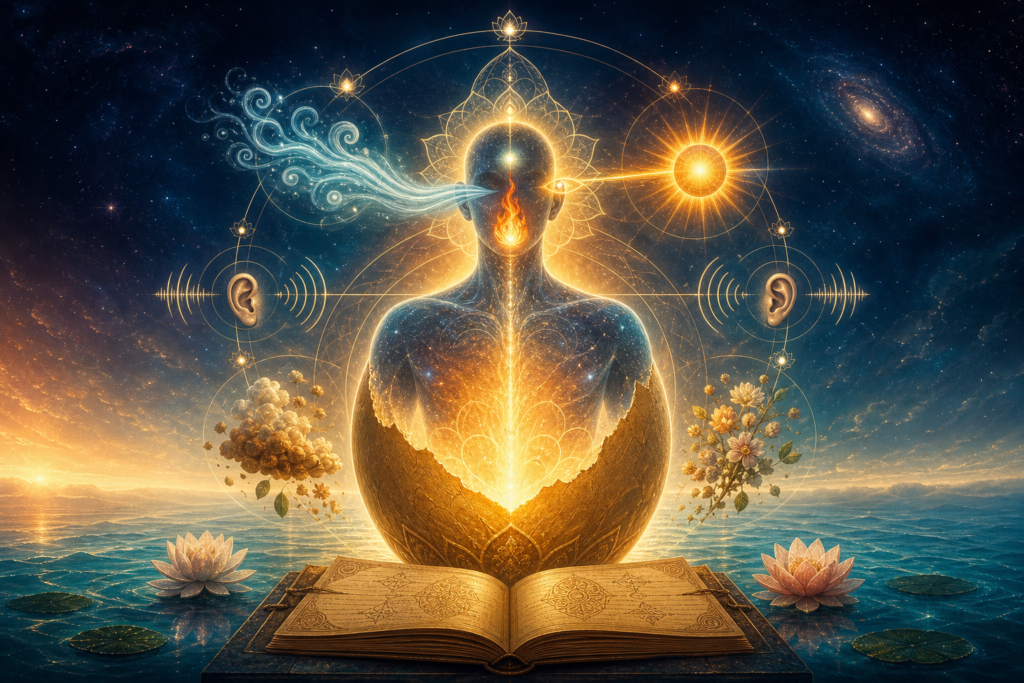
The Bhagavad Gita presents this distinction with remarkable precision. In Chapter 15, Krishna distinguishes between the perishable field of material existence and the imperishable spiritual Self. The body, senses, mind, ego, and intellect belong to the changing order of prakriti. They are real as lived experience, but they are not ultimate, because they are modified by time. The atman, by contrast, is not reducible to the body or the fluctuations of the mind. It is the conscious principle by which experience is known.
This distinction is not merely theological; it is also psychological. When identity is built only around appearance, social role, productivity, opinion, or emotional state, the person becomes vulnerable to every external shift. Praise inflates the ego, criticism wounds it, success creates anxiety about loss, and failure appears to threaten one’s very being. Spiritual practice begins to correct this error by distinguishing between the witnessing Self and the temporary conditions passing through awareness.
In theistic Vedantic traditions, the analysis moves one step further. Beyond the perishable world and the imperishable individual Self is Paramatma, the Supreme Self, the sustaining consciousness present within all beings and yet not limited by any of them. Vaishnava traditions often speak of this Supreme Reality as Narayana, the One in whom all beings rest and who dwells within all beings. This language expresses both transcendence and immanence: the Divine is beyond the cosmos, yet intimately present within it.
From this perspective, the ultimate goal of life is not a vague escape from existence, but the restoration of conscious relationship with the Eternal. In Hindu vocabulary, this may be described as moksha, God-realisation, Self-Realization, or loving union with the Supreme. In the devotional framework of bhakti, the goal is experienced as a living relationship of love, surrender, remembrance, and service. The finite self does not become spiritually fulfilled by possessing more temporary objects; it becomes fulfilled by remembering its eternal source.
This insight also supports unity among Dharmic traditions. Hinduism, Buddhism, Jainism, and Sikhism use different philosophical vocabularies, yet each warns against bondage to ego, craving, ignorance, and narrow self-interest. Buddhism analyses attachment and impermanence with great discipline. Jainism emphasizes purification of the jiva through right vision, right knowledge, and right conduct. Sikhism teaches remembrance of the Divine Name, seva, humility, and the grace of the Guru. Hindu traditions offer many yogic paths, including jnana, karma, raja, and bhakti. These streams need not be collapsed into one system to be honoured together; their shared civilisational wisdom lies in directing human life beyond compulsive desire toward truth, compassion, discipline, and liberation.
Bhakti-yoga gives this quest a specifically relational form. Devotion is not sentimentality, nor is it passive emotion. It is disciplined love expressed through attention, remembrance, worship, ethical conduct, selfless service, and the offering of daily life to the Divine. The Bhagavad Gita repeatedly teaches that devotion clarifies knowledge because love focuses the whole person: thought, speech, action, intention, and emotion. In this sense, bhakti is not opposed to philosophy; it gives philosophy a heart and a direction.
The practical significance of devotion is that it transforms ordinary action. Work can become worship when performed without egoistic possessiveness. Family life can become sadhana when shaped by patience, responsibility, and reverence. Art, music, study, meditation, ritual, and service can become vehicles of inner refinement when directed toward the highest good. The goal is not to reject the world in bitterness, but to stop demanding from the world what only the Eternal can provide.
This is why surrender is often misunderstood. In a mature Dharmic sense, surrender does not mean abandoning intelligence, dignity, or ethical responsibility. It means relinquishing the illusion that the ego is the final authority over reality. Surrender is the disciplined reorientation of life toward truth. It allows the individual to act vigorously while accepting that the fruit of action is not fully under personal control. Such surrender is closely related to karma yoga, where action is performed with sincerity but without bondage to outcome.
Grace occupies an equally important place in the devotional understanding of spiritual progress. Human effort is necessary: one must study, practise, serve, reflect, restrain harmful tendencies, and cultivate devotion. Yet the complete knowledge of the Divine is not manufactured by egoic effort alone. Grace is the uplifting presence of the Divine that completes and exceeds human striving. A useful analogy is that disciplined practice prepares the vessel, while grace fills it with what the individual cannot produce independently.
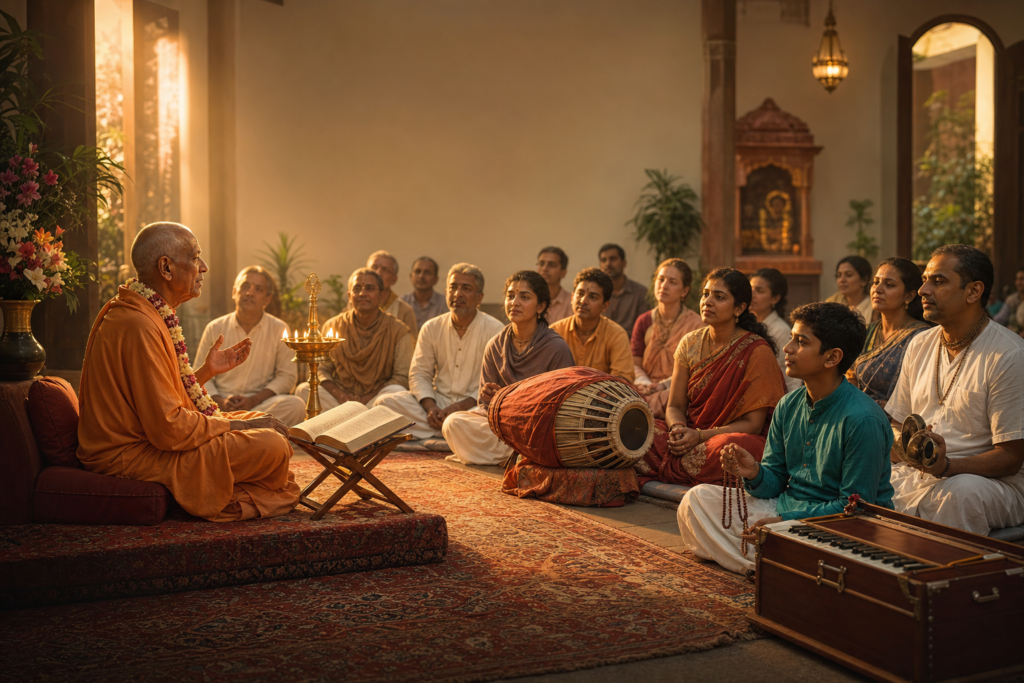
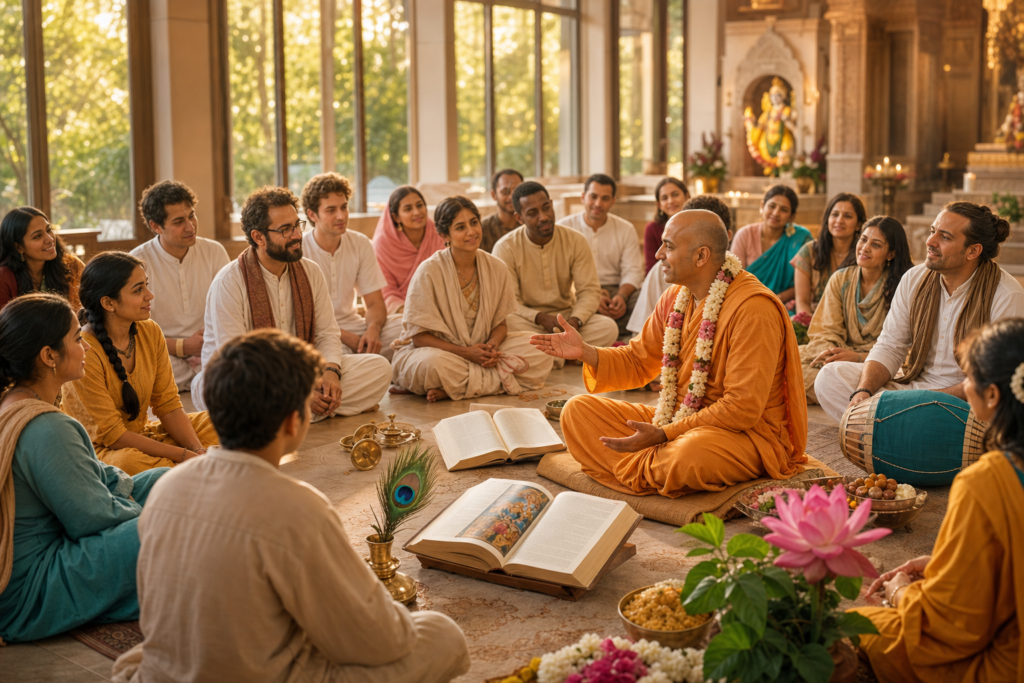
The role of the guru must be understood within this framework of disciplined learning. In contemporary usage, the word guru is often weakened into a label for any expert, influencer, or motivational figure. In the classical Dharmic sense, however, a true spiritual master is one who dispels ignorance by transmitting spiritual knowledge grounded in realization. The guru-shishya tradition is not a cult of personality when properly understood; it is a pedagogical and spiritual relationship based on humility, inquiry, practice, ethics, and transformation.
The Bhagavad Gita advises seekers to approach realized teachers with humility, sincere questioning, and service. These three elements are technically important. Humility makes learning possible because it softens intellectual arrogance. Inquiry protects devotion from blind imitation because it seeks understanding. Service purifies self-centeredness because it trains the individual to act for a purpose larger than personal gain. Together, they create the conditions in which spiritual knowledge can move from concept to lived realization.
At the same time, discernment remains essential. Dharmic traditions do not ask sincere seekers to suspend conscience. A genuine path deepens compassion, steadiness, responsibility, and clarity; it does not intensify fear, manipulation, or hostility toward other Dharmic paths. Any interpretation of spiritual authority that weakens moral intelligence must be examined carefully. True guidance should bring a person closer to truth, humility, devotion, and service, not to sectarian pride.
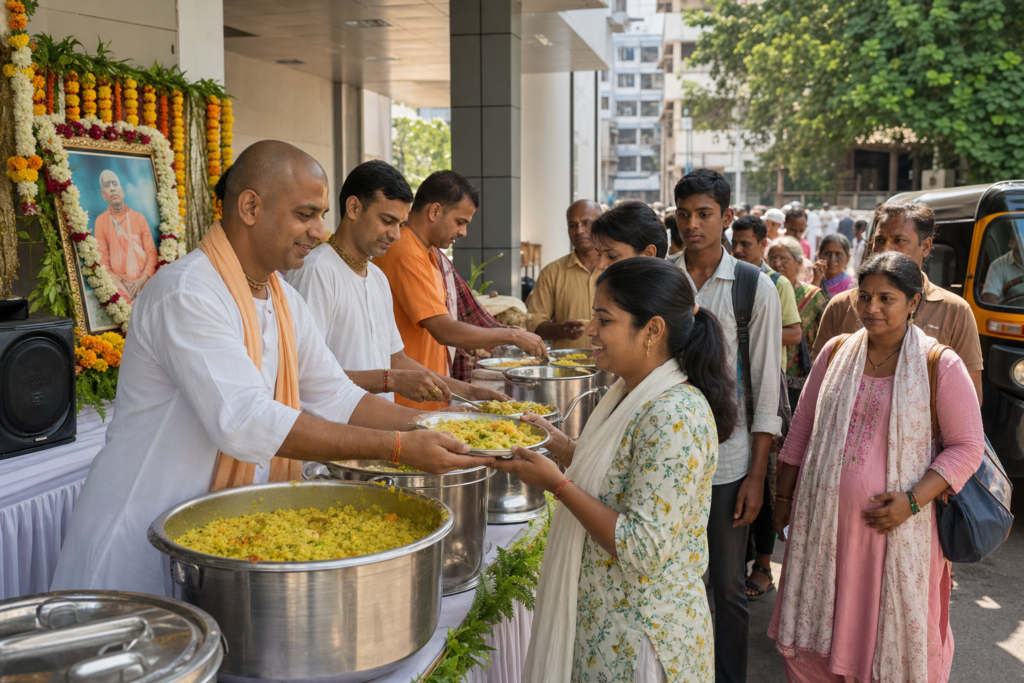
The spiritual goal also has social implications. If every being is more than a temporary body and social label, then dignity cannot be restricted by caste, wealth, education, region, language, or sect. The recognition of the Self within all beings supports ahimsa, seva, interfaith respect, and social responsibility. In this way, the inward search for the Eternal does not produce indifference to the world; it produces a more grounded way of serving it.
The recurring mistake of modern life is to confuse stimulation with fulfilment. Digital distraction, consumer aspiration, and constant comparison train the mind to move outward. Yet the deeper hunger remains unresolved. Spiritual disciplines such as japa, meditation, scriptural study, kirtan, puja, seva, mindful breathing, and ethical restraint work because they reverse this outward scattering. They gather the mind, refine emotion, and gradually make the heart capable of stable love.
Self-Realization and God-realisation can therefore be understood as two related dimensions of the same ascent. Self-Realization reveals that the person is not merely the body-mind complex. God-realisation reveals the living relationship between the individual soul and the Supreme Reality. In bhakti, this relationship is not cold metaphysics. It is love: love that remembers, serves, trusts, and becomes increasingly free from selfish demand.
The emotional power of this teaching lies in its realism. Everyone knows the ache of impermanence: a loved one’s absence, the passing of youth, the fading of success, the instability of mood, the uncertainty of the future. Spiritual wisdom does not deny these experiences. It gives them context. The heart suffers most when it tries to make the temporary carry the weight of the eternal. When love is rooted in the Divine, worldly relationships can become more tender, not less, because they are no longer burdened with impossible demands.
This is why the supreme goal of life can be described as the re-establishment of a perfect relationship with the Eternal. For some, this language will mean devotion to Sriman Narayana, Krishna, Shiva, Devi, Rama, or another chosen form of the Divine. For others within the Dharmic family, it may be expressed through liberation from craving, purification of the soul, remembrance of Naam, or direct insight into ultimate truth. The forms differ, but the movement is recognizably upward: from ego to truth, from attachment to freedom, from restlessness to peace, and from self-centeredness to love.
The practical conclusion is simple but demanding. A human life becomes spiritually meaningful when its aim is aligned with what does not perish. Wealth, health, family, learning, beauty, and service can all be honoured, but they must be placed in proper order. They are gifts and responsibilities, not final refuges. The final refuge is the Eternal Reality that gives existence its ground, consciousness its light, and love its permanence.
Lasting happiness is therefore not found by escaping life, nor by clinging to its passing forms. It is found by living in the world with remembrance of the imperishable. The supreme goal of life is to awaken to the Self, love the Divine, serve all beings with humility, and allow every thought, word, and action to become an offering. In that orientation, freedom is not postponed to another world; it begins as a transformed way of seeing, loving, and living here and now.
Inspired by this post on Bhakti marga blog.



Leave a Reply
You must be logged in to post a comment.