
A Hari Bhakta lifestyle is best understood as a disciplined life of devotion in which love for God becomes the organising principle of thought, speech, conduct, worship, community, and service. In this tradition, the word Hari refers to the Divine, commonly associated with Lord Vishnu or Narayana, while bhakta means devotee, lover, or one whose heart is oriented toward God. The lifestyle is therefore not merely a set of external religious habits. It is a coherent devotional culture shaped by bhakti, sadhana, seva, dharma, reverence for the guru, and a conscious effort to see the Divine presence in all beings.
The original question, “What is the lifestyle of a Hari Bhakta?”, points to something deeper than identity or affiliation. It asks how devotion becomes visible in daily life. A person may enter a temple, hear kirtan, see devotees wearing tilak, observe joyful festivals, or meet monks, nuns, and householders serving side by side. These outer signs invite curiosity. Yet the inner principle is more subtle: the devotee seeks to make God the constant focus of life, not by withdrawing from the world in every case, but by transforming ordinary life into an offering.
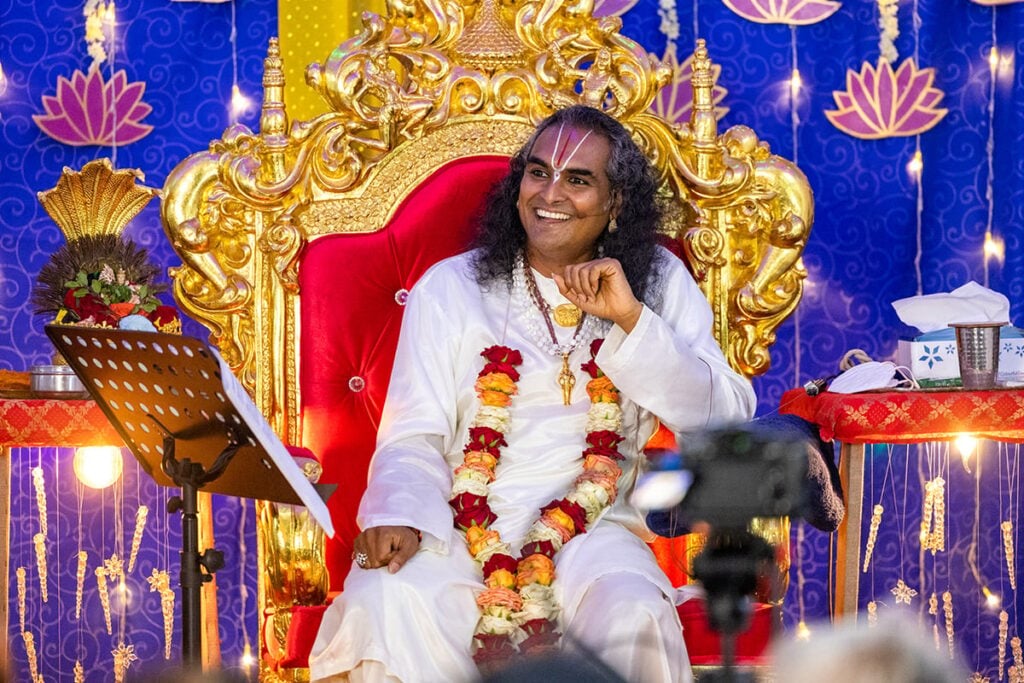
Within Bhakti Marga, the Hari Bhakta Sampradaya is presented as a devotional lineage founded around the teachings and living example of Paramahamsa Sri Swami Vishwananda. Devotees regard him as the spiritual authority of the lineage and as a guide who directs seekers toward God-realisation through love, remembrance, worship, scriptural study, service, and inner transformation. This must be understood in the language of devotional faith: disciples and followers interpret the guru not only as a teacher of concepts, but as a living centre of spiritual relationship.
A sampradaya is a transmitted lineage of teaching, practice, interpretation, and spiritual discipline. In many dharmic traditions, a sampradaya preserves knowledge through the relationship between guru and disciple. It offers continuity without reducing spirituality to institutional membership. The Hari Bhakta Sampradaya, as described by its practitioners, is a pathway for lovers of God. Its central claim is not that other sincere paths are invalid, but that devotion to Hari under the guidance of the guru can become a complete path of spiritual life.
This emphasis is important for the broader unity of dharmic traditions. Hinduism, Buddhism, Jainism, and Sikhism differ in theology, metaphysics, ritual, and language, yet they share a civilisational respect for disciplined practice, self-transformation, compassion, restraint, truthfulness, and the possibility of liberation from narrow ego-centred existence. A Hari Bhakta lifestyle belongs specifically to a Hindu Vaishnava devotional environment, but its ethical grammar can be appreciated across the dharmic family: purify the mind, serve others, honour the sacred, discipline the senses, and live with reverence.
The heart of this lifestyle is bhakti. In academic terms, bhakti may be described as a devotional orientation in which the relationship between the human being and the Divine is cultivated through love, surrender, remembrance, worship, song, service, and moral refinement. In lived experience, bhakti is less abstract. It is the movement of the heart toward God during prayer, the softening of pride in the presence of the guru, the willingness to serve without recognition, and the repeated effort to bring the mind back to the Divine Name.
The Bhagavad Gita provides a classical framework for this kind of devotional life. Its teachings on karma yoga, bhakti yoga, jnana, self-discipline, and surrender help explain why devotion is not limited to ritual. The Gita repeatedly directs the seeker to remember the Divine while acting in the world. For a Hari Bhakta, this means that work, family duties, temple worship, study, festival participation, and private prayer can all become part of a single devotional movement when performed with the right intention.
Daily sadhana is the technical foundation of the lifestyle. The Sanskrit term sadhana refers to spiritual practice, method, or disciplined means of attainment. It is not simply an occasional expression of faith. It is repeated practice that shapes attention, memory, emotion, and conduct. A devotee who chants the Divine Names every day is not only performing a ritual act; the devotee is training the mind to return again and again to the sacred centre of life.
Common forms of sadhana in the Bhakti Marga environment include japa, meditation, Atma Kriya Yoga, puja, daily prayer, kirtan, scriptural reading, and devotional arts. Japa involves repetition of the Divine Name or mantra, often with a mala. Its spiritual function is remembrance; its psychological function is concentration; its ethical function is purification of intention. A distracted mind is gradually given a sacred anchor. Over time, repetition becomes less mechanical and more relational, because the Name is approached as a living presence rather than a mere sound pattern.
Atma Kriya Yoga is also associated with this devotional culture as a meditative and yogic discipline intended to awaken inner devotion and deepen the connection with the Divine. From a technical perspective, yogic practices often work through breath, posture, concentration, mantra, and subtle awareness. In a bhakti context, these are not pursued merely for relaxation or personal power. They are directed toward God-realisation, humility, and the awakening of love in the heart.
Puja, or ritual worship, forms another essential dimension. In Hindu practice, puja can include offerings of water, flowers, incense, light, food, mantra, and reverential gestures before the deity. For a Hari Bhakta, ritual is not empty symbolism. It is embodied theology. The hands offer, the eyes behold, the ears hear mantra and music, the nose receives incense, and the tongue honours prasadam. The senses, which often scatter attention into the world, are gathered and redirected toward the Divine.
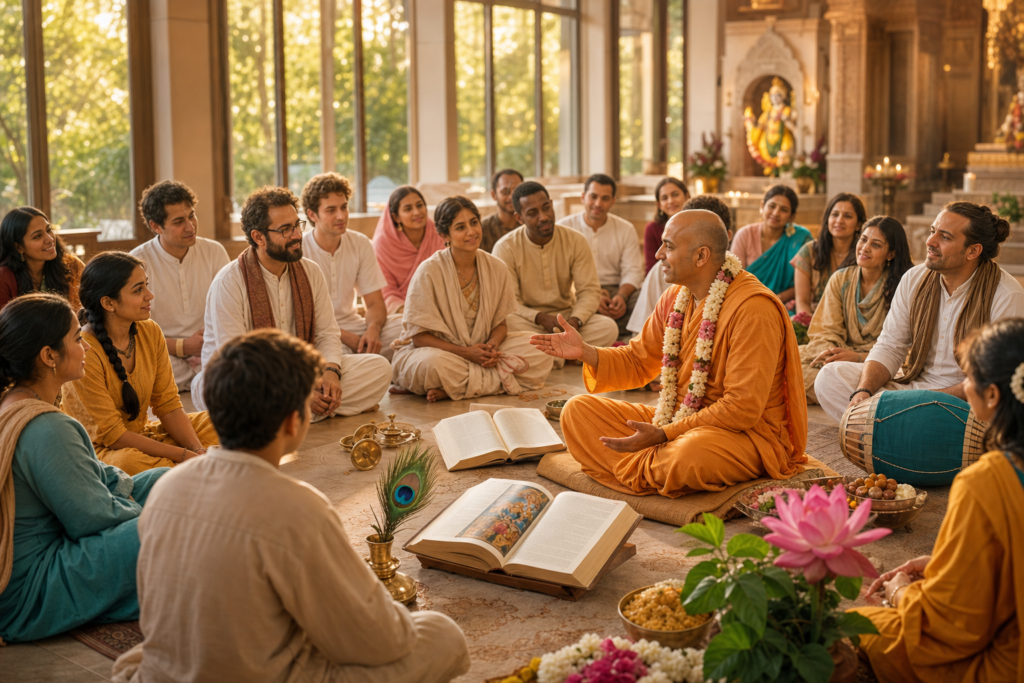
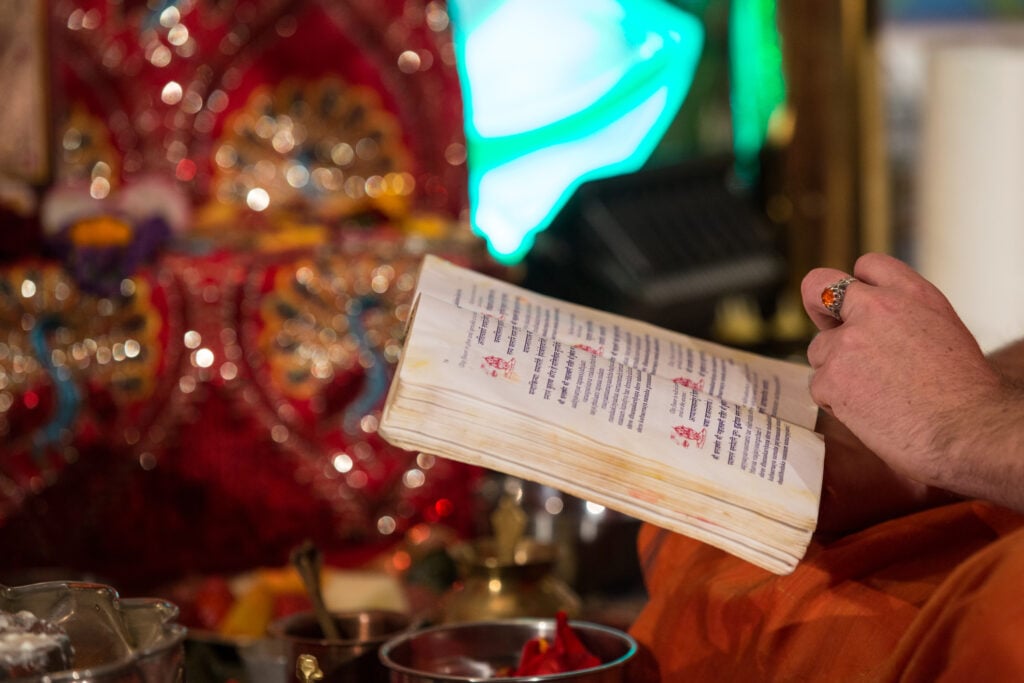
Scriptural study adds intellectual and contemplative depth to devotion. The daily reading of even one verse from the Bhagavad Gita is significant because it prevents devotion from becoming sentiment without discernment. Knowledge helps the devotee interpret experience, recognise inner obstacles, and understand why discipline matters. Bhakti does not reject knowledge; rather, it warms knowledge with love and prevents learning from becoming prideful abstraction.
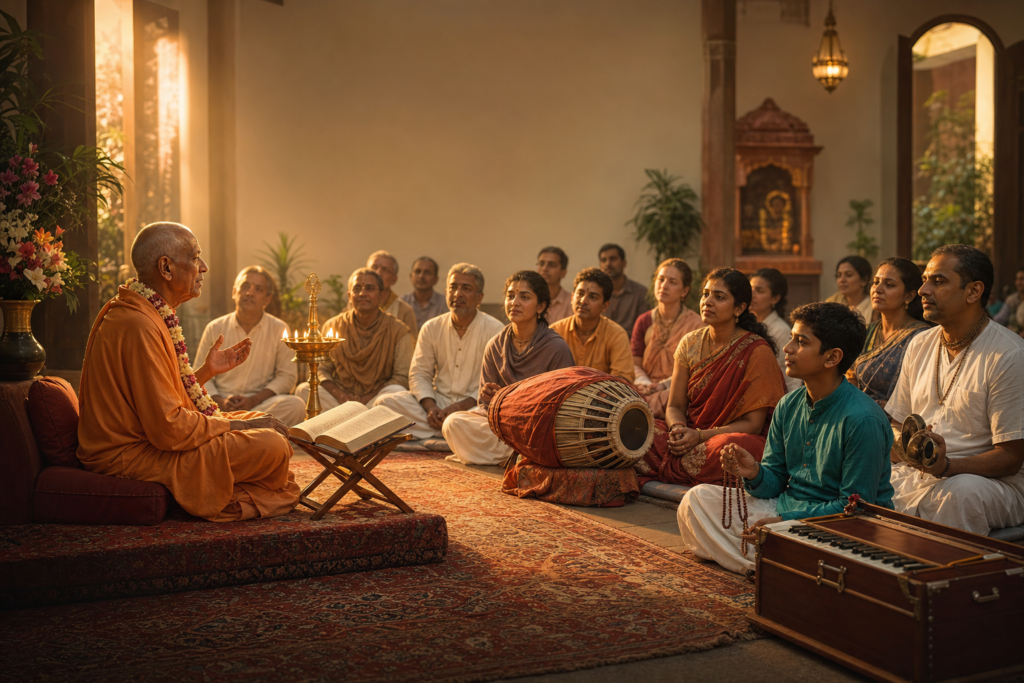
The devotional arts also play a serious role. Singing, dancing, painting, theatre, and sacred design can function as modes of worship. Kirtan, in particular, makes devotion communal and embodied. The Divine Name is sung not as performance alone, but as shared remembrance. This is one reason temple gatherings often feel emotionally powerful to participants. Music, rhythm, repetition, and collective intention create an atmosphere in which the individual heart feels carried by the community.
Celebration is therefore not secondary to the Hari Bhakta lifestyle. Festivals, yajnas, special pujas, vigils, processions, and temple events express the conviction that the Divine should be celebrated with beauty, sound, fragrance, colour, food, and community. Hindu festivals often involve long hours, early mornings, late nights, elaborate decoration, and collective discipline. To an outside observer, this may appear ceremonial. To devotees, it is a way of entering sacred time.
The emotional quality of these celebrations matters. Devotees frequently describe temple festivals as joyful, purifying, and deeply intimate. The deity is dressed beautifully, lamps are waved, bells are rung, conches may be blown, and prasadam is distributed. These details are not incidental. They create a devotional ecology in which the whole person participates. The festival becomes a spiritual education of the senses.
Yet a Hari Bhakta lifestyle cannot be reduced to what happens inside a temple. Seva, or selfless service, extends devotion into practical action. The concept of seva is shared widely across dharmic traditions, including Hindu and Sikh practice, where service is understood as a sacred discipline that reduces ego and benefits the community. In the Hari Bhakta context, seva means serving God by serving people, the temple, the sangha, the guru’s mission, and the duties that arise in everyday life.
Seva is not simply volunteer labour. Its inner measure is intention. A person may clean a floor, cook food, organise an event, teach, care for guests, support a family member, or offer professional skills. Outwardly these acts differ, but spiritually they become similar when performed as an offering. This shift is central to karma yoga: action is purified when it is performed without possessiveness over the result and without constant demand for recognition.
This is where the lifestyle becomes relatable even beyond monastic settings. Most people do not live in ashrams. They work, raise children, manage finances, care for elders, face deadlines, and navigate conflict. The devotional challenge is not to pretend these duties are separate from spirituality. It is to bring remembrance into them. When performed with steadiness, honesty, compassion, and dedication, ordinary responsibilities become part of dharma.
Dharma is one of the most important concepts in understanding the Hari Bhakta lifestyle. The term has multiple meanings: duty, order, righteousness, purpose, law, nature, and sustaining principle. In this context, dharma includes both the universal purpose of the soul and the specific responsibilities of one’s present life. The universal purpose is reunion with Divine Love. The specific purpose may be family life, study, work, temple service, monastic dedication, teaching, healing, administration, or quiet support behind the scenes.
A mature understanding of dharma prevents comparison. Not every devotee is called to the same form of life. Some become monks or nuns. Some remain householders. Some serve visibly; others serve quietly. Some are drawn to scriptural study, while others are transformed through music, ritual, meditation, or practical service. The shared principle is sincere dedication to God and guru, not uniformity of personality or social role.
This helps explain the visible roles within Bhakti Marga. Swamis and swaminis, rishis and rishikas, brahmacharis and brahmacharinis, household devotees, and community members may all participate in the same devotional ecosystem. The colours of clothing often indicate role and commitment. Orange is associated with swamis and swaminis, red with rishis and rishikas, and yellow with brahmacharis and brahmacharinis. These colours are not fashion statements; they communicate responsibility, discipline, and relationship to the lineage.
Monastic life is a specialised dharma, not an expectation placed on every devotee. Those who take vows of celibacy and dedicate their lives to the path accept a distinctive form of discipline. Some live in ashrams, while others may serve while remaining active in wider society. Householders, by contrast, practise devotion through family responsibilities, livelihood, community participation, and daily sadhana. Both forms can be spiritually serious when lived with integrity.
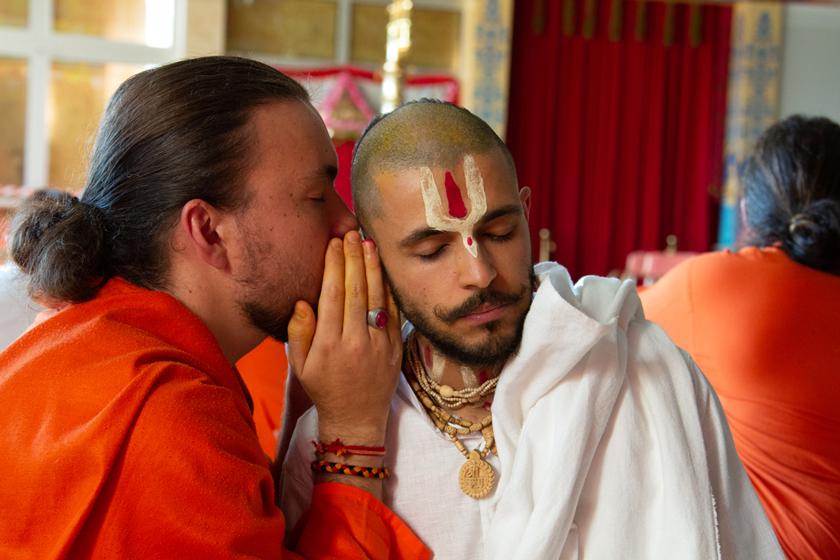
Tilak and traditional clothing are among the most recognisable external signs of the Hari Bhakta lifestyle. Tilak is a sacred mark worn on the body, especially the forehead, and in many Hindu communities it indicates lineage, devotion, and theological orientation. In the Bhakti Marga usage described by devotees, the wide V-shape represents the Foot of Narayana, the red line represents Maha-Lakshmi, and the dots between the eyes are associated with the guru and Tulsi, or devotion.
Such symbolism shows how theology becomes embodied. The forehead is not marked merely for public identification. It is marked as a reminder: the body belongs to God, the mind should be directed toward God, and daily conduct should honour the chosen path. Traditional clothing, such as saris, kurtas, and dhotis during temple events, likewise creates a boundary between ordinary social time and sacred time. Clothing becomes a tool of recollection.
At the same time, external signs require inner alignment. A tilak without humility, clothing without discipline, or ritual without compassion would fail to express the heart of bhakti. Dharmic traditions repeatedly warn against spiritual pride. The visible symbols of a Hari Bhakta are therefore best understood as supports for remembrance, not substitutes for transformation.
The guru-shishya relationship is central to this path. In many dharmic traditions, the guru is not merely an instructor but a spiritual guide who helps the disciple move from ego-centred life toward truth, discipline, and liberation. In the Hari Bhakta Sampradaya, devotees view Paramahamsa Vishwananda as the founder, guide, and living authority of the path. Their devotion to him is inseparable from their devotion to God, because they understand the guru as one who leads them toward the Divine.
This relationship carries both tenderness and responsibility. Devotees often speak of grace, shelter, and unconditional love, but the practical implications are demanding. A sincere disciple must practise, serve, study, refine conduct, confront inner resistance, and become more loving in real situations. Guru-bhakti is not passive admiration. It is a disciplined willingness to be transformed.
From a psychological perspective, the lifestyle works through repetition, symbolism, community reinforcement, emotional devotion, ethical practice, and embodied ritual. Repetition stabilises attention. Symbolism gives meaning to daily actions. Community reduces isolation and normalises spiritual discipline. Emotional devotion keeps practice warm and relational. Ethical service prevents spirituality from becoming self-absorbed. Ritual integrates body and mind. Together, these elements create a comprehensive devotional culture.
The community, or sangha, is especially important. A seeker may begin with curiosity, but sustained practice usually requires support. In a temple or devotional community, people of different ages, ethnic backgrounds, professions, and life histories gather around a shared sacred centre. This diversity is one of the strengths of bhakti. It shows that devotion is not restricted to one temperament, nationality, or stage of life.
However, community life also requires maturity. Wherever people gather, differences arise. A devotional lifestyle therefore includes patience, listening, forgiveness, accountability, and humility. Seva becomes difficult when the ego wants preference. Ritual becomes difficult when the mind is restless. Study becomes difficult when it challenges assumptions. These difficulties are not failures of the path; they are part of the training field in which devotion becomes real.
The Hari Bhakta lifestyle also reflects a distinct view of the human person. The individual is not seen merely as a consumer, worker, political identity, or psychological bundle of desires. The person is understood as a soul whose deepest longing is for Divine Love. This anthropology changes the meaning of discipline. Spiritual practice is not punishment or repression; it is a way of aligning life with the soul’s deepest orientation.
In practical terms, this often means simplifying priorities. A devotee may ask whether speech is truthful and kind, whether food is taken with gratitude, whether work is honest, whether time is given to sadhana, whether the mind is being fed by resentment or remembrance, and whether relationships are becoming more compassionate. These questions bring bhakti into daily ethics.
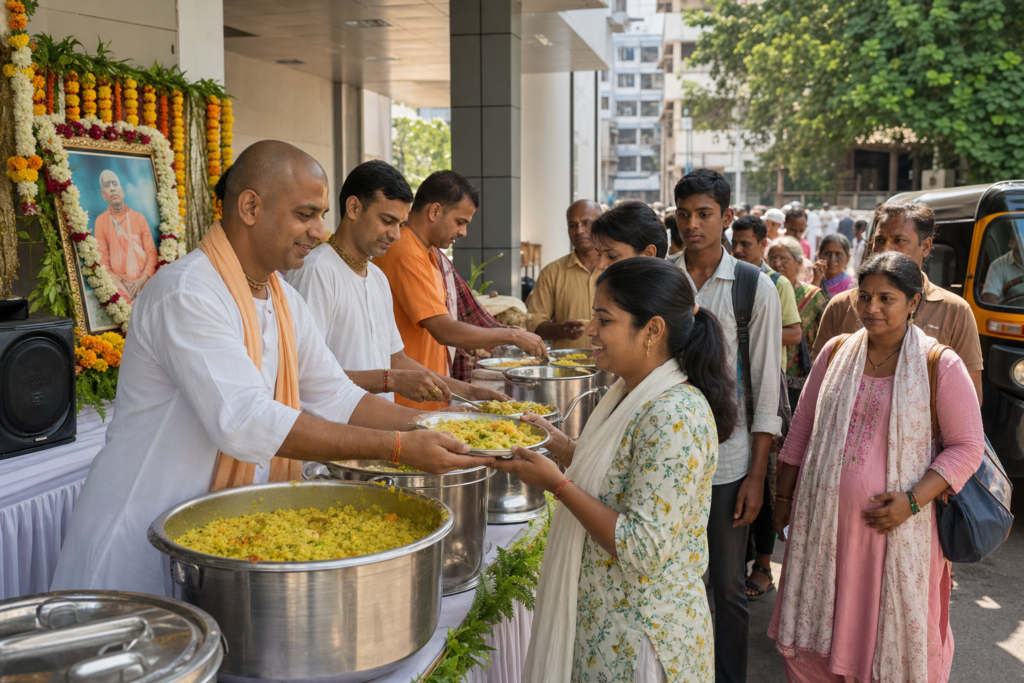
Food and prasadam also deserve attention. In many Hindu devotional settings, food offered to the deity becomes prasadam, a sacred gift received with gratitude. Eating then becomes connected to reverence rather than mere consumption. The act of cooking, offering, distributing, and receiving food can become seva, community-building, and spiritual remembrance at once.
The same principle applies to speech. Chanting, japa, satsang, scriptural recitation, and respectful conversation train the tongue toward sacred use. Harmful speech disperses spiritual energy; truthful and compassionate speech strengthens it. A Hari Bhakta lifestyle therefore includes attention not only to formal prayer but also to the ordinary words spoken at home, at work, online, and in community settings.
This is particularly relevant in the modern world, where distraction is constant. Digital media, social comparison, ideological conflict, and overstimulation make remembrance difficult. The discipline of japa, scripture, puja, and seva offers a counter-structure. It creates sacred rhythm in a fragmented age. Even a short daily practice can become a stabilising centre when performed sincerely and consistently.
The lifestyle is therefore both devotional and technical. It has emotional warmth, but it also has method. It includes love, but also schedule. It includes celebration, but also vows and duties. It honours grace, but does not dismiss effort. In this balance, the Hari Bhakta path resembles many dharmic systems: liberation or God-realisation is not treated as a casual preference, but as the highest aim of human life.
For those encountering the tradition from outside, the most accurate approach is neither romanticisation nor dismissal. The outer forms may be unfamiliar: tilak, Sanskrit terms, deity worship, guru devotion, monastic colours, yajna, kirtan, or festival rhythms. Yet each of these forms has a function within a coherent devotional system. They train perception, express theology, sustain community, and help the devotee remember the Divine.
A balanced understanding also recognises that devotion is lived at different levels of intensity. Some people are initiated devotees with formal commitments. Some are regular practitioners. Some are visitors or seekers. Some are still discerning their relationship to the path. The lifestyle is not entered fully in a single moment. It is gradually cultivated through exposure, practice, study, service, and grace.
The word “lifestyle” can sometimes sound superficial, as if devotion were a personal brand or aesthetic. In the Hari Bhakta context, however, lifestyle means the integration of metaphysics, ethics, ritual, community, discipline, and love. It is a way of arranging life around the conviction that God is real, present, lovable, and worthy of remembrance in every action.
This integration is the central benefit of the path. A divided life produces exhaustion: one identity at work, another in worship, another in private thought, another in public appearance. A devotional life seeks unity. Thought, word, and deed are gradually brought into alignment. The devotee may still struggle, doubt, become distracted, or fall short, but the direction remains clear: return to God, return to the heart, return to service, return to love.
Ultimately, the lifestyle of a Hari Bhakta is not defined by perfection. It is defined by sincere orientation. The devotee strives to love God, honour the guru, practise sadhana, serve the community, study sacred wisdom, celebrate the Divine, respect dharma, and see God in all beings. This is why the path can be both deeply personal and communally visible. The inner longing becomes outer discipline, and outer discipline deepens the inner longing.
In its most refined form, the Hari Bhakta lifestyle teaches that devotion is not an escape from life but a sanctification of life. The temple, the home, the workplace, the festival, the mala, the scripture, the meal, the act of service, and the quiet breath can all become part of the same offering. The aim is God-realisation through love, and the method is a life gradually shaped by bhakti, seva, dharma, and grace.
Inspired by this post on Bhakti marga blog.



Leave a Reply
You must be logged in to post a comment.