-
Agnidev Das (ACBSP) in Critical Condition: Stroke Realities, Compassionate Care, and Dharmic Unity

Agnidev Das (ACBSP), a senior disciple of Srila Prabhupada, is in critical condition following a severe brain stroke; clinicians report unresponsiveness and a transition to comfort-focused care. This analysis explains the clinical landscape of stroke—ischemic and hemorrhagic types, time-sensitive interventions, and why treatment sometimes shifts from curative to palliative. It clarifies that palliative medicine is…
-
From Fearlessness to Surrender: Prabhupada’s Doctrine of Divine Protection at ISKCON Mombasa

This reflection from ISKCON Mombasa distills how A. C. Bhaktivedanta Swami Prabhupada’s life fuses bold action with śaraṇāgati to reveal the true meaning of divine protection. It clarifies Gita-based principles (18.66, 9.22, 9.31) and the six limbs of surrender, showing that protection preserves and deepens bhakti rather than promising a risk-free life. Scriptural exemplars like…
-
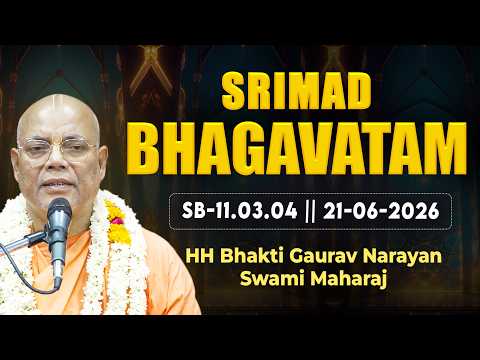
Srimad Bhagavatam 7.12.16: Bhakti Discipline and Inner Transformation at ISKCON GEV

This in-depth summary of the Srimad Bhagavatam 7.12.16 class by H.G. Mahamaya Mataji at ISKCON GEV presents a clear, academically grounded pathway to devotional growth. It situates the verse within Canto Seven’s broader ethical and spiritual framework and explains how guru–shishya parampara safeguards scriptural integrity. Readers gain a practical map of sadhana—from śraddhā to prema—supported…
-
Spirituality Means Intensity: Uncover Timeless Jewels of Wisdom in London with Keshava Swami

Set in London and associated with Svayam Bhagavan Keshava Swami, this reflection explores why genuine spirituality is best understood as disciplined, compassionate presence. The “Find Your Jewels” approach distills ancient dharmic teachings into practical guidance that seekers can apply immediately. It emphasizes that the greatest offering to the world is refined inner life—consciousness, character, and…
-
Heaven on Earth Is Contentment: A Dharmic Path to Lasting Joy Beyond Wealth and Status

This article examines why contentment—santosha in Hindu thought—functions as a greater treasure than material abundance and how it manifests as “heaven on earth.” It contrasts the emptiness that can persist despite wealth with the quiet joy possible in simplicity. Drawing on shared insights from Hinduism, Buddhism, Jainism, and Sikhism, it shows how santosha, aparigraha, upekkhā,…
-
Reflections of the Soul—SB 10.1.43 with HG Aniruddha Prabhu: Calm Mind, Clear Vision

This session on Srimad-Bhagavatam (SB) 10.1.43 with HG Aniruddha Prabhu uses a vivid reflection metaphor to clarify how mental turbulence distorts perception while the self remains unchanged. It draws unifying parallels across Hindu, Buddhist, Jain, and Sikh traditions, showing a shared commitment to clarity and compassion. Practical takeaways include breath awareness, mantra-japa, and contemplative self-inquiry…
-
Chatus Sana in Hinduism: The Eternal Four Sages of Brahma and Their Timeless Wisdom

The Chatus Sana—Sanaka, Sanatkumara, Sanatsujata, and Sanandana—are revered in Hinduism as the eternal, mind-born sages of Brahma who embody purity, wisdom, and spiritual knowledge. Their presence across the Puranas, the Mahabharata, and the Upanishads highlights a shared commitment to contemplation, ethical clarity, and inner freedom. Sanatkumara’s Upanishadic teaching, Sanatsujata’s discourse on deathlessness, and Sanaka and…
-
From Disposable Bonds to Enduring Freedom: Dharmic Wisdom for Modern Relationships
Modern society’s disposable culture often extends to human bonds, eroding trust and meaning. Drawing on dharmic wisdom, this reflection explores how Hindu principles—dharma, viveka, vairagya, ahimsa, and aparigraha—can restore depth to relationships without endorsing indifference. It highlights convergences across Buddhism (anicca, karuṇā), Jainism (aparigraha, ahimsa), and Sikhism (seva, sarbat da bhala) to model unity in…
-
Dhritarashtra’s Locked Room: A Powerful Dharmic Lesson on Attachment, Denial, and Freedom

The Mahabharata’s portrait of Dhritarashtra reveals how attachment (moha) and denial create a self-made prison that undermines ethical judgment. This analysis clarifies the difference between ignorance and active refusal to see, mapping the locked-room metaphor onto everyday life, leadership, and responsibility. It highlights convergence across Hinduism, Buddhism, Jainism, and Sikhism on freeing oneself from clinging…
-
WSN October 2025: Powerful Sankirtan Achievements, Temple Leaders, and Global Outreach

WSN October 2025 showcases a strong month of sankirtan outreach, with Mayapur, Mumbai-Juhu, and Los Angeles leading large temples and London-Soho, Bengaluru-South, and Baroda topping the medium category. Atlanta Krishna Life, Surat, and Chandigarh excelled among small centers, while Baltimore, Winnipeg, and Ottawa led the maha-small group. More than 385,000 literatures were distributed, expanding access…
-
When Silence Speaks: Hindu, Buddhist, Jain, and Sikh Wisdom for Social Media Calm

Social media rewards speed and outrage, yet dharmic traditions teach that silence is disciplined strength. Hindu philosophy frames silence (mauna), meditation (dhyana), and sensory restraint (pratyahara) as ethical practices that refine speech and preserve clarity. Parallel insights in Buddhism, Jainism, and Sikhism elevate non-reactivity, compassionate truth, and inner equipoise. Applied today, choosing “no response” can…
-
Compassion with Purpose: Dharmic Wisdom on Krsna Consciousness Beyond Material Aid

Compassion is most powerful when guided by spiritual intelligence. Drawing on the insight associated with His Divine Grace A.C.B. Swami Prabhupada, this piece explains why care centered solely on bodily comfort is limited, while compassion that elevates consciousness brings enduring relief. It unifies Hindu, Buddhist, Jain, and Sikh perspectives, showing how practices like dhyana, japa,…
-
Gratitude Before the Feast: A Dharmic, Hindu-Informed Path to a Sacred Thanksgiving

Thanksgiving can hold both joy and discomfort, from difficult histories to personal loneliness. A Dharmic, Hindu-informed approach reframes gratitude as a daily discipline rather than a reaction to perfect circumstances. Drawing on shared values across Hinduism, Buddhism, Jainism, and Sikhism, it emphasizes compassion, non-harm, and inner steadiness. Sadhviji highlights that gratitude works best when it…
-
Endure the Challenge: Timeless Hindu Wisdom for Modern Resilience and Steady Mind

This reflection explores the Bhagavad Gita’s teaching on sthithaprajna—steady wisdom—as a practical guide to modern resilience. Rooted in Chapter 2 (Verses 55–72), it emphasizes equanimity as the basis for ethical action and emotional balance, not detachment from life. The discussion connects Hindu insights with related ideas in Buddhism (upekkha), Jainism (sāmāyika), and Sikhism (Sehaj and…
-
दसमहाविद्या साधना: Protection, Wisdom, Prosperity—A Practical, Ethical Guide

This post presents a clear, ethically grounded overview of दसमहाविद्या (Dasamahavidya) as living principles that cultivate protection, wisdom, and resilience. It preserves the original non-English descriptors for selected Mahavidyas and provides concise, practice-oriented context for each. Readers learn how Kali supports fearlessness and protection, Tara fosters learning and resourcefulness, Tripura Sundari harmonizes mental and subtle…
-
Why Choosing Spirituality Reflects True Wisdom: A Dharmic Path to Clarity, Peace, and Unity

Spirituality, within Hindu philosophy and related Dharmic traditions, is a deliberate, wise choice rooted in discernment and Dharma. It emphasizes distinguishing the temporary from the eternal, echoing the Bhagavad Gita and the Upanishads. Practically, it matures through ethics, Meditation, and Yoga philosophy, cultivating clarity, compassion, and resilience. Across Hinduism, Buddhism, Jainism, and Sikhism, diverse practices…
-
Who Are the ‘Good People’? A Dharmic Guide to Recognizing Virtue and Choosing Satsang

Spiritual traditions often advise keeping the company of the wise, yet the criteria can seem unclear. A dharmic lens makes the measure practical: consistent alignment with dharma, non-violence (ahimsa), truthfulness (satya), compassion (karuna), and self-restraint offers reliable evidence of goodness. The Bhagavad Gita’s daivi sampad and the Yoga Sutra’s yamas and niyamas provide observable markers.…
-
Why Materialism Fuels Endless Anxiety: Hindu Wisdom on Desire, Aparigraha, and Peace

Hindu wisdom explains why unchecked materialism intensifies anxiety by fueling attachment and craving. It reframes prosperity within dharma so possessions serve purpose rather than define identity. Aparigraha, shared across Hinduism, Buddhism, Jainism, and Sikhism through allied principles like santokh and dana, offers a practical antidote to compulsive desire. Readers gain a clear model for balancing…
-
Essential Breakthrough for Burnout Recovery: How a Great Horned Owl Transformed Pace and Purpose

This reflective analysis examines how burnout can quietly accumulate under the weight of meaningful commitments and how a single moment with a great horned owl clarified the need to recalibrate. It outlines the grief of stepping back, the value of the in-between, and the difference between honoring a season and clinging to an identity. The…
-
Proven Ramayana Lessons on Fortune’s Turns: Master Resilience, Dharma, and Equanimity

Fortune can change overnight, yet the Ramayana shows how dharma-centered living creates inner stability. Rama’s exile, Sita’s steadfastness, and the choices of Bharata, Sugriva, Vibhishana, and Ravana reveal a proven framework for navigating sudden reversals. These narratives highlight resilience, ethical leadership, and the consequences of hubris. The insights align with broader Dharmic principles—Hindu dharma and…