
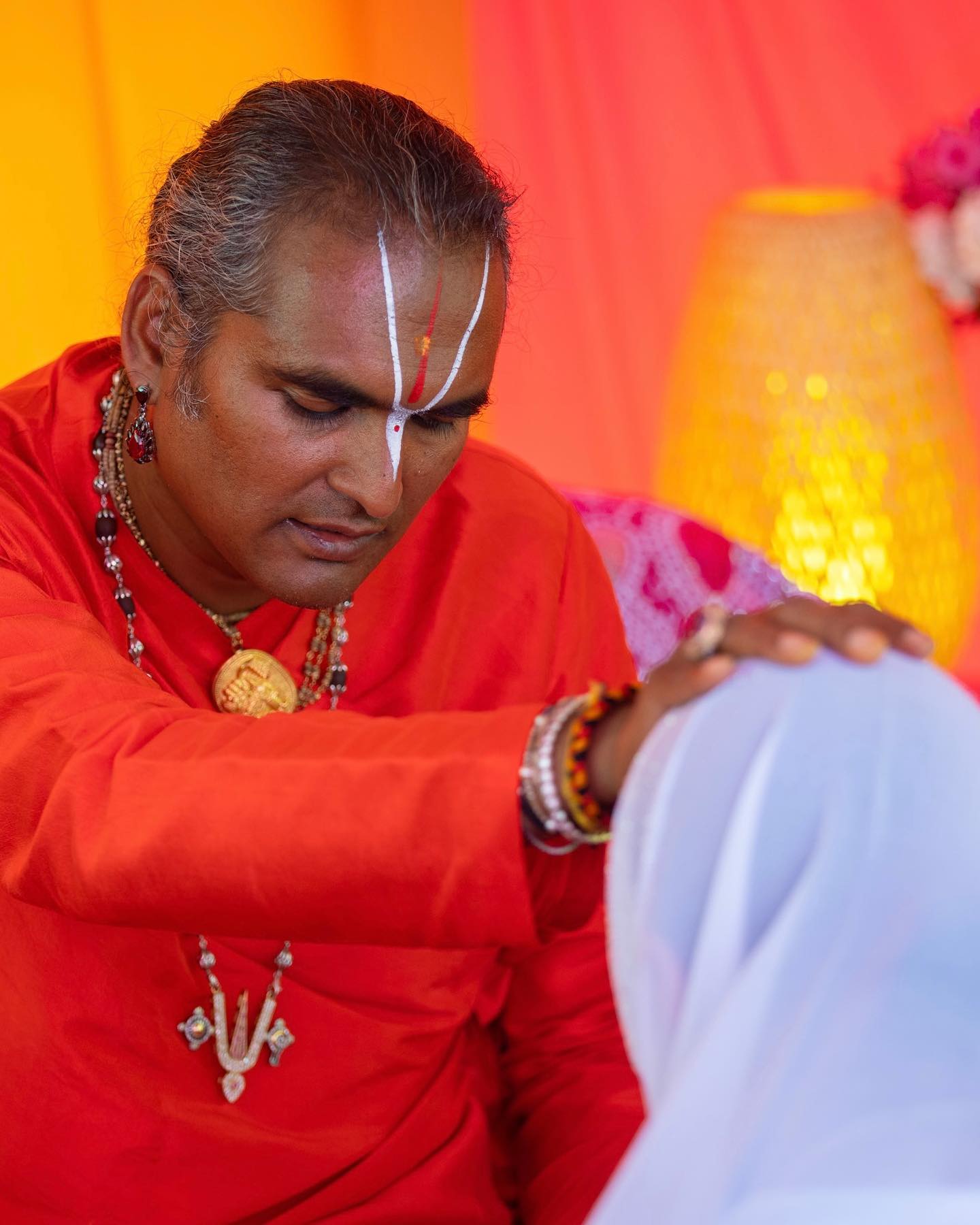
Becoming a devotee is not merely the adoption of a religious identity, a change in outer habits, or an affiliation with a spiritual community. In the dharmic understanding, devotion begins with the quiet but persistent longing of the atma, the soul, for its source. This longing may appear as dissatisfaction with ordinary success, a hunger for meaning, a deep attraction to prayer, or an unexplained tenderness toward the Divine. It is often subtle at first, but it gradually reorders a person’s priorities and reveals that human life is not exhausted by material ambition, social recognition, or intellectual certainty.
The path of bhakti is grounded in the recognition that the human being is more than the body and more than the changing patterns of the mind. The body grows, ages, and passes through conditions; the mind moves through desire, fear, memory, judgement, and expectation. The atma, however, is understood as the deeper spiritual self, the enduring principle of consciousness that seeks union, clarity, and love. In this sense, devotion is not emotionalism. It is a disciplined reorientation of the whole person toward truth, humility, remembrance, and loving service.
Within Hindu spirituality, especially in the bhakti tradition, devotion is often described as a relationship with the Divine. This relationship may take many forms: reverence for Narayana, love for Krishna, surrender to Rama, worship of Devi, adoration of Shiva, contemplation of the formless Brahman, or service to the Divine present in all beings. The dharmic traditions have long preserved this plurality of approach. Hinduism, Buddhism, Jainism, and Sikhism differ in theology, practice, and vocabulary, yet they share a serious concern for self-mastery, compassion, ethical conduct, inner transformation, and liberation from ignorance. A mature understanding of devotion therefore strengthens unity among dharmic traditions rather than narrowing the heart into sectarian pride.
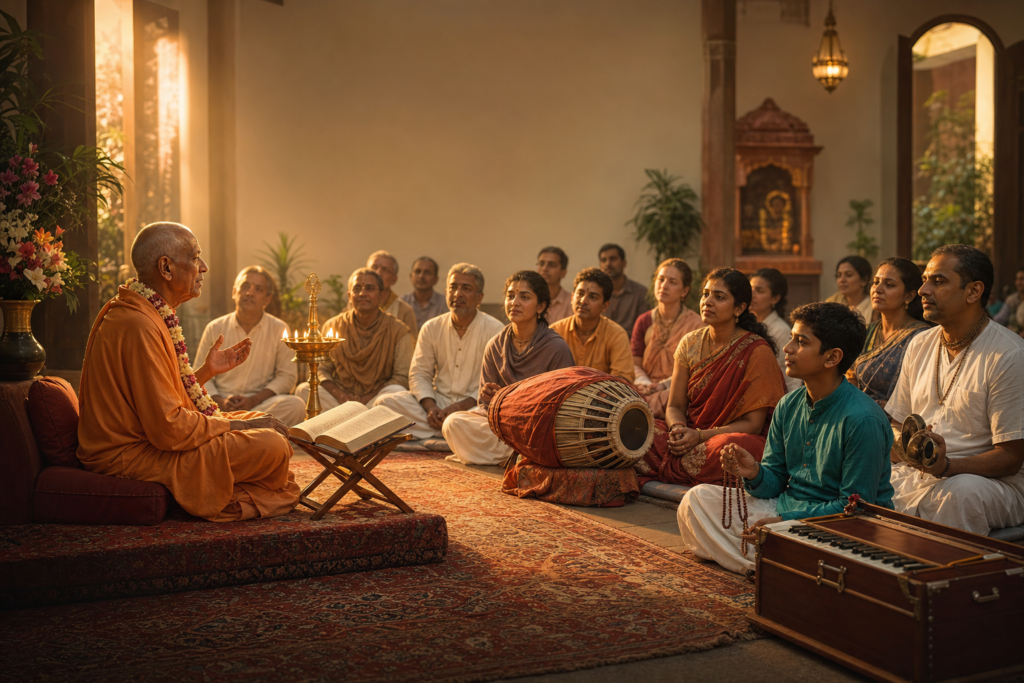
The longing of the soul often becomes clearer through encounter. A person may encounter a guru, a scripture, a temple atmosphere, a kirtan, a mantra, a moment of silence, or the example of a sincere practitioner. Such encounters can disturb habitual assumptions. They may reveal that spiritual life is not a decorative addition to worldly life, but a serious path that asks for discipline, humility, and transformation. Many devotees describe this moment as a recognition rather than a conclusion. Something within the heart responds before the intellect has fully organized the experience.
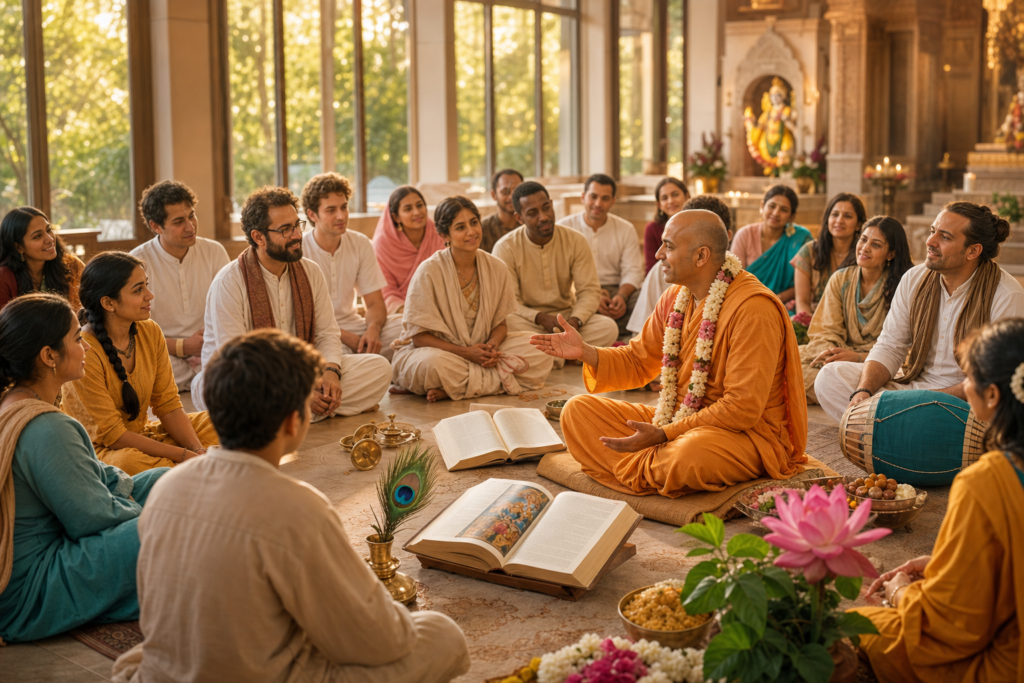
The role of the guru is central in many bhakti lineages, but it must be understood with philosophical care. The Sanskrit word guru is traditionally associated with the dispelling of darkness, meaning the removal of ignorance. A true spiritual guide does not merely offer comfort or personality-based attraction. The guru principle reflects back the aspirant’s potential as well as the obstacles that prevent its realization. Pride, ego, attachment, envy, restlessness, and self-deception become visible on the path because devotion is not meant to leave the personality untouched. It is meant to purify perception and awaken the heart.
In practical terms, the guru-disciple relationship is built through trust, study, practice, observation, and ethical responsibility. Trust does not mean the suspension of discernment; rather, it grows through consistency, integrity, and lived experience. A disciple learns to distinguish passing emotion from deeper intuition, personal preference from dharma, and spiritual aspiration from egoic fantasy. This is why the guru-shishya tradition has historically emphasized patience. Transformation becomes stable only when insight is tested by conduct.
The Bhagavad Gita provides one of the clearest philosophical foundations for the life of devotion. It teaches that the embodied being is not ultimately reducible to the body, and it compares the soul’s passage through bodies to the changing of worn-out garments. This teaching is not intended to produce indifference toward life. Rather, it gives life a larger horizon. If the human being is the atma, then the purpose of life cannot be limited to consumption, status, or temporary pleasure. Life becomes a field for self-knowledge, karma yoga, devotion, and the gradual purification of intention.
The Gita also presents the Divine as both immanent and transcendent. Narayana, Krishna, or the Supreme Reality is not merely distant from the world; the Divine is also present as the indwelling source of life. This vision gives bhakti its distinctive depth. Devotion is not only directed upward toward a heavenly goal, nor only inward toward private experience. It is also expressed outward through conduct, speech, food, relationships, work, and service. When the Divine is recognized as present in all beings, devotion naturally becomes ethical.
A devotee’s relationship with God is therefore one of love, reverence, and service. The language of servitude in bhakti should not be confused with passivity or humiliation. It indicates the surrender of egoic self-importance before the sacred. In daily life, this surrender may appear as the willingness to speak truthfully, to forgive, to restrain harmful impulses, to serve without applause, to remember God during difficulty, and to place dharma above convenience. The devotee seeks freedom not by asserting separateness, but by aligning the will with the Divine.
The question of why human beings are here on Earth is answered in many ways across dharmic philosophy. In the bhakti framework, earthly life is often understood as an opportunity to remember the forgotten relationship with God. The world is not dismissed as meaningless; it becomes a training ground. Family life, work, grief, success, failure, illness, friendship, and conflict all become occasions for self-observation. Prakriti, material nature, provides the field in which the embodied being learns the consequences of attachment and the liberating power of devotion.
The goal of devotion is the restoration of a loving relationship with the Divine. This does not require rejection of reason, culture, or social responsibility. It requires purification of motive. A person may chant, worship, meditate, study scripture, perform seva, observe vegetarian discipline, or participate in temple life, yet the inner question remains essential: is the practice reducing ego and increasing love? Without this question, ritual can become mechanical. With this question, even simple acts become spiritually luminous.
Spiritual practice gives devotion structure. Mantra japa trains attention and purifies speech. Kirtan brings the heart into collective remembrance. Puja disciplines the senses through beauty, fragrance, sound, gesture, and offering. Study of the Bhagavad Gita and other sacred texts gives intellectual clarity. Meditation steadies the mind. Seva transforms action into service. Vegetarian discipline, when adopted with sincerity, cultivates non-violence, restraint, and sensitivity toward life. These practices are not isolated techniques; together they reshape the practitioner’s relationship with the body, mind, community, and cosmos.
For those who do not come from a Hindu background, or who are newly approaching bhakti, the richness of symbols, customs, Sanskrit terms, and temple practices may initially feel overwhelming. This is natural. A tradition that has developed over centuries cannot be absorbed instantly. The responsible approach is gradual study, respectful participation, and honest self-examination. Spiritual depth is not measured by how quickly one imitates external forms, but by how sincerely one understands their meaning and allows them to refine conduct.
Outer disciplines matter because they protect inner aspiration. Modest dress in sacred spaces, respectful conduct during worship, avoidance of intoxication, vegetarian food, and truthful speech are not arbitrary restrictions. They create an environment in which the senses become less agitated and the mind becomes more available for remembrance. Yet discipline must be joined to compassion. A devotee should not use personal vows as instruments of superiority. The purpose of discipline is purification, not social comparison.
Seva, or selfless service, is one of the most important expressions of devotion. It shifts attention from self-centered desire to the welfare of others. In temples, ashrams, homes, and communities, seva may take the form of cooking, cleaning, teaching, organizing, listening, caring for guests, preserving sacred spaces, or helping those in distress. The spiritual value of seva lies not only in the visible task but in the inner offering. When service is performed without constant demand for recognition, the heart becomes less contracted and more capable of love.
The life of a devotee also requires discernment about loyalty and openness. A practitioner may follow a chosen guru, lineage, mantra, or form of worship with deep focus, while still honoring other dharmic paths. This balance is essential for spiritual maturity. Focus prevents superficial wandering; respect prevents fanaticism. The dharmic world has always included diverse temperaments and methods, from bhakti and jnana to karma yoga, meditation, renunciation, household discipline, temple worship, philosophical inquiry, and social service. The chosen path becomes fruitful when it deepens humility rather than hostility.
Devotion is also emotionally demanding. It exposes the places where the heart is defended. Many people approach spiritual life seeking peace, but they soon discover unresolved anger, fear, grief, pride, and insecurity. This discovery should not be viewed as failure. It is part of inner transformation. The mind’s negativity must be seen before it can be offered, purified, and transcended. Bhakti does not deny human vulnerability; it gives vulnerability a sacred direction.
The true self, in the language of many dharmic traditions, is not defined by jealousy, hatred, judgement, or anger. These states arise in the mind, but they do not constitute the deepest identity. The devotee’s work is to remember this truth repeatedly. Every moment of irritation becomes an opportunity to practice patience. Every experience of pride becomes an invitation to humility. Every attachment becomes a lesson in surrender. Every act of kindness becomes a small restoration of the soul’s natural dignity.
In contemporary life, the path of devotion has particular relevance. Modern society often rewards speed, consumption, self-display, and fragmentation. Bhakti offers a counter-discipline: remembrance instead of distraction, service instead of self-absorption, gratitude instead of entitlement, and sacred relationship instead of isolation. It does not require withdrawal from the world for everyone. Rather, it asks that worldly life be reorganized around dharma. Work, family, education, and civic responsibility can all become part of spiritual practice when performed with clarity and offering.
Becoming a devotee, then, is best understood as a lifelong movement from ego-centered living toward God-centered awareness. It begins with longing, matures through guidance, stabilizes through practice, and expresses itself through love. It is not completed by a label, ceremony, or public identity. It is proven slowly through conduct, resilience, humility, and the ability to see the Divine presence in others. When one person undertakes this transformation sincerely, the benefit is not private alone. Families, communities, and society are touched by the presence of a more disciplined, compassionate, and spiritually grounded human being.
The deepest promise of bhakti is that love is not merely an emotion produced by the mind. It is the nature of the soul when the coverings of ego, fear, and ignorance begin to fall away. To become a devotee is to live in search of that love, to practice it when it is difficult, to protect it through discipline, and to share it through service. In that sense, devotion is not an escape from life. It is a more truthful way of inhabiting life, with the atma turned steadily toward the Divine.
Inspired by this post on Bhakti marga blog.








Leave a Reply
You must be logged in to post a comment.