Across the Hindu temple landscape, red does not simply decorate; it communicates. Within sanctums and courtyards, on banners, flowers, powders, and cloth, red functions as a dense symbolic language that evokes Shakti (dynamic divine energy), auspicious beginnings (mangala), vigor (rajas), and focused devotion (bhakti). The result is an atmosphere charged with spiritual vitality, where sensory cues, scriptural memory, ritual protocols, and community practice converge.
In Hinduism, red is foremost the color of Shaktithe enlivening, protective, and creative power that animates the cosmos. It binds together the sensorial and the sacred: attention is awakened by the hue’s intensity; intention is grounded by ritual touchmost visibly through kumkum or sindoor placed upon the deity and the devotee. The color thereby becomes both an offering and an imprint, aligning inner aspiration with outer worship.
Classical sources support this symbolism. Agamic manuals and temple liturgical traditions map colors to deities, qualities, and ritual aims; Shakta Tantras explicitly associate red with rajas and the kinetic presence of the Goddess. Puranic and poetic descriptions frequently portray goddessesDurga, Kali, Tripura Sundarias adorned with red garments or flowers, a visual shorthand for protective ferocity and compassionate power. Vedic literature also preserves cognate color termssuch as aruṇa and rohitathat evoke dawn, flame, and vital force.
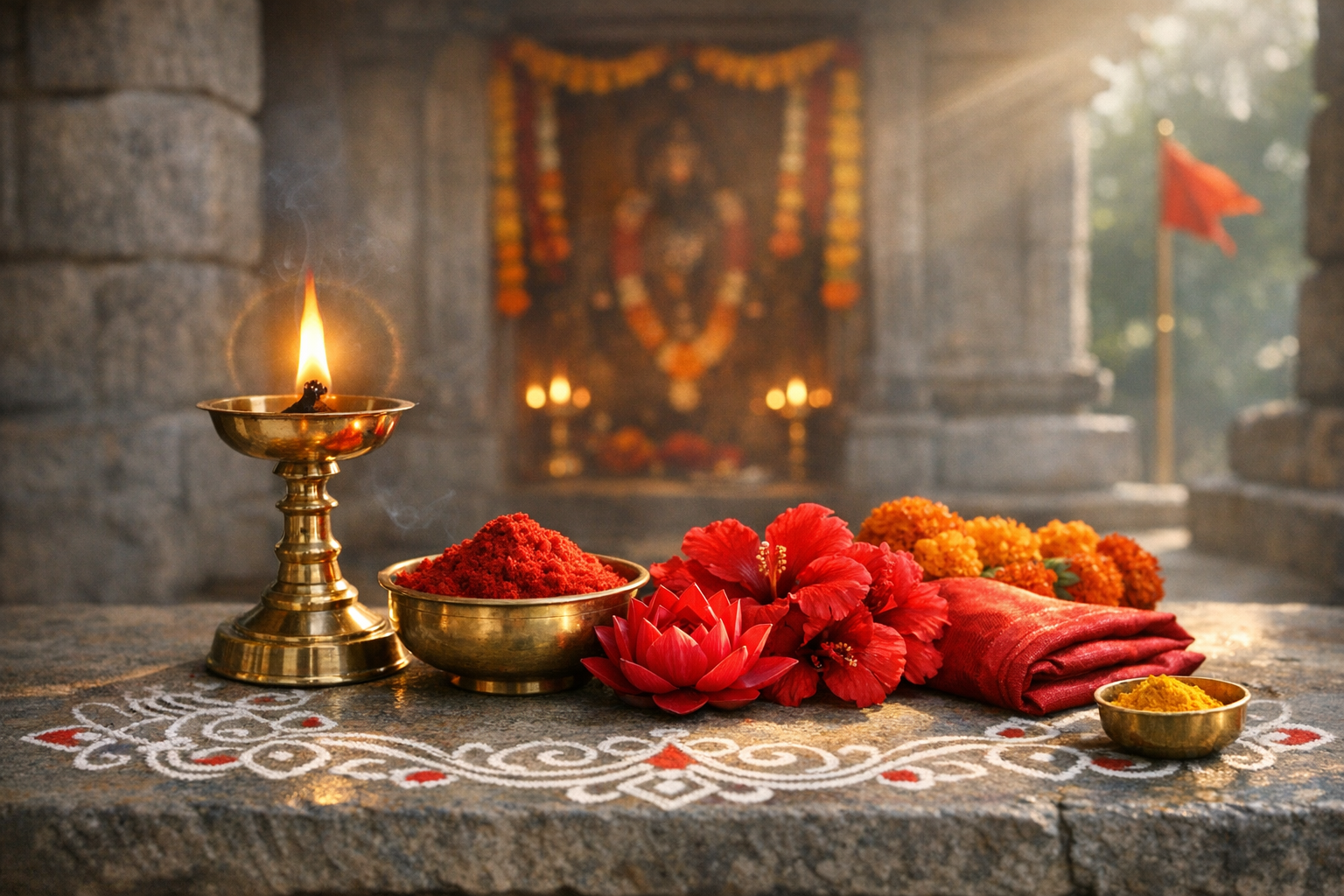
Temple practice operationalizes these meanings through materials. Two prominent red offerings are kumkum and sindoor. Kumkum is traditionally prepared by treating turmeric with alkaline substances (e.g., slaked lime), transforming curcumin’s golden hue into a deep red; sindoor, historically vermilion (mercury sulfide), is a brilliant scarlet used especially in North Indian contexts. Many temples today prefer plant-based or mineral-safe formulations to honor both sanctity and well-being. When applied as tilak or bindi, these powders link the devotee’s ajna region or forehead with a living pledge of devotion and receptivity.
Red flowers intensify this visual theology. Hibiscus (especially for Durga and Kali), red lotus, and seasonal red blossoms are common in archana and pushpanjali. Their chromatic saturation completes the sensory field established by lamps (deepa) and incense, aligning sight, scent, and gesture. In Shakta shrines, kumkumarchanaoffering petals and kumkum while reciting names of the Goddessmakes red a rhythmic pulse through mantra, motion, and color.
Vestments and textiles reinforce the message. A lal chunri (red scarf) or sari offered to the Goddess, red threads tied on sacred trees or around wrists, and red dhwaja (flag) raised on the dhwajasthambha each signal protection, vow-keeping, and auspicious continuity. In many regions, the temple flag or canopy bears warm reds or allied hues to invoke victory (vijaya) and steadfast guardianship.
Festivals render the symbolism unmistakable. During Navaratri and Durga Puja, red predominates in alankara, garlands, and garments, celebrating the Goddess’s protective grace. In Bengal’s sindoor khela on Vijayadashami, married women ceremonially apply sindoor to each other and to the Goddess, ritually sharing auspiciousness. A popular Hanuman tradition explains the use of sindoor by recalling how Hanuman once smeared his body with it to ensure Rama’s well-beinghence the offering of vermilion at Hanuman shrines.
Regional practices provide rich textures. In Tamil Nadu and elsewhere in South India, Amman temples feature vibrant kumkumarchanai, and red ochre (kaavi/geru) historically outlined thresholds and select temple surfaces to signal sacred boundaries. In Assam’s Kamakhya, the annual Ambubachi Mela engages red cloths to symbolize earth’s fertility, reflecting theological associations of the Goddess with cyclical creativity. Such usages differ in detail yet consistently affirm red as a sign of life-force and blessing.
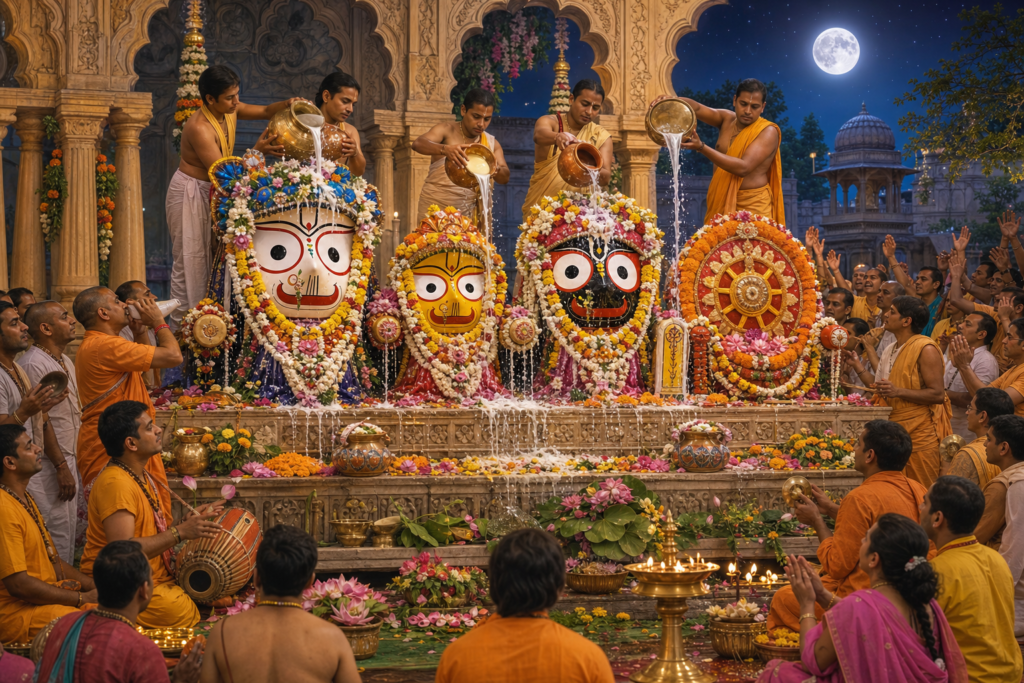
Temple aesthetics and architecture also steward the hue. While the garbhagriha remains architecturally restrained to preserve contemplative focus, red enters through seasonal alankara, toranas, rangoli/kolam patterns, textiles, and select abhisheka media such as rakta-chandana (red sandal paste). These applications balance visual potency with devotional sobriety so that color amplifies, rather than distracts from, darshan.
Yogic frameworks illuminate a metaphysical rationale. The muladhara chakra, often depicted as red, anchors embodiment and stability; kundalini Shakti rests coiled here until awakened through sadhana. Red, then, signifies both groundedness and ignitionakin to agni (sacred fire) that transforms offerings into subtle grace. In worship, red channels this ignition toward protection, initiative, and righteous action.
Psychophysiology adds a complementary insight. Empirical studies consistently find that red captures attention and increases alertness. In sacred space, this attentional liftpaired with mantra and ritual sequencecan deepen one-pointedness (ekagrata). The flame of arati mirrored by red flowers and cloth creates a coherent field of cues that prime participants for presence, reverence, and resolve.
Nuance matters: while red symbolizes Shakti and auspicious onset, allied colors play parallel roles. Saffron and kesari tones, for instance, signify renunciation, valor, and sacred aspiration across many dharmic settings. In practice, temples interweave these warm hues to articulate courage, purity, and the will to servewithout reducing any color to a single, fixed meaning.
Sectarian and regional traditions calibrate color differently. Shakta temples lean strongly into reds; many Vaishnava shrines emphasize white and yellow (purity and prosperity) for Vishnu and Lakshmi; Shaiva traditions often highlight white (ash/vibhuti) for Shiva’s ascetic luminosity. Such variation is not contradiction but complementaritya multi-hued expression of dharmic unity in diversity.
A dharmic, ecumenical perspective further reveals shared resonances. In many Buddhist contexts, especially Vajrayana, maroon and red mark disciplined vitality and appear prominently in thangka iconography (e.g., Amitabha’s red). Jain lay worship frequently employs saffron and kumkum to honor footprints or symbols, celebrating auspiciousness while monks preserve renunciatory simplicity. Sikh tradition venerates kesari (saffron) in the Nishan Sahib and often embraces warm hues, including red, in cultural celebrations such as weddings. Across Hinduism, Buddhism, Jainism, and Sikhism, warm reds and saffrons thus signify courage, devotion, auspicious passage, and communal continuityshared values within the broader dharmic family.
Stewardship and safety are a contemporary priority. Given historical use of mercury-based vermilion, many temples and households now opt for non-toxic, plant-derived kumkum or mineral-safe alternatives. This aligns with ahimsa and responsible care for devotees and the environment. Clear labeling, artisanal sourcing, and community education help preserve sanctity while minimizing harm.
For visitors and diaspora communities, several practices sustain meaning: receive or apply kumkum or tilak reverentially; offer red flowers appropriate to the deity (hibiscus for Shakti shrines is common); contribute a red cloth or dhwaja where customary; and observe local etiquette about powders, textiles, and festival-specific colors. Respecting regional protocols ensures that color remains a bridge to shared devotion rather than a source of confusion.
Ultimately, red in Hindu temple worship is a living hermeneutican intelligible sign that unites theology (Shakti), ritual (tilak, archana, alankara), psychology (attention, ardor), and community (festivals, vows, protection). It is not merely seen; it is enacted, felt, and remembered. In dialogue with allied hues across dharmic traditions, red continues to inspire courage, consecrate beginnings, and remind communities that devotion is an energized, auspicious commitment to truth and care.
Inspired by this post on Hindu Blog.