-
Overcoming Egoism and Lethargy in Kali-Yuga: Bhagavad Gita Guidance for Humility and Seva

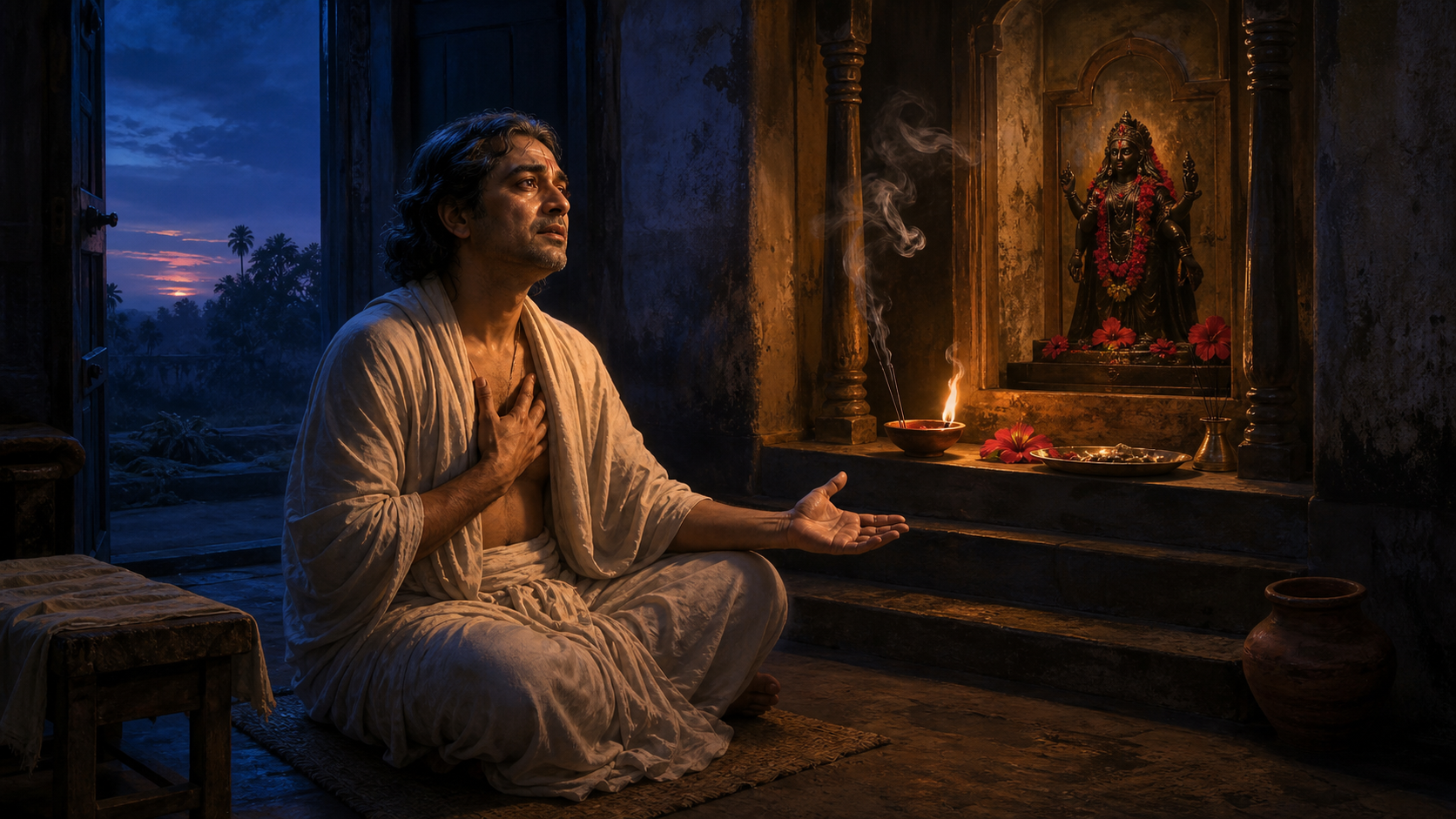
Egoism and lethargy are two subtle forces that derail spiritual progress in Kali-Yuga. Drawing on Bhagavad Gita teachings and parallel insights from Buddhism, Jainism, and Sikhism, this article explains how false ego (ahankara) reframes practice around I and mine, while tamasic inertia fosters delay and neglect. It then offers an integrated, practical program that combines…
-
The Eleven Forms of Goddess Kali: Fierce Compassion, Iconography, and Living Devotion

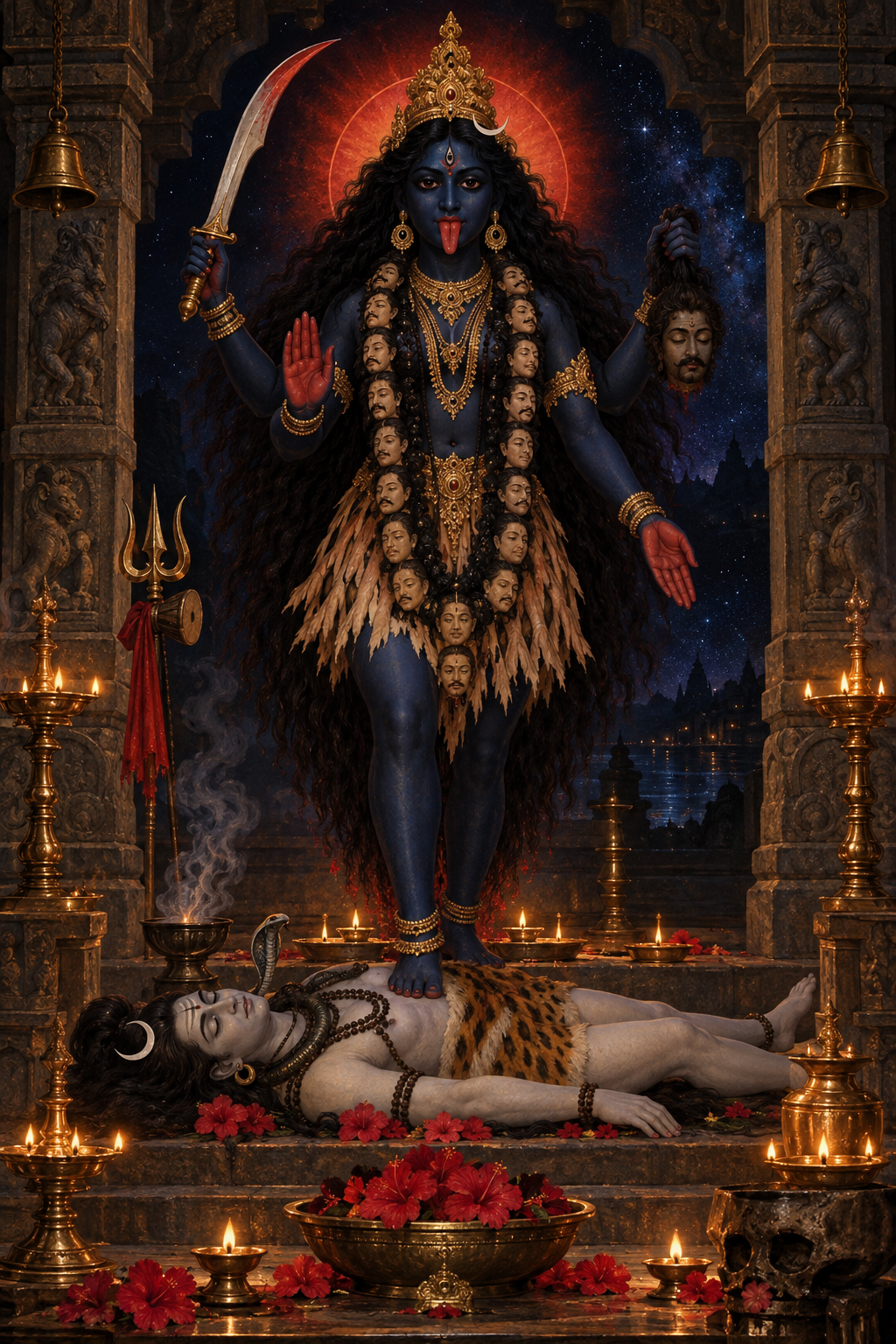
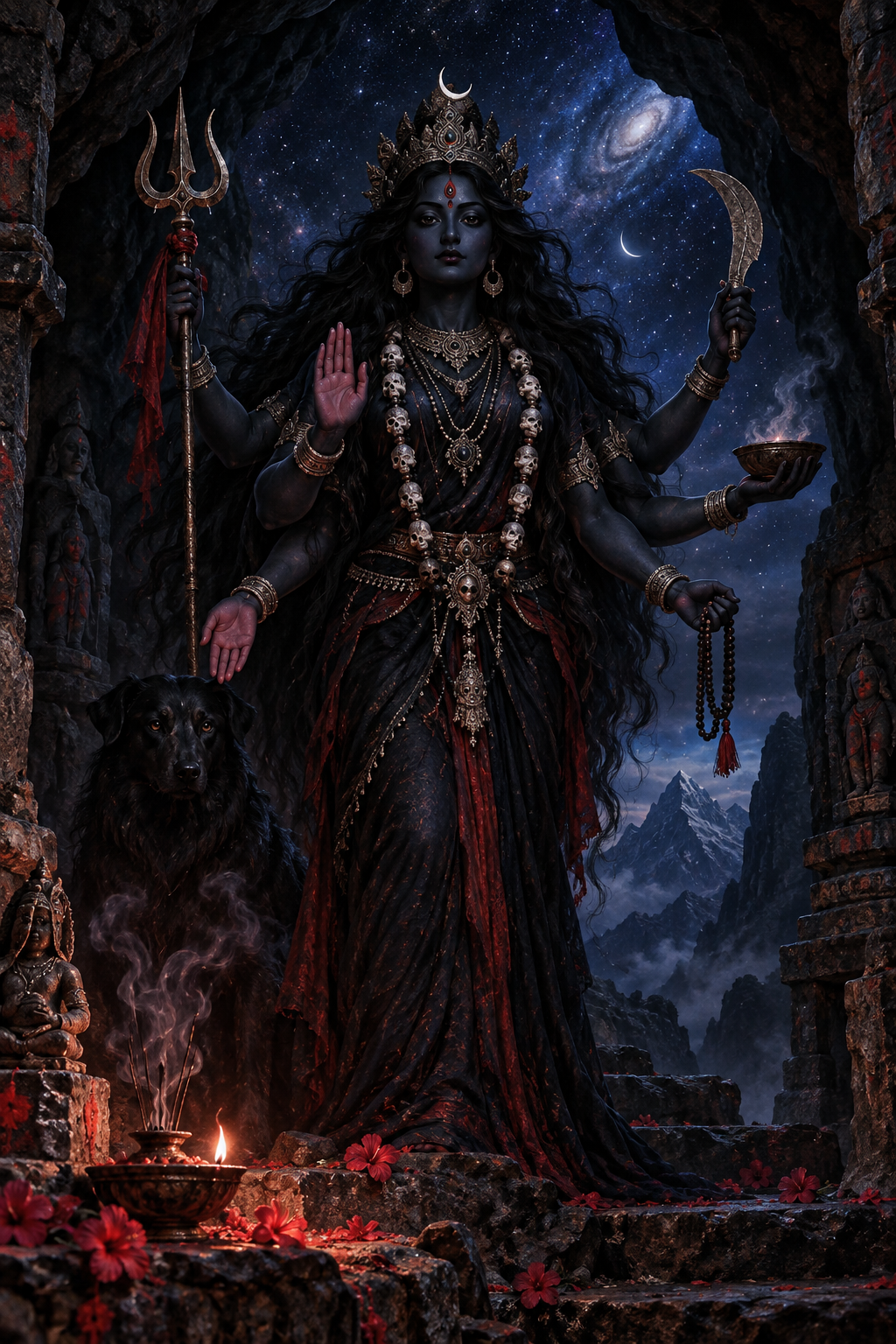
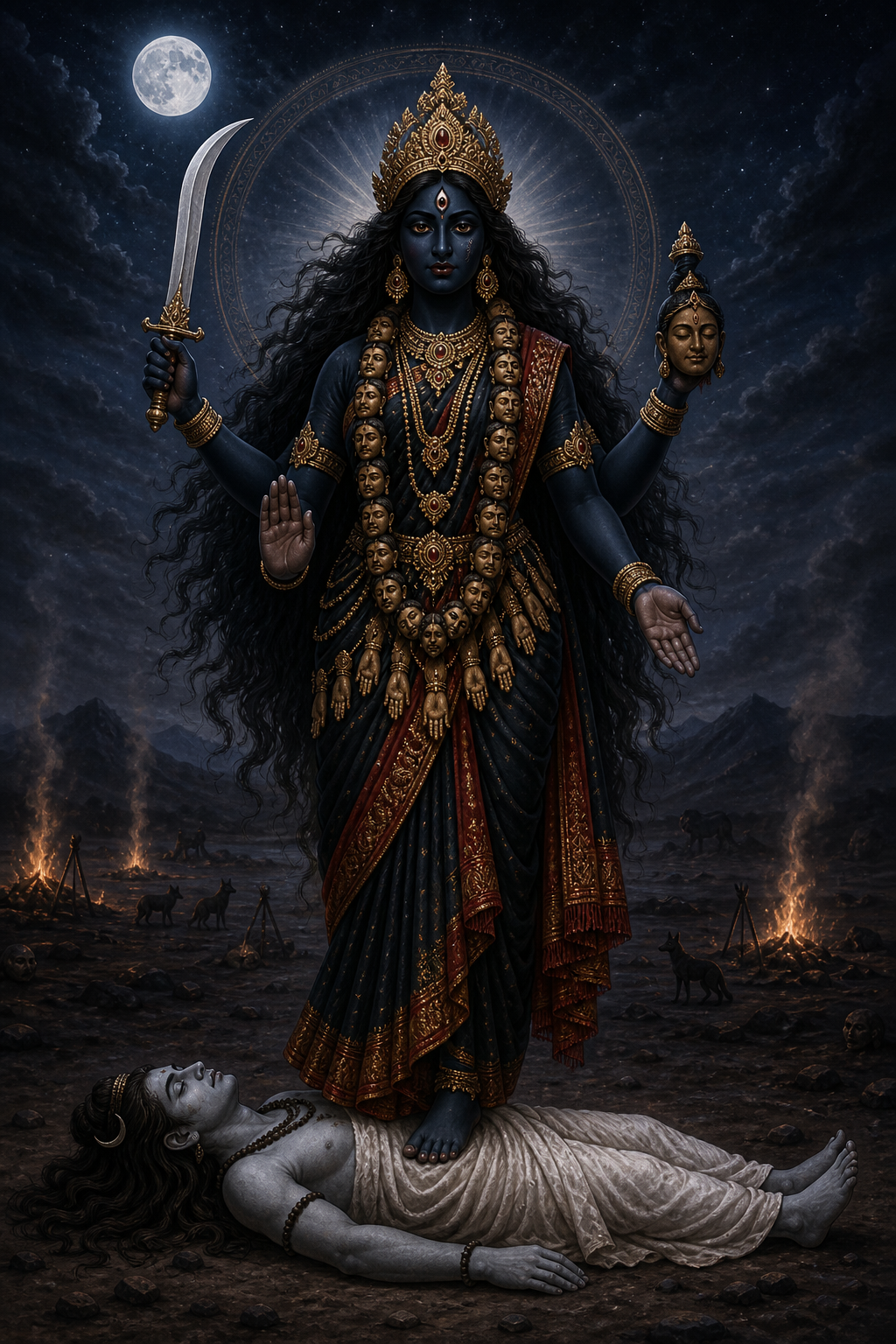
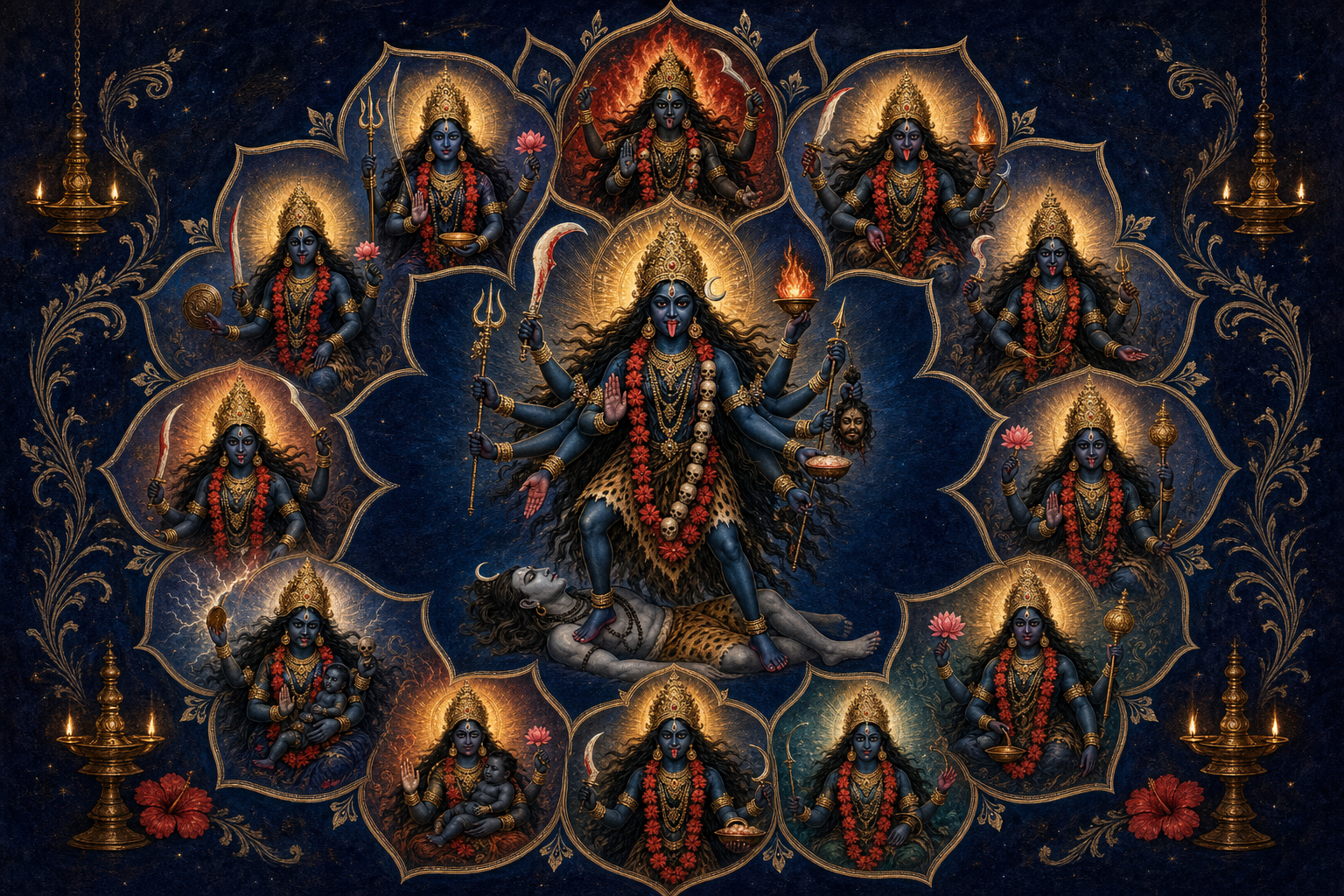
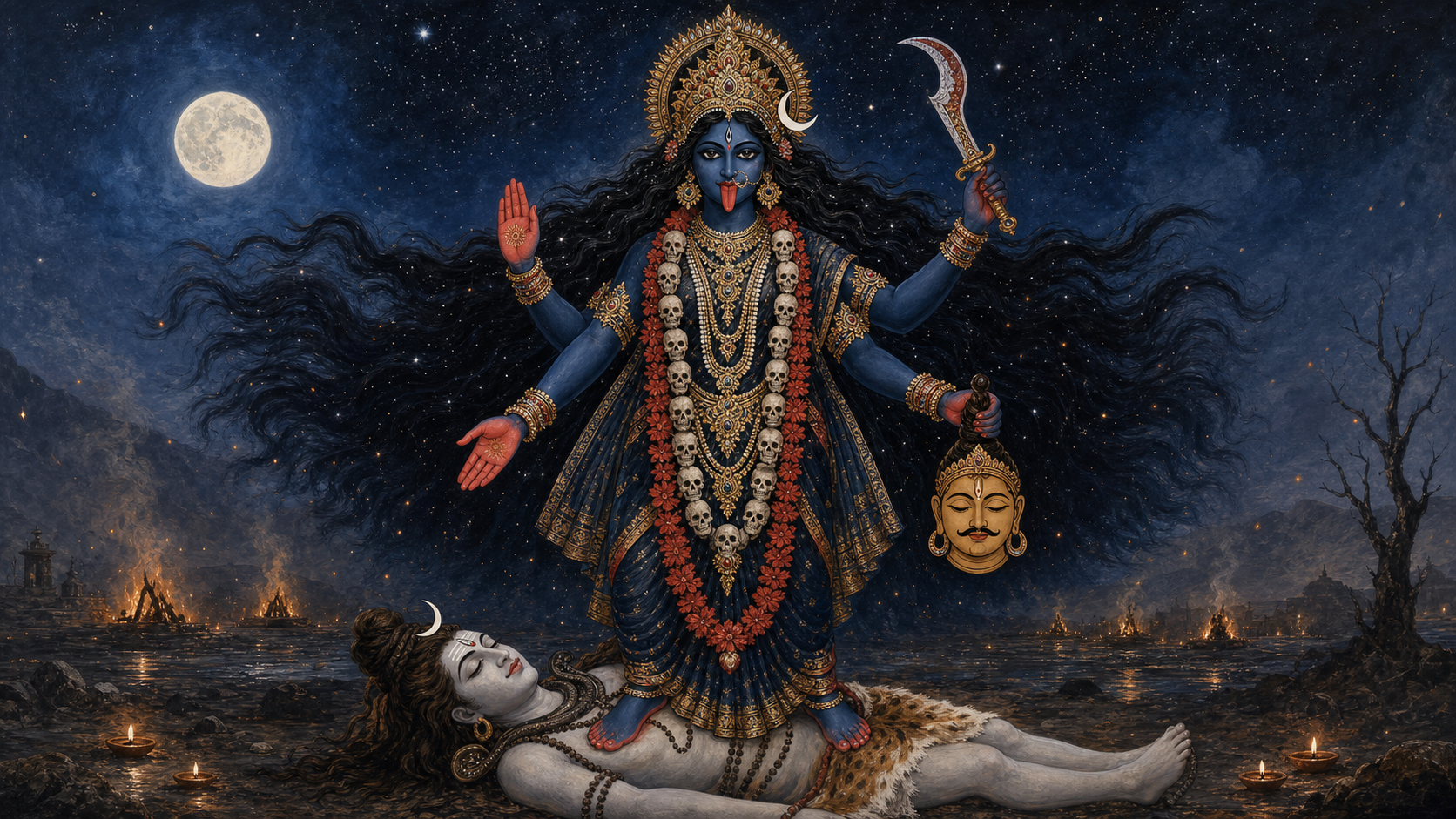
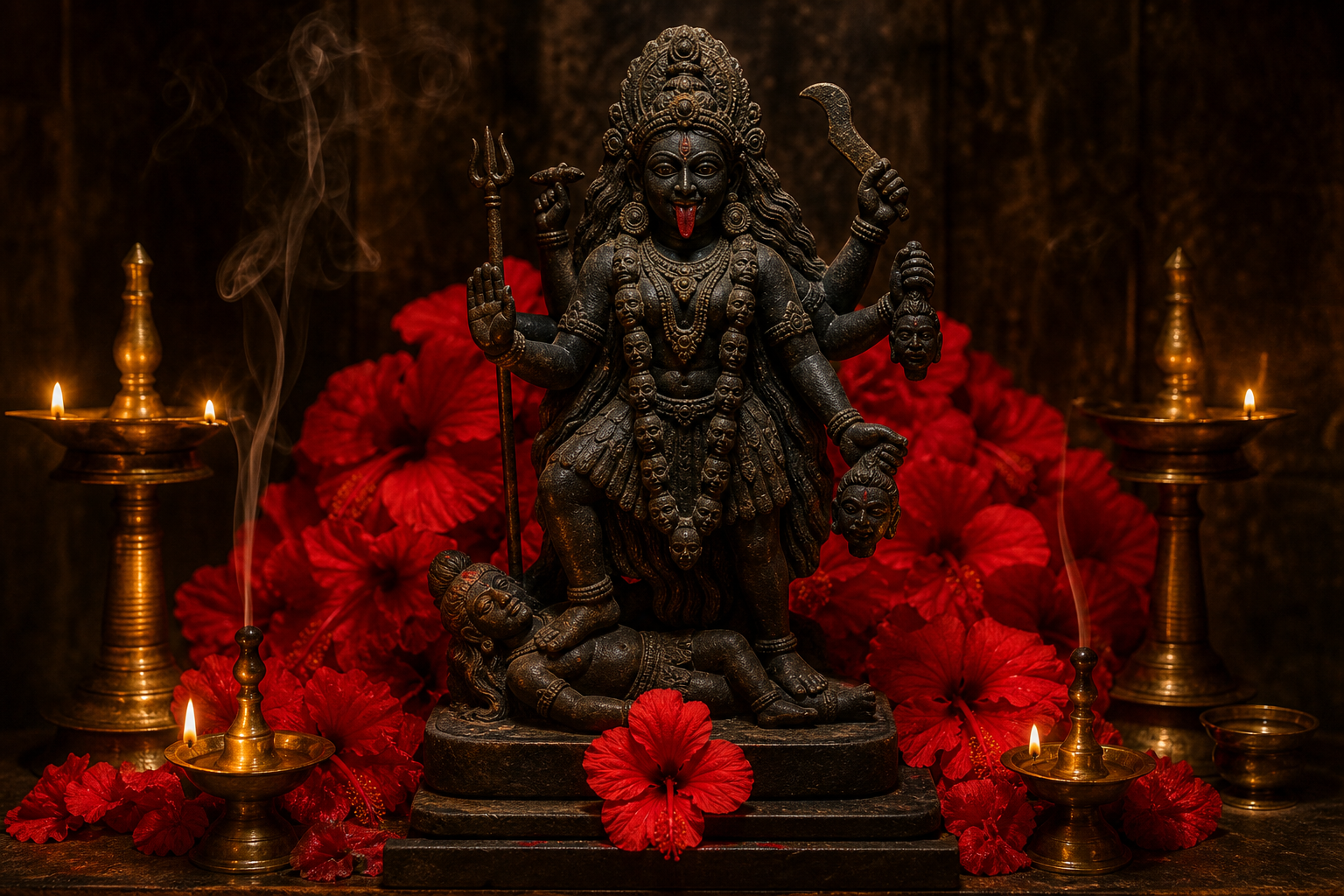
This article explores the eleven forms (Ekadasha) of Goddess Kali as preserved in Bengali and eastern Indian Shakta traditions. It situates each form—Adya, Dakshina, Shyama, Bhadra, Smasana, Raksha, Siddha, Guhya, Hansa, Bhima, and Chamunda—within clear iconography, ritual practice, and philosophical meaning. Readers learn how the Goddess embodies both gentle reassurance and fierce compassion, guiding household…
-
Swarnakarshana Bhairava: Guardian of Gold, Prosperity, and Dharma in Kali Yuga

Swarnakarshana Bhairava—“the one who draws gold”—is a Shaiva Tantric form that links prosperity to disciplined guardianship, especially relevant in Kali Yuga. The iconography, often golden and protective, signals plenitude anchored in vigilance and ethics rather than greed. Textual and ritual traditions frame this Bhairava as a kṣetrapāla of resources, aligning wealth with dharma, responsibility, and…
-
Decoding the Khatvanga: Skull Staff of Chamunda & Kali—Fearlessness, Tantra, and Transcendence

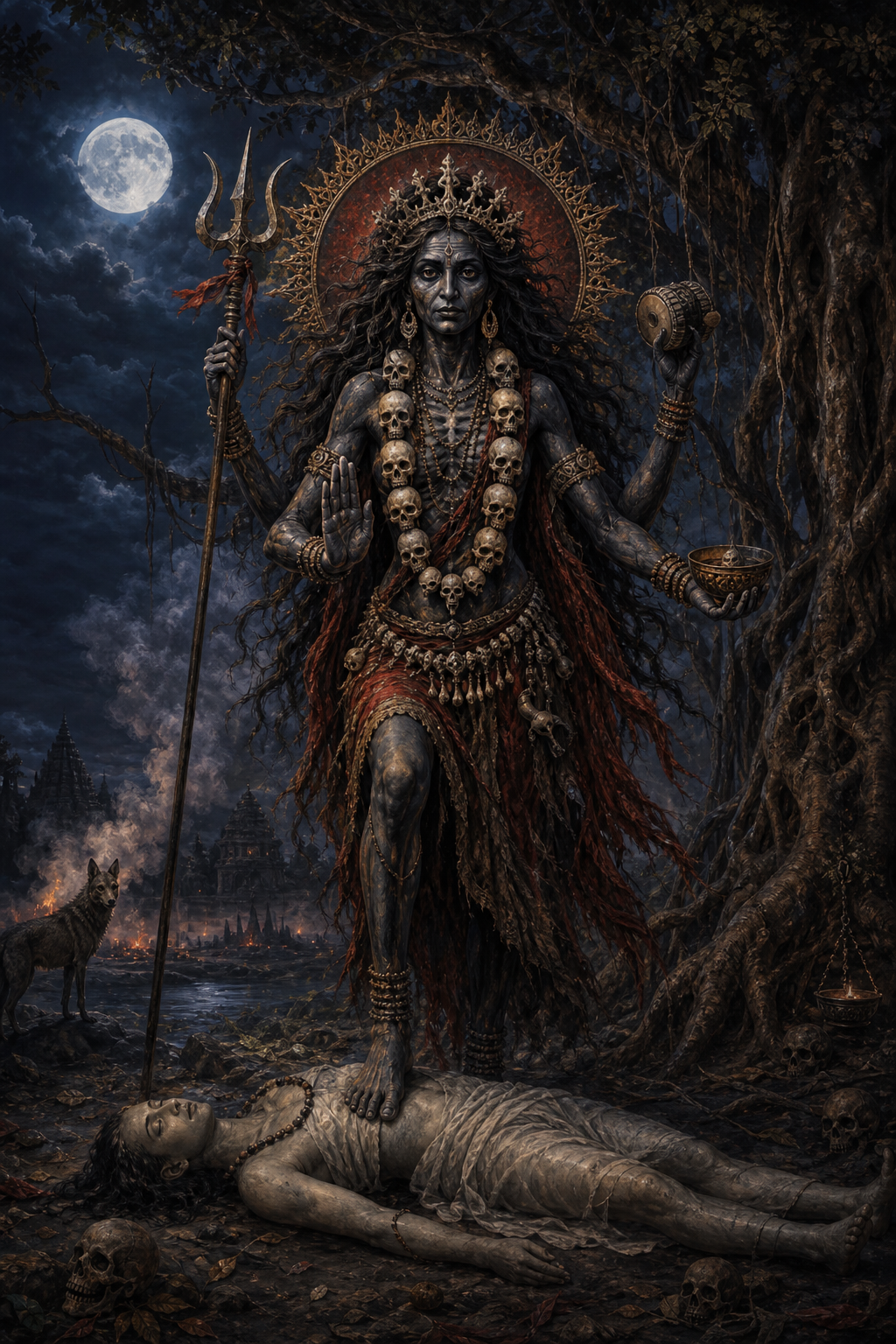
The khatvanga—skull-staff of Chamunda, Kali, and other fierce goddesses—emerges as a precise, multilayered symbol in Hindu iconography and tantric philosophy. This long-form analysis decodes its form (skull, bone staff, damaru, banner), its cremation-ground origins, and its ethical evolution from literal bone to wood or metal in mainstream ritual spaces. It clarifies how the staff encodes…
-
Decode Shyam–Shyama: Baul Mysticism’s Bold Union of Krishna and Kali as One

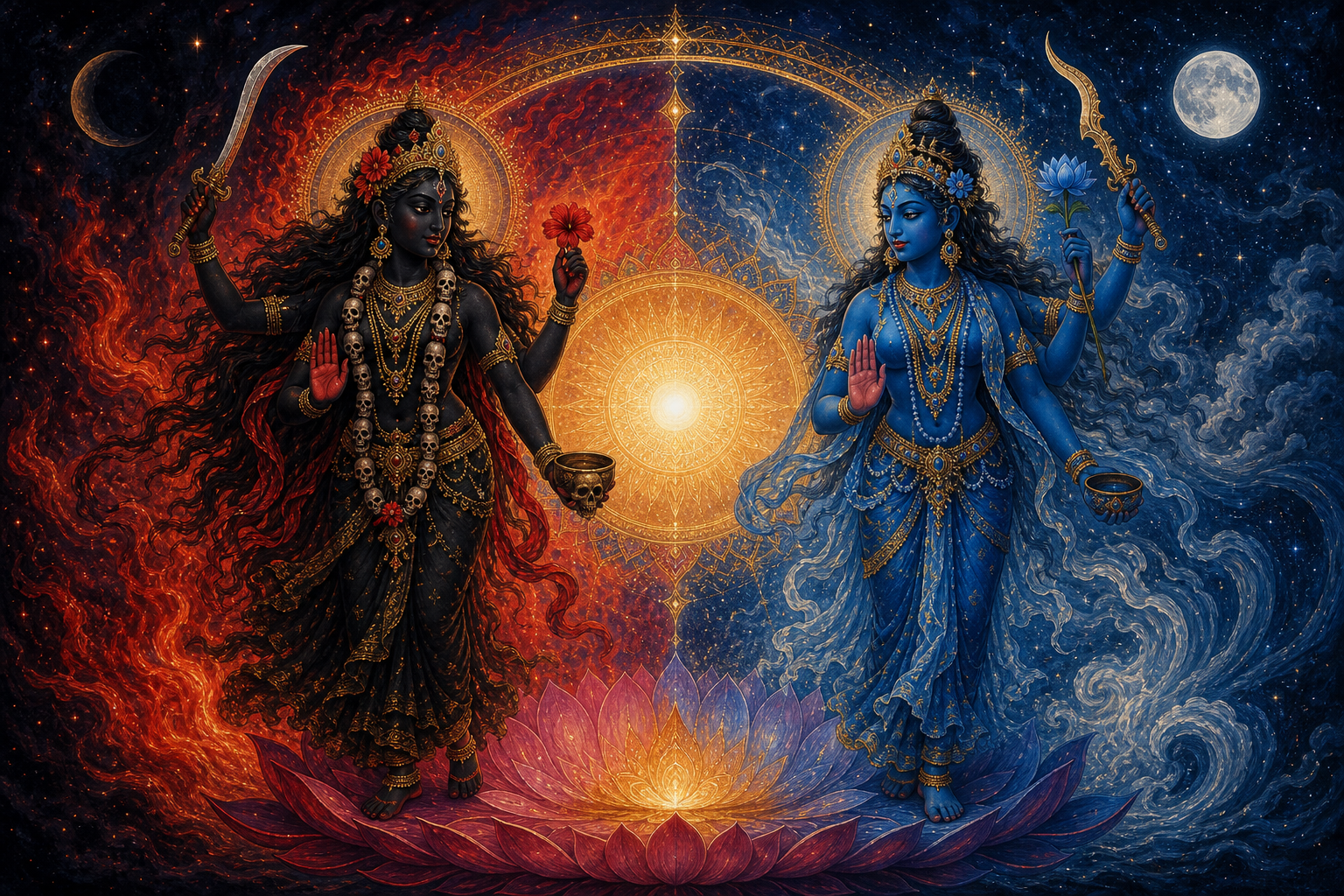
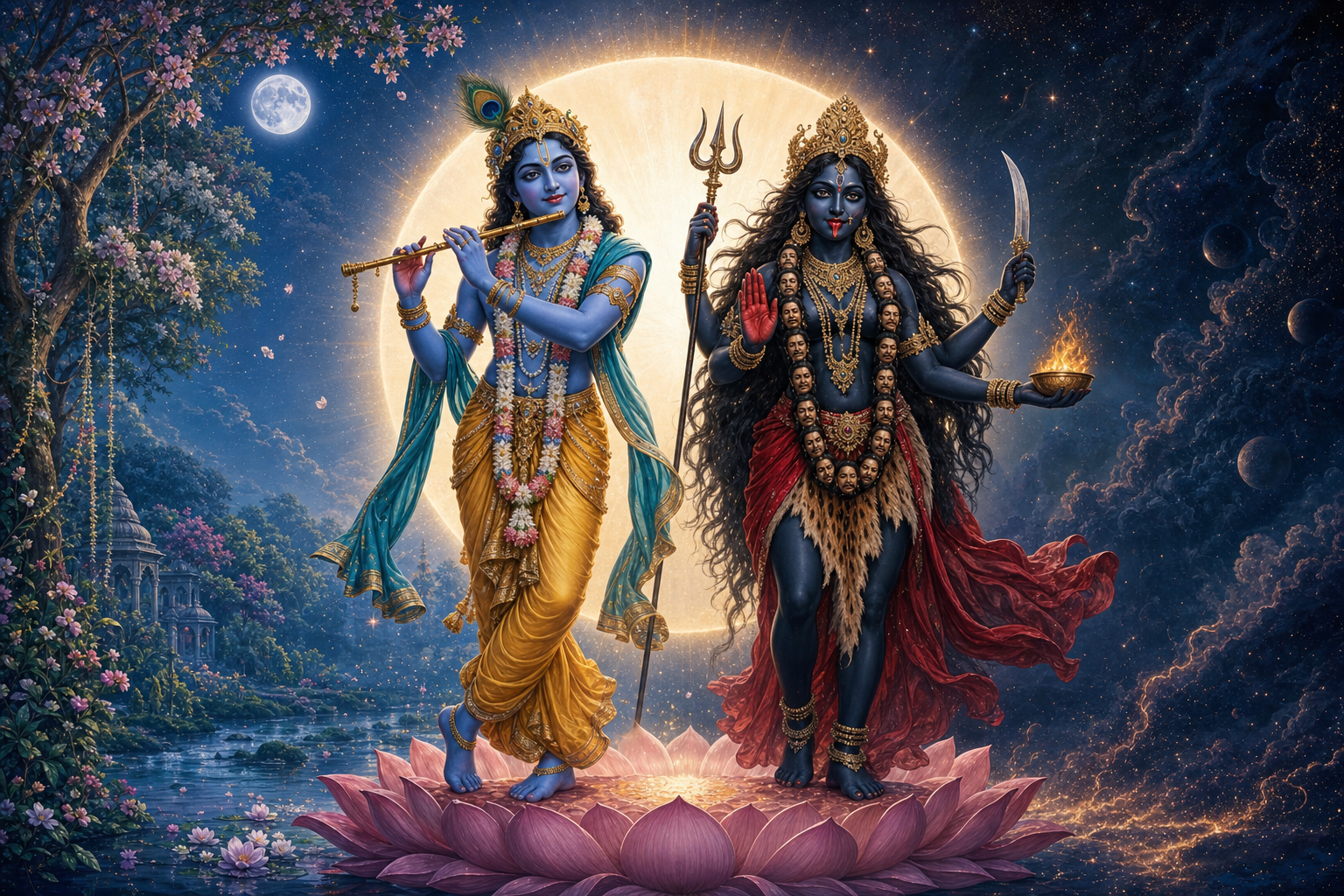
Baul spirituality in Bengal contemplates Krishna (Shyam) and Kali (Shyama) as expressions of one luminous Reality, using their shared dark hue as a theological bridge between bhakti and tantra. This essay explains how Bauls integrate Vaishnava love, Shakta insight, yogic embodiment, and Sufi interiority to honor moner manush—the innermost Beloved. It unpacks the symbolism of…
-
Why Red Rules Hindu Temples: Shakti, Auspiciousness, Ritual Power, and Color Science

Red in Hindu temples is far more than ornament; it is the visual pulse of Shakti, auspiciousness, and energized devotion. This article explains how scriptures, Agamic traditions, and Shakta Tantras align red with rajas and protective grace, while temple practices translate meaning into materials such as kumkum, sindoor, and red flowers. It examines the role…
-
Indrajit’s Final Penance: A Riveting Study of Dharma, Filial Loyalty, and Redemption in Ramayana

This long-form analysis explores Indrajit (Meghanada) as one of the Ramayana’s most complex figures—an invincible warrior confronting a profound dharmic dilemma between filial loyalty and moral law. Anchored in the Valmiki Ramayana and enriched by regional traditions such as the Krittivasi Ramayana, it explains how the Nikumbhila sanctuary—often associated with Kali—frames his final yuddha-yajna as…
-
Bhairava as Bhudhara Atma: The Unshakable Ground of Kalika, Earth, and All Worlds

This long-form exploration clarifies Bhudharatmajaya Bhairava as the atma of Bhudhara—the conscious support of Earth and mountains—and the Adhara, the unmoving ground of charachar prakriti. It decodes the Sanskrit terms, situates Bhairava and Kalika within Tantric and Purana frameworks, and maps their complementarity across the panchabhuta and Shaiva tattvas. Temple architecture, kshetrapala guardianship, and contemplative…
-
Dhumavati and Shiva Unveiled: Origin Myths, Smoke-Clad Symbolism, and Transformative Wisdom

Dhumavati, the smoke-clad Mahavidya, teaches how endings and absence become gateways to discernment across the Dharmic family. This in-depth essay clarifies her origin myths, including the Sati–Shiva narratives and the Daksha yajna smoke motif, and interprets their philosophical stakes. It decodes her iconography—crow, broom, winnowing basket, cremation ground—as a curriculum in viveka and vairagya. Readers…
-
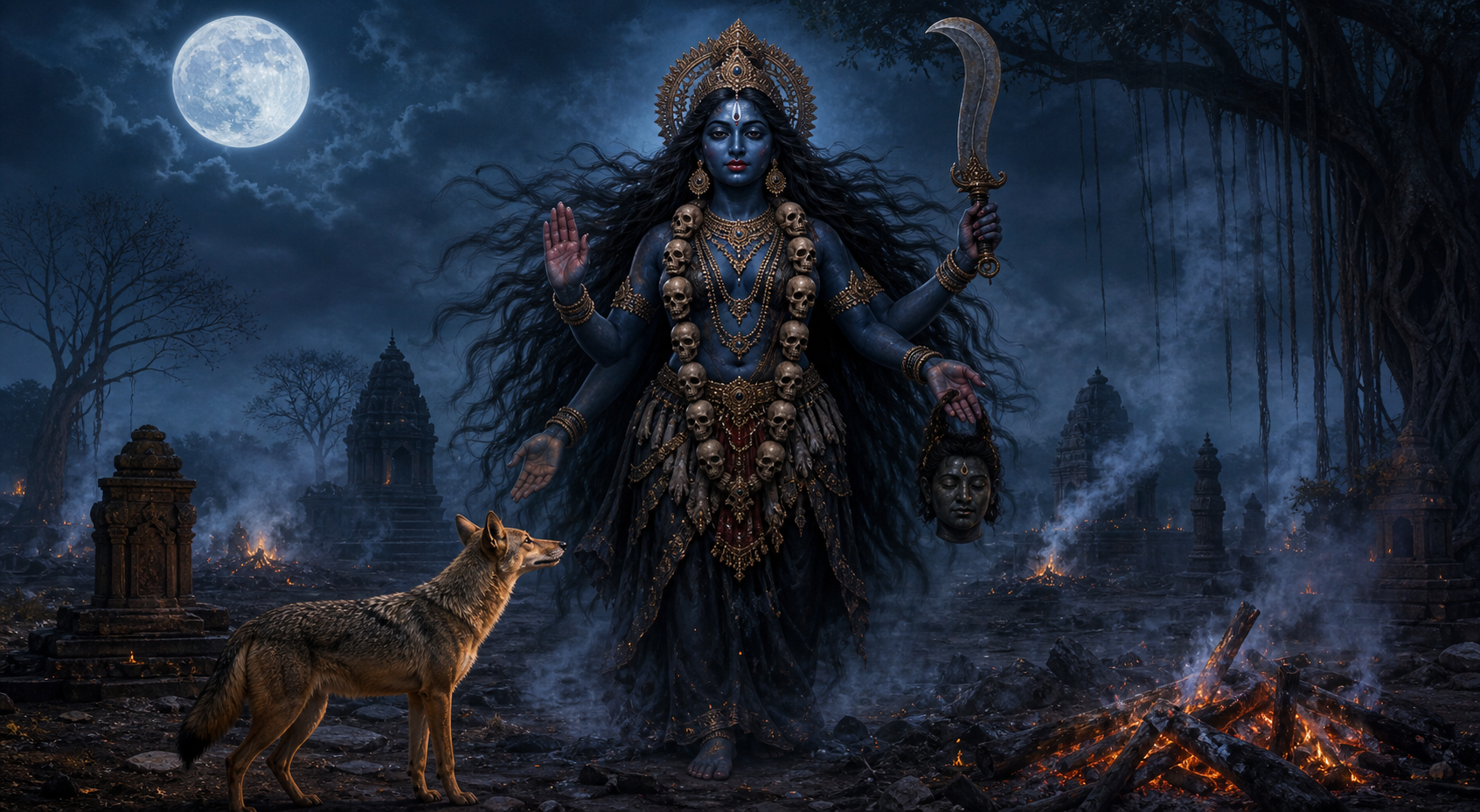
Shiva-bhog in Kali Temples: Feeding Jackals with Prasada and the Wisdom of Shakta Tantra

Shiva-bhog in Kali temples is a Shakta Tantra rite in which a consecrated share of prasada is respectfully offered to jackals, seen as attendants of the Mother and guardians under Bhairava. Rooted in classical iconography that pairs Kali and Chamunda with the smashana and its liminal beings, the practice integrates Shaiva–Shakta theology with ecological awareness.…
-
Kalachakra in Hindu Tantra: Decoding the Wheel of Time, Consciousness, and Dharmic Unity

Kalachakra in Hindu Tantra presents time as a living cycle that unifies microcosm and macrocosm, offering a precise path to the timeless ground of awareness. Drawing on the Maitri Upanishad and the Bhagavad Gita, it treats time as both measurable rhythm and doorway to the Akāla, the unconditioned. The framework integrates Vedic cosmology, pañcāṅga timing,…
-
Dashamahavidya Jayanti 2026–2027: Accurate Tithi Guide, Deep Meanings, and Home Puja Methods

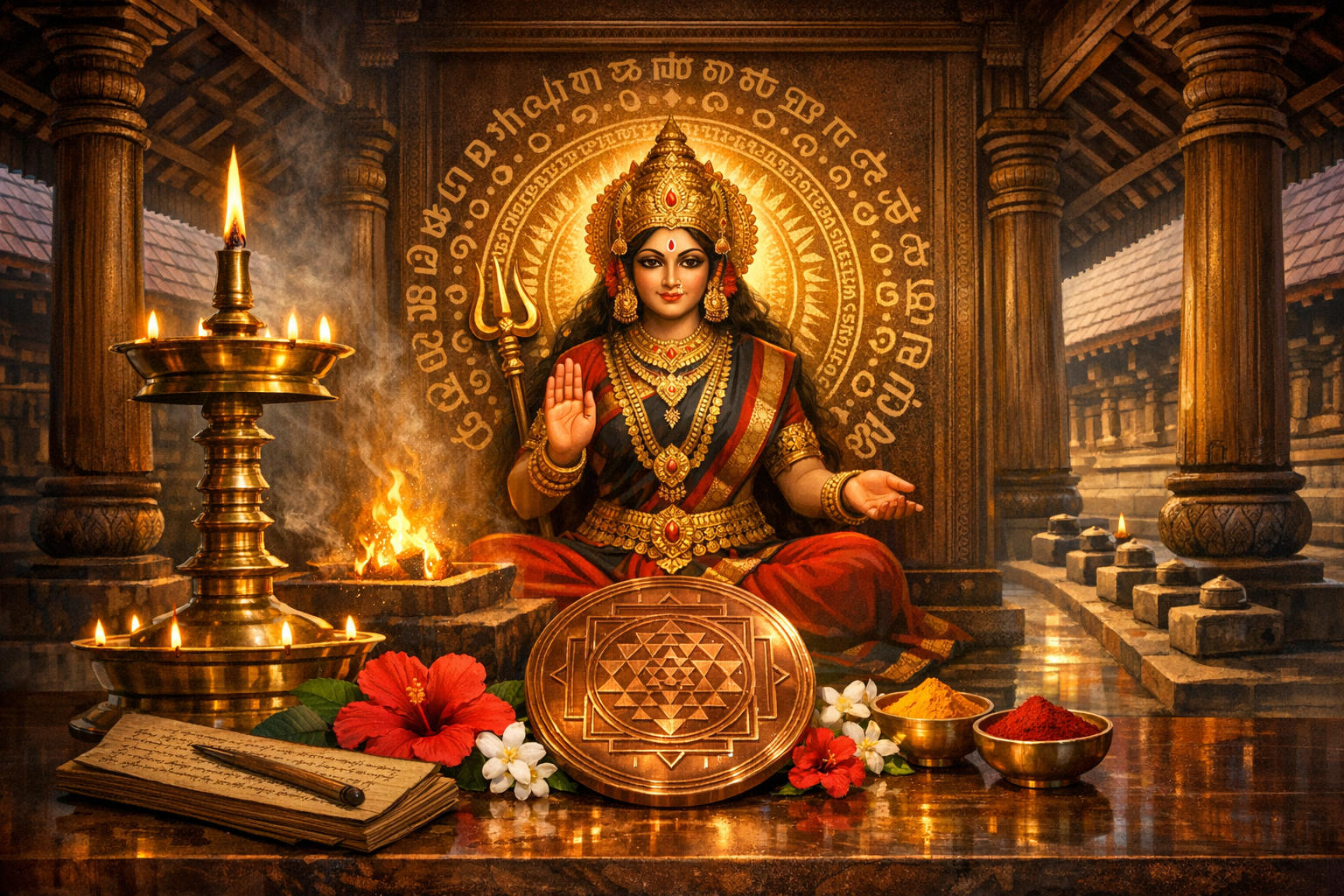
This comprehensive guide to Dashamahavidya Jayanti 2026–2027 explains how the ten Jayantis of Mahatara, Matangi, Bagalamukhi, Chinnamastika, Dhumavati, Mahakali, Bhuvaneshwari, Kamala, Tripurabhairavi & Lalita are determined by tithi, with clear notes on regional calendar differences. It summarises widely observed tithis for each Mahavidya, indicates likely 2026–2027 Gregorian windows, and offers practical home-puja methods aligned to…
-
From Nataraja to Raas Leela: The Awe-Inspiring Science, Symbolism, and Legacy of Divine Dance

Divine dance in the dharmic traditions is a precise language of cosmology and devotion. This article explains Shiva as Nataraja with technical iconography (damaru, agni, abhaya, Apasmara) and maps his pañcha-kṛtya to movement, clarifying how sound (nada) and rhythm underpin Sanskrit and ritual. It situates Bharatanatyam, Odissi, Kuchipudi, Kathak, Mohiniyattam, Sattriya, Chhau, Yakshagana, Chakyar Koothu,…
-
Raksha Kali: Fierce Protector of Dharma—Iconography, Mantras, Ritual Practice, Living Devotion

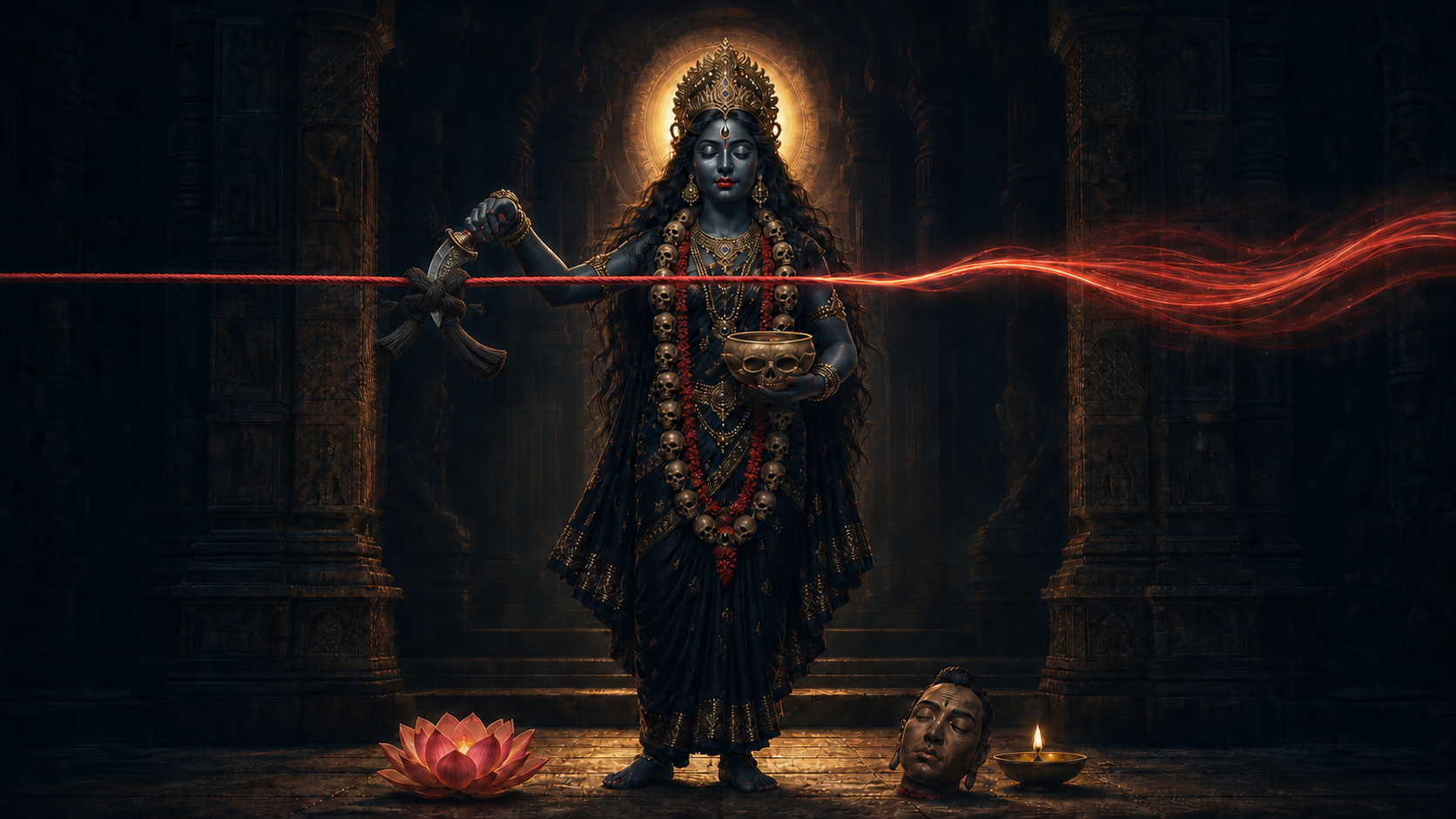
Raksha Kali is revered in Shakta Tantra as the Divine Protector, an aspect closely aligned with Dakshina Kali that amplifies compassionate guardianship. The name “raksha” (protection) captures her role in safeguarding devotees and sustaining dharma, a function expressed through powerful iconography—abhaya and varada mudras, the sword of discernment, and symbols of ego-transcendence. The article explains…
-
Bhadrakali Amman Unveiled: Sacred Iconography, Rituals, and Time-Transcending Philosophy

Bhadrakali Amman is presented as fierce grace: a guardian who unites auspiciousness with the transformative power of time. The analysis explains the etymology from Kala, the iconography of weapons and mudrās, and the ritual ecosystem of Amman worship in Tamil Nadu and Kerala. It highlights key festivals such as Attukal Pongala and the ethical turn…
-
Shiyali Kali (Kokmukha Devi): Unveiling the Enigmatic Jackal-Faced Shakti of India

Shiyali Kali (Kokmukha Devi) is a rare, jackal-faced manifestation of the Hindu Goddess that embodies the sacred power of liminality—night, the cremation ground, and the frontier between life and death. Although largely forgotten today, this form remains legible through Ancient Texts, Archaeology, regional memory, and the broader Śākta iconographic grammar linking the Goddess with jackals.…
-
Kali Yuga and Immediate Karma: A Clear, Cross-Dharmic Guide to Action, Reaction, and Dharma

This essay explains why the belief that actions trigger swift, sometimes near-immediate consequences in Kali Yuga is both philosophically coherent and practically observable. It situates the claim within Hindu cosmology and classical karma theory (sanchita, prarabdha, kriyamana; drishta/adrishta-phala). It shows how social and technological conditions of Kali Yuga create faster feedback loops for both harm…
-
Kali Yuga’s Vanishing Divide: Decoding How Asuras ‘Turn Human’ and What It Means for Dharma

This in-depth analysis decodes the Hindu claim that in Kali Yuga the line between asuras and humans fades, showing it as a moral-psychological map rather than a literal prophecy. Drawing on the Vishnu Purana, Bhagavata Purana, and the Bhagavad Gita, it explains how dharma degrades across the yugas and why the age demands simpler, heart-centered…
-
Kali Yuga’s Hidden Crisis: How Daily Divine Remembrance Ends Confusion, Stress, and Suffering

Kali Yuga’s defining crisis is not doctrinal disagreement but the everyday amnesia that severs attention from the Divine and amplifies stress and confusion. Rooted in the Bhagavad Gita’s call to remember at all times and the Bhagavata Purana’s praise of nāma-kīrtana, this analysis details a practical, inclusive protocol for continuous remembrance. It integrates japa, kīrtana…