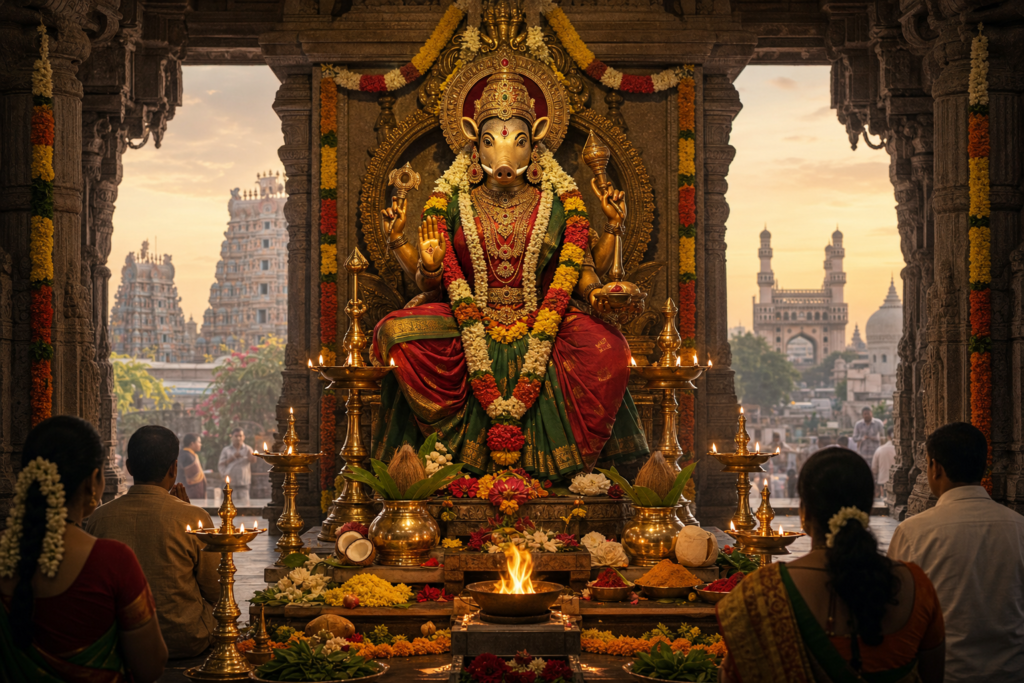
Tamil Nadu’s sacred landscape is renowned for its ancient temple traditions, and within this living heritage, Adhi Gajanathar stands out as a profound and evocative manifestation of Lord Ganesha. Revered as the primordial formthe “first” or foundational presenceAdhi Gajanathar encapsulates the principle of auspicious beginnings that pervades South Indian worship. The figure is central to temple practice, where devotees instinctively seek darshan of Ganesha before approaching other deities, aligning daily ritual with a theology of commencement and cosmic order.
The term “Adhi Gajanathar” combines the idea of primacy (Adhi) with Ganesha’s sovereignty as lord of the elephant-faced wisdom (Gajanathar). In Agamic and Puranic frameworks, this primordial Ganesha signifies the first impulse of creation and the removal of obstacles at every threshold. The emphasis on beginnings resonates across dharmic traditions, where mindful initiationwhether of a journey, a study, or a ritualembodies clarity, humility, and resolve.
Across Tamil Nadu templesspanning Chola, Pandya, and later Nayaka patronageAdhi Gajanathar often occupies a prominent threshold space near the gopuram or in the prakaras, guiding devotees through the sacred circuit. Many Śiva and Viṣṇu temples house dedicated sanctums or niches for Pillaiyar (Ganesha), affirming his role as the guardian of passageways and the first recipient of offerings. This continuity in placement reflects an architectural grammar of devotion, where spatial priority mirrors theological priority.
Iconographically, Adhi Gajanathar is typically portrayed with a serene countenance, a rounded belly symbolizing plenitude, and one broken tusk signifying sacrifice in the pursuit of knowledge. Four-armed forms commonly hold the pāśa (noose) and aṅkuśa (goad), alongside the modaka that connotes inner sweetness, while the remaining hand offers abhaya (assurance). Seated postures vary from padmāsana to mahārājalīlāsana, and the trunk’s gentle curve often rests toward a sweet, inviting the devotee to taste the nectar of discernment.
Ritual practice around Adhi Gajanathar emphasizes simple, time-honored offeringsfresh coconut, durvā grass, and modakamaccompanied by the powerful mantra “Om Gam Ganapataye Namah.” Vinayaka Chaturthi amplifies this focus, yet the daily rhythm of pradakṣiṇā and quiet prayer is where most visitors encounter the deity’s calm, clearing presence. Families frequently begin life eventseducation, business, travelby seeking this darshan, aligning personal milestones with sacred time and space.
Epigraphic and literary references from the Chola and Pandya periods attest to endowments for Pillaiyar, underscoring Ganesha’s deep integration into Tamil temple economy and ritual life. Stone inscriptions record donations for lamps, festivals, and daily worship, revealing how communities sustained and refined Adhi Gajanathar traditions over centuries. This historical continuity gives contemporary practice its unmistakable gravitas.
Adhi Gajanathar also speaks to a broader unity across dharmic traditions. The ethical impulse to begin with clarity and compassion is honored in Hindu, Buddhist, Jain, and Sikh pathways, where wisdom, restraint, and service guide action. While theological expressions differ, the shared reverence for auspicious beginnings fosters mutual respect and cultural harmonyan enduring strength of the Indian spiritual milieu.
Visitors often describe an immediate sense of grounding when pausing before Adhi Gajanathar: the hum of temple music, the fragrance of sandal and camphor, and the rhythmic murmur of mantras combine to settle the mind. In such moments, the primordial aspect feels tangibleas if the din of modern life recedes and a more lucid, purposeful intention arises.
For those exploring Tamil Nadu temples, a mindful approach enriches the experience: begin with Adhi Gajanathar, observe the sequence of shrines, and note how iconography, architecture, and ritual interlace. Engaging respectfully with priests, listening to local lore, and studying Agamic conventions can transform a visit into a study of living heritage, where scholarship and devotion meet.
In essence, Adhi Gajanathar affirms a timeless insight: every worthy undertaking begins with humility, discernment, and a request for grace. As Tamil Nadu’s temples continue to safeguard this primordial remembrance, devotees and visitors alike encounter a unifying symbolone that honors diversity of practice while celebrating the shared aspiration to begin well.
Inspired by this post on Hindu Blog.