-
18 Research-Backed Facts about Ganesha: Iconography, Mantras, Festivals, and Global Legacy

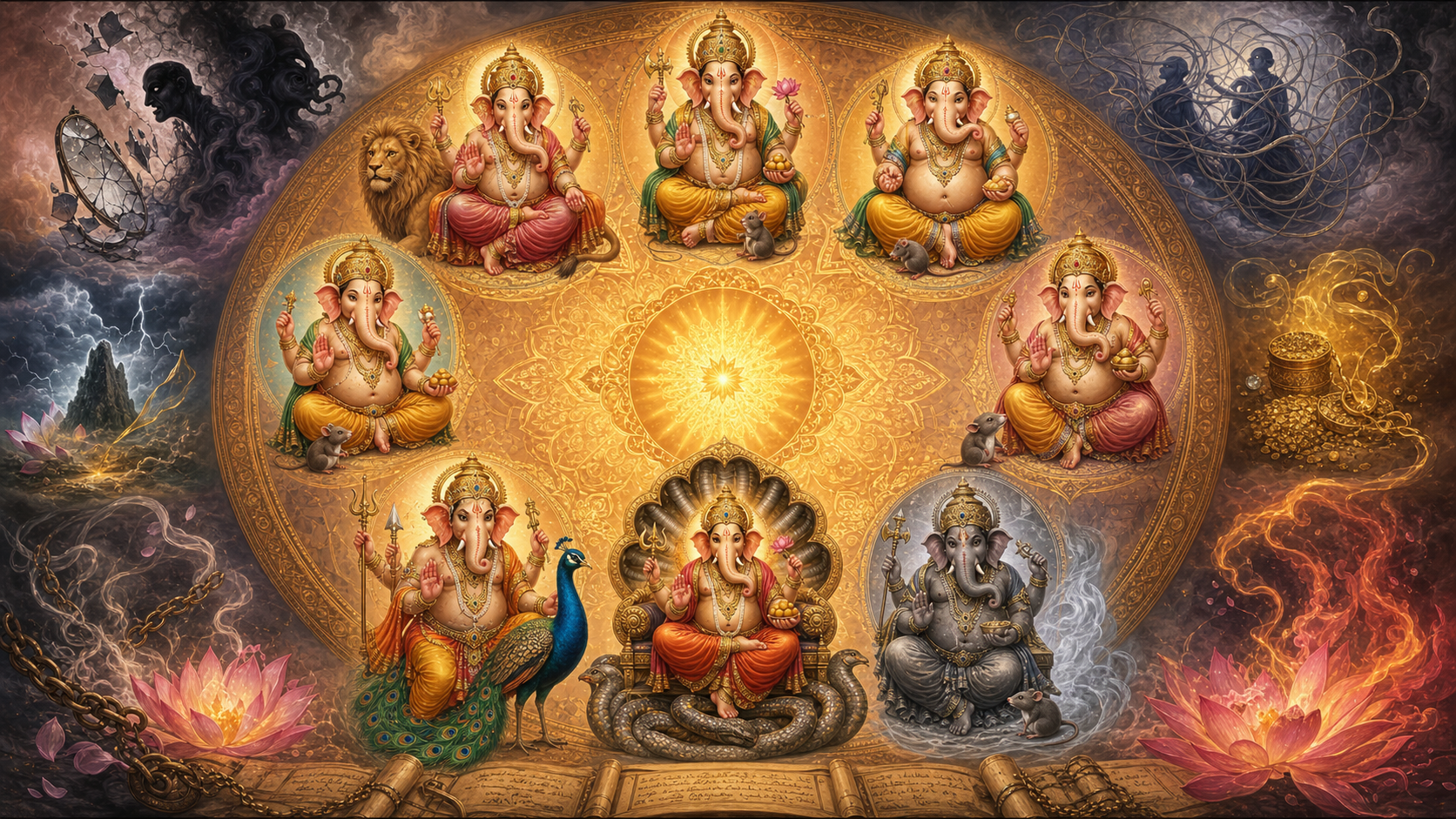
This comprehensive, research-grounded guide presents 18 essential facts about Ganesha—his Puranic origins, rich iconography, mantras, and threshold role as Prathama Pujya. Readers will learn how symbols such as the goad, noose, modaka, and the mouse vahana communicate psychological discipline and ethical intent. The overview explains the eight incarnations (Mudgala Purana), monthly observances like Sankatahara Chaturthi,…
-
18 Research-Backed Insights on Ganesha: Timeless Symbols, Mantras, and Global Legacy

Ganesha (Vinayaka, Vighneshwara, Ganapati) is first invoked in Hindu ritual as the remover of obstacles and guardian of auspicious beginnings. This long-form, research-informed overview presents 18 key facts that cover scripture (Ganapati Atharvashirsha, Mudgala Purana), iconography (elephant head, Ekadanta, Mushika vahana), ritual elements (durva grass, modaka), festivals (Ganesh Chaturthi, Masik Sankashti), and mantras such as…
-
Vamavarti Ganesha Explained: Auspicious Left-Trunk Form, Symbolism, Rituals, Benefits

Vamavarti Ganesha (Vamavarta Ganapati) is the left-trunk form of Shri Ganesha revered as gentle, auspicious, and ideal for household worship. The leftward curve aligns with the lunar Ida nadi, symbolizing cooling, sattvic energies that nurture calm, clarity, and family harmony. Traditional practice links this form with smoother beginnings, steadier learning for children, and the softening…
-
Powerful Vikata Sankashti Chaturthi, 5 April 2026: Moonrise 9:50 PM, Puja and Vrat Guide

Sankashti Chaturthi in April 2026 occurs on Sunday, 5 April 2026, as Krishna Chaturthi in Chaitra and is observed as Vikata Sankashti Chaturthi. Moonrise for concluding the fast is noted at 9:50 PM IST, with local variations to be confirmed via a reliable Panchang. The vrata emphasizes disciplined worship of Shri Ganesha—offerings of durva, modak,…
-
Mudgala Purana Decoded: Timeless Ganesha Wisdom, Eight Incarnations, and Why It Matters

The Mudgala Purana, a revered upapurāṇa, offers a focused and sophisticated theology of Gaṇeśa that unites story, ritual, and ethics. Central to its legacy are the eight incarnations of Ganesha, each conquering a specific inner vice and modeling a virtue—an elegant map for practical transformation. Textual features such as dialogical framing, symbolic attributes (tusk, modaka,…
-
Rajarshi Mudgala’s Timeless Legacy: The Mudgala Purana, Ganesha’s Eight Avatars, and Puja Vidhi

Rajarshi Mudgala is remembered as a Kshatriya sovereign who attained rishihood through intense tapas and is traditionally linked to the Mudgala Purana, a Ganesha-centered Upapurana. The text offers a lucid map of devotion to Vighneshwara, weaving myth, vrata guidance, mantra-vidhi, puja, and homam into a practical manual. Its hallmark is the teaching on Ganesha’s eight…
-
Siddhidata Ganesha’s Right‑Coiled Trunk: Sacred Discipline, Temple Protocols, and Home Guidance

Siddhidata Ganesha’s right‑coiled trunk (dakshinavarti) carries a potent, solar symbolism that calls for strict, temple‑grade discipline. This long‑form guide explains why many traditions advise keeping such forms in temples or in homes only where steady nitya‑puja and satvika living are realistically sustained. It clarifies the pranic rationale (Ida–Pingala–Sushumna), summarizes Shilpa Shastra and Agama perspectives, and…
-
Why Ganesha Rides a Mouse: Mastering the Restless Mind Through Ancient Sacred Symbolism

The celebrated image of Śrī Gaṇeśa seated on a mouse encodes a complete psychology of spiritual practice: wisdom seated above impulse, directing and calming the restless mind. Philological analysis of mūṣika (“the thief”) aligns with traditional models of manas, buddhi, and ahaṃkāra, while Purāṇic sources frame the vāhana as a pedagogical tool. Read alongside Yoga,…
-
Ganesha’s Small Eyes, Vast Vision: Iconography, Mindfulness, and Dharmic Unity Lessons

Ganesha’s small, intent eyes encode a powerful contemplative teaching: expansive wisdom arises from focused, compassionate attention. Drawing on Hindu iconography and Yoga philosophy, the symbol aligns with pratyahara, dharana, and dhyana, and is reinforced by the Bhagavad Gita’s guidance on nasikagra-drishti. Contemporary attention science complements this reading, linking steady gaze with reduced cognitive load and…
-
Why Ganesha Wears Red: Auspicious Energy, Shakti, and Victory Over Darkness

The sacred red of Ganesha is not decoration but a precise visual theology that communicates Shakti, auspiciousness, and the courage to begin well. Rooted in Agamic and iconographic traditions, vermilion (sindoor), kumkum, and red flowers activate Ganesha’s obstacle-clearing grace at personal and communal thresholds. The color aligns with the Muladhara chakra, reinforcing stability and decisive…
-
Why a Left-Coiled Ganesha Belongs at Home: Auspicious Energy and Easeful Worship

Traditional iconography explains why many households prefer a left-coiled (Vamavarta) Ganesha: it conveys calm, lunar-aligned auspiciousness that suits daily worship. The form is associated with gentle obstacle-removal and easeful upasana, making it practical for families with changing routines. By contrast, right-coiled images often require stricter ritual observance better supported in temple settings or under guidance.…
-
Adhi Gajanathar in Tamil Nadu: Discover the Primordial Power and Timeless Grace of Ganesha

Adhi Gajanathar, revered as the primordial form of Lord Ganesha in Tamil Nadu temples, embodies the principle of auspicious beginnings woven through South Indian worship. This form’s placement near thresholds and prakaras reflects a theology of commencement that aligns space, ritual, and meaning. Iconography—noose, goad, modaka, and the protective gesture—communicates wisdom, protection, and inner sweetness.…
-
Why Ganesha Is Invoked First: Timeless Wisdom Behind Auspicious Beginnings in Hindu Pujas

Ganesh is invoked first in Hindu pujas because dharmic tradition emphasizes auspicious beginnings grounded in wisdom, humility, and ethical intent. Scriptures present him as prathama pujya, the remover of obstacles who sanctifies new ventures. Symbolically, Ganesh represents focused intellect and expansive understanding, encouraging steadiness before action. Rituals such as Ganesh Puja, housewarmings, and educational commencements…
-
Trishunda Mayureshwar Ganpati, Pune: Unveiling the Three-Trunk Ganesha’s Symbolic Power

The Trishunda Mayureshwar Ganpati Temple in Somwar Peth, Pune, presents a rare three-trunk form of Ganesha riding a peacock, locally known as Moreswar. This Peshwa-era shrine blends refined stone architecture with distinctive iconography that symbolizes tri-guṇa, tri-kāla, and tri-loka harmonized in one image. The Mayureshwar aspect recalls Purāṇic narratives in which Ganesha, mounted on a…
-
Vakratunda Sankashti Vrat Katha: Harness Ganesha’s Power in Kartik for Relief and Prosperity

Observed on the Krishna Paksha Chaturthi of Kartik, the Vakratunda Sankashti Vrat Katha honors Lord Ganesha’s form as Vakratunda, revered for removing obstacles and restoring clarity. The vrata pairs disciplined fasting with recitation, reflection, and charity, cultivating relief from troubles and prosperity grounded in dharma. Its narrative mirrors inner struggles, especially envy and pride, and…
-
Mudgala Purana Unveiled: Ganesha’s Eight Incarnations, Timeless Wisdom, and Ritual Guidance

The Mudgala Purana is a core Ganesha Upapurana that presents a clear theology, practical rituals, and the famous eight incarnations of Ganapati. It guides readers to identify and overcome inner vices through ethically charged narratives and accessible worship practices. Distinct from the Skanda Purana yet harmonious with the Purana tradition, it balances devotion with philosophical…