Goddess Sundarikali (Sundarkali) is understood in Hindu traditions as a luminous manifestation of the Divine Feminine, harmonizing fierce protective energy with serene beauty. Revered as a rare and radiant form of Kali, this embodiment of Devi Shakti offers a balanced vision of courage and compassion that speaks to the heart of the Hindu way of life.
The name itself conveys a core insight: “Sundara” signifies beauty and grace, while “Kali” evokes time, transformation, and the fearless power that dissolves ignorance. Together, Sundarikali symbolizes the union of aesthetic radiance and transformative strengtha reminder that spiritual life matures when inner tenderness and resolute protection grow side by side.
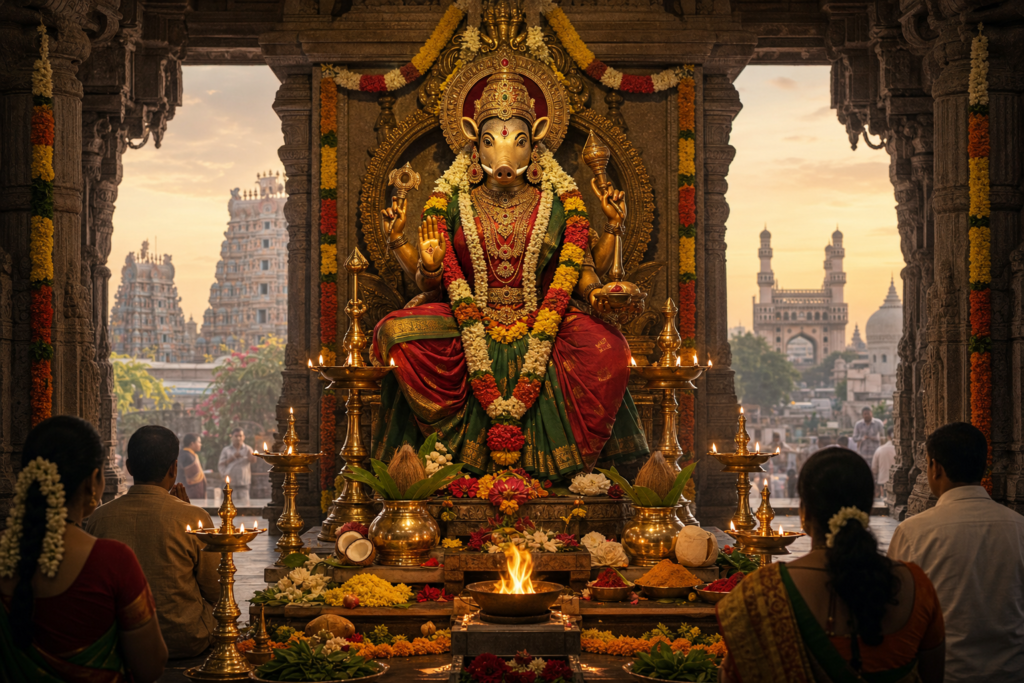
Iconographic themes associated with Sundarikali vary across regions and lineages, yet they often emphasize a calm, radiant presence that does not diminish Kali’s protective force. This synthesis allows devotees to contemplate the Divine as both benevolent and vigilant, an image that encourages ethical clarity, resilience, and care for all beings. In this way, Sundarikali complements well-known depictions of Kali and enriches the larger tapestry of Devi traditions.
Devotees commonly describe encounters with Sundarikali as emotionally grounding and ethically orienting. In temples and home altars alike, practices such as japa, silent contemplation, and offerings of flowers are undertaken to cultivate inner steadiness and compassion in daily life. During collective observances like Navaratri, when diverse forms of the Divine Mother are honored, the spirit of Sundarikali encourages a contemplative balance of devotion, discipline, and loving-kindness.
Philosophically, Sundarikali underscores a vital principle within Hindu Dharma: spiritual growth requires the integration of courage (shakti as protective force) and compassion (shakti as nurturing grace). These qualities resonate across dharmic traditionskaruna in Buddhism, ahimsa in Jainism, and seva in Sikhismaffirming a shared ethical horizon while respecting distinct symbols, practices, and doctrines. This perspective supports religious pluralism and unity in spiritual diversity without collapsing differences.
In contemporary life marked by uncertainty, Sundarikali’s meaning remains practical and relevant. The form encourages conscientious action in the worldstanding firm against harm while extending care toward those in need. Devotees draw from this image to cultivate emotional balance, ethical discernment, and a resilient hope informed by wisdom rather than impulse.
Accessible practices inspired by Sundarikali include a daily remembrance of both compassion and courage, brief periods of mindful breathing before major decisions, and a consistent commitment to respectful dialogue across faiths. Such habits foster inner transformation and strengthen social harmony, reflecting a dharmic commitment to coexistence and mutual uplift.
Ultimately, Sundarikali (Sundarkali) invites reflection on the Divine as both radiant and protectivean enduring archetype that refines character and deepens devotion. By honoring this form within the vast family of Devi, communities reaffirm a shared aspiration: to align strength with kindness, and beauty with responsibility, for the benefit of all.
Inspired by this post on Hindu Blog.