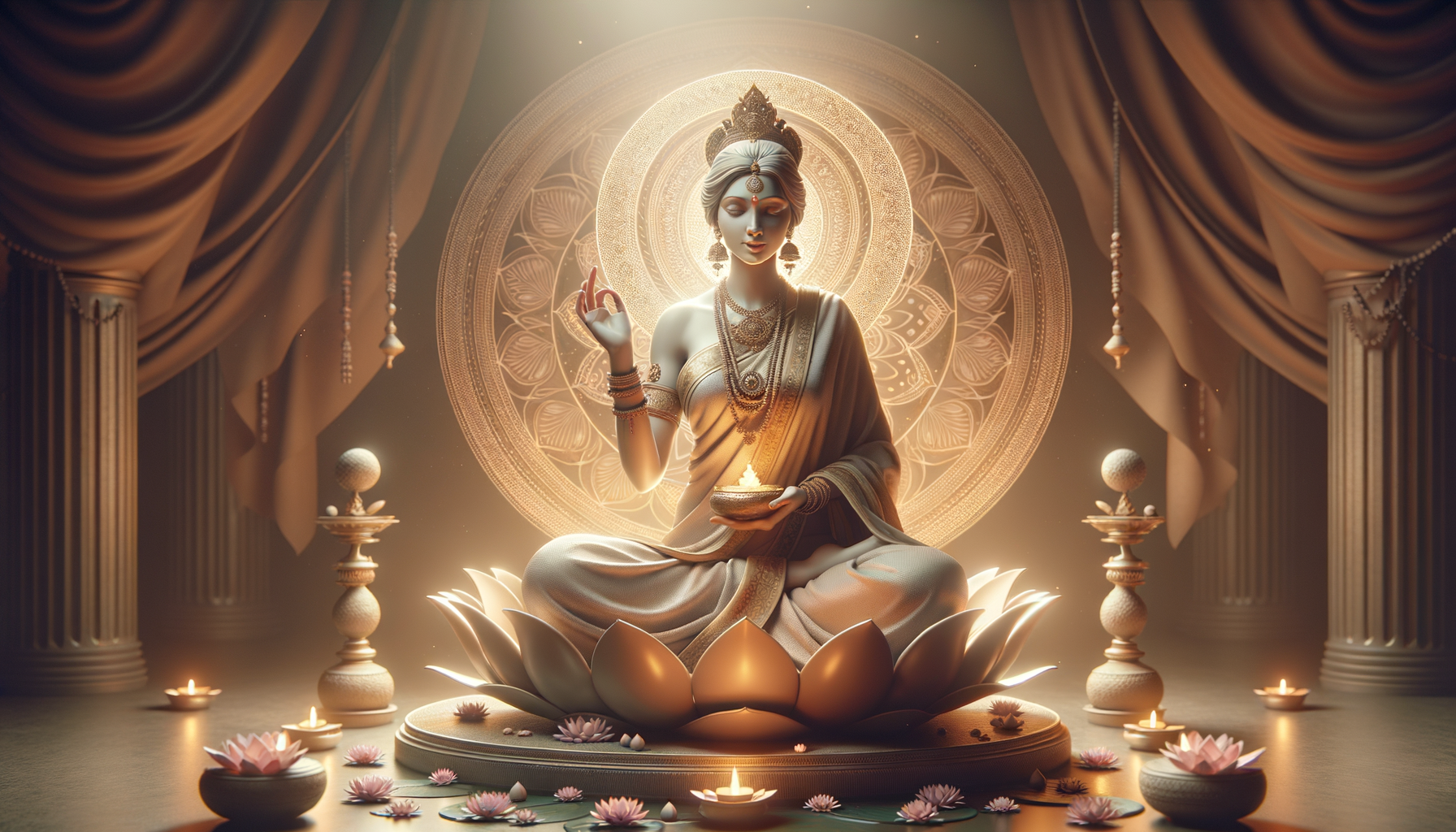
Anagha Devi is revered as the Shakti of Lord Dattatreya, a luminous embodiment of the Divine Mother’s compassionate power within the Datta tradition. Descriptions highlight her radiant, serene countenance and the symbolic vessel of divine nectar held in her hands, signifying nourishment, healing, and spiritual renewal. As a manifestation of Mata Shakti Devi, she is venerated for motherly care that gently guides seekers toward inner balance and clarity.
Within Hindu philosophy, Shakti represents the dynamic energy that animates and sustains the cosmos. In this framework, Anagha Devi personifies the benevolent force that complements Dattatreya’s wisdom, harmonizing knowledge (jnana), action (karma), and devotion (bhakti). The name “Anagha,” meaning “stainless” or “free from fault,” expresses an ethical ideal: the cultivation of purity in intention and conduct, aligned with dharma and compassionate living.
Devotees frequently describe a palpable sense of maternal reassurance in practices dedicated to Maa Anaghaquiet nama japa, simple lamp-lighting, and reflective meditation on her qualities. These observances encourage virtues such as humility, steadiness of mind, and gratitude. The focus is not on elaborate ritual alone but on sincere remembrance, allowing the heart to rest in a relationship of trust with the Divine Mother.
The visual motifs associated with Anagha Devi are rich in symbolism. The vessel of divine nectar evokes amritaimmortality, healing, and the sweet essence of spiritual insight. Her shining face signifies the inner light that dispels confusion, while her maternal presence communicates protection and reassurance. Together, these elements form a contemplative iconography that aids concentration, devotion, and ethical resolve.
In many homes and community gatherings, observances in honor of Anagha Devi are marked by collective prayer, sankirtan, and charitable acts (seva). Such practices deepen devotion while fostering social harmony, reflecting a core insight of bhakti: love expressed in service strengthens both individual character and community wellbeing. The Datta tradition emphasizes accessibilitysimple, sincere worship that welcomes all seekers.
Practitioners often note the fruits of steady devotion: peace during uncertainty, moral clarity amid difficult choices, and courage to meet life’s responsibilities. By contemplating Anagha Devi as the compassionate Shakti of Lord Dattatreya, devotees integrate spiritual insight with everyday living, transforming routine duties into opportunities for mindful action and loving awareness.
The reverence for a protective, compassionate Divine presence resonates across dharmic paths. The qualities associated with Anagha Devikaruna (compassion), ahimsa (non-violence), and seva (selfless service)find echoes in Buddhism, Jainism, and Sikhism, supporting a shared ethos of dignity, responsibility, and unity. This inclusive vision strengthens mutual respect among traditions while honoring distinct practices.
As Shakti of Lord Dattatreya, Anagha Devi offers an accessible doorway into the living experience of the Divine Mother. Her “stainless” ideal invites persistent refinement of thought, word, and action. In turning to her with sincerity, devotees discover a steady source of guidance and gracenourishment for the heart, light for the intellect, and courage for the path of dharma.
Inspired by this post on Hindu Pad.