The Ramayana presents a precise logic for avatarhood in which metaphysical law, moral order, and political power converge. The question of why Lord Rama, an avatar of Vishnu, had to be human is inseparable from Ravana’s boona legal-spiritual safeguard that shaped the conditions under which adharma could be defeated without violating cosmic law.
According to Hindu scriptures, Ravana attained extraordinary power through intense tapasya and secured from Brahma a boon that protected him from devas, gandharvas, yakshas, and other formidable beings. In a telling act of hubris, Ravana dismissed humans and certain animals as inconsequential, leaving a deliberate gap in his invincibility. That omission did not merely reflect arrogance; it framed the lawful pathway through which tyranny could be checked while honoring the very terms of the boon.
Vishnu’s response was not to overwhelm Ravana with divine force, but to work within the constraints of the boon by incarnating as a humanSri Rama. This choice upheld dharma and safeguarded the integrity of vows and boons that sustain the moral fabric (ṛta). By entering the human condition, Rama did not circumvent the rules; he fulfilled them, demonstrating that cosmic justice is most persuasive when it is achieved through rightful means rather than irresistible might.
Rama’s humanity entailed real suffering: exile, the anguish of separation from Sita, the burden of kingship, and the weight of choosing between competing duties. These were not incidental hardships but integral to the avatar’s purpose. In facing grief, doubt, and limitation, Rama modeled maryadaright conduct under constraintso that dharma could be seen as livable, not merely laudable. Readers who have endured loss or moral complexity often recognize in Rama’s steadiness a map for their own trials.
Within this narrative design, suffering serves a pedagogical function. It reveals that ethical excellence does not require superhuman exemption from pain; rather, it arises from disciplined commitments amid imperfection. The title Maryada Purushottama thus gains clarity: Rama embodies the apex of human rectitude, proving that devotion, restraint, and courage can coexist with human vulnerability.
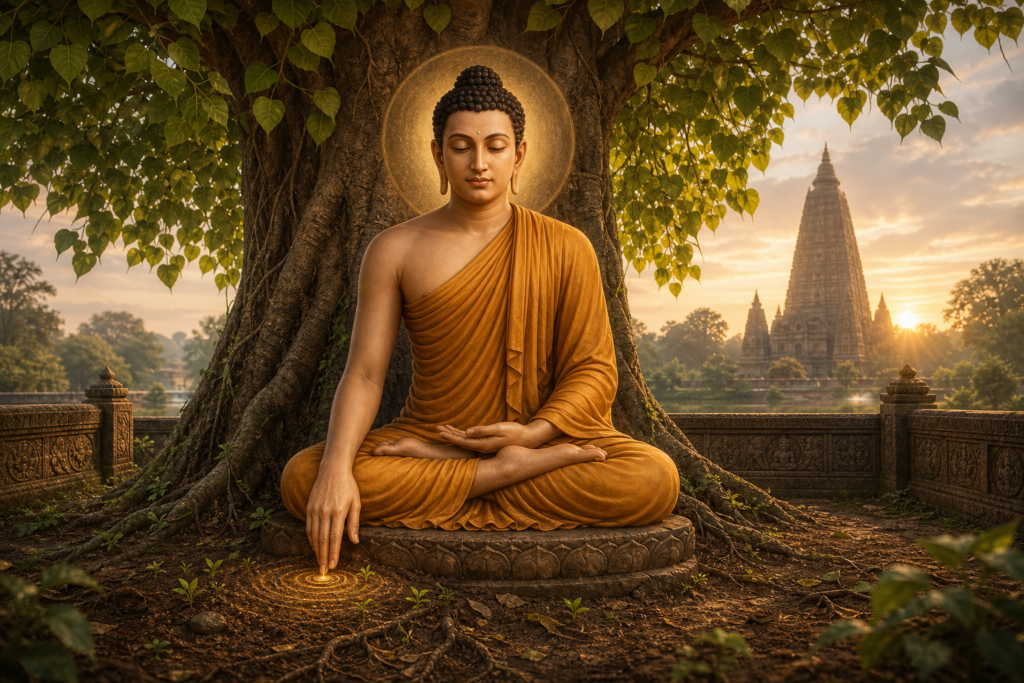
Viewed through a broader dharmic lens, this insight resonates across traditions. Like the Buddha’s emphasis on the human path to liberation through insight and compassion, and Mahavira’s accent on disciplined self-mastery, Rama’s example affirms that transformation is possible within ordinary life. Sikh teachings on righteous living and service similarly foreground the ethical power of human action. These convergences underscore unity among Hindu, Buddhist, Jain, and Sikh perspectives: spiritual truth is not exclusive, and human conduct is a sacred arena for realizing it.
Ravana’s error illustrates the politics of pride: systems fortified by apparent invulnerability often collapse through the very exclusions they enshrine. By respecting the boon’s limits, Rama shows that dharma does not annul commitmentseven those made by adversariesbut fulfills justice through proportionate, principled action. The defeat of adharma thus emerges as lawful and legitimate, not merely victorious.
The alliance of humans with the vanara-sena further amplifies this point. Ravana undervalued both humans and certain animal communities, yet cooperation among those he dismissed became the decisive force. Hanuman’s devotion, Sugriva’s alliance, and collective effort illuminate a consistent lesson: humility, solidarity, and service can overcome power built on contempt.
For many, the narrative’s contemporary relevance is intuitive. Institutions, conflicts, or personal struggles may appear impregnable; yet, patient, ethical, human actiongrounded in dharmacan open a lawful way forward. The Ramayana’s wisdom reframes hardship not as evidence of abandonment but as the very context in which fidelity, courage, and compassion acquire their meaning.
In this light, the answer to why Rama had to be human becomes clear: Ravana’s boon created the doorway, and Rama’s suffering furnished the path. The avatar’s humanity was neither accident nor deficiency; it was the chosen medium through which dharma could triumph without violating the moral order. That is the deeper wisdom behind Ravana’s boon and the avatarhood of Lord Ramaa lesson of integrity, restraint, and unity that speaks powerfully across dharmic traditions and into everyday life.
Inspired by this post on Hindu Blog.