-
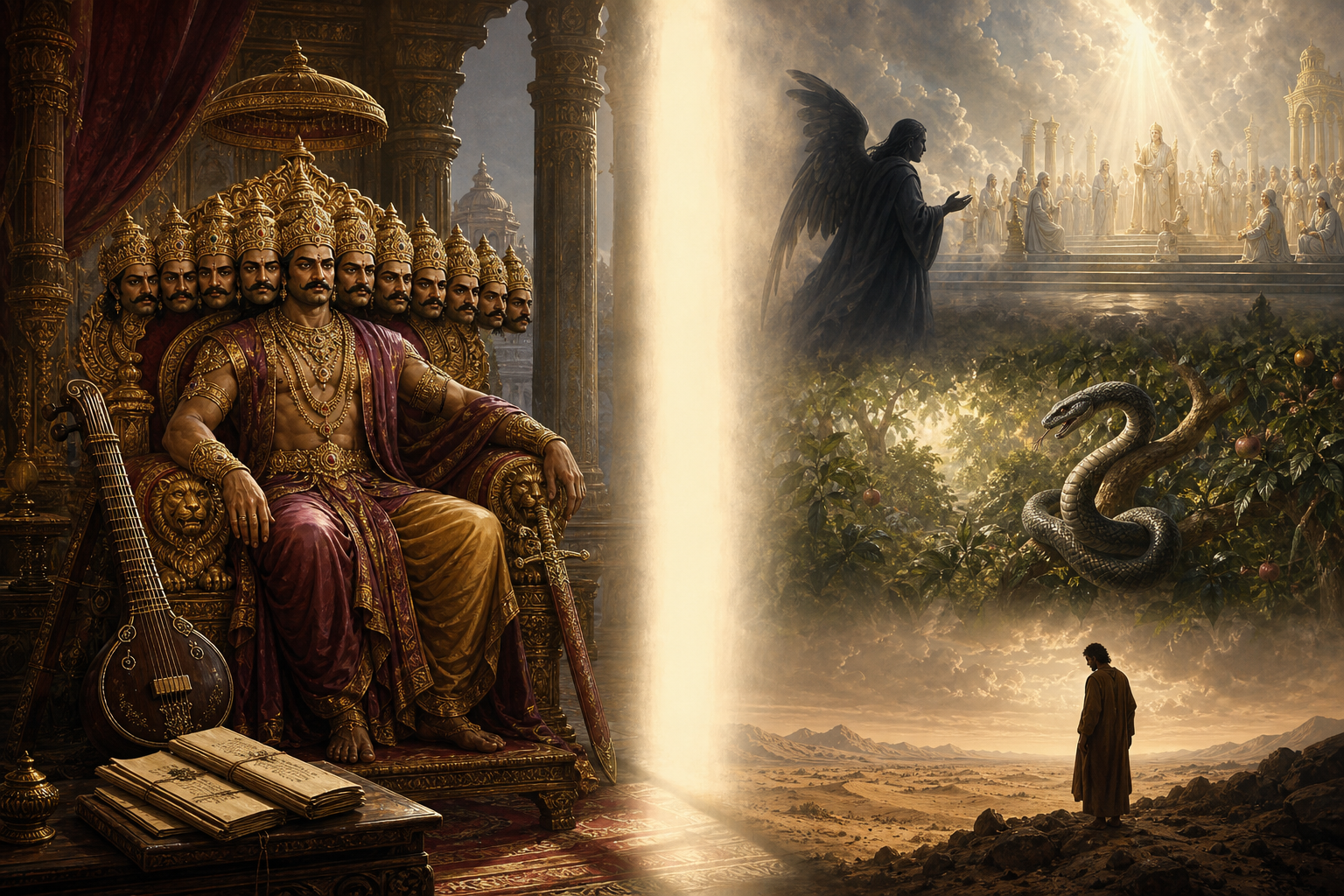
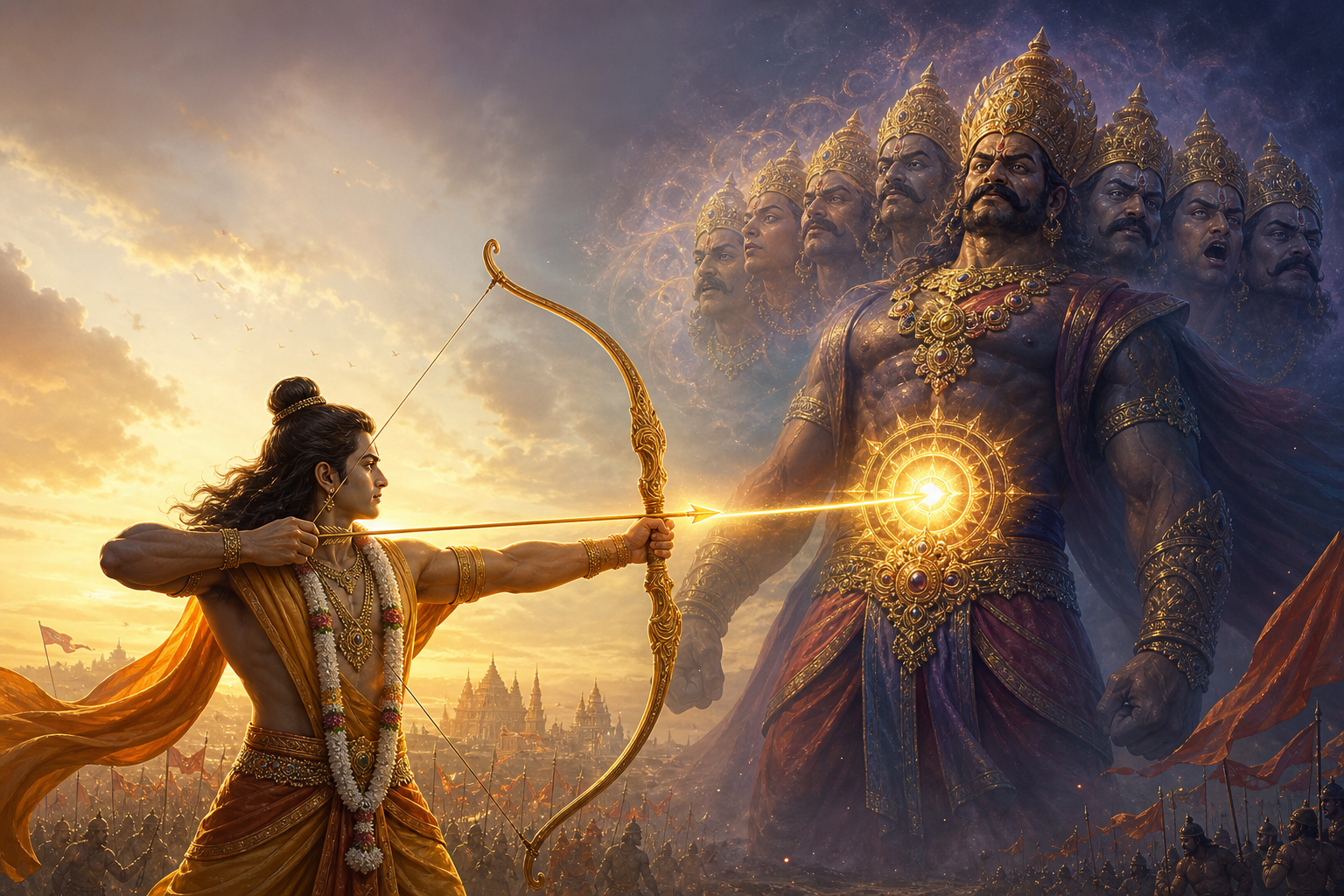
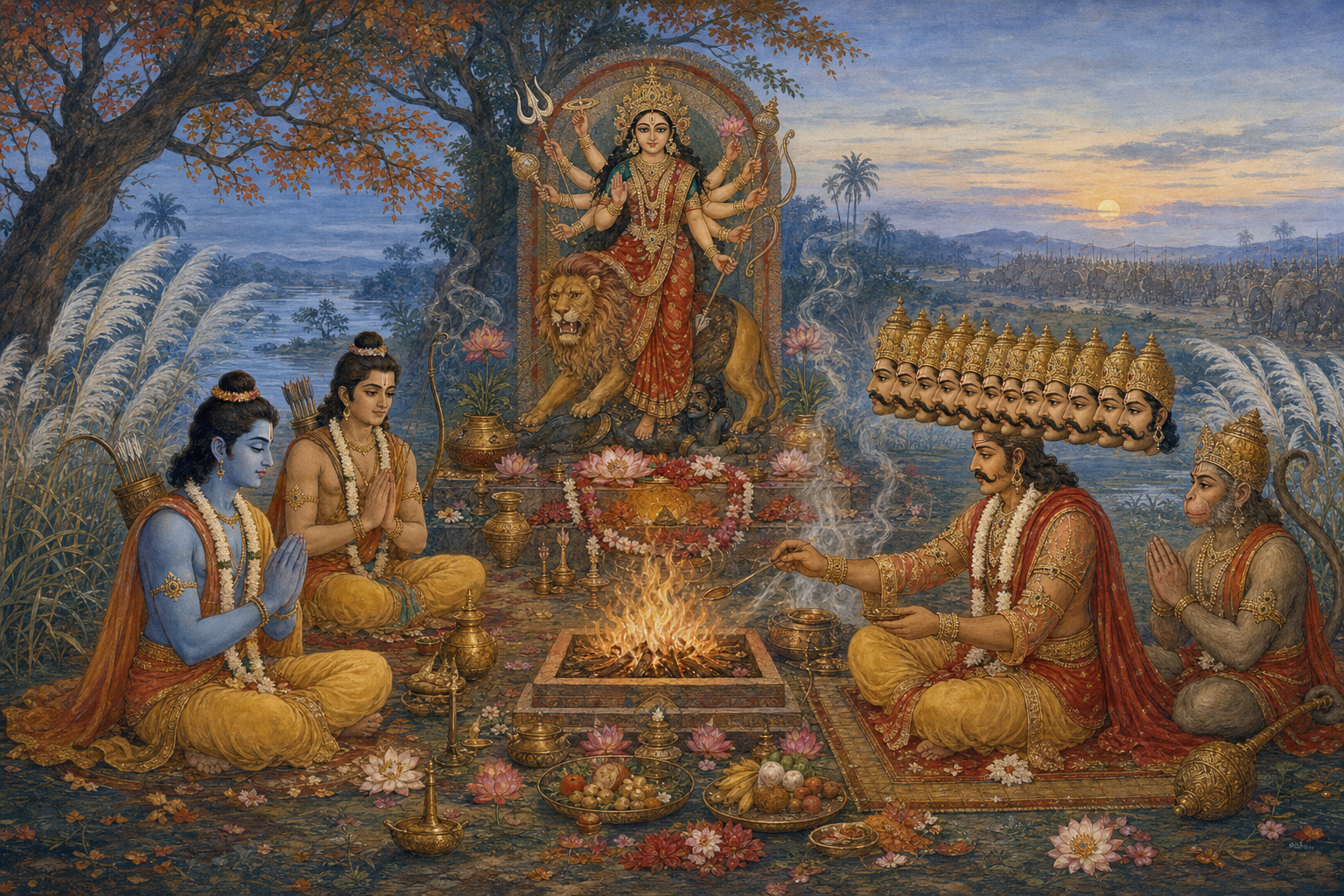
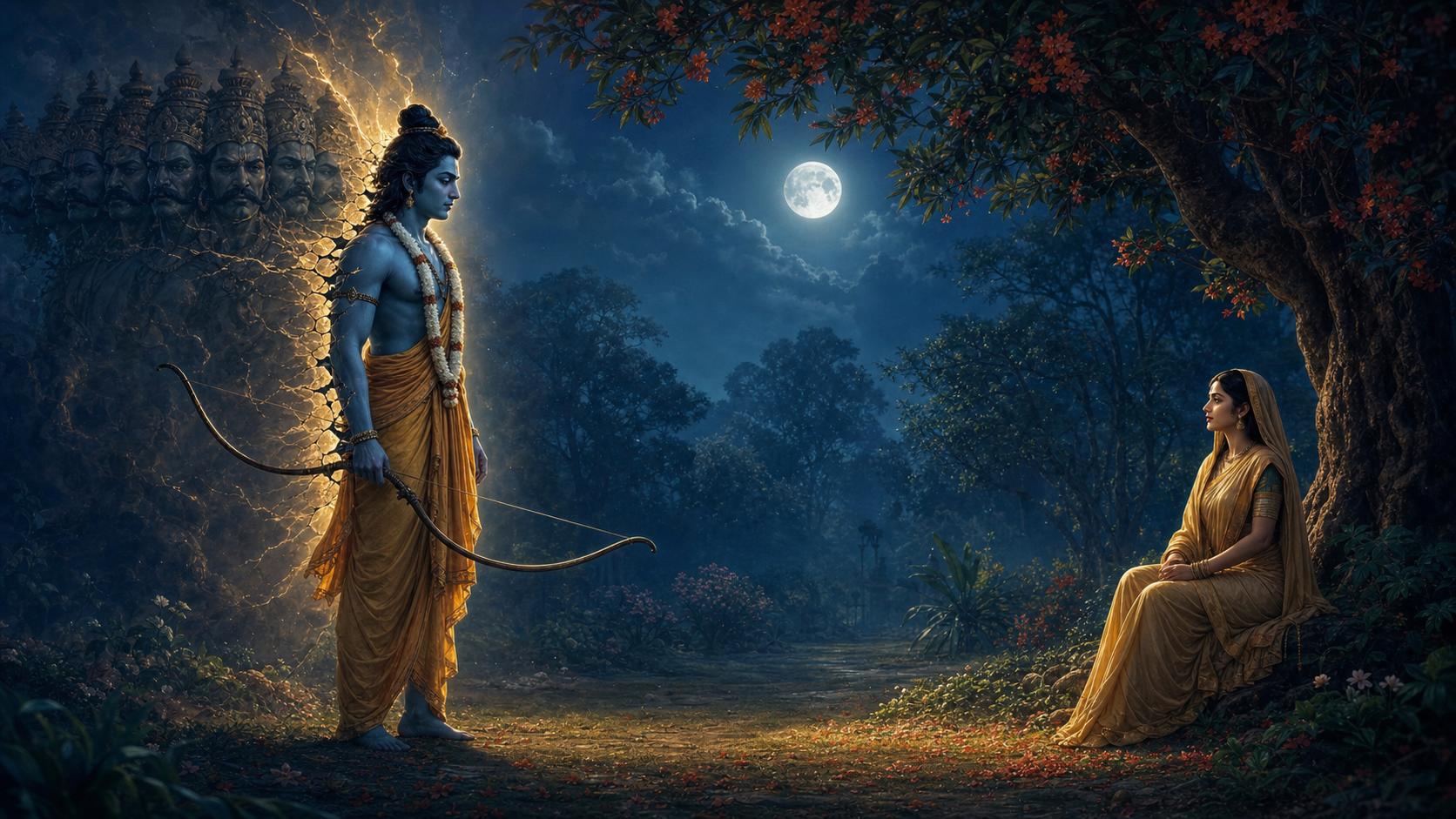
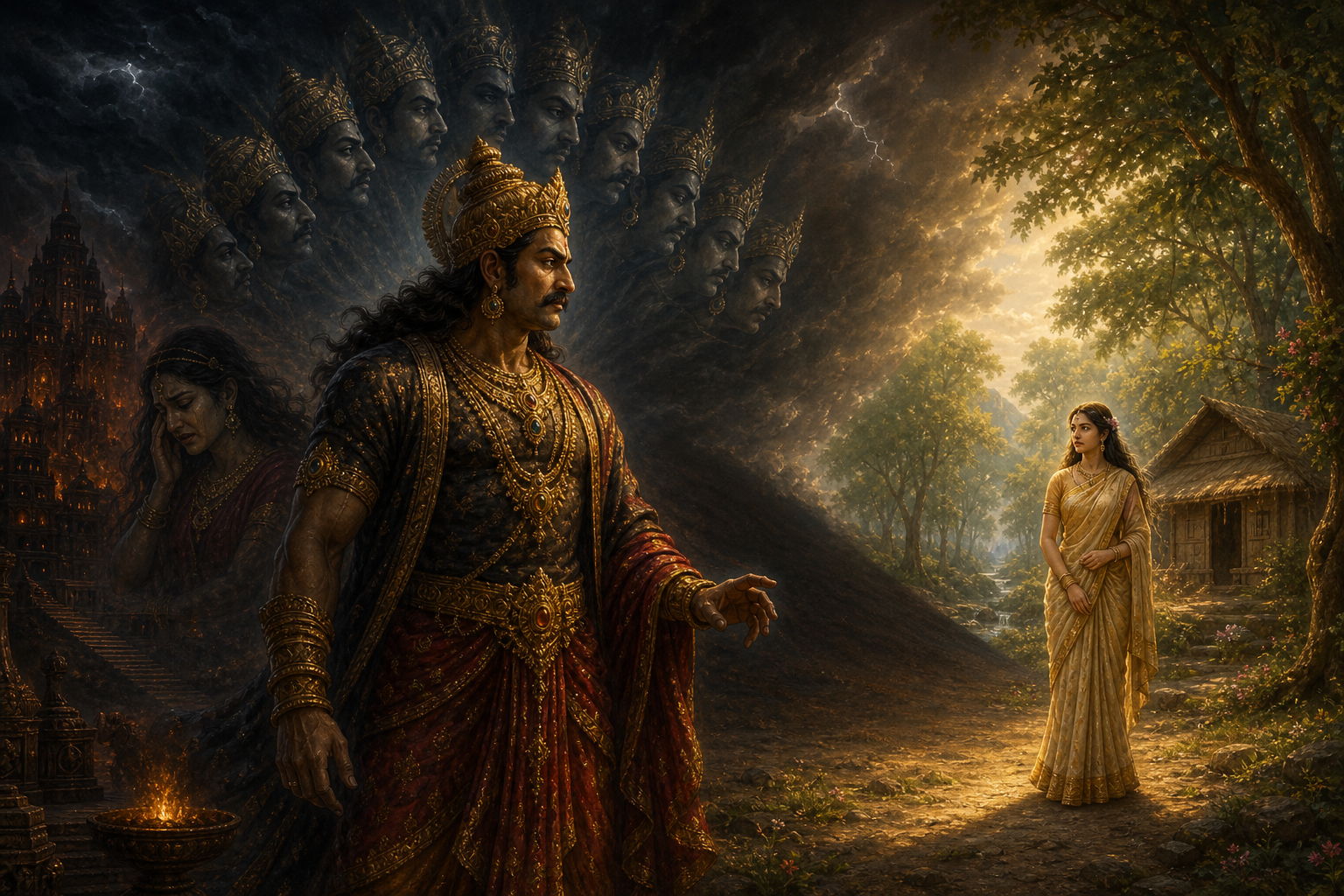
Ravana’s Regenerating Heads: The Profound Wisdom Behind Rama’s Final Aim

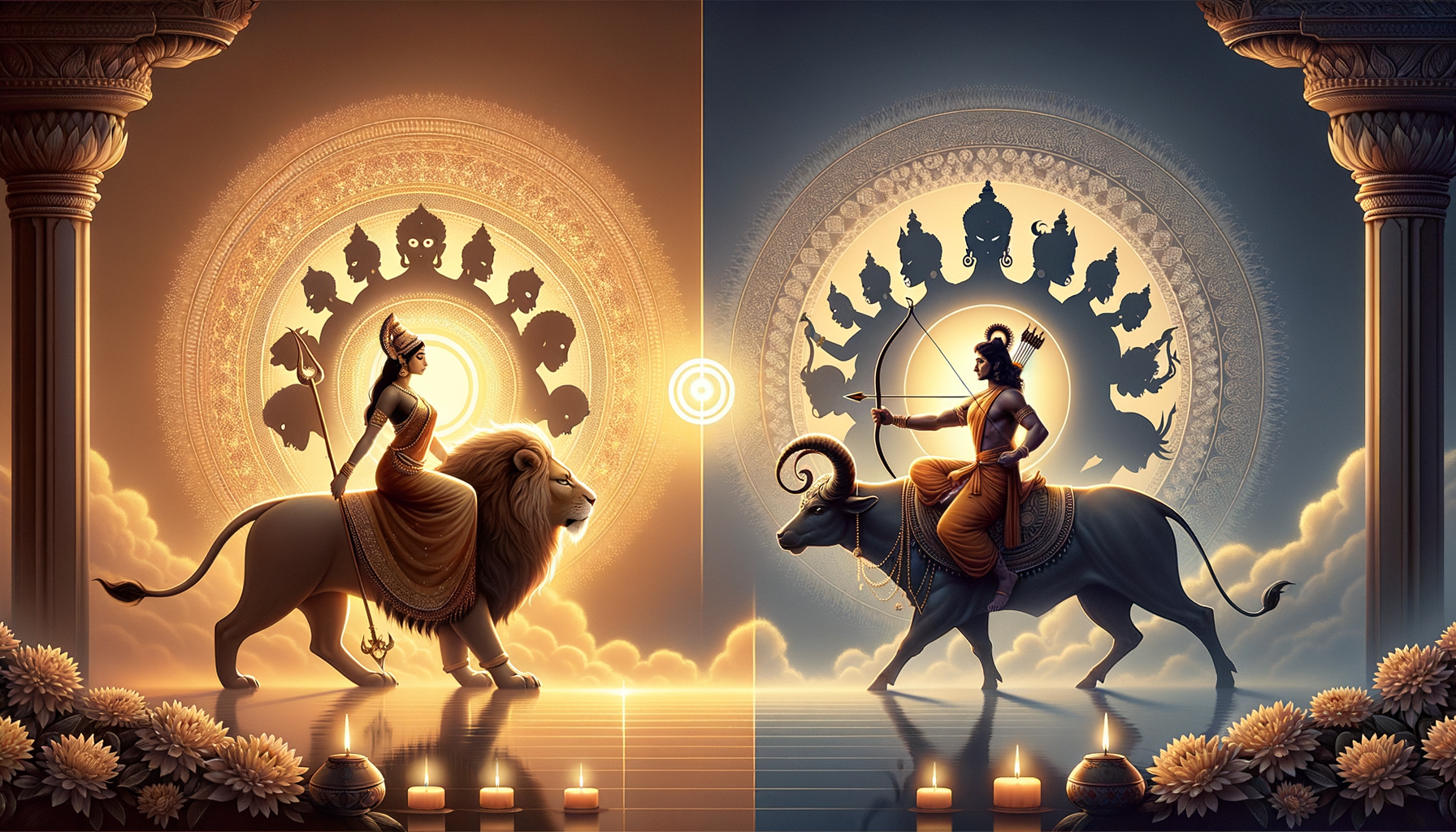
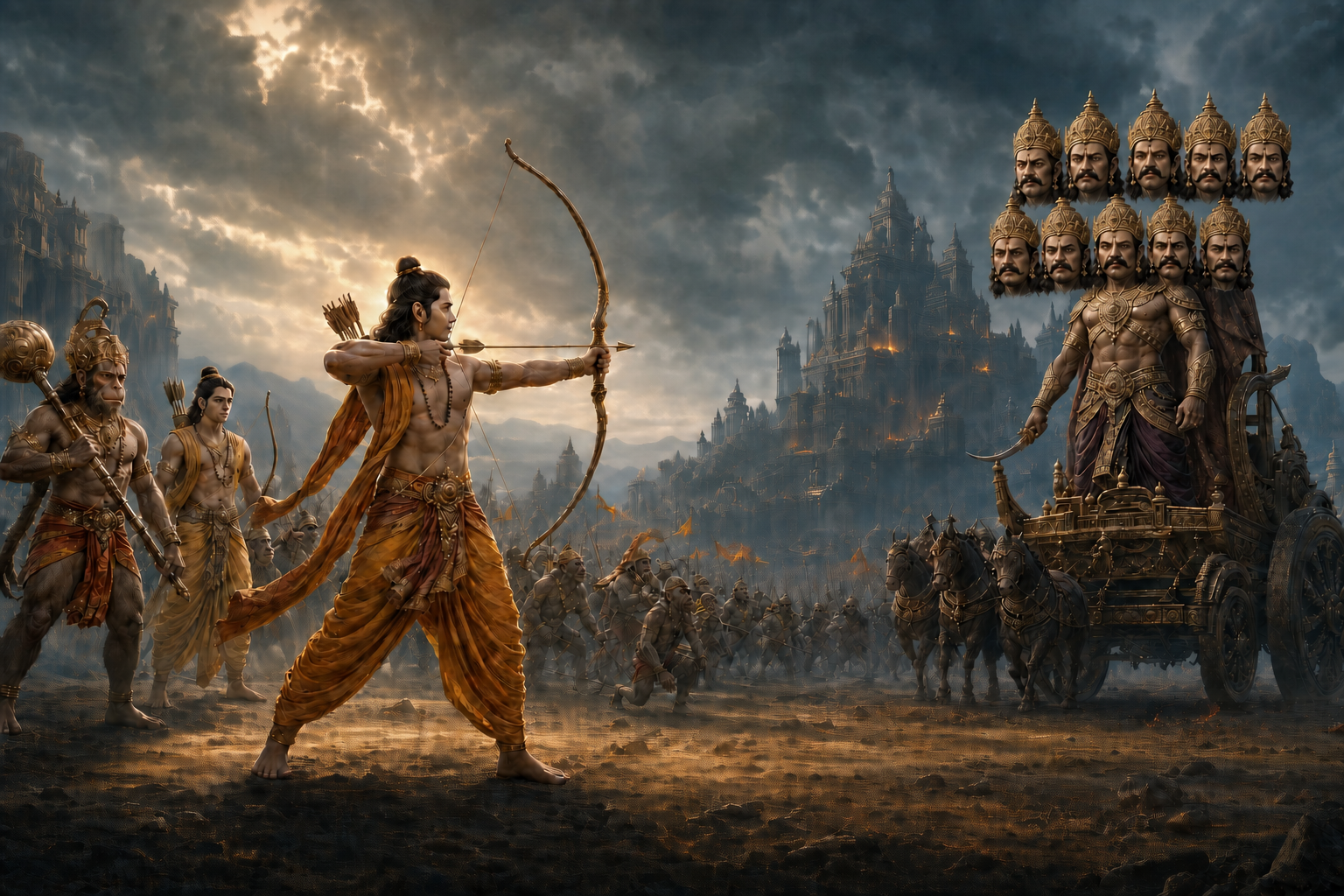
This article explores the symbolism of Ravana’s regenerating heads and the deeper meaning behind Rama’s final victory in the Ramayana. It explains that the repeated severing of Ravana’s heads represents the failure of treating symptoms while leaving the root of ego, desire, and adharma untouched. The piece distinguishes between Valmiki Ramayana and later traditional interpretations…
-
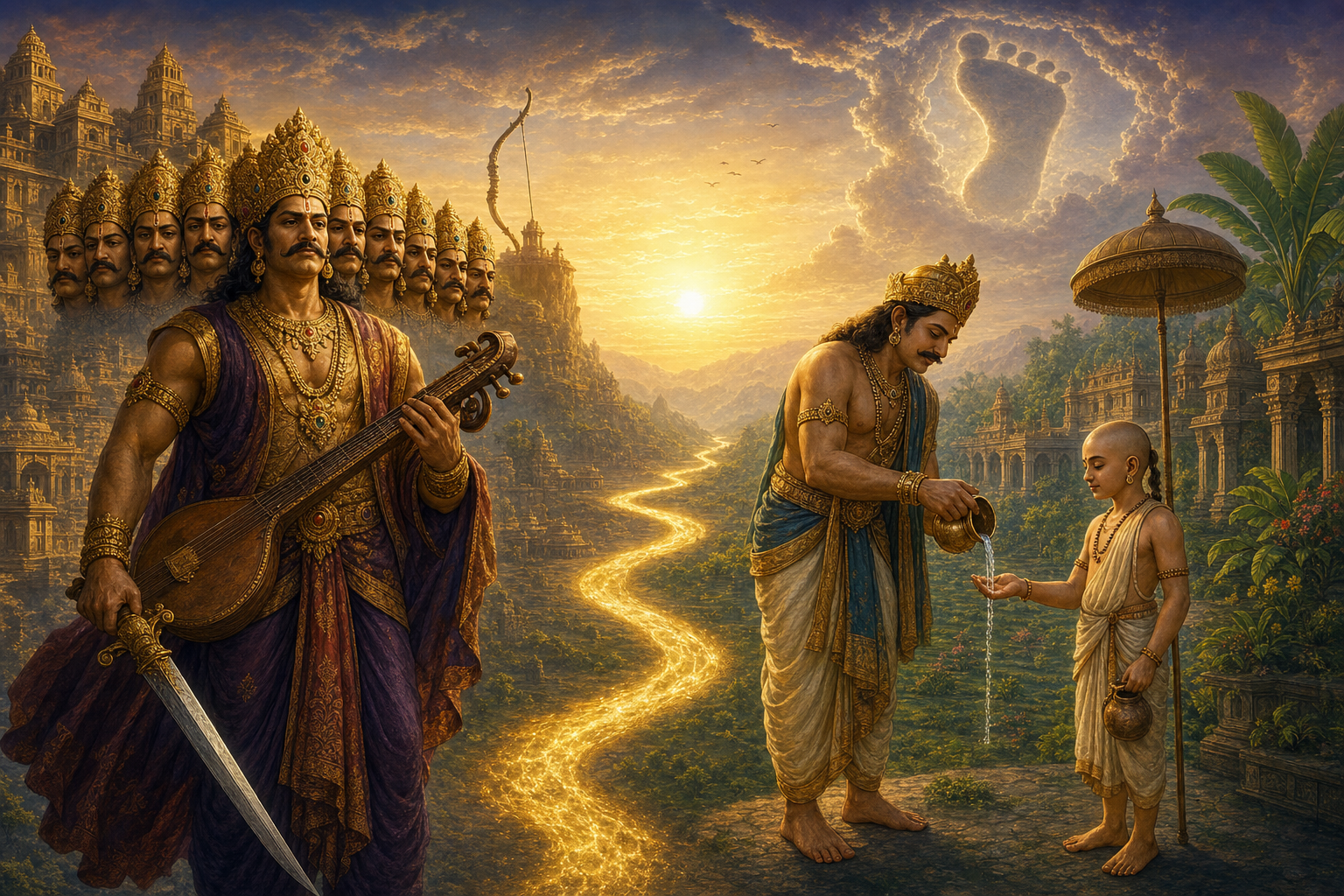
Perception Shapes Destiny: Vibhishana and Ravana on Dharma, Devotion, and Right View

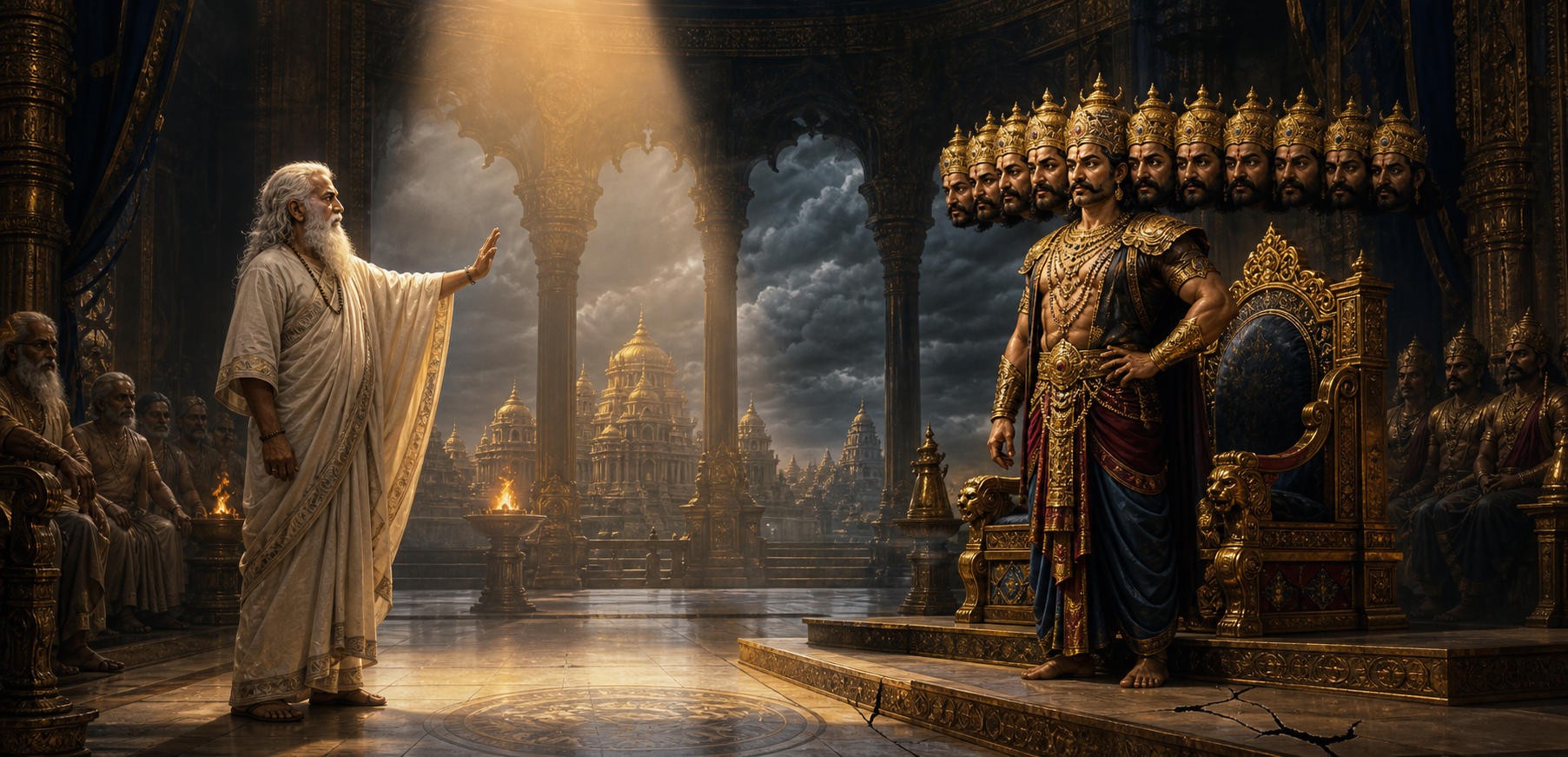
The Vibhishana–Ravana contrast in the Ramayana shows how perception actively shapes devotion, decision, and destiny. Vibhishana’s sattvic clarity leads to ethical counsel, śaraṇāgati to Sri Rama, and the restoration of just kingship. Ravana’s rajasic ambition and tamasic delusion produce cognitive bias, institutional decay, and ruin. The narrative aligns with Buddhist samyak dṛṣṭi, Jain Anekantavada and…
-
Choosing Dharma Over Blood: Vibhishana and Yuyutsu’s Moral Courage in India’s Epics

This comparative essay examines how Vibhishana in the Ramayana and Yuyutsu in the Mahabharata choose dharma over kinship, modeling ethical defection that prioritizes truth and justice above partisan loyalty. It analyzes their decisions through rajadharma, kshatra dharma, Vidura-niti, and the just-war ethos of Dharma-Yuddha, showing how both epics legitimize power only when allied with righteousness.…
-
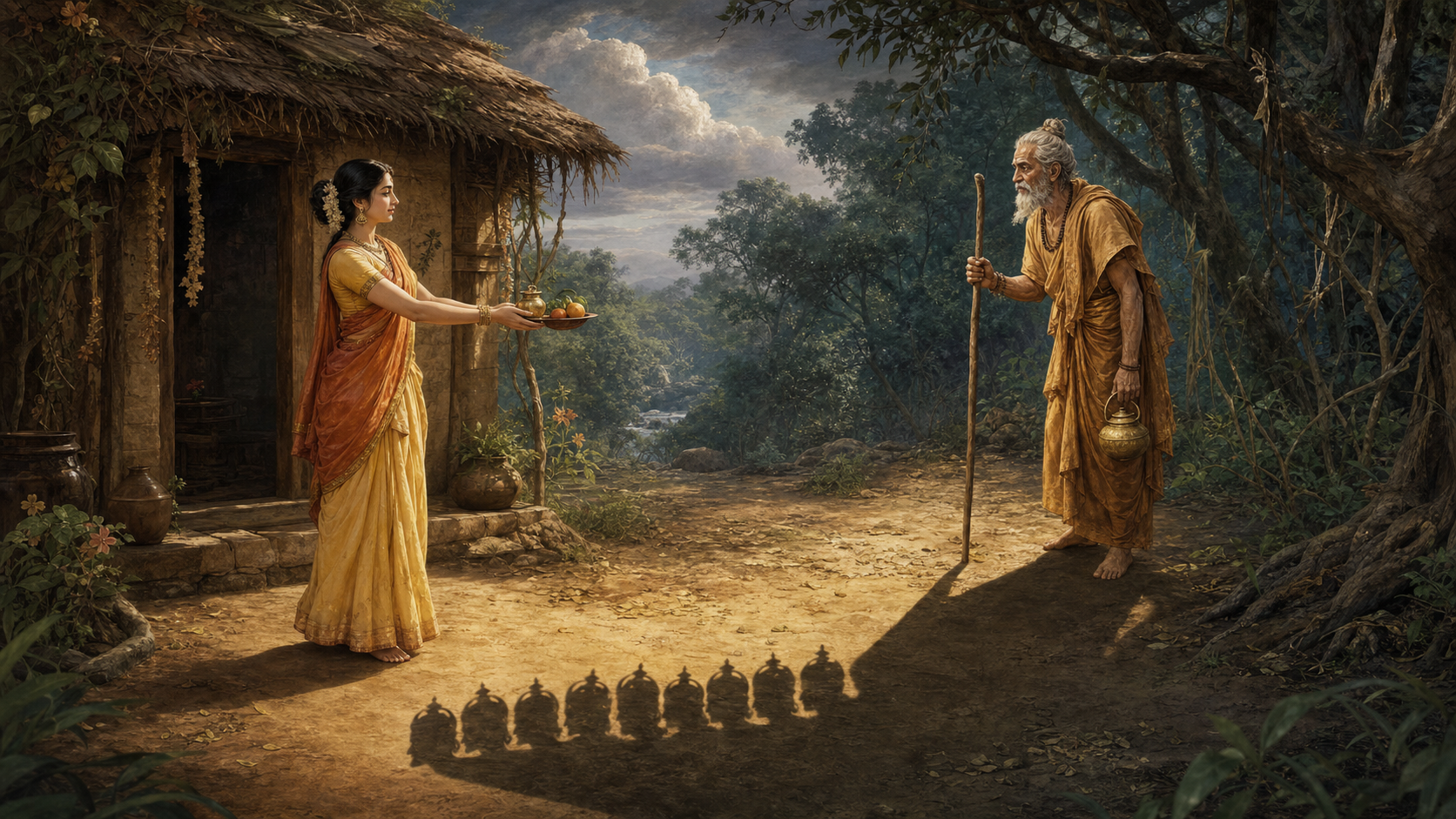
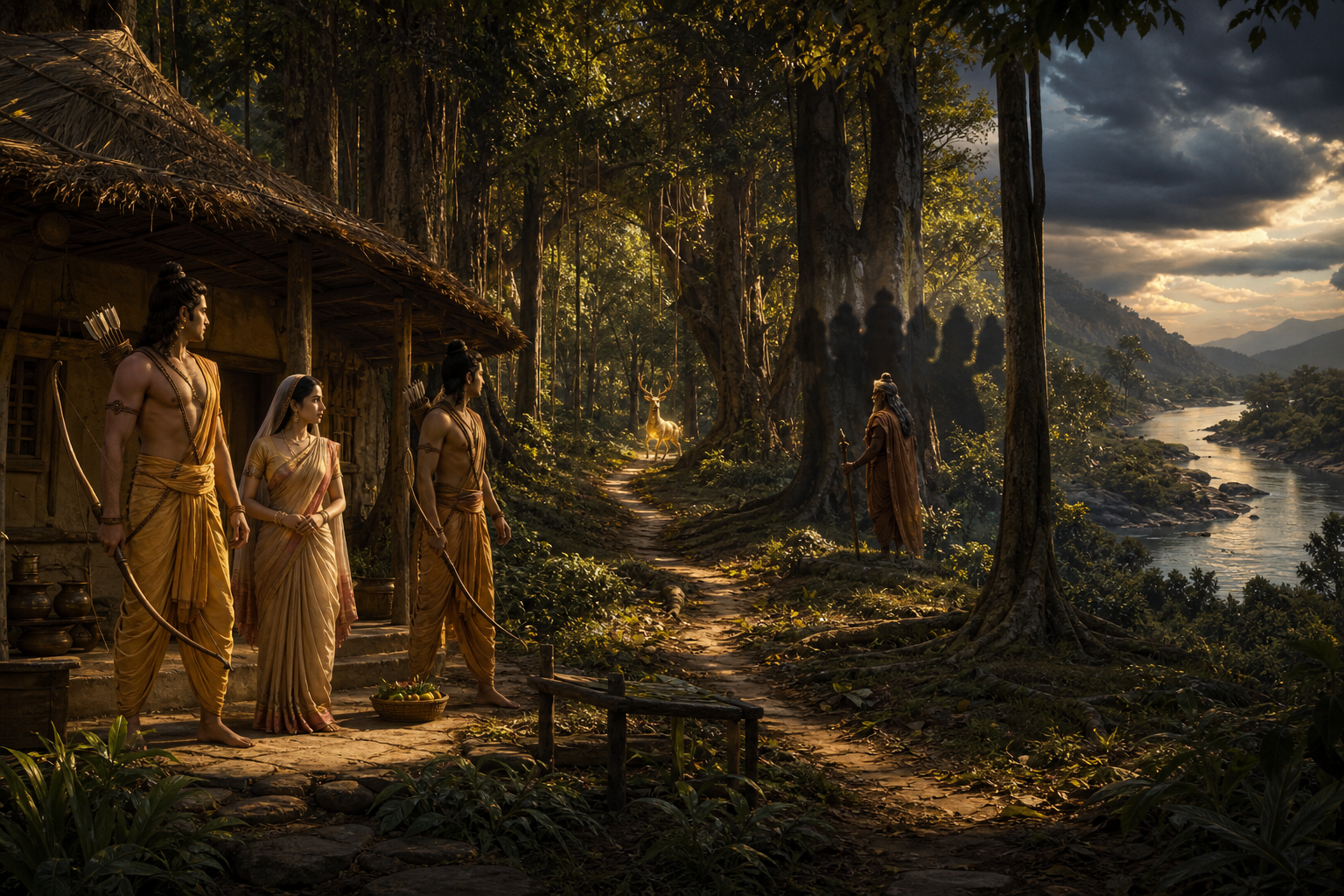
The Golden Deer in Ramayana: Destiny, Dharma, and the Perils of Illusion Unveiled

The Golden Deer episode in the Ramayana is a precise study in destiny, duty, and perception, showing how beauty can mask deception and how dharma reasserts itself through tested choices. Grounded in Valmiki’s Aranya Kanda and enriched by later Rama-kathas, the narrative functions as a catalyst that transforms exile into righteous struggle. A symbolic reading…
-
Unveiling Lankini (Lankalakshmi): Lanka’s Fierce GuardianIconography, Myth, and Spiritual Power

Lankinialso known as Lankalakshmiappears in the Sundara Kanda as the fierce yet discerning guardian of Lanka’s gate. Her encounter with Hanuman marks the withdrawal of fortune from adharma and the redirection of śrī toward a righteous mission. Iconographically, she aligns with threshold guardians (dvarapalikas), typically shown with martial attributes and a vigilant stance; regional traditions…
-
Rama’s Exile Reimagined: How the Indonesian Ramayana Transforms Vanvas into Sacred Austerity

The Indonesian Ramayana preserves the familiar arc of Rama’s 14-year exile while transforming its meaning through Javanese-Balinese ethics, performance, and iconography. Drawing on the Kakawin Ramayana, Prambanan’s ninth-century reliefs, and wayang and kecak traditions, exile (vanvas) is recast as tapa brataa disciplined pathway to leadership rather than mere banishment. Local concepts such as nrimo ing…
-
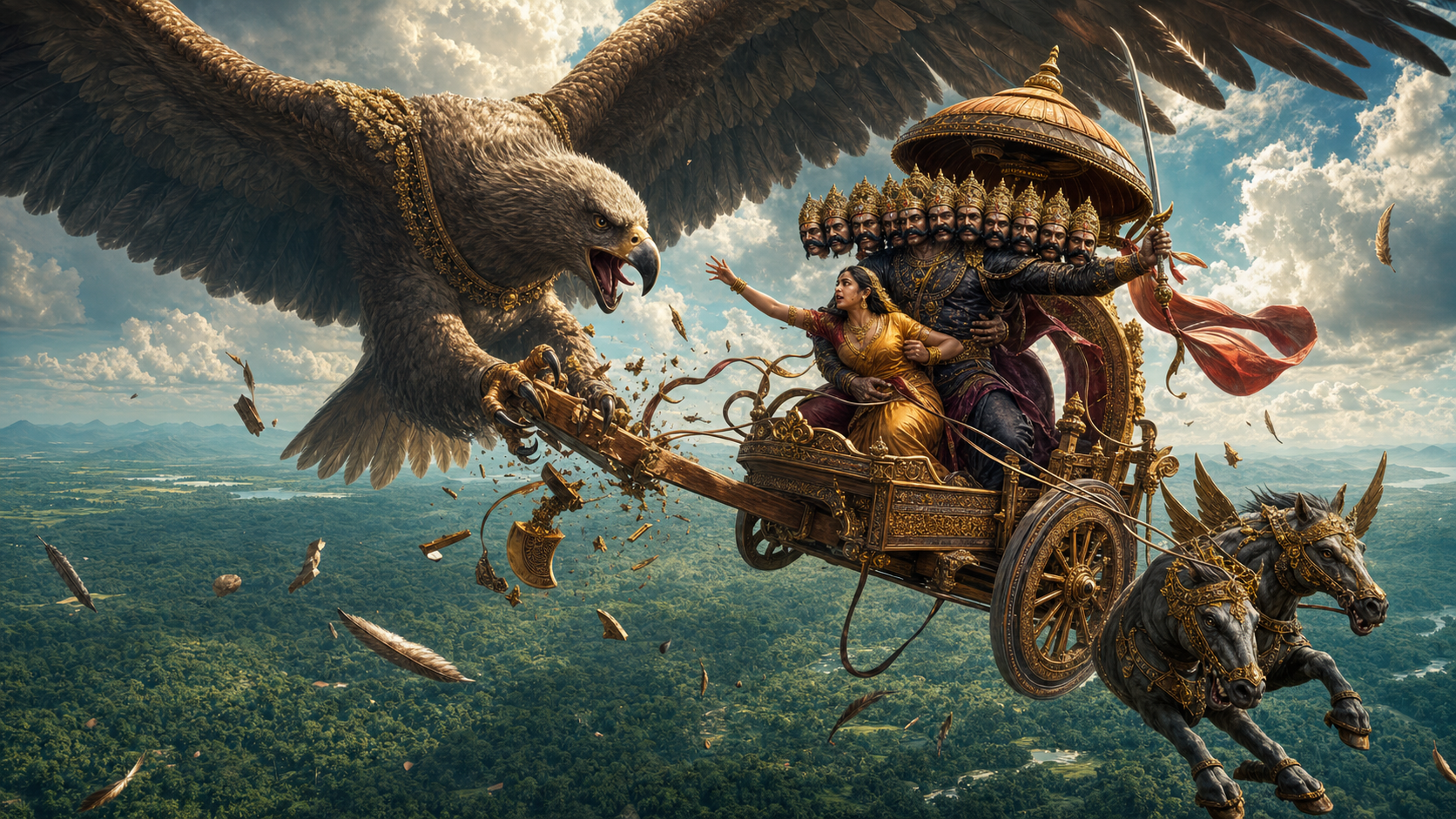
Ravana’s Celestial Chariots Decoded: Sacred Power and Terrible Splendor in Lanka’s Final War

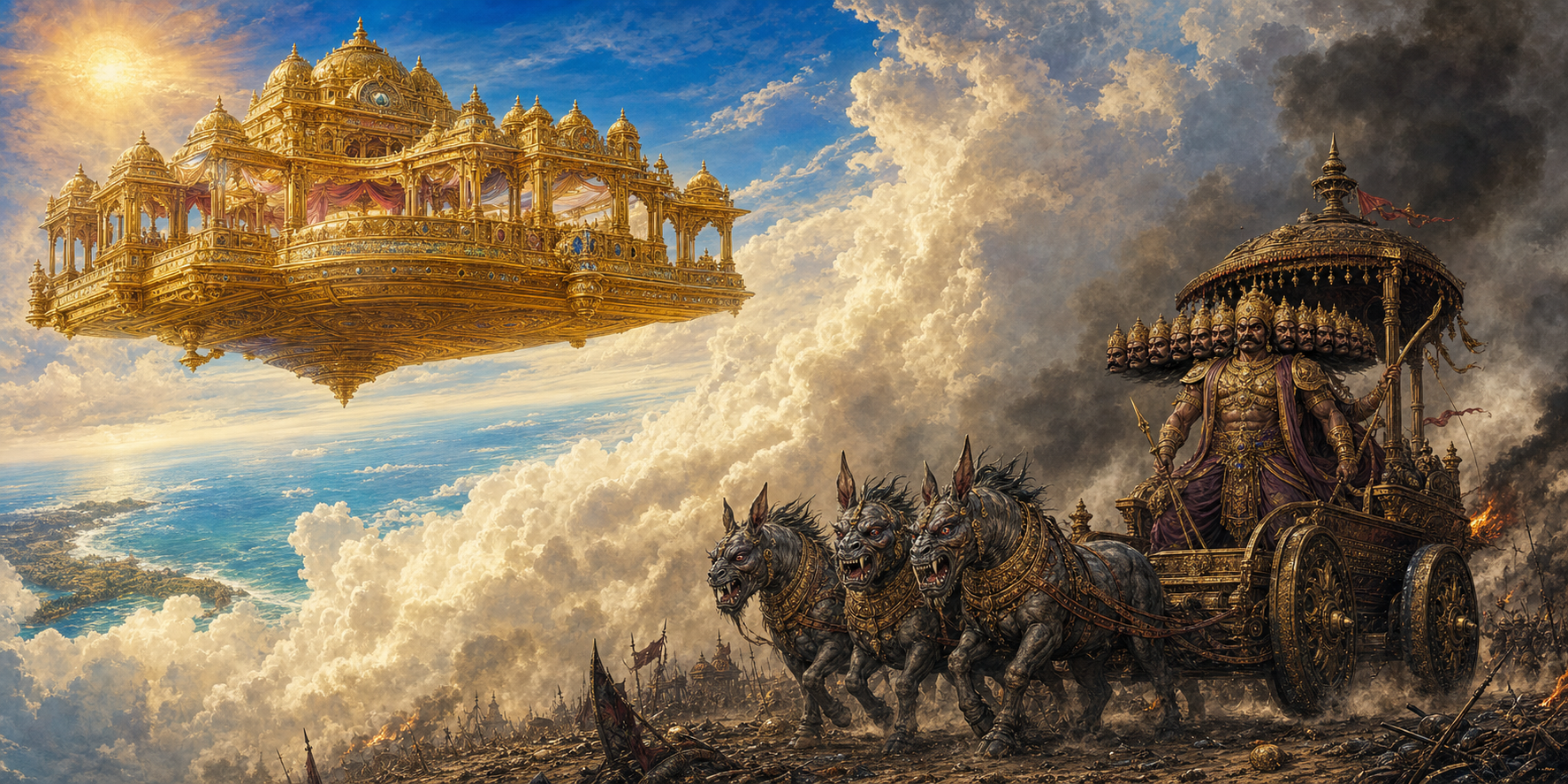
The final battle of Lanka in the Yuddha Kanda turns on two war chariotsRavana’s radiant ratha and Indra’s chariot driven by Matalithat fuse ritual, technology, and ethics. This analysis decodes ratha architecture, disablement tactics, and the elemental taxonomy of astras such as Agneyastra, Varunastra, and Brahmastra. It clarifies how Dharma-Yuddha constrains violence, showing why Rama’s…
-
Hanuman’s Honeybee Stratagem: Foiling Mahiravana in Patala to Save Rama and Lakshmana

This long-form analysis narrates how Hanuman’s honeybee form and Panchamukhi manifestation foil Mahiravana’s Patala ritual to rescue Rama and Lakshmana. It situates the episode in later and regional Ramayana traditions, clarifying its relationship to Valmiki while highlighting its wide cultural reception in performance and temple iconography. The essay unpacks Patala cosmology, the five-lamp life-bond, and…
-
Hanuman’s Tail-Dome and the Underworld Duel: Mahiravana’s Deception and a Dharmic Rescue

This analytical retelling explores the Mahiravana (Ahiravana) episode from later Ramayana traditions, where Hanuman’s innovative “tail-dome” defense is outwitted by a master of illusion and redeemed by a precise, dharmic rescue in Patala. It situates the story within regional Ramayana literatures, clarifies iconography around Panchamukhi Hanuman, and explains the technical constraint of extinguishing five life-lamps…
-
Rama on Hanuman, Lakshman on Angada: Decoding Yuddha Kanda Strategy and Sacred Symbolism

This study examines Rama’s march to Lanka through the dual lenses of strategy and symbolism in the Yuddha Kanda. It traces how intelligence from Sundara Kanda matured into a disciplined campaign: ritual diplomacy with the ocean, Nala’s engineering of Rama Setu, and Sugriva’s team-of-teams command across a high-mobility Vanara army. It clarifies that Valmiki does…
-
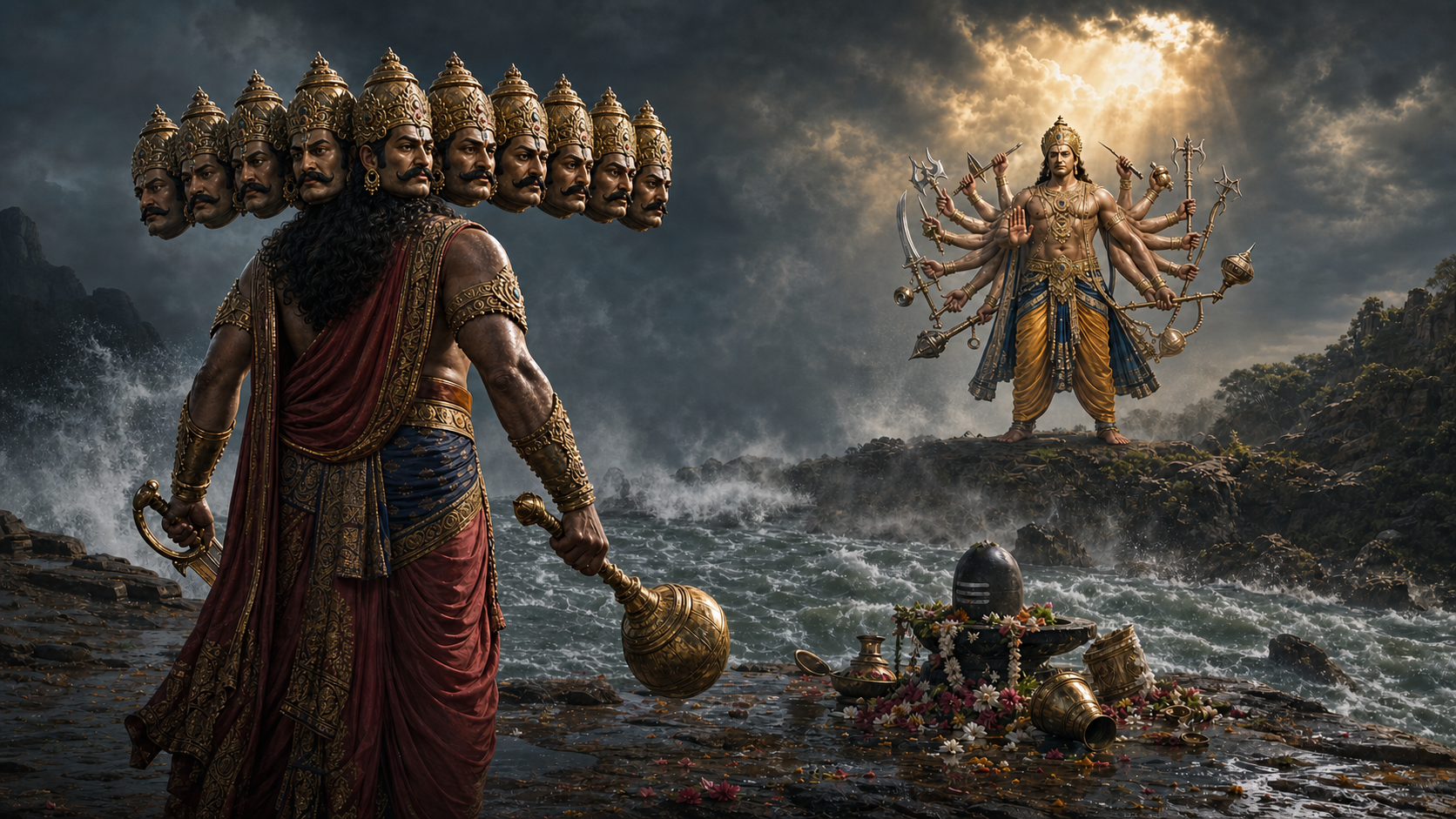
Rakshasa Linga Explained: How Fierce Tapas Wins Shiva’s Non‑Discriminating Grace

This in-depth exploration clarifies what a Rakshasa Linga is and why it matters: a Shivalinga worshipped or installed by a Rakshasa in Purana and sthala-mahatmya traditions. It explains how Skanda Purana and Shiva Purana preserve narrativessuch as Gokarna’s Atma Linga and Baidyanath Jyotirlingathat highlight Ravana’s fierce tapas and Shiva’s impartial grace. It situates these accounts…
-
Indrajit’s Final Penance: A Riveting Study of Dharma, Filial Loyalty, and Redemption in Ramayana

This long-form analysis explores Indrajit (Meghanada) as one of the Ramayana’s most complex figuresan invincible warrior confronting a profound dharmic dilemma between filial loyalty and moral law. Anchored in the Valmiki Ramayana and enriched by regional traditions such as the Krittivasi Ramayana, it explains how the Nikumbhila sanctuaryoften associated with Kaliframes his final yuddha-yajna as…
-
Ramayana’s Unfinished Truth: Why Rama and Sita Don’t Get a Fairy-Tale Ending (and Dharma’s Lesson)

Ramayana is not a fairy tale about bliss after victory; it is a rigorous meditation on dharma under the pressures of love, power, and public trust. The narrative after Ravana’s defeat intensifies into a study of rajadharma, where Rama’s personal anguish and public duty collide. Sita’s trialsAgni Pariksha, exile, and her return to Mother Earthexpose…
-
Kumbhakarna and Vikarna: Tragic Brothers of Conscience, Loyalty, and Dharma in the Epics

Kumbhakarna (Ramayana) and Vikarna (Mahabharata) embody the epic dilemma between loyalty to kin and loyalty to dharma. This rigorous, text-grounded comparison explains how each man speaks the truth, anticipates disaster, and yet dies fighting for causes he judged unjust. Readers gain a practical frameworkkṣātra-dharma, bandhu-dharma, rāṣṭra-dharma, and ātma-dharmato evaluate conflicts of duty. The analysis connects…
-
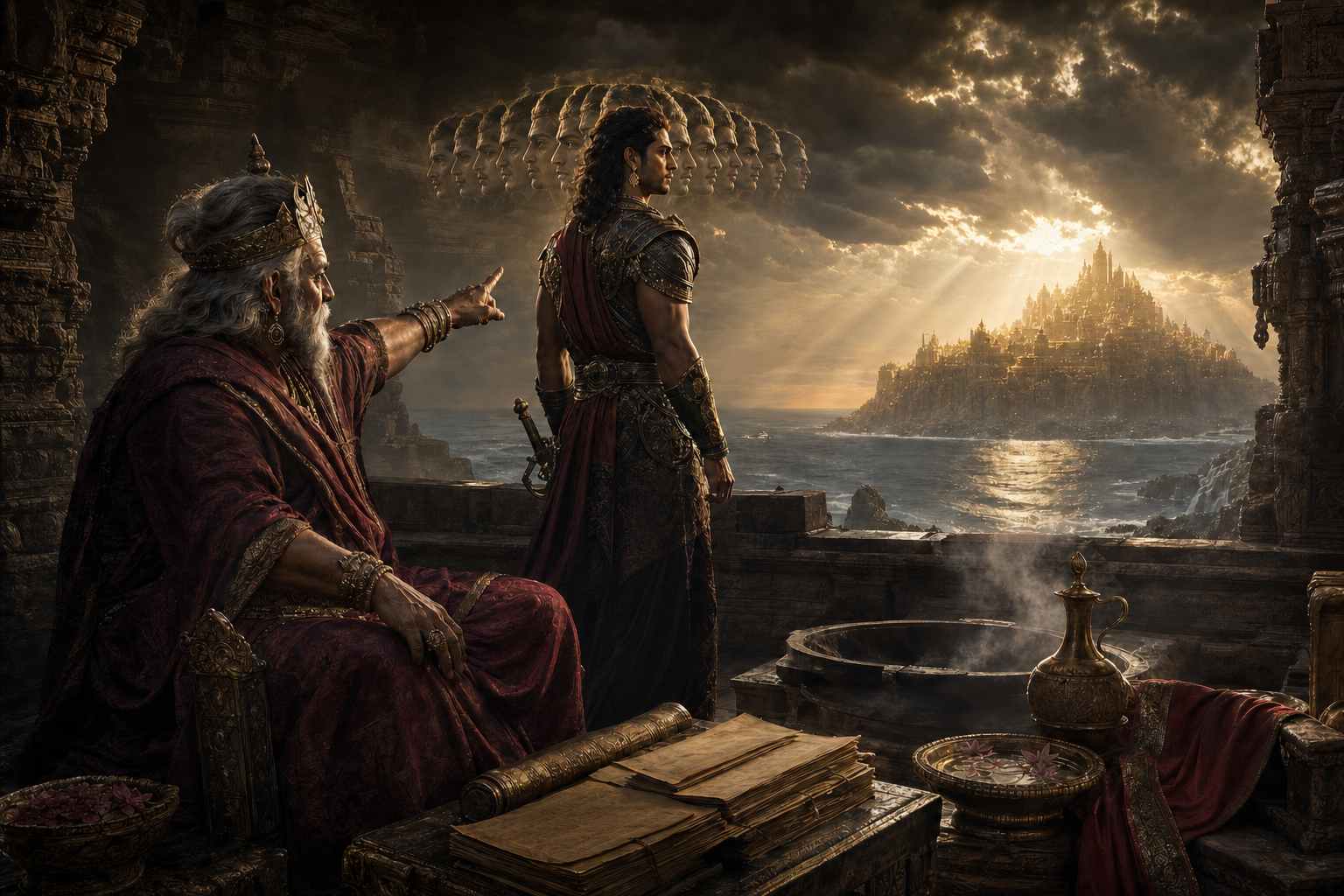
Why Hanuman’s Lanka Infiltration Seemed Impossible: Fortifications, Yogic Science, and Bhakti

Hanuman’s entry into Lanka in the Sundara Kanda is a tightly orchestrated mission that combined strategic insight, advanced fortifications, yogic mastery, and unflinching bhakti. Lanka’s defensesattributed in origin to Vishwakarma’s design and later fortified by Ravanamade infiltration rather than siege the rational first move. The ocean crossing presents a trilogy of tests (Mainaka, Surasa, Simhika)…
-
Devantaka’s Fall in the Ramayana: Hanuman’s Decisive Blow Against Ravana’s Mighty Son

Devantaka’s fall in the Yuddha Kanda of the Ramayana captures a decisive moral and strategic lesson: disciplined strength, anchored in dharma, defeats ferocity untethered to ethics. Classical sources consistently pair Devantaka with Narantaka, Trisira, and Mahodara as Lanka’s shock corps, yet it is Hanuman’s single, precisely timed strike that ends Devantaka’s assault. The episode’s symbolism…
-
Atikaya’s Tragic Valor: Reclaiming Ramayana’s Forgotten Warrior and His Quest for Belonging

Atikaya emerges in the Ramayana as a formidable yet under-remembered warrior whose courage is matched by a poignant quest for recognition in Ravana’s court. Drawing on Yuddha Kanda and regional retellings, this analysis situates his duel with Lakshmana within the ethics of dharma-yuddha, highlighting the disciplined use of astras and the decisive counsel of Vibhishana.…