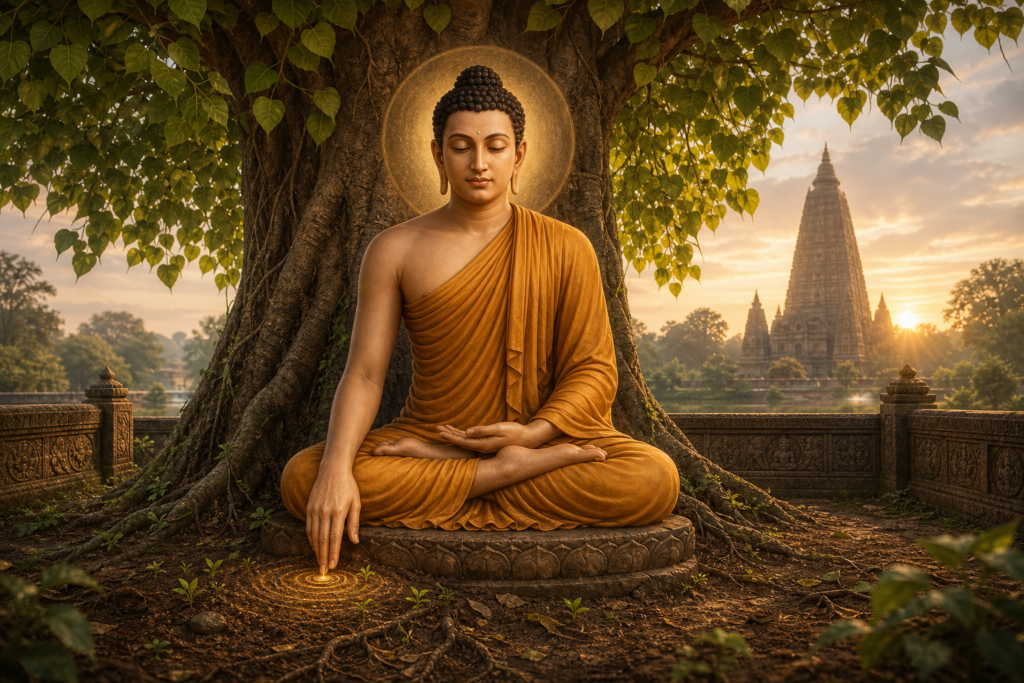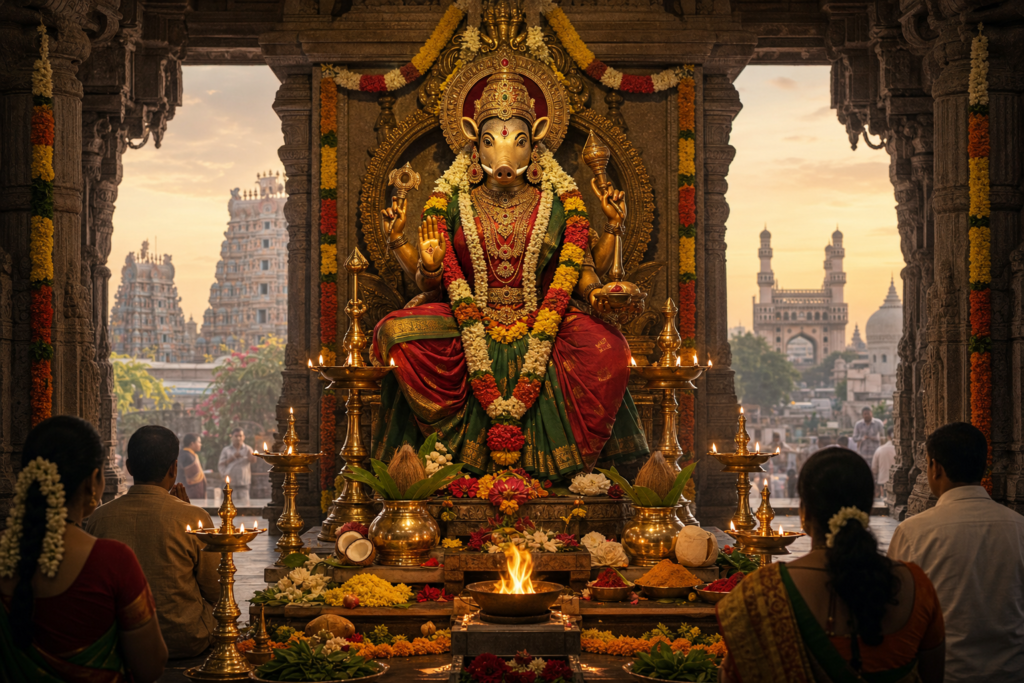
The Brahma-vaivarta Purana recounts a striking narrative of a South Indian brahmana who longed to offer sweet rice (khir) to his Deities but lacked the means to procure ingredients. In the spirit of bhakti and with unwavering devotion, he performed the entire offering mentally, entering deep meditation to collect, cook, and prepare the dish. This Hindu story, preserved in the Puranas, highlights a central principle of the Bhakti Tradition: sincere intention can sanctify even the humblest offering.
As the account unfolds, the preparation completed in contemplation required cooling before the offering to Krishna. To test the temperature, the brahmana touched the sweet rice within his meditation and felt an actual burn on his finger. The episode concludes with the Lord accepting the heartfelt offering and granting the devotee entry to Vaikuntha. Read in an academic light, this scene articulates a profound insight into devotional practice and meditation: intense one-pointedness can blur the conventional boundary between mental absorption and embodied experience, underscoring how devotion (bhakti) and intention can shape lived reality.
Considered within the broader dharmic family, the emphasis on intention unifies diverse traditions. Buddhism treats intention (cetanā) as central to the ethical quality of actions; Jainism’s samayik and bhavana elevate inner purity and disciplined resolve; Sikhism’s simran and seva affirm sincerity and selfless action as primary. While the theological frames differ, the shared dharmic understanding is clear: the depth of inner devotion carries transformative power that is not contingent on material opulence. This convergence strengthens unity among Hinduism, Buddhism, Jainism, and Sikhism by affirming that the essence of Dharma is accessible through authentic, mindful practice.
For contemporary practitioners, the story offers practical guidance. When resources are limited or circumstances constrain outward ritual, contemplative offering, mindful mantra, and ethical living remain meaningful and efficacious. Many will recognize parallel momentsquiet prayers during hardship, simple meals offered with gratitude, or brief meditations in busy liveswhere intention sustained spiritual connection. Such practices align with the Bhakti Tradition and with meditation-centered disciplines across dharmic paths, demonstrating that devotion and mindfulness can be integrated into daily routines with humility and consistency.
Ultimately, this Purana narrative affirms an inclusive principle: devotion dignifies every sincere act, and intention elevates even the simplest offering. By foregrounding inner sincerity over external display, it encourages compassion toward oneself and others, fosters inter-traditional respect, and strengthens unity within the broader dharmic tapestry. In this way, the account of the brahmana and his khir continues to inspire a shared ethic of devotion, meditation, and Dharma for all who seek spiritual insight.
Inspired by this post on Dandavats.