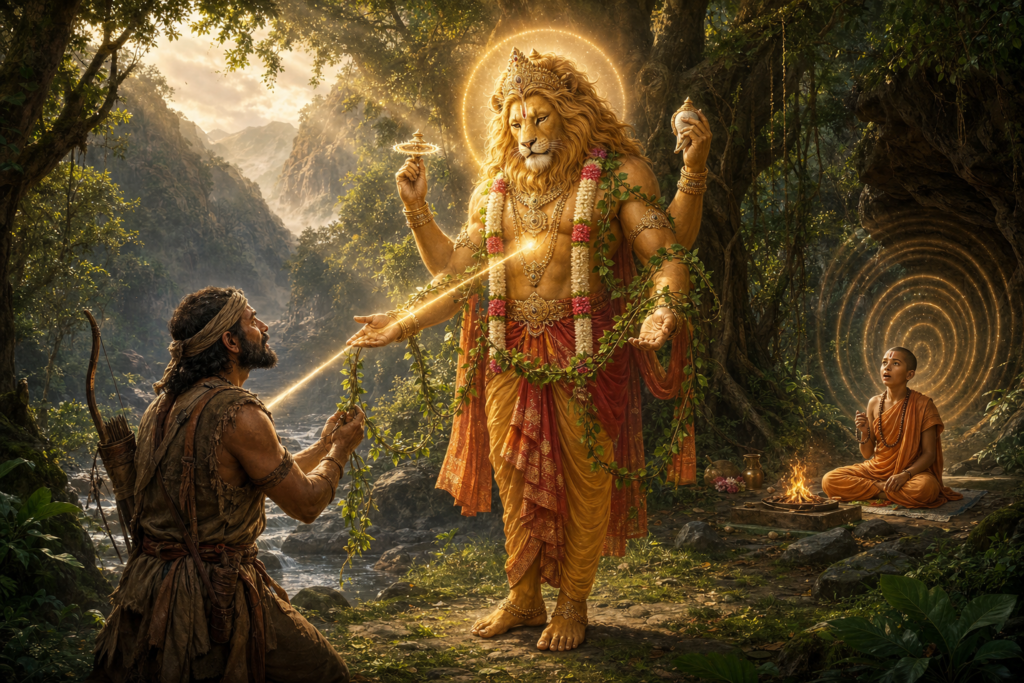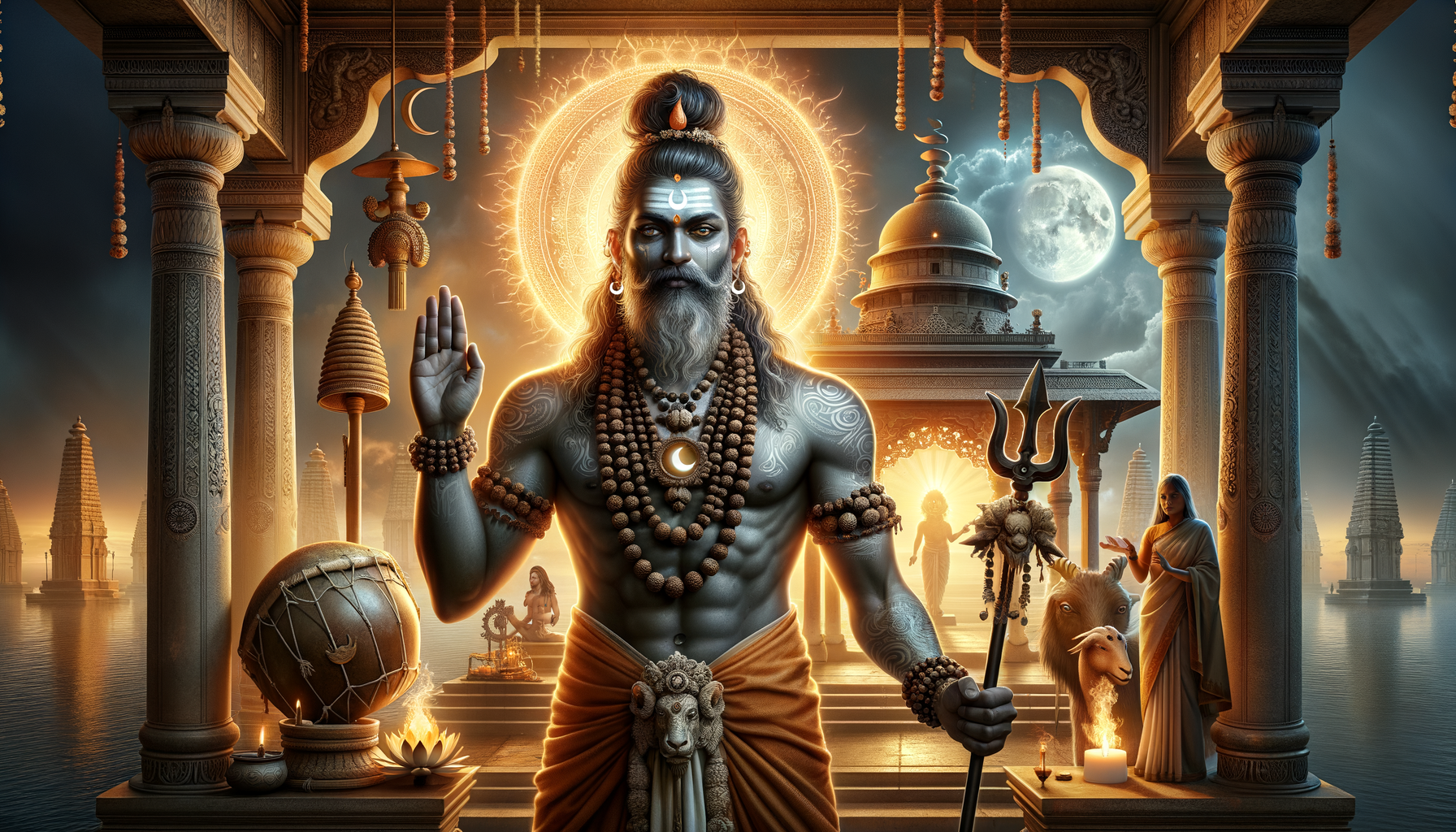
Veerabhadra Katha presents Veerabhadra Swamy as a formidable manifestation of Lord Shiva, brought forth to restore dharma when pride disrupted the sacred order. Revered across Shaiva traditions and temple lore, this narrative clarifies how disciplined strength, guided by compassion, safeguards spiritual integrity and community harmony.
The background centers on Daksha, a Prajapati, who convened a grand Yagna but deliberately excluded Shiva. SatiDaksha’s daughter and consort of Shivaattended the sacrificial assembly out of filial duty. Confronted with public derision toward Shiva and the profanation of sacred rites, she relinquished her mortal frame through yogic self-immolation, an act that underscored the gravity of disrespect within a sanctified setting.
Shiva’s response united grief with cosmic purpose. From a lock of his matted hair, he manifested Veerabhadra; traditions also recall the emergence of Bhadrakali. Veerabhadra entered the Yagna arena, dismantled sacrificial implements, humbled the arrogant, and decapitated Daksha. Accounts in the Puranas, including the Shiva Purana and Skanda Purana, describe how even the assembled deities could not withstand this corrective force once the sanctity of dharma had been breached.
The resolution reveals the essential balance of raudra and karuna. Shiva’s compassion prevailed: Daksha was restored to life with a goat’s head, the rite was completed with due honor, and reconciliation replaced hubris. The narrative thus affirms that ritual divorced from reverence and inclusivity loses its meaning, whereas humility and right conduct reestablish cosmic equilibrium.
Symbolically, Veerabhadra embodies kshatra in service of dharmarighteous power restrained by wisdom. The episode illustrates that indignation becomes just only when aligned with ethical purpose and followed by restoration. For contemporary communities, this translates into confronting exclusion or disrespect firmly yet fairly, with a commitment to repair and cohesion.
These ethical motifs resonate across the dharmic familyHinduism, Buddhism, Jainism, and Sikhismthrough shared values of humility, self-mastery, truthfulness, and compassionate resolution. While the imagery is intense, its enduring lesson aligns with principles such as ahimsa and satya: unchecked pride fractures communities, whereas respectful inclusion heals them. The Katha also supports honoring diverse spiritual paths within the broader dharmic tapestry.
As a living tradition, devotion to Veerabhadra Swamy flourishes in many parts of India, particularly in South Indian temples. Katha recitations, festival dramatizations, and darshan experiences emphasize protection, moral courage, and reverence for sacred order. For many devotees, the fierce iconography is experienced not as hostility, but as guardianshipan assurance that righteous strength ultimately serves compassion and balance.
In summary, the Story of Veerabhadra Swamycentral to Shaiva scriptures and retellingsdetails the Daksha Yagna, Sati’s sacrifice, Shiva’s manifestation of Veerabhadra, and the final reconciliation that restored harmony. Read in an ethical framework, Veerabhadra Katha becomes a guide for channeling power responsibly, honoring diverse spiritual journeys, and sustaining unity within dharmic traditions.
Inspired by this post on Hindu Pad.