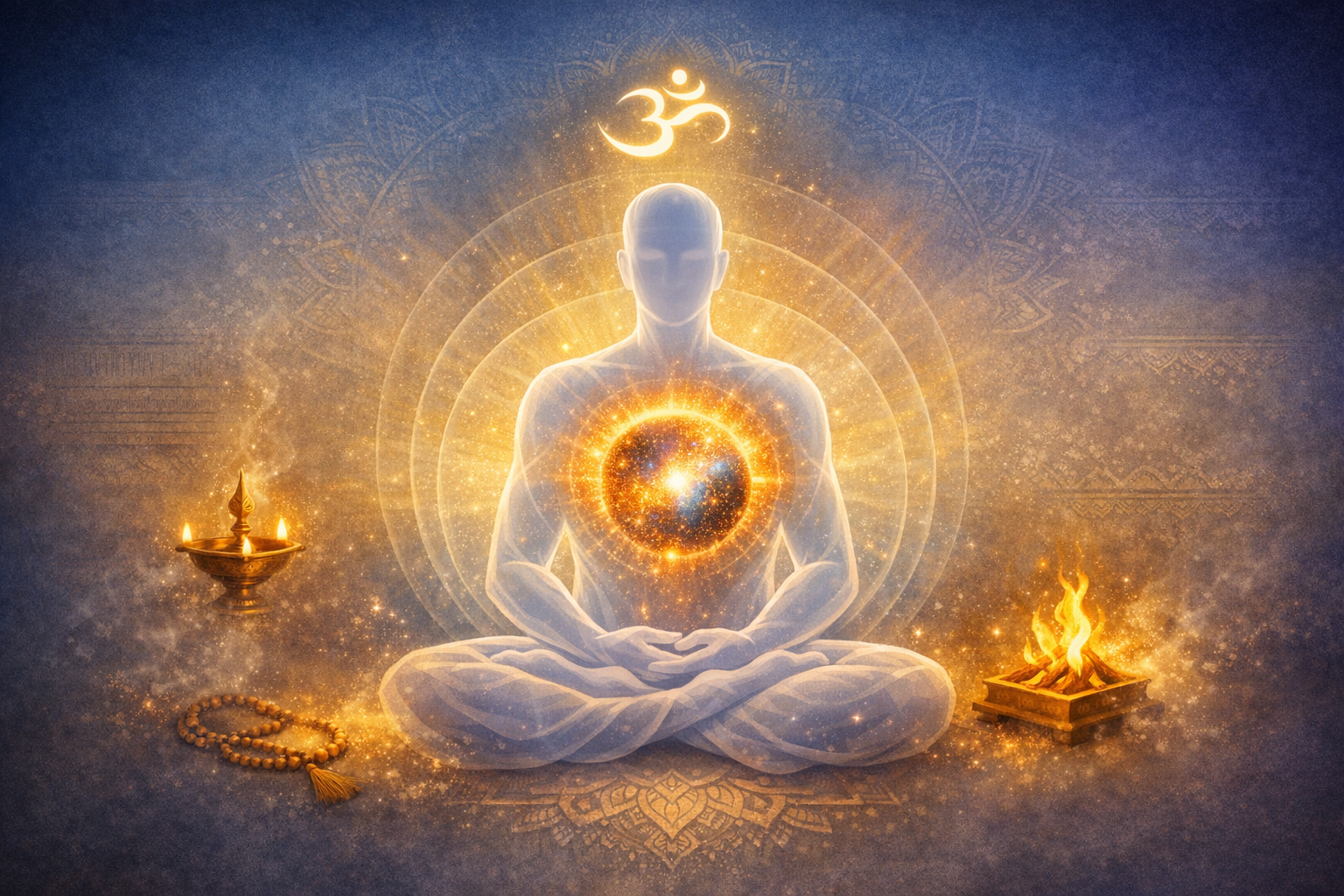
The Upanishads articulate a revolutionary vision in the history of ideas: ultimate reality is not an external deity to be supplicated but the very essence of consciousnessAtmanrecognized as non-different from Brahman. Rather than prescribing obligatory worship of a god, these scriptures map a disciplined pathway from ritual to realization, from outward forms to inner knowledge, culminating in moksha through direct insight. This perspective does not negate devotion; it reframes devotion as a means to interiorization and clarity, preparing the mind for Self-Realization.
Composed as the concluding wisdom (Vedanta) of the Vedas, the principal Upanishadssuch as Isha, Kena, Katha, Prashna, Mundaka, Mandukya, Taittiriya, Aitareya, Chandogya, and Brihadaranyakabelong to the category of shruti and are treated as a pramāṇa (valid source of knowledge) for metaphysical truth. Their method blends reason (yukti), transmission (shravana), reflection (manana), and contemplative assimilation (nididhyāsana), validating knowledge through lived anubhava (direct experience).
At the heart of their teaching stand the mahāvākyastat tvam asi, aham brahmāsmi, prajñānam brahma, ayam ātmā brahmawhich assert identity rather than separation. These declarations do not require intermediaries to access the sacred; they invite rigorous self-inquiry, ethical clarity, and contemplative stillness to recognize what is always present, self-luminous, and boundaryless.
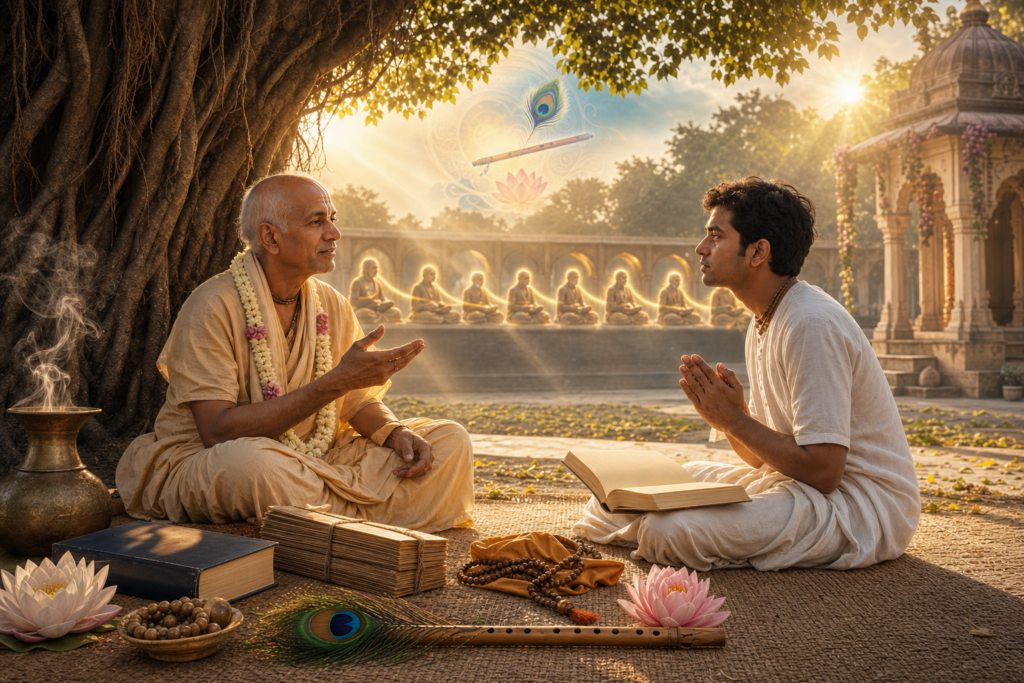
Contrary to the assumption that sacred texts primarily establish hierarchies between worshipper and worshipped, the Upanishads consistently redirect attention from external dependence to inner recognition. Where ritual (karma-kāṇḍa) disciplines behavior and upāsanā (contemplation on symbols, sages, deities, or cosmic functions) refines attention, jñāna (knowledge) resolves ignorance regarding the Self. In this sequence, worship is honored as sādhanā (means), not mandated as the goal.
Mundaka Upanishad distinguishes “lower” disciplines (including ritual and liturgical knowledge) from “higher” knowledge that reveals the imperishable. In a striking exhortation, it advises examining the limits of action-born results and turning inward toward that which is not produced by action. This shift does not disparage practice; it orients practice toward the discovery of what action cannot deliver: abiding freedom.
Kena Upanishad advances the paradoxical method that protects the ineffable from conceptual capture“It is known to the one who thinks it is unknown; unknown to the one who thinks it is known.” Such pedagogy, coupled with Brihadaranyaka’s neti neti, dissolves reifications and guards against reducing Brahman to an object among objects. The aim is not to deny forms but to prevent misidentification with them.
Within this architecture, devotion retains a vital role. Upāsanā on saguna Brahman (the Divine with attributes) and meditation on Om cultivate steadiness and subtlety of the mind. Mandukya Upanishad reveals the layered significance of Om across the waking, dream, and deep-sleep states, pointing beyond them to turīya, the unconditioned ground. Devotion, thus, becomes a bridge across attention’s restlessness, preparing for nondual insight.
In practical terms, the Upanishadic pathway is structured by sādhana-catustaya (four qualifications): viveka (discernment of the real and unreal), vairāgya (dispassion for transient ends), śamādi-ṣaṭka (the sixfold disciplines of mind), and mumukṣutva (intense longing for liberation). When these mature, shravana, manana, and nididhyāsana become transformative rather than merely intellectual, and many practitioners report a quiet, stable clarity displacing existential anxiety.
Psychologically and phenomenologically, the Taittiriya Upanishad’s five-kosha modelannamaya, prāṇamaya, manomaya, vijñānamaya, ānandamayamaps a progressive interiorization from the gross to the subtle. This model anticipates modern contemplative psychology: identity is often entangled with body, breath, emotion, cognition, and even refined bliss states. The Upanishadic instruction is to witness each layer without clinging, recognizing Atman as the non-objective witness that illumines all layers without itself being grasped.
Ethically, the Upanishads integrate knowledge with dharma. Without ahiṁsā, satya, asteya, brahmacharya, and aparigraha infusing conduct, the mind lacks the lucidity needed for Self-Realization. This convergence resonates across the wider dharmic familyBuddhist sīla, Jain vows, and the Sikh rehat maryada similarly refine intention, stabilize attention, and orient life toward truth. These convergences embody unity in spiritual diversity rather than uniformity of belief.
Seen in a broader dharmic context, the Upanishadic emphasis on direct insight aligns with methods in Buddhism (vipassanā and the investigation of experience), Jainism (samyak-darśana and samayik), and Sikhism (simran and living in remembrance of Ik Onkar). While doctrinal formulations varysuch as the Buddhist analysis of anattā or Jain anekāntavāda’s many-sidednessthe shared commitment is to inner transformation, ethical clarity, and liberation from ignorance and affliction.
Nonduality (advait) is often foregrounded in Upanishadic interpretation, especially in later Advaita Vedanta. Yet the scriptural corpus is sufficiently capacious to inspire alternative Vedanta readings, such as Viśiṣṭādvaita and Dvaita, that affirm intimate communion without collapsing difference. In practice, seekers in each stream report the same essential trajectory: from reliance on external supports to a living, present-centered intimacy with the Divine reality.
Epistemologically, the Upanishadic method may be understood through adhyāropa–apavāda (provisional superimposition followed by rescission). Provisional models help the mind attendcosmic meditations, deific symbols, or Om as a sound-form of Brahmanwhile apavāda withdraws the scaffolding once clarity dawns. This graduated deconstruction prevents premature nihilism and guides attention past conceptual habit into unmistakable immediacy.
The question “Do the Upanishads ask for the worship of a god?” resolves into a subtler answer: they neither prohibit nor absolutize worship. Upāsanā is sanctioned as a powerful means where appropriate, yet the telos is vidyāstable recognition that the knower of all states is free of all states. In this light, forms of worship are honored as inclusive entryways for diverse dispositions (ishta), integral to the Hindu way of life and harmonious with the plural genius of the subcontinent’s dharmic traditions.
Many practitioners describe a relatable arc. A person may begin with image worship, mantra-japa, and pilgrimage, discovering solace and meaning. Over time, attention naturally turns inwardfirst to breath and subtle sensation, then to the sense of “I am,” and finally to the sheer aware presence in which all experiences arise. What remains is not a concept but a quiet certainty: awareness is self-luminous and unbounded; it does not need to be attained because it is never absent.
This arc also explains why the Upanishads emphasize interior practices over doctrinal allegiance. When devotion matures into love of truth, it no longer depends on outcomes. Service (seva) flows without calculation, meditation becomes effortless resting as awareness, and ethical clarity ceases to feel imposed. The inner transformation is its own testimony.
Misconceptions often arise from conflating scriptural layers. Vedic ritual texts focus on cosmic order and merit; the Upanishads aim at final release through recognition. The latter do not attack ritual or worship; they integrate and transcend them. Read in this way, the spiritual ecosystem of India coheres: there is room for temple traditions, philosophical analysis, yogic disciplines, and formless contemplationeach sustaining the others.
Key contemplative instructions across the corpus reinforce this orientation. Isha Upanishad enjoins seeing the Self in all beings and all beings in the Self, a vision whose ethical result is non-harming and compassion. Katha Upanishad contrasts the pleasant and the good, urging the steady choice of wisdom. Chandogya’s tat tvam asi and Brihadaranyaka’s neti neti alternately affirm and negate, ensuring the mind neither objectifies nor doubts what is most intimate.
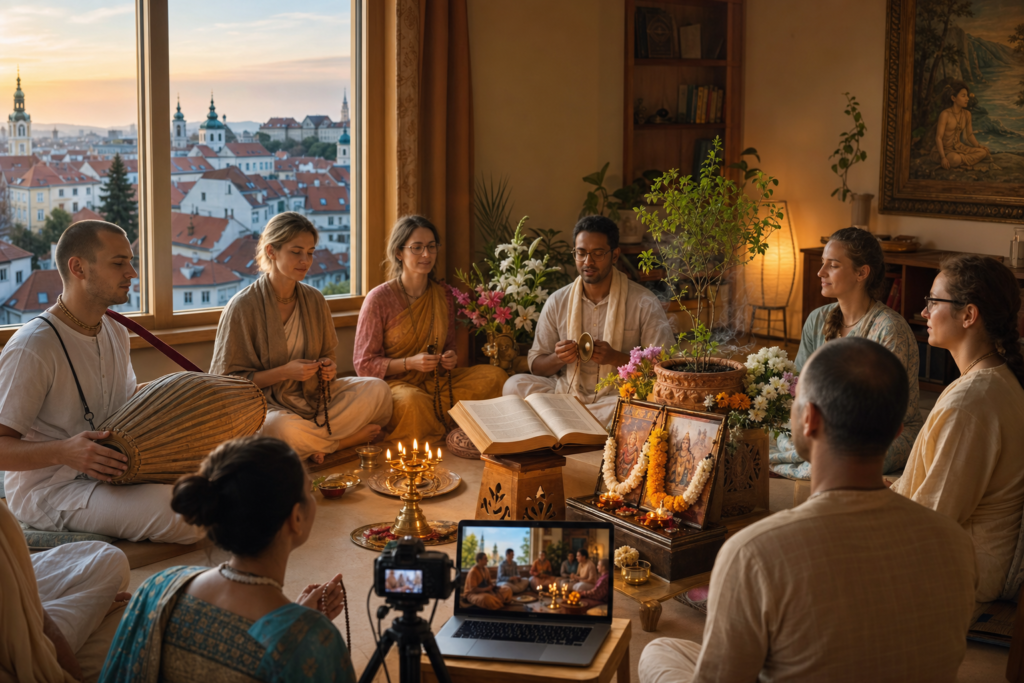
In contemporary practice, this wisdom translates into disciplined simplicity. A daily rhythm could include: a period of shravana (study of a primary Upanishad with a trusted commentary), manana (written or silent reflection on a single sentence), and nididhyāsana (resting as awareness, gently repeating a mahāvākya). Complementary supports include breath awareness, mantra-japa, and acts of quiet service that embody non-possessiveness and compassion.
Ishtaone’s chosen form or approachensures that spiritual life remains personal and effective. For some, it may be meditation on Om; for others, remembrance of a deity’s name, or a formless inquiry into the sense of “I.” The Upanishadic consensus is that sincerity, steadiness, and ethical integrity matter more than the specific doorway chosen. Such acceptance sustains interfaith harmony within the dharmic fold and nurtures unity in spiritual diversity.
A recurrent experiential marker on this path is a gentle reduction in reactivity. As identification loosens from body, emotion, and thought-knotting, there is heightened capacity for listening and empathy. Many notice that everyday challengeswork, family, servicebecome extensions of practice rather than distractions from it. Knowledge is verified not by metaphysical debates but by ease, responsibility, and unforced kindness.
From a comparative perspective, the Upanishadic insight that awareness is not an object aligns with rigorous analyses in Buddhist Abhidharma and Madhyamaka, even as interpretive conclusions differ. Jain anekāntavāda underscores the humility of multiple standpoints, encouraging dialogue rather than dogma. The Sikh affirmation of Ik Onkar harmonizes devotion and direct remembrance. These resonances demonstrate that the Indian civilizational ethos supports many complementary paths to freedom.
Technically, one may summarize the Upanishadic soteriology as the removal of avidyā (ignorance) about Atman rather than the production of a new state. Because Brahman is by definition limitless, it cannot be gained as a finite object; it is recognized as the ever-present ground. Hence the insistence that liberation is not an achievement but claritystabilized through nididhyāsana and lived as fearless responsibility in the world.
For those drawn to practice, several diagnostics help. If devotion deepens humility and steadiness, it is serving its purpose. If study breeds conceit or agitation, the remedy is to return to ethical basics and contemplative simplicity. If meditation becomes an escape, reengage seva and relationship. The Upanishadic balance of wisdom and compassion, insight and service, sustains a whole life rather than a spiritual persona.
Ultimately, the Upanishads do not ask for worship in the sense of dependence on an external authority for salvation. They invite awakening to what is already true: the luminous Self that is never separate from the whole. Devotion, meditation, study, and service converge in that invitation, and the wider dharmic traditionsHinduism, Buddhism, Jainism, and Sikhismoffer mutually enriching methods to realize it in daily life.
When read with care, the Upanishads become less a set of propositions and more a refined pedagogy of freedom. They honor diverse dispositions, affirm ishta, integrate worship without absolutizing it, and guide attention toward the undeniable simplicity of awareness. In a plural society, this vision is not merely metaphysical; it is a template for harmonyunity without uniformity, depth without dogma, love without fear.
Inspired by this post on Hindu Blog.