Tag: atma

  • Bhairava as Bhudhara Atma: The Unshakable Ground of Kalika, Earth, and All Worlds

    Bhairava as Bhudhara Atma: The Unshakable Ground of Kalika, Earth, and All Worlds

    This long-form exploration clarifies Bhudharatmajaya Bhairava as the atma of Bhudhara—the conscious support of Earth and mountains—and the Adhara, the unmoving ground of charachar prakriti. It decodes the Sanskrit terms, situates Bhairava and Kalika within Tantric and Purana frameworks, and maps their complementarity across the panchabhuta and Shaiva tattvas. Temple architecture, kshetrapala guardianship, and contemplative…

  • Beyond the Bodily Concept: SB 10.4.20 on ātmā, family ties, and fearless devotion

    Beyond the Bodily Concept: SB 10.4.20 on ātmā, family ties, and fearless devotion

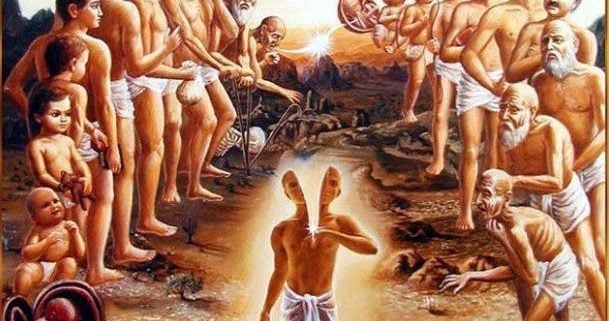
    This analysis of Śrīmad-Bhāgavatam 10.4.20, as presented in a morning class by HG Bhurijana Prabhu, explains how mistaking the body for the ātmā intensifies attachment and vulnerability to the pains of union and separation within family, society, and nation. It offers a precise Vedic framework (tri-śarīra and pañca-kośa) to clarify identity and reduce suffering. Practical…

  • Who Is the Real Father? ISKCON and Gita on the Soul, Death, and the Supreme Source

    Who Is the Real Father? ISKCON and Gita on the Soul, Death, and the Supreme Source

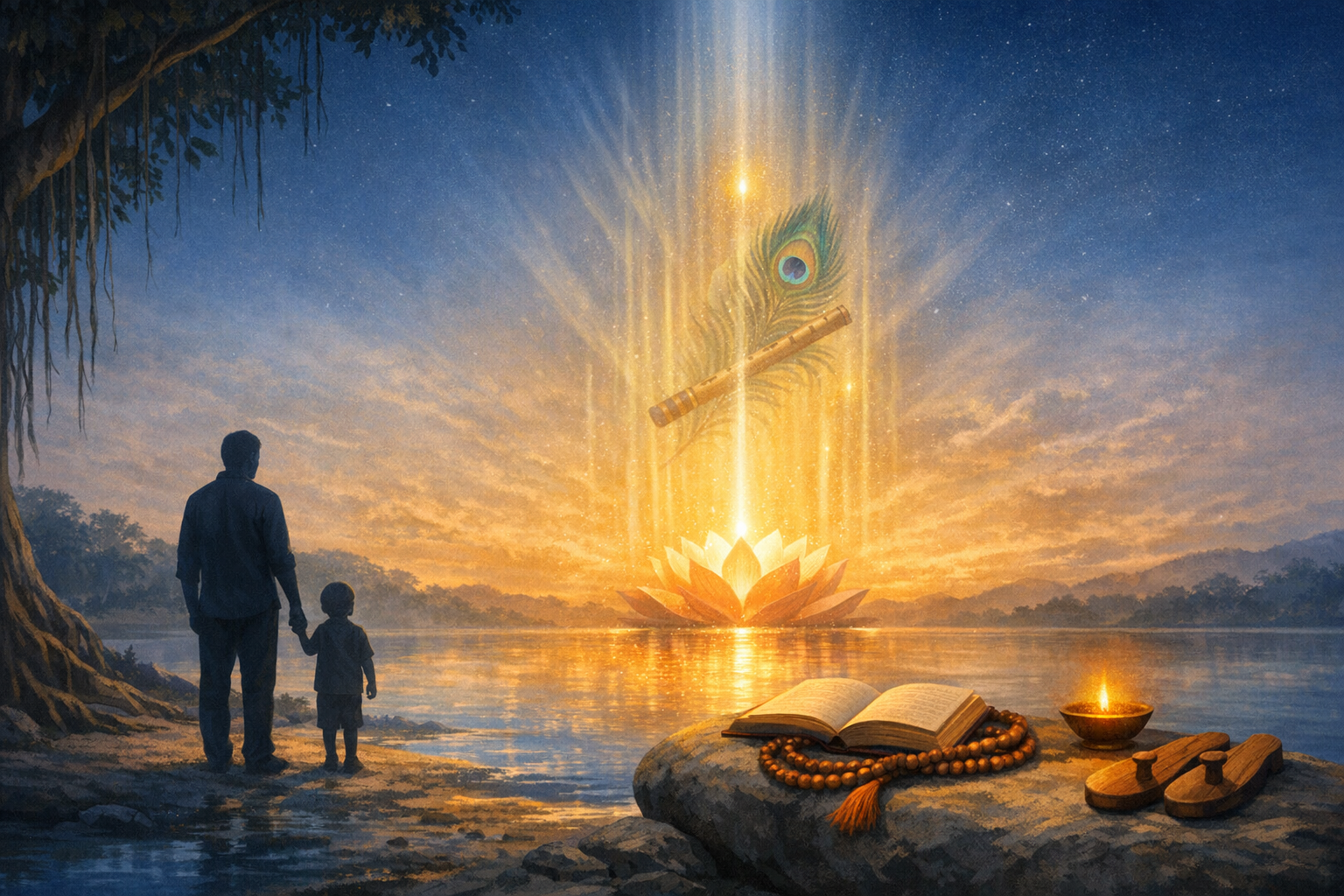
    This essay explores the Hare Krishna (ISKCON) understanding of who the “real father” is by distinguishing bodily from spiritual parenthood through the lens of the Bhagavad Gita. It explains why everyday bereavement language—“he has gone”—implicitly recognizes the self (ātmā) as distinct from the body. Drawing on key verses (Gita 14.4, 2.13, 2.20, 15.7), it shows…

  • Healthy Jiva Seminar Insights: Harnessing Vedic Wisdom for Body–Mind–Atma Harmony and Resilience

    Healthy Jiva Seminar Insights: Harnessing Vedic Wisdom for Body–Mind–Atma Harmony and Resilience

    The “Healthy Jiva” seminar by HH Bhanu Swami (Fri 06 Mar 2026) distilled a Vedic, evidence-aligned model of health that integrates the gross body, the subtle body, and the atma. It explained how imbalances propagate across layers, clarifying why mind-body practices such as asana, pranayama, meditation, and bhakti stabilize well-being. Drawing on tri-sharira, pancha-kosha, and…

  • The Upanishads’ Radical Vision: Beyond Worship to Realize Atman–Brahman Within

    The Upanishads’ Radical Vision: Beyond Worship to Realize Atman–Brahman Within

    This essay clarifies the Upanishads’ radical claim that ultimate reality is not an external deity to be appeased but the Self (Atman), recognized as non-different from Brahman. It explains how ritual and devotion (upāsanā) are honored as preparatory means, while liberating knowledge (jñāna) is the goal. Readers gain a technical overview of key methods—śravaṇa, manana,…

  • Before the Particle Accelerator: Soviet Science, atma, and a Profound Dharmic Convergence

    Before the Particle Accelerator: Soviet Science, atma, and a Profound Dharmic Convergence

    A quiet moment before a Soviet-era particle accelerator crystallizes a core insight: the most decisive forces in life are often unseen. This reflection connects modern physics with dharmic inquiry into atma, showing how both rely on disciplined methods to infer what cannot be directly observed. Hindu philosophy and Vedanta, Buddhism’s process-oriented view, Jainism’s jiva and…

  • Atmarina in Hinduism: Honoring the Self to Unlock Dharma, Clarity, and Liberation

    Atmarina in Hinduism: Honoring the Self to Unlock Dharma, Clarity, and Liberation

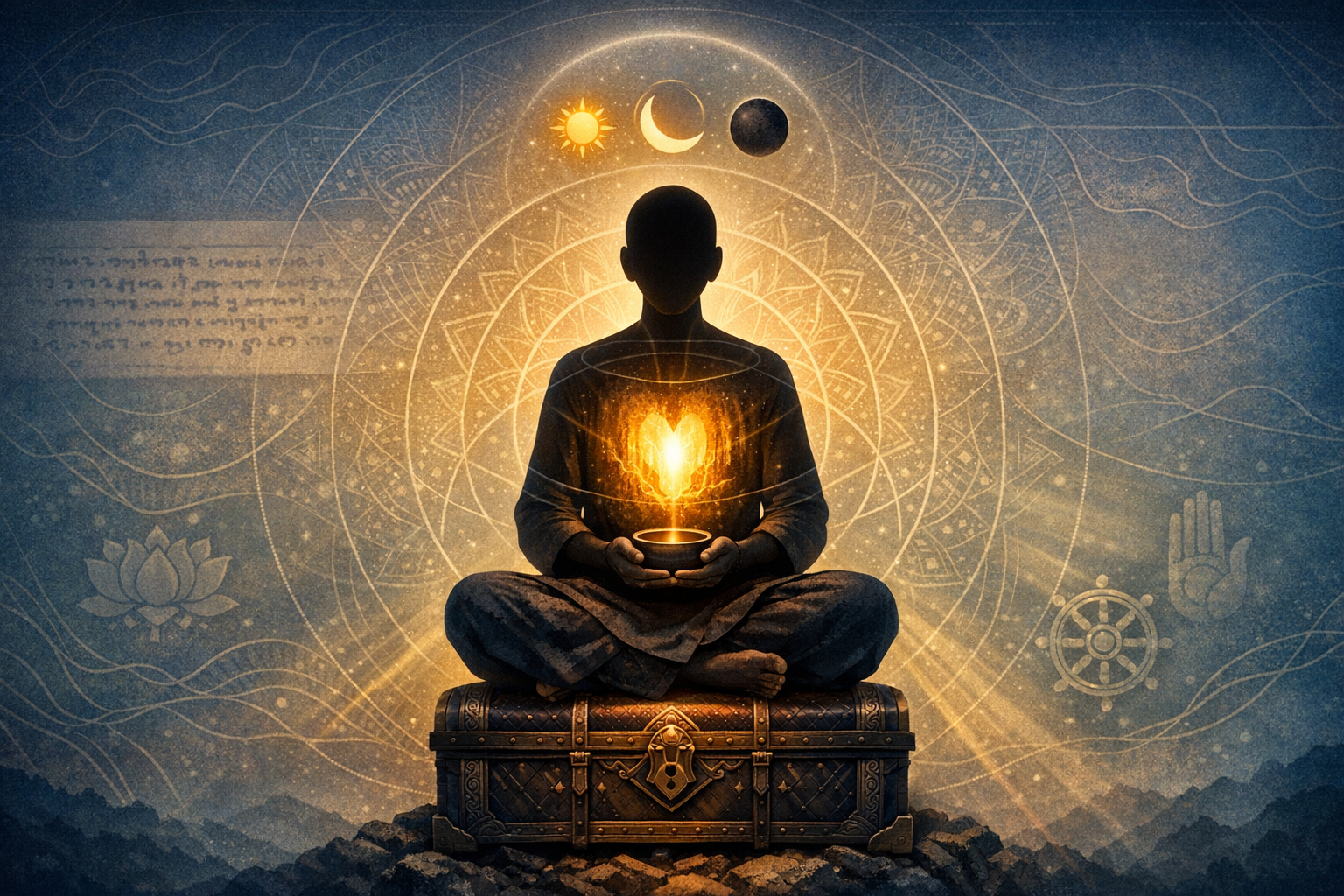
    Atmarina—the debt to the self—frames an inner commitment within Hinduism to cultivate clarity, virtue, and wisdom so that all other duties are fulfilled well. Grounded in the Upanishads, the Bhagavad Gita, and Yoga philosophy, it emphasizes svadhyaya, yama-niyama, wellbeing, and meditation. This approach strengthens Devarina, Pitrina, Rishirina, and Bhutirina by making worship sincere, tradition discerning,…

  • Discover the Complete Convergence of Buddhism and Hinduism: A Proven Path of Rediscovery

    Discover the Complete Convergence of Buddhism and Hinduism: A Proven Path of Rediscovery

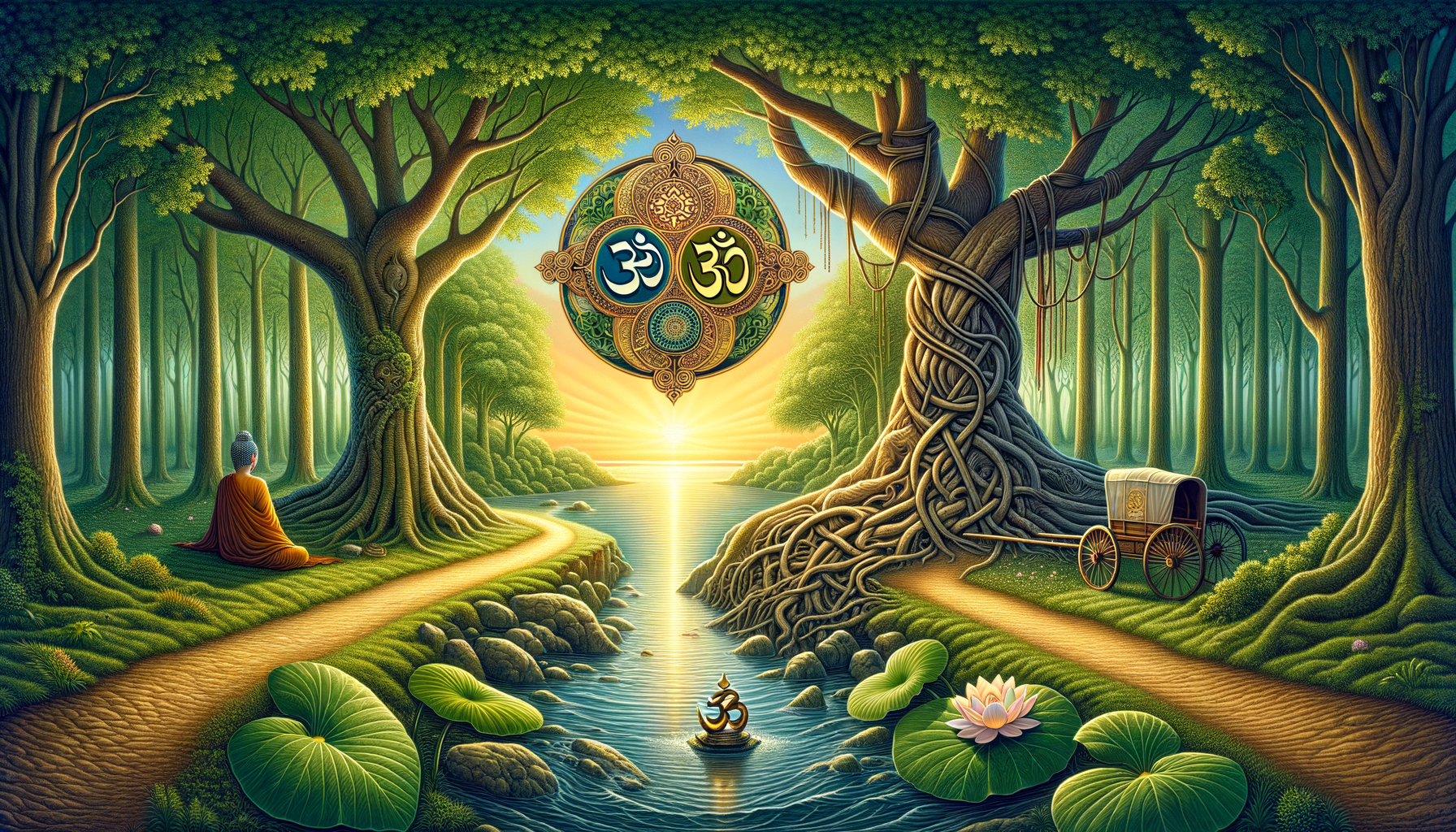
    Is Buddhism a social reformation of Hinduism, or a rediscovery of perennial truths? Drawing on Ananda K. Coomaraswamy, this analysis reframes the relationship as a deep continuity rather than a rupture. It explores shared methods—neti neti and analytical discernment—and common aims such as transcending the senses and realizing ultimate truth. It clarifies how modern mindfulness…

  • A Mother’s Final Words: A Complete Breakthrough in Dharmic Understanding of the Eternal Self

    A Mother’s Final Words: A Complete Breakthrough in Dharmic Understanding of the Eternal Self

    A late-night call informed that a mother had passed, yet her final words—“I’m not this body… I’m going to Krsna!”—reframed grief into reflective calm. The account situates her transformation within dharmic perspectives on the self, liberation, and impermanence. It connects Hindu, Buddhist, Jain, and Sikh insights, showing how they converge ethically on fearlessness, compassion, and…

  • Karma-Siddhanta and its Significance in Sanatana Dharma

    Karma-Siddhanta and its Significance in Sanatana Dharma

    The concept of karma is a fundamental aspect of Sanatana Dharma, which includes Hinduism, Buddhism, Jainism, and Sikhism. Each of these religions has its own unique perspective on karma, but they all share some commonalities. In this blog post, we will explore the concept of karma in each of these religions, its significance, and its…

  • Atman in Karmic Religions

    Atman in Karmic Religions

    atman, (Sanskrit: “self,” “breath”) one of the most basic concepts in Sanatan, the universal self, identical with the eternal core of the personality that after death either transmigrates to a new life or attains release (moksha) from the bonds of existence. As Karmic religions like Hinduism (and its various sects), Jainism, Buddhism & Sikhism arose…