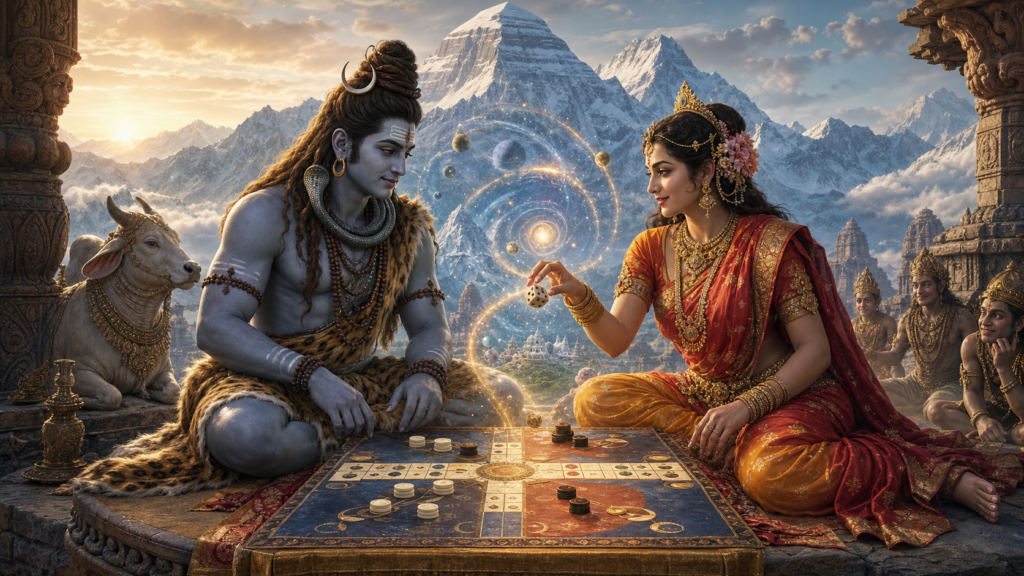
Puranas constitute a vast corpus of Hindu scriptures traditionally attributed to Veda Vyasa. Composed in Sanskrit and transmitted through numerous regional languages, these texts preserve theology, cosmology, sacred history, and ritual practice through narrative. Across the eighteen Mahapuranas and many Upapuranas, they present the significance of deities such as Ganesha (Vinayaka), Skanda (Muruga), Shiva, and Pārvatī, while cultivating a devotional imagination that has shaped cultural memory and sacred geography throughout South Asia.
Among these, the Shiva Purana occupies a central place in the Shaiva tradition. Surviving in multiple recensions with varying structures, its teachings are organized in samhitas (sections) that interweave metaphysics, ethics, pilgrimage guidance, vrata (vows), and vividly instructive tales. Although the text is traditionally said to comprise 24,000 verses, textual scholarship notes substantial variation across manuscripts and medieval redactions. This fluidity reflects the living nature of the Purana tradition, which emphasizes transmission of dharma through story and practice rather than fixed authorship alone.
Three narratives from the Shiva PuranaDaksha Yajna and Sati, Markandeya and the Mrityunjaya grace, and Shiva as Neelakantha during the Samudra Manthanaremain particularly resonant. Each story operates on several levels: as sacred history (itihasa), as theological instruction about Shiva and Shakti, and as a contemplative template for inner transformation. Read together, they illuminate how “stories from Puranas” function as both scripture and a practical guide to living with courage, humility, and compassion.
Reading Puranic narrative benefits from a dual lens. On one hand, devotees honor the stories as historical events in sacred time. On the other, an allegorical reading highlights perennial insights about ego, suffering, devotion (bhakti), discipline (tapas), and liberation (moksha). This integrative approach aligns with a broader dharmic sensibility shared across Hinduism, Buddhism, Jainism, and Sikhismwhere story, ethics, and contemplative practice reinforce one another without demanding a single exclusive path.
The account of Daksha Yajna in the Rudra Samhita narrates a clash between ritual formalism and spiritual realization. Daksha, a Prajapati celebrated for sacrificial prowess, disapproves of Sati’s self-chosen marriage to Shivathe ascetic, unconventional lord who transcends social markers while upholding cosmic order. When Daksha organizes a grand yajna, he deliberately excludes Shiva. Sati, bound by filial ties yet devoted to her husband, attends despite the slight.
At the sacrificial ground, Daksha’s disdain escalates into open insult. Sati, unwilling to tolerate disrespect towards Shivawho is both her lord and the supreme consciousness (parama-tattva)invokes yogāgni and relinquishes her body in a profound act of self-offering. This moment marks not mere protest but a theological statement: rites shorn of reverence for the highest reality lapse into adharma, however impeccable their outer form.
Shiva’s grief turns to righteous resolve. From his matted locks, he manifests Vīrabhadra and Bhadrakālī, who dismantle the sacrificial arrogance of the assembly. Daksha is decapitated; later, upon repentance and restoration of order, Shiva revives him with a goat’s head and completes the sacrifice properly oriented to the divine. The episode affirms that ritual finds fulfillment only when animated by humility and surrender to the supreme.
Subsequent strands of the Purana tradition recount Shiva roaming with Sati’s body in inconsolable grief, until Viṣṇu’s discus dismembers it, consecrating the Shakti Pīṭhas across Bhārata’s sacred geography. These sites, venerating the energy (Shakti) inseparable from Shiva, illustrate a theological complementarity fundamental to Hindu thought: consciousness and power, Shiva and Shakti, are one reality perceived in two modalities. The narrative’s enduring appeal lies in its corrective to sectarian pride and its insistence that devotion, not exclusion, completes yajna.
Interpreted ethically, Daksha Yajna cautions against spiritual conceit and validates reverence across diverse forms of worship. Its message harmonizes with the dharmic ethos shared by Hindu, Buddhist, Jain, and Sikh traditions: outer observances remain incomplete without inner transformation marked by humility, compassion, and truthfulness.
Another beloved narrative centers on Markandeya, whose parents receive a fateful boon: a son of unsurpassed virtue who will live briefly, or a long-lived son of ordinary merit. Choosing excellence over longevity, they beget Markandeya, destined to die at sixteen. As the appointed time nears, the boy-devotee immerses himself in Shiva-bhakti, worshipping the liṅga with bilva leaves and unwavering concentration.
Tradition links his supplication to the Mrityunjaya, the “conquest of death” mantraalso known as the Tryambakaṁ mantrafirst attested in the Rig Veda (7.59.12) and later embraced in Shaiva practice. Its cadence, meaning, and ritual use in healing rites and meditative recitation have consoled generations: Tryambakaṁ yajāmahe sugandhiṁ puṣṭi-vardhanam, urvārukam iva bandhanān mṛtyor mukṣīya mā amṛtāt.
When Yama arrives to claim Markandeya, the youth clasps the liṅga. Yama’s noose, cast toward the boy, encircles the emblem of Shiva itself. From the liṅga Shiva arises as KālāntakaHe who ends Deathchastens Yama, and grants Markandeya a boon of long life and deathlessness in spirit. In this theophany, Shiva is Mrityunjaya, the liberator from mortality’s tyranny.
Philosophically, the story speaks beyond physical longevity. Here “death” symbolizes the binding force of ignorance (avidyā) and fear, while the mantra’s “liberation” signals release into fearless awareness. In practice, recitation of the Mrityunjaya mantra is most potent when joined with ethical living, compassion, and steadiness of mindvirtues equally honored across dharmic lineages. Thus the narrative offers both devotional solace and a rigorous contemplative map for transforming anxiety into wisdom.
The third narrative unfolds during the Samudra Manthana, the cosmic churning of the Ocean of Milk by devas and asuras seeking amṛta. Using Mount Mandara as the churning rod and Vāsuki as the ropestabilized by Viṣṇu’s Kurma avatāratheir efforts first produce a catastrophic toxin, Hālāhala (also called Kālakūṭa). The poison, dark and unbounded, threatens all worlds.
In a supreme act of compassion, Shiva receives Hālāhala into himself to shield creation. Pārvatī, embodying Shakti’s discerning grace, restrains the poison in Shiva’s throat, preventing its descent. From this event arises the epithet Nīlakaṇṭha, “the blue-throated one.” The cosmos survives, and only then do the auspicious treasures of the churning emerge, culminating in amṛta.
Read symbolically, Samudra Manthana represents the arduous churning of consciousness. Before nectar, toxins appearlatent fears, resentments, and collective negativity. Shiva’s act models transmutation: steadfast awareness that can “hold” poison without letting it pervade the heart. The image resonates with contemplative ideals cherished across dharmic traditionscourageous compassion, equanimity under strain, and service to the common good.
Together, these three stories delineate a Shaiva theology at once devotional and philosophical. Daksha Yajna teaches that ritual reaches fruition only in humility before the supreme. Markandeya’s deliverance instructs that fearless devotion and disciplined mantra practice can overcome existential dread. The Nīlakaṇṭha episode illustrates how enlightened awareness metabolizes suffering into protection for all beings.
Historically, the Shiva Purana’s multi-recensional character has produced narrative variations across regions and commentarial traditions. Such diversity reflects the Purana’s function as a living scripturesung in temples, dramatized in festivals, meditated upon by seekers, and retold in householdsrather than a single fixed text. Translations into Indian languages further expanded its reach, making its teachings accessible to diverse communities while retaining its Sanskritic core.
For contemporary readers, these tales offer practical guidance. The ethic of respect learned from Daksha Yajna discourages sectarianism and nurtures interfaith and inter-sect harmony. The Mrityunjaya mantra, undertaken with sincerity and ethical intent, becomes a contemplative practice for resilience. The Nīlakaṇṭha ideal encourages individuals and communities to meet crisis with composure, holding and transforming collective anxieties rather than amplifying them.
Viewed within the broader dharmic family, the Shiva Purana’s lessons align with shared values: ahimsa, truthful speech, self-discipline, and compassionate action. Whether one approaches these narratives as sacred history or as luminous metaphors, they invite a unifying commitment to inner refinement and mutual respectan aspiration at the heart of Hinduism, Buddhism, Jainism, and Sikhism.
As “stories from Puranas” continue to inform festivals such as Maha Shivaratri and pilgrimages to Shakti Pīṭhas, their enduring relevance becomes clear. They do not merely recount the past; they educate conscience, refine perception, and anchor everyday life in a tradition of wisdom that celebrates diversity in paths while affirming unity in purpose.
Inspired by this post on Hindu Pad.