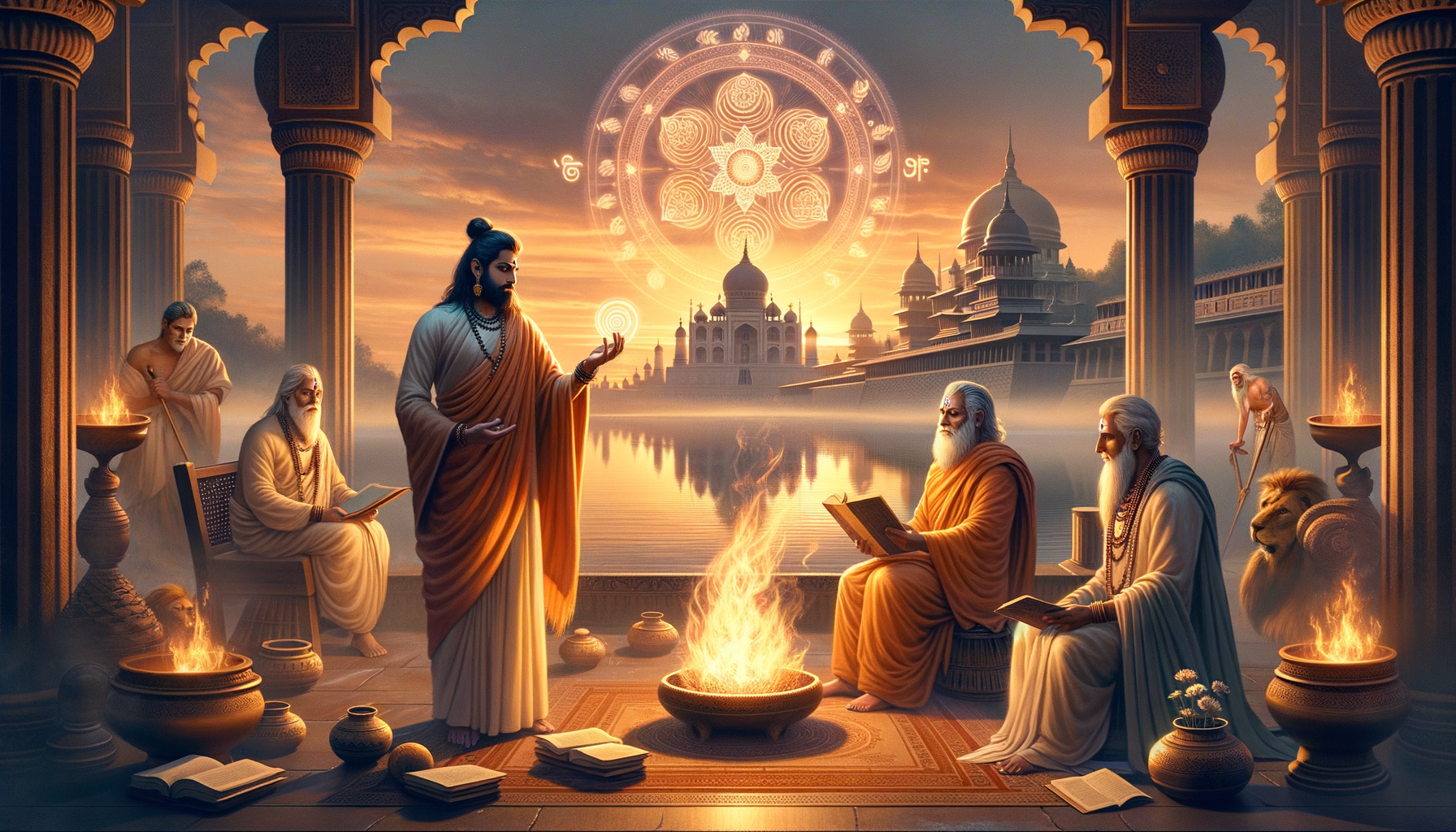
This narrative from the Itihasa-Purana tradition traces a profound arc from vengeance to wisdom, centering on Sage Parashara and King Kalmashapada (also known as Mitrasaha, and in many sources as Saudasa). Situated in the royal lineage of Ayodhya, the episode illuminates how a single curse can destabilize a kingdom, shatter a lineage, and yet ultimately guide a community back to dharma through discernment, restraint, and compassionate counsel.
In the ancient kingdom of Ayodhya, King Kalmashapada was renowned for valor and a reputation for just rule. Yet the epics preserve multiple strands of how the king came under a devastating curse. Several recensions recount that after a fraught encounter with Shaktison of the sage Vashishthathe king was cursed to become a man-eating Rakshasa. Other tellings note the entanglements of the rivalries between Vashishtha and Vishvamitra, emphasizing how misdirection, anger, and ritual error converged to precipitate the curse.
The consequence was catastrophic. Under the sway of the curse, Kalmashapada lost the clarity of a righteous king and succumbed to demonic ferocity. In some versions, Shakti and several members of Vashishtha’s lineage perished as a result, a wound that reverberated through the world of sages. The moral texture of the story is deliberate: it frames how adharma does not simply arise from malice, but can grow from a chain of grievance, misjudgment, and the dark gravity of fate.
Parashara, Shakti’s son, stands at the heart of what follows. Grief deepened into rage, and in a dramatic episode remembered across Puranic literature, Parashara initiated a powerful rite to annihilate the Rakshasas responsible for his father’s death. At that precipice of destructive resolve, the wisdom of the elders intervened. Vashishtha and, in many accounts, the sage Pulastya, counseled Parashara to recognize the complex web of causation: the king acted under curse; suffering begot suffering; and the cycle would not end through retribution alone.
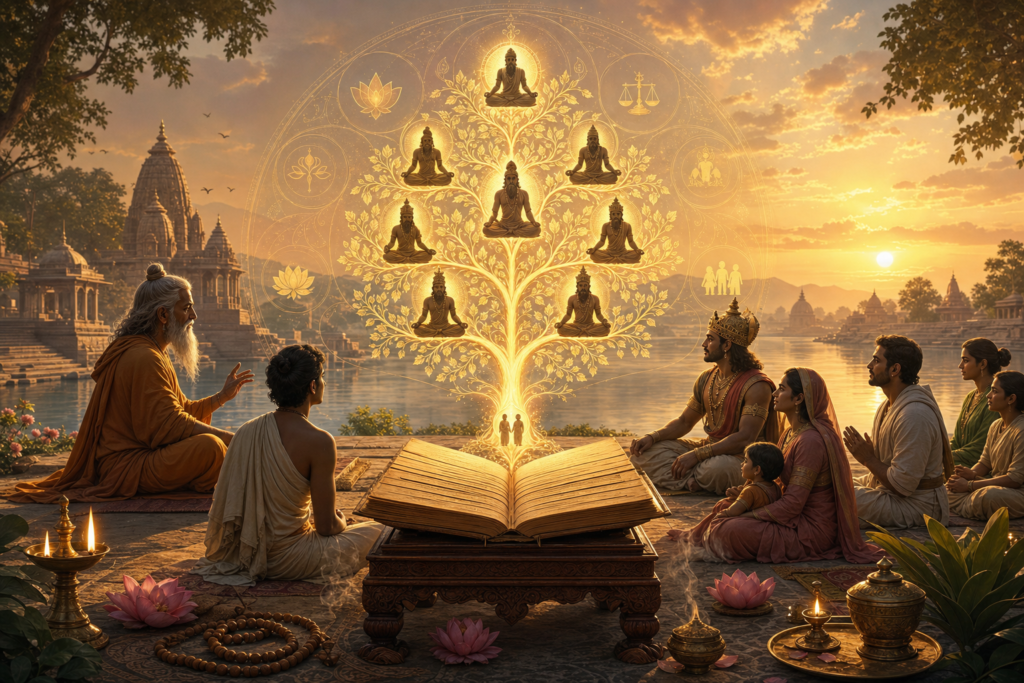
This counsel transformed the narrative. Parashara abandoned the sacrificial destruction and turned toward knowledge, tapas, and the unfolding of dharma. Tradition holds that Pulastya imparted to Parashara teachings that would crystallize as the Vishnu Purana. In time, Parashara would also become a formative link in India’s civilizational memory by fathering Veda Vyasa with Satyavatithe redactor of the Vedas and the architect of the Mahabharata’s transmission. Thus, a lineage threatened by grief became a source of wisdom for the ages.
The king’s path, too, bends toward resolution. In many tellings, Kalmashapada’s curse waned after the ordained period, aided by sage’s grace and expiatory discipline. The textual tradition is careful to underline that dharma includes accountability and atonement, but also the possibility of reintegration after sincere repentance. The restoration of the king’s faculties is not merely personal relief; it is a political and social healing that reaffirms the primacy of counsel, restraint, and ethical order in governance.
Thematically, the tale stages an enduring debate within dharma: What is justice when harm has been done? How should righteous anger be held so that it does not reproduce the very violence it seeks to end? Parashara’s pivotfrom vengeance to wisdom under the guidance of Vashishtha and Pulastyaoffers a disciplined model of moral transformation. It insists that clarity, not fury, is the path by which dharma and adharma are distinguished and addressed.
Many readers may recognize the emotional arc: the rawness of loss, the allure of retribution, and the eventual relief that emerges when insight replaces impulse. In contemporary terms, the episode reads as a study in leadership under crisishow communities recover when leaders accept counsel, practice self-restraint, and prioritize long-term harmony over short-term vindication.
Across dharmic traditions, this resolution resonates with a shared ethical core. Hindu texts extol kshama (forbearance) and viveka (discernment); Buddhist teachings elevate karuna (compassion) and skillful means; Jain thought centers ahimsa (non-violence) and anuvrata (self-restraint); Sikh tradition honors daya (compassion), nimrata (humility), and the Guru’s guidance. Read together, these traditions converge on a unifying insight: cycles of harm are best ended by disciplined compassion, principled accountability, and transformative understanding.
As a contribution to India’s civilizational heritage, the story of Sage Parashara and King Kalmashapada endures because it turns the energy of grief into the light of knowledge. It shows how the guardians of dharmasages, teachers, and conscientious rulerscan redirect history away from spirals of violence and toward institutions of learning, ethical governance, and spiritual insight. In that redirection lies the lasting legacy of this Ayodhya tale: a reminder that even a haunting curse can become the catalyst for wisdom, unity, and renewal.
Inspired by this post on Hindu Blog.