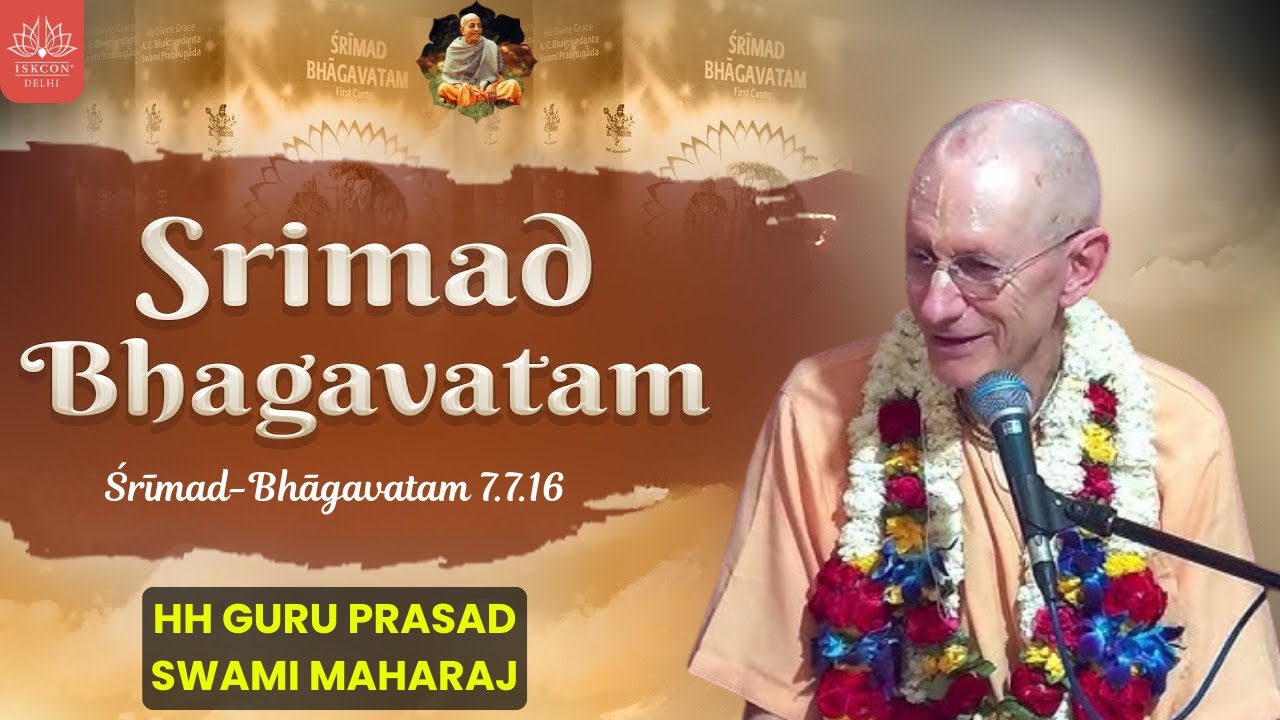
In a morning Srimad Bhagavatam class, HH Guru Prasad Swami examines Srimad Bhagavatam 7.7.16, where Prahlāda reflects on the enduring power of sacred instruction received through the compassion of Nārada. The passage contrasts the fading of memory over time with the stabilizing influence of a guru’s blessing, illuminating how divine guidance imprints enduring values even amid changing circumstances.
Within the narrative, Prahlāda notes that his mother, affected by the passage of time and life’s pressures, could not retain earlier teachings, whereas the benediction of the great sage Nārada preserved those teachings within him. Read alongside traditional commentaries, this episode underscores the spiritual principle that remembrance (smṛti) is safeguarded by grace (anugraha), rather than suggesting intrinsic differences between individuals. Framed in this way, the text invites an inclusive and compassionate understanding aligned with dharmic unity.
The class highlights the guru-śiṣya paramparā as a living conduit of wisdom, where śravaṇa (attentive hearing) and saṅga (elevating association) plant enduring saṁskāras. HH Guru Prasad Swami’s exposition emphasizes that the potency of instruction lies not merely in words but in the realized presence of the guru and the receiver’s receptivity. This insight aligns with bhakti practice, wherein remembrance, gratitude, and service consolidate learning into character.
Listeners often recognize how easily essential teachings fade without steady practice. Across dharmic traditionsHinduism, Buddhism, Jainism, and Sikhismdaily remembrance disciplines such as japa, dhyāna, svādhyāya, and simran reinforce wisdom through repetition, contemplation, and lived application. This shared emphasis on memory, guidance, and ethical conduct reflects a common spiritual grammar that nurtures unity in spiritual diversity.
Practical takeaways from SB 7.7.16 include cultivating a regular rhythm of study and reflection: a few verses of Srimad Bhagavatam each morning, a brief period of silent meditation, and a moment of gratitude directed toward teachers and mentors. Many find that keeping a small journal of insights enhances retention, while a weekly satsanga strengthens commitment and clarity. Such steady practices transform inspiration into integration.
Ultimately, the session presents a simple, profound proposition: when spiritual knowledge is received through compassionate guidance and remembered through practice, it becomes a resilient compass. By foregrounding Nārada’s grace and Prahlāda’s steadfast remembrance, HH Guru Prasad Swami’s class affirms the timeless relevance of the Srimad Bhagavatam and encourages a dharmic outlook that honors shared values across traditions while deepening devotion, understanding, and ethical living.
Inspired by this post on Dandavats.